High pressure laminate HPL benchmarks that actually affect durability
Time
Click Count
When comparing high pressure laminate (HPL) benchmarks, durability depends on more than surface appearance. For procurement teams, operators, and commercial evaluators, the real differences emerge in wear resistance, impact performance, VOC emission levels in furniture, and compatibility with powder coated steel frames or solid wood commercial grade substrates. This guide explains which HPL benchmarks actually matter for long-term use in modern commercial interiors.
Which HPL benchmarks actually predict durability in commercial use?
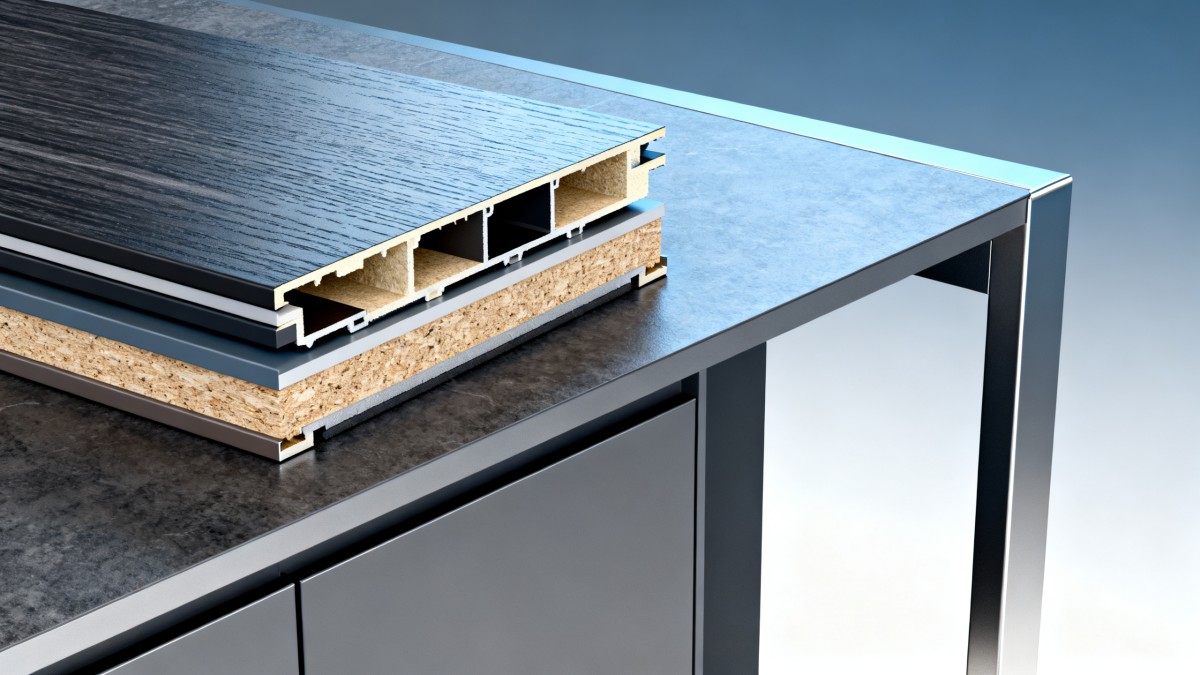
In commercial interiors, HPL durability is rarely determined by decorative finish alone. A panel that looks identical in a showroom may perform very differently after 12–24 months of daily cleaning, repeated contact, rolling equipment impact, or edge exposure. For research teams and buyers, the practical question is not whether a laminate sheet appears premium on day one, but whether its benchmark profile aligns with the actual duty cycle of the space.
The most meaningful HPL benchmarks usually fall into 5 core categories: wear resistance, impact resistance, moisture behavior, chemical or stain resistance, and indoor environmental performance such as VOC emissions. In furniture and fixture projects, substrate stability and bonding quality also matter because HPL is a system material, not a standalone surface. A durable surface can still fail if it is pressed onto unstable board or paired with weak edge detailing.
This is especially relevant in retail chains, office fit-outs, hospitality counters, healthcare waiting areas, and mixed-use commercial developments. These environments often require surfaces to remain visually consistent across 3–7 years of service while tolerating high-touch use, frequent cleaning, and multi-region procurement. A narrow focus on color, gloss, or sample-board feel often leads to expensive replacement cycles later.
At G-BCE, benchmarking is approached from a systems perspective. That means evaluating HPL not only against generic material expectations, but also in relation to commercial furniture frames, fixture fabrication methods, global compliance expectations, and lifecycle cost. For sourcing directors and commercial architects, this reduces the gap between laboratory claims and operational reality.
The 5 indicators that deserve priority
- Wear resistance: Critical for tabletops, counters, reception desks, and work surfaces exposed to repeated abrasion from bags, boxes, tools, or customer traffic.
- Impact resistance: Important where mobile carts, handheld devices, chair collisions, or dropped objects are part of daily use.
- Moisture and edge behavior: Highly relevant in cafés, wash zones, healthcare stations, and humid climates where failure often begins at seams or edges rather than the top face.
- VOC and emissions profile: Necessary for enclosed interiors, branded retail, education, and any project with internal material health requirements.
- Substrate compatibility: A laminate bonded to MDF, particleboard, plywood, or solid wood commercial grade substrate will behave differently under temperature swings and structural stress.
These categories help procurement teams move from aesthetic sampling to evidence-based selection. In many projects, just 3 early checks—surface class, substrate type, and edge construction—can eliminate a large share of avoidable durability failures before production begins.
What should procurement teams compare beyond the sample board?
Procurement decisions often fail because the comparison basis is too narrow. Teams may compare thickness, color match, and unit price, but overlook the operating context. An HPL panel used on a display wall has a different benchmark requirement than one used on a cashier counter or a back-of-house worktop. The right approach is to compare performance by application, cleaning frequency, load condition, and substrate assembly.
A useful buying framework is to separate visible durability from structural durability. Visible durability covers scratch visibility, gloss retention, stain response, and color consistency across batches. Structural durability covers bond integrity, substrate movement, edge stability, moisture exposure, and fastening compatibility with metal or wood support systems. Both matter, but they fail in different ways and at different times.
The table below summarizes practical HPL benchmarks that influence commercial lifecycle performance more directly than appearance alone. It is designed for sourcing, facility operations, and business evaluation teams comparing multiple supplier offers over a 2–4 week review cycle.
For commercial buyers, this comparison table helps turn a supplier quote into a real evaluation tool. If two proposals are close in price, the one with stronger bond-system disclosure, clearer emissions information, and better edge construction often provides lower replacement risk over a 3–5 year asset horizon.
A simple 4-step comparison workflow
- Map the application into low, medium, or high contact intensity instead of treating all HPL uses as identical.
- Ask suppliers to disclose the complete assembly: HPL face, backing balance if relevant, adhesive method, substrate, edge treatment, and support frame.
- Review compliance needs early, especially for indoor air, fire-related specifications where applicable, and furniture alignment with standards used in your market.
- Test the shortlisted options against actual cleaning routines and use conditions before approving bulk production.
This process is particularly valuable when projects involve multiple countries, mixed material packages, or phased rollouts in batches over 6–12 months. It keeps commercial durability from being reduced to a visual approval exercise.
How do substrates, edges, and support frames change HPL performance?
A frequent sourcing mistake is to evaluate HPL sheets as though they perform independently of the structure beneath them. In reality, durability depends heavily on the assembly. The same laminate can perform well on stable plywood in a climate-controlled setting yet fail prematurely on low-density board exposed to humidity swings or poor edge sealing. For operators, this is why one location may age well while another shows lifting, swelling, or chipping within a much shorter period.
Substrate selection is especially important for counters, workstation tops, retail fixtures, and hospitality furniture. MDF may support a refined finish and machining precision, but its moisture sensitivity can become a liability if the design leaves vulnerable edges. Plywood may offer stronger dimensional stability in variable environments. Solid wood commercial grade substrates bring different movement behavior that must be anticipated during bonding and edge detailing.
Support frames also matter. Powder coated steel frames can improve structural strength, but they introduce rigid restraint points and thermal differences. If the panel assembly lacks allowance for movement or uses inconsistent fastening details, cosmetic stress or edge separation can appear over time. In projects with long tables, public benches, or integrated smart retail fixtures, these interactions become more pronounced as spans increase.
Where failures usually begin
Edges and corners
In many commercial installations, the first visible failure appears at edges rather than on the main face. High-contact corners, exposed sink-adjacent lines, and chair-impact points are common weak zones. Even when the HPL face is robust, poor edge radius design, thin edge sealing, or inadequate protection can shorten service life significantly within the first 6–18 months.
Bond line and backing balance
Uneven bonding or an imbalanced panel construction can create warp, stress, or long-term instability. This becomes more relevant in larger panels and in regions with fluctuating humidity. Commercial buyers should ask whether a balancing layer is used where needed and whether the production process is consistent across repeated batches.
Frame integration
When HPL-faced panels are mounted onto powder coated steel frames, screw positions, insert details, and support spacing matter. A panel spanning beyond appropriate support intervals can look acceptable at installation but gradually show deflection or stress. In practical terms, buyers should review at least 3 structural points: frame spacing, fixing method, and expected live-use pattern.
- Use application-specific substrate logic rather than selecting one board type for every fixture category.
- Review edge details with the same seriousness as surface finish, especially in public-use zones.
- Confirm panel-to-frame integration when combining HPL surfaces with metal systems, digital retail hardware, or heavy accessory mounting.
For cross-border sourcing, G-BCE’s benchmarking perspective is useful because it connects material selection with fabrication realities. That is often the missing layer between a technically acceptable panel spec and a commercially resilient finished product.
Which standards, compliance checks, and test documents are worth asking for?
Commercial evaluators often receive broad claims such as “commercial grade,” “low emission,” or “high impact” without enough detail to compare suppliers. A better practice is to request specific documentation by category: laminate performance, substrate information, emissions records, and finished furniture alignment where relevant. This creates a more defensible basis for approval, especially when projects involve landlords, brand compliance teams, or regional sourcing offices.
Because HPL is frequently part of a larger furniture or fixture package, standards should be interpreted at the system level. A panel may meet one set of expectations, while the finished desk, display, or service counter is evaluated under another. In multinational projects, buyers commonly reference international frameworks such as UL, CE, and BIFMA depending on product category, electrical integration, market destination, and furniture use case.
The table below shows how procurement teams can organize compliance requests without overcomplicating the process. It is not a substitute for project-specific legal review, but it helps narrow attention to the documents most likely to affect approval and risk management during a 7–15 day quotation and verification cycle.
The value of these documents is not bureaucracy. It is decision clarity. When technical papers, substrate details, and emissions information are reviewed together, sourcing teams can compare supplier maturity, not just supplier pricing. That is especially useful for chain rollouts, premium branded interiors, and mixed-category procurement involving furniture, signage, and smart retail equipment.
Three common compliance misunderstandings
- A decorative panel claim does not automatically confirm the same performance in the finished assembled product.
- Low-emission expectations should include adhesives and substrate, not only the visible HPL sheet.
- A recognized standard reference is useful only when it matches the actual product category and destination market.
For business evaluation teams, these checks reduce downstream friction during approval, shipping, installation, and facility handover. They also improve communication between design, sourcing, and operations teams that often use different criteria when judging the same product.
How should buyers choose HPL by scenario, budget, and lifecycle risk?
Not every project needs the same HPL benchmark level. The right selection depends on traffic intensity, cleaning chemistry, expected replacement cycle, and budget tolerance for disruption. A premium surface may be unnecessary for a low-contact decorative wall, while an under-specified surface on a service counter can become costly if replacement requires night work, store downtime, or brand inconsistency across locations.
A practical evaluation model is to divide decisions into 3 procurement tiers: appearance-led, operationally balanced, and heavy-duty commercial. The first tier fits low-touch vertical applications. The second tier suits most office, hospitality, and branded retail furniture. The third tier is appropriate for high-abuse horizontal use, high-frequency cleaning, or public environments where repairs are difficult and service continuity matters.
The goal is not to buy the highest specification everywhere. It is to place performance where it creates measurable lifecycle value. In many mixed-use fit-outs, this means combining different HPL grades or assembly strategies across 4–6 fixture types instead of forcing a single specification onto every surface.
Scenario-based selection guide
The comparison below helps align HPL durability benchmarks with common commercial scenarios, budget logic, and replacement risk. It is useful during concept design, tender review, and value engineering discussions.
This kind of scenario mapping supports better value engineering. It helps buyers reduce unnecessary cost in low-risk zones while strengthening durability where replacement is disruptive. For many organizations, that is a more effective strategy than negotiating unit price alone.
Questions decision-makers should ask before approval
- Will this HPL assembly face dry touch, wet cleaning, chemical wiping, or repeated object drag every day?
- Is the replacement cycle expected to be under 3 years, around 3–5 years, or longer than 5 years?
- Does the quote clearly state substrate, edge treatment, backing logic, and support frame integration?
- Will the project need sample approval, batch matching, and phased delivery across multiple sites?
If these questions are answered early, procurement teams can reduce rework, limit specification drift, and improve supplier accountability throughout the ordering process.
FAQ and next-step support for HPL benchmarking projects
For information researchers, operators, procurement professionals, and commercial evaluators, the most effective HPL decision is rarely based on a single technical sheet. It comes from matching surface benchmarks to real use conditions, assembly details, and compliance requirements. That is where structured benchmarking support becomes valuable.
G-BCE helps global project teams evaluate HPL and related commercial fixture materials through a broader modernization lens. Because our platform covers commercial furniture and fixtures, smart retail technology, consumer goods supply chains, lighting and signage, and sustainable packaging, we can assess whether a material choice works not only in isolation but within the full commercial ecosystem.
If you are comparing suppliers across Asia and international markets, the benefit is clearer decision structure. Instead of reviewing disconnected claims, you can align laminate performance, substrate logic, emissions expectations, and installation realities in one procurement conversation. This is especially useful for chain operators, developers, and premium brands managing multiple categories and short delivery windows.
How do I know if an HPL benchmark is suitable for high-traffic use?
Start with the application, not the finish name. High-traffic horizontal surfaces usually require stronger focus on wear resistance, impact behavior, edge protection, and maintenance compatibility. Ask for test-related documentation, then review the substrate and support structure. A surface may be suitable in theory but underbuilt in the final assembly.
What is the most overlooked factor in HPL durability?
Edge construction is often the most overlooked factor. Many failures begin at corners, sink lines, impact points, or exposed seams. In projects expected to last 3–7 years, edge detailing deserves the same level of scrutiny as face-sheet performance.
How long does supplier benchmarking usually take?
For a focused review with available documents, many teams can complete an initial comparison in 7–15 days. If the project includes multiple substrates, custom fixtures, emissions review, or phased rollout planning, a more complete evaluation may take 2–4 weeks, especially when sample validation is included.
What should be included in an HPL inquiry package?
A strong inquiry package should include at least 6 items: application type, expected traffic level, cleaning routine, substrate preference, frame or support structure, and required compliance references. If color consistency and phased delivery matter, include sample approval expectations and batch management requirements as well.
Why choose us for HPL benchmarking and sourcing evaluation?
Choose G-BCE when you need more than a decorative material summary. We help teams confirm which HPL benchmarks are relevant for specific commercial applications, compare panel systems across suppliers, clarify VOC and compliance considerations, and assess compatibility with powder coated steel frames or solid wood commercial grade substrates. Our work is built for global commercial architects, sourcing directors, and business evaluators who need practical benchmarking rather than generic product language.
You can contact us for parameter confirmation, supplier comparison, sample review logic, typical lead-time discussion, phased rollout planning, certification-related document mapping, and quotation evaluation support. If your project involves retail modernization, office systems, hospitality fixtures, or multi-category commercial fit-out, we can help you translate HPL durability benchmarks into a clearer and more defensible sourcing decision.
- commercial furniture
- retail fixtures
- smart retail
- supply chain
- consumer goods
- signage
- sustainable packaging
- retail technology
- commercial architects
- consumer goods supply chain
- smart retail technology
- VOC emission levels in furniture
- solid wood commercial grade
- powder coated steel frames
- high pressure laminate (HPL) benchmarks
News Recommendations
 How to compare commercial linear light wholesale quotes accurately
![51a6ab95581761cc26f4318be6520c15]()
Aris Katos
Future of Carbide Coatings
 How to verify international standards compliance for Middle East exports
![51a6ab95581761cc26f4318be6520c15]()
Aris Katos
Future of Carbide Coatings
 How to select laboratory instruments for reproducible test results
![51a6ab95581761cc26f4318be6520c15]()
Aris Katos
Future of Carbide Coatings
 When does a sheet metal prototype reveal design flaws early?
![51a6ab95581761cc26f4318be6520c15]()
Aris Katos
Future of Carbide Coatings
 When PE air column bags reduce damage in e-commerce fulfillment
![51a6ab95581761cc26f4318be6520c15]()
Aris Katos
Future of Carbide Coatings
 How energy-efficient design reduces operating costs in retail lighting
![51a6ab95581761cc26f4318be6520c15]()
Aris Katos
Future of Carbide Coatings
 When commercial aluminum storefronts make sense for a retail renovation
![51a6ab95581761cc26f4318be6520c15]()
Aris Katos
Future of Carbide Coatings
 What makes LED lights durable in high-use commercial spaces?
![51a6ab95581761cc26f4318be6520c15]()
Aris Katos
Future of Carbide Coatings
 Which industry categories offer the strongest export potential in Latin America?
![51a6ab95581761cc26f4318be6520c15]()
Aris Katos
Future of Carbide Coatings
 How to choose an ultra bright waterproof window display for storefronts
![51a6ab95581761cc26f4318be6520c15]()
Aris Katos
Future of Carbide Coatings
 How to verify suppliers on a trade portal for global sourcing
![51a6ab95581761cc26f4318be6520c15]()
Aris Katos
Future of Carbide Coatings
 How RoHS requirements should be stated in product specifications
![51a6ab95581761cc26f4318be6520c15]()
Aris Katos
Future of Carbide Coatings
 What affects the lead time for custom retail counter displays?
![51a6ab95581761cc26f4318be6520c15]()
Aris Katos
Future of Carbide Coatings
 What consumer packaging USA importers need to verify before ordering
![51a6ab95581761cc26f4318be6520c15]()
Aris Katos
Future of Carbide Coatings
 How commercial spaces interiors shape customer dwell time
![51a6ab95581761cc26f4318be6520c15]()
Aris Katos
Future of Carbide Coatings
 How LED commercial lighting design reduces glare in retail spaces
![51a6ab95581761cc26f4318be6520c15]()
Aris Katos
Future of Carbide Coatings
 How industrial technology information improves RFID inventory accuracy
![51a6ab95581761cc26f4318be6520c15]()
Aris Katos
Future of Carbide Coatings
 When drip garden watering systems make more sense than sprinklers
![51a6ab95581761cc26f4318be6520c15]()
Aris Katos
Future of Carbide Coatings
 When category comparison improves sourcing for industrial applications
![51a6ab95581761cc26f4318be6520c15]()
Aris Katos
Future of Carbide Coatings
 Industrial application guidance for selecting the right LED lighting
![51a6ab95581761cc26f4318be6520c15]()
Aris Katos
Future of Carbide Coatings
 Which commercial architecture standards apply to European retail fit-outs?
![51a6ab95581761cc26f4318be6520c15]()
Aris Katos
Future of Carbide Coatings
 How to verify FDA requirements for maternity care products
![51a6ab95581761cc26f4318be6520c15]()
Aris Katos
Future of Carbide Coatings
 How to verify BPA-free claims for food-contact products
![51a6ab95581761cc26f4318be6520c15]()
Aris Katos
Future of Carbide Coatings
 When does a European wholesale supplier suit modular office projects?
![51a6ab95581761cc26f4318be6520c15]()
Aris Katos
Future of Carbide Coatings
 When consumer ecosystem solutions improve the in-store shopping journey
![51a6ab95581761cc26f4318be6520c15]()
Aris Katos
Future of Carbide Coatings
 How a commercial developers network can reduce site selection risk
![51a6ab95581761cc26f4318be6520c15]()
Aris Katos
Future of Carbide Coatings
 How clear purchasing specifications prevent costly supplier deviations
![51a6ab95581761cc26f4318be6520c15]()
Aris Katos
Future of Carbide Coatings
 What an ISTA drop test lab checks before your packaging ships
![51a6ab95581761cc26f4318be6520c15]()
Aris Katos
Future of Carbide Coatings
 Which commercial furniture standards apply to workplace seating?
![51a6ab95581761cc26f4318be6520c15]()
Aris Katos
Future of Carbide Coatings
 How to evaluate smart lighting module OEM compatibility before sampling
![51a6ab95581761cc26f4318be6520c15]()
Aris Katos
Future of Carbide Coatings
 How to assess whether sustainable technology delivers real impact
![51a6ab95581761cc26f4318be6520c15]()
Aris Katos
Future of Carbide Coatings
 How to assess an OEM supplier’s quality control before ordering
![51a6ab95581761cc26f4318be6520c15]()
Aris Katos
Future of Carbide Coatings
 How consumer ecosystem solutions data can improve retail personalization
![51a6ab95581761cc26f4318be6520c15]()
Aris Katos
Future of Carbide Coatings
 When does consumer packaging design justify a higher product price?
![51a6ab95581761cc26f4318be6520c15]()
Aris Katos
Future of Carbide Coatings
 Supermarket Fixture Installation: Planning Layouts, Wiring, and Handover
![51a6ab95581761cc26f4318be6520c15]()
Aris Katos
Future of Carbide Coatings
 Automated Lighting and Smart Lighting Control in Bergerac: Key Project Considerations
![51a6ab95581761cc26f4318be6520c15]()
Aris Katos
Future of Carbide Coatings
 Segment Streetlight Controllers: Choosing Control Modes for Urban Roads
![51a6ab95581761cc26f4318be6520c15]()
Aris Katos
Future of Carbide Coatings
 IEC 62471-2 Explained: How to Assess Photobiological Risks in LED Lighting
![51a6ab95581761cc26f4318be6520c15]()
Aris Katos
Future of Carbide Coatings
 Food Grade Packaging Requirements by Product Type, Temperature, and Contact Risk
![51a6ab95581761cc26f4318be6520c15]()
Aris Katos
Future of Carbide Coatings