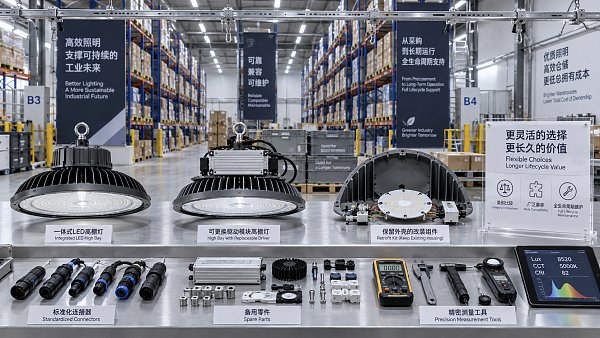
EU Forced Labor Regulation Fully Effective
Time
Click Count
On April 1, 2026, the European Union’s Forced Labor Regulation entered into full legal force, mandating supply chain due diligence across all tiers—from raw material extraction to final assembly—for any manufacturer or importer placing goods on the EU market. This development directly affects exporters of electronic integration products—including POS terminals, digital signage solutions, and smart lighting controls—particularly those based in China, as compliance now functions as a de facto market access requirement.
Event Overview
The EU Forced Labor Regulation became fully applicable on April 1, 2026. It requires all economic operators placing goods on the EU market—including manufacturers outside the EU and EU-based importers—to submit comprehensive, tiered supply chain due diligence reports. The regulation applies to all stages of production, from upstream raw material sourcing to downstream assembly. Under the rule, EU importers must obtain a supplier-issued ‘compliance digital passport’ prior to order placement; failure to do so may result in product removal from shelves and financial penalties. The regulation operates in parallel with the U.S. Uyghur Forced Labor Prevention Act (UFLPA), forming a transatlantic dual-track compliance framework.
Industries Affected by Segment
Direct Trading Enterprises
These include non-EU exporters (e.g., Chinese OEMs/ODMs) selling finished goods into the EU. They are affected because they must now produce and maintain auditable, multi-tier supply chain documentation—not just for their own facilities but for sub-tier suppliers down to mining and refining. Impact manifests as increased pre-shipment verification requirements and contractual liability shifts toward upstream transparency obligations.
Raw Material Procurement Entities
Firms sourcing metals (e.g., aluminum, copper, cobalt), rare earth elements, or semiconductors used in electronics face heightened traceability demands. The regulation explicitly covers extraction activities, meaning procurement teams must now verify origin, labor conditions, and subcontracting practices at the mine or refinery level—beyond traditional certifications like ISO or RBA.
Contract Manufacturing & Assembly Firms
EMS providers and contract assemblers supplying POS terminals or smart lighting systems are required to map not only their own labor practices but also those of component suppliers (e.g., PCB fabricators, display module makers). Their role shifts from operational execution to active due diligence coordination—especially where sub-tier suppliers lack digital reporting infrastructure.
Distribution & Channel Intermediaries
EU-based distributors, brand licensees, and e-commerce platforms acting as ‘importers’ under the regulation bear direct legal responsibility. They must validate the ‘compliance digital passport’ before accepting inventory—and retain evidence of verification. This introduces new operational checkpoints in order intake, customs clearance, and warehouse receipt processes.
Key Focus Areas and Immediate Response Steps
Monitor official guidance from EU Commission and national market surveillance authorities
The European Commission is expected to publish detailed implementing acts—including technical standards for digital passport format, acceptable audit methodologies, and definitions of ‘high-risk sectors’. Until these are finalized, interpretation of ‘full supply chain coverage’ remains subject to national enforcement discretion.
Prioritize high-exposure product categories and sourcing geographies
POS terminals, digital signage, and smart lighting controls are explicitly cited in regulatory impact assessments as priority segments due to complex global component sourcing (e.g., displays from Southeast Asia, controllers from China, power modules from Korea). Firms should first assess exposure in regions identified by the EU as having documented forced labor risks—particularly where mineral inputs originate.
Distinguish between regulatory signal and enforceable obligation
While the regulation is legally effective as of April 1, 2026, enforcement timelines—including inspection frequency, penalty thresholds, and transitional allowances for SMEs—are still being defined by Member States. Companies should treat early 2026 as a validation phase—not a full compliance deadline—but prepare documentation frameworks now to avoid delays in Q3–Q4 order cycles.
Initiate supplier engagement and internal data readiness
Begin mapping tier-2 and tier-3 suppliers for critical components (e.g., lithium batteries, LED drivers, touch sensors), and collect standardized self-declarations or third-party audit summaries. Internal ERP or PLM systems should be configured to tag and store due diligence records per SKU—not just per facility—to support rapid passport generation.
Editorial Perspective / Industry Observation
Observably, this regulation marks a structural shift from product-level conformity (e.g., CE marking) to process-level accountability across global value chains. Analysis shows it is less a one-time certification hurdle and more an embedded operational requirement—akin to environmental due diligence under the EU Corporate Sustainability Due Diligence Directive (CSDDD). From an industry perspective, the April 2026 date signals the start of enforcement readiness, not full implementation maturity. Current enforcement remains selective and risk-based; however, the ‘digital passport’ mechanism suggests scalability toward automated customs integration. Continued attention is warranted not only for legal compliance but for strategic procurement resilience—especially where alternative sourcing routes lack equivalent traceability infrastructure.
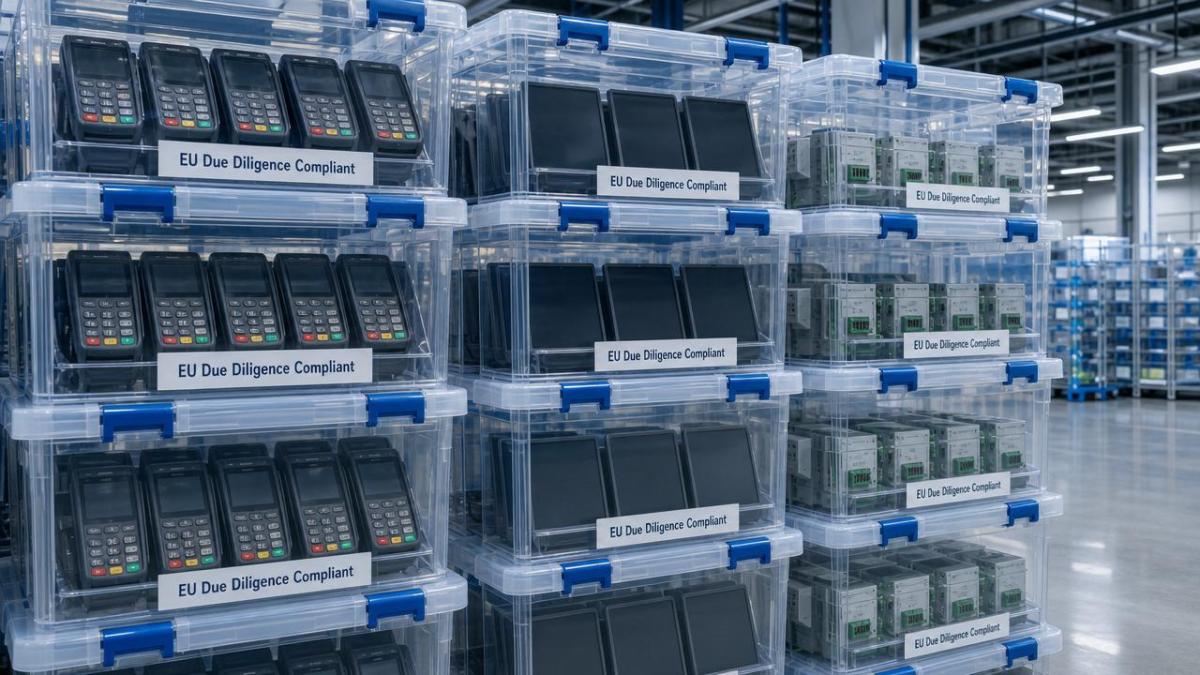
In summary, the EU Forced Labor Regulation does not introduce new ethical principles but institutionalizes supply chain transparency as a binding commercial prerequisite. Its significance lies not in immediate penalties, but in redefining due diligence as a continuous, data-driven function—not a point-in-time audit. For affected firms, it is best understood today as an operational calibration phase: one requiring documentation discipline, cross-tier collaboration, and close tracking of national-level enforcement patterns—not a binary pass/fail event.
Source: Official Journal of the European Union (Regulation (EU) 2023/XXX, published 2023; entry into full application confirmed April 1, 2026); European Commission press release, March 2026; U.S. CBP UFLPA enforcement guidance (updated February 2026).
Note: Implementing acts defining digital passport specifications and enforcement protocols remain pending and are subject to ongoing observation.
News Recommendations
 How to select laboratory instruments for reproducible test results
![51a6ab95581761cc26f4318be6520c15]()
Aris Katos
Future of Carbide Coatings
 When does a sheet metal prototype reveal design flaws early?
![51a6ab95581761cc26f4318be6520c15]()
Aris Katos
Future of Carbide Coatings
 When PE air column bags reduce damage in e-commerce fulfillment
![51a6ab95581761cc26f4318be6520c15]()
Aris Katos
Future of Carbide Coatings
 How energy-efficient design reduces operating costs in retail lighting
![51a6ab95581761cc26f4318be6520c15]()
Aris Katos
Future of Carbide Coatings
 When commercial aluminum storefronts make sense for a retail renovation
![51a6ab95581761cc26f4318be6520c15]()
Aris Katos
Future of Carbide Coatings
 What makes LED lights durable in high-use commercial spaces?
![51a6ab95581761cc26f4318be6520c15]()
Aris Katos
Future of Carbide Coatings
 Which industry categories offer the strongest export potential in Latin America?
![51a6ab95581761cc26f4318be6520c15]()
Aris Katos
Future of Carbide Coatings
 How to choose an ultra bright waterproof window display for storefronts
![51a6ab95581761cc26f4318be6520c15]()
Aris Katos
Future of Carbide Coatings
 How to verify suppliers on a trade portal for global sourcing
![51a6ab95581761cc26f4318be6520c15]()
Aris Katos
Future of Carbide Coatings
 How RoHS requirements should be stated in product specifications
![51a6ab95581761cc26f4318be6520c15]()
Aris Katos
Future of Carbide Coatings
 What affects the lead time for custom retail counter displays?
![51a6ab95581761cc26f4318be6520c15]()
Aris Katos
Future of Carbide Coatings
 What consumer packaging USA importers need to verify before ordering
![51a6ab95581761cc26f4318be6520c15]()
Aris Katos
Future of Carbide Coatings
 How commercial spaces interiors shape customer dwell time
![51a6ab95581761cc26f4318be6520c15]()
Aris Katos
Future of Carbide Coatings
 How LED commercial lighting design reduces glare in retail spaces
![51a6ab95581761cc26f4318be6520c15]()
Aris Katos
Future of Carbide Coatings
 How industrial technology information improves RFID inventory accuracy
![51a6ab95581761cc26f4318be6520c15]()
Aris Katos
Future of Carbide Coatings
 When drip garden watering systems make more sense than sprinklers
![51a6ab95581761cc26f4318be6520c15]()
Aris Katos
Future of Carbide Coatings
 When category comparison improves sourcing for industrial applications
![51a6ab95581761cc26f4318be6520c15]()
Aris Katos
Future of Carbide Coatings
 Industrial application guidance for selecting the right LED lighting
![51a6ab95581761cc26f4318be6520c15]()
Aris Katos
Future of Carbide Coatings
 Which commercial architecture standards apply to European retail fit-outs?
![51a6ab95581761cc26f4318be6520c15]()
Aris Katos
Future of Carbide Coatings
 How to verify FDA requirements for maternity care products
![51a6ab95581761cc26f4318be6520c15]()
Aris Katos
Future of Carbide Coatings
 How to verify BPA-free claims for food-contact products
![51a6ab95581761cc26f4318be6520c15]()
Aris Katos
Future of Carbide Coatings
 When does a European wholesale supplier suit modular office projects?
![51a6ab95581761cc26f4318be6520c15]()
Aris Katos
Future of Carbide Coatings
 When consumer ecosystem solutions improve the in-store shopping journey
![51a6ab95581761cc26f4318be6520c15]()
Aris Katos
Future of Carbide Coatings
 How a commercial developers network can reduce site selection risk
![51a6ab95581761cc26f4318be6520c15]()
Aris Katos
Future of Carbide Coatings
 How clear purchasing specifications prevent costly supplier deviations
![51a6ab95581761cc26f4318be6520c15]()
Aris Katos
Future of Carbide Coatings
 What an ISTA drop test lab checks before your packaging ships
![51a6ab95581761cc26f4318be6520c15]()
Aris Katos
Future of Carbide Coatings
 Which commercial furniture standards apply to workplace seating?
![51a6ab95581761cc26f4318be6520c15]()
Aris Katos
Future of Carbide Coatings
 How to evaluate smart lighting module OEM compatibility before sampling
![51a6ab95581761cc26f4318be6520c15]()
Aris Katos
Future of Carbide Coatings
 How to assess whether sustainable technology delivers real impact
![51a6ab95581761cc26f4318be6520c15]()
Aris Katos
Future of Carbide Coatings
 How to assess an OEM supplier’s quality control before ordering
![51a6ab95581761cc26f4318be6520c15]()
Aris Katos
Future of Carbide Coatings
 How consumer ecosystem solutions data can improve retail personalization
![51a6ab95581761cc26f4318be6520c15]()
Aris Katos
Future of Carbide Coatings
 When does consumer packaging design justify a higher product price?
![51a6ab95581761cc26f4318be6520c15]()
Aris Katos
Future of Carbide Coatings
 Supermarket Fixture Installation: Planning Layouts, Wiring, and Handover
![51a6ab95581761cc26f4318be6520c15]()
Aris Katos
Future of Carbide Coatings
 Automated Lighting and Smart Lighting Control in Bergerac: Key Project Considerations
![51a6ab95581761cc26f4318be6520c15]()
Aris Katos
Future of Carbide Coatings
 Segment Streetlight Controllers: Choosing Control Modes for Urban Roads
![51a6ab95581761cc26f4318be6520c15]()
Aris Katos
Future of Carbide Coatings
 IEC 62471-2 Explained: How to Assess Photobiological Risks in LED Lighting
![51a6ab95581761cc26f4318be6520c15]()
Aris Katos
Future of Carbide Coatings
 Food Grade Packaging Requirements by Product Type, Temperature, and Contact Risk
![51a6ab95581761cc26f4318be6520c15]()
Aris Katos
Future of Carbide Coatings
 Food Packaging Compliance Checklist: Tests, Records, and Labeling Before Shipment
![51a6ab95581761cc26f4318be6520c15]()
Aris Katos
Future of Carbide Coatings
 NSF Food Packaging Standards: When Certification Matters for Commercial Food Use
![51a6ab95581761cc26f4318be6520c15]()
Aris Katos
Future of Carbide Coatings