Retail Technology Standards: What Actually Matters in 2026
Time
Click Count
In 2026, retail technology standards are no longer just a compliance checklist—they directly shape operational resilience, customer experience, and long-term ROI. For business decision-makers navigating smarter stores, connected supply chains, and rising sustainability demands, knowing which standards actually matter is essential. This article highlights the benchmarks, certifications, and practical priorities that will define high-performing retail ecosystems worldwide.
For most executives, the real question is not whether standards matter, but which ones materially affect investment quality, deployment risk, and cross-market scalability. The answer is clear: prioritize standards that improve interoperability, cybersecurity, safety, data reliability, and lifecycle performance.
That means retail technology standards should be treated as business infrastructure. In 2026, the winners will be retailers and commercial ecosystem partners that use standards to avoid fragmented systems, reduce vendor lock-in, strengthen compliance readiness, and create more resilient omnichannel operations.
What business leaders are really searching for when they ask about retail technology standards
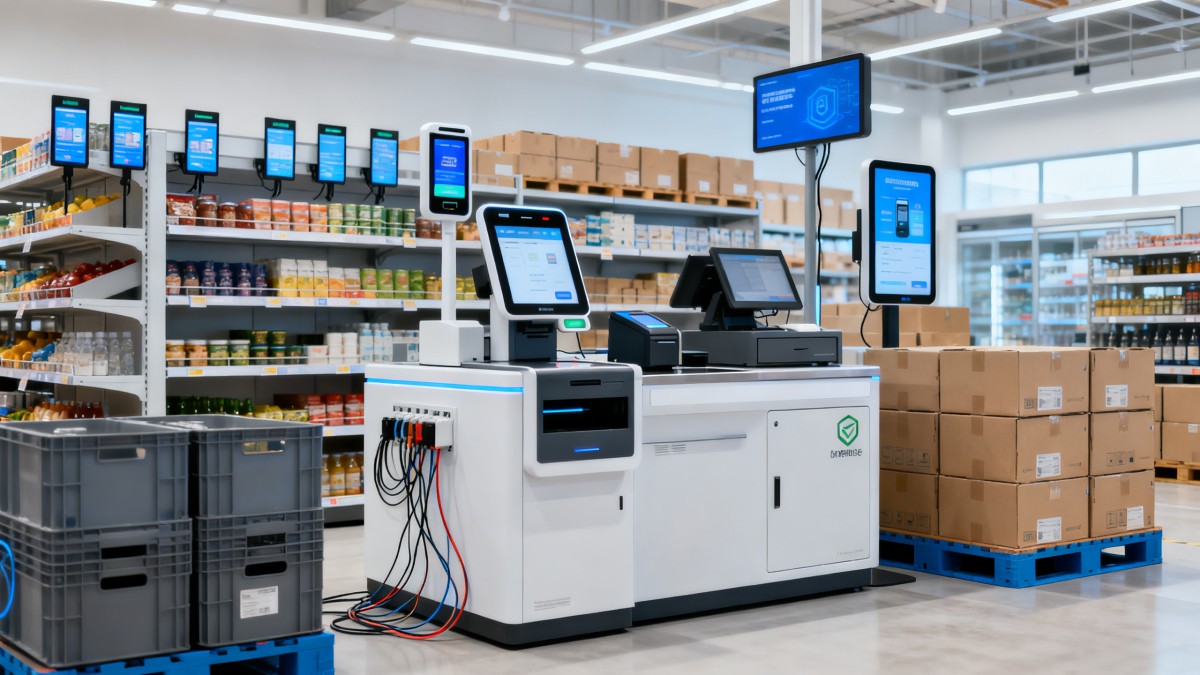
When decision-makers search for retail technology standards, they are rarely looking for a technical glossary. They want a practical filter for evaluating store systems, connected devices, digital fixtures, and supply chain technology investments across multiple regions.
They are also trying to reduce uncertainty. Which certifications are mandatory? Which interoperability frameworks protect future integration? Which standards influence procurement, insurance, operational uptime, and consumer trust? These are strategic questions, not engineering trivia.
For enterprise buyers, the most useful perspective is to separate standards into three tiers: required compliance, operationally critical benchmarks, and market-differentiating specifications. That framing helps leaders avoid overpaying for features that look advanced but create limited enterprise value.
The standards that actually matter most in 2026
Not every standard deserves equal attention. In modern retail environments, the highest-value standards are those connected to product safety, electrical reliability, device communication, payment security, data governance, and environmental performance across physical and digital retail infrastructure.
Safety and electrical certifications remain foundational. UL, CE, FCC, and related market-entry requirements are non-negotiable for smart fixtures, displays, lighting systems, kiosks, self-checkout hardware, digital signage, and connected point-of-sale devices deployed internationally.
These certifications do more than satisfy regulators. They reduce liability exposure, simplify approvals with landlords and developers, and support consistent deployment across chains operating in different legal environments. For commercial decision-makers, that translates into fewer delays and lower rollout friction.
Interoperability standards are equally important. Retailers increasingly depend on mixed ecosystems that combine POS, inventory systems, sensors, electronic shelf labels, customer analytics, payment infrastructure, and enterprise planning software. If these systems cannot communicate reliably, the cost of integration rises quickly.
In 2026, open APIs, standardized data exchange models, and protocol compatibility matter more than proprietary feature claims. A strong retail technology investment should fit into broader store operations, not create an isolated island of intelligence that requires expensive customization.
Cybersecurity and payment standards now belong at the center of retail technology decisions. PCI DSS remains essential for payment environments, but leaders must also assess network segmentation, endpoint security, access control, encryption, update management, and audit readiness for all connected retail devices.
The expansion of edge computing and in-store AI has widened the attack surface. Smart cameras, occupancy sensors, interactive screens, and AI-driven terminals all create new operational benefits, but also introduce new data and security responsibilities. Standards help define acceptable control baselines.
Sustainability-related standards are becoming commercially relevant rather than merely reputational. Energy efficiency ratings, material disclosure frameworks, repairability criteria, and environmental certifications increasingly influence procurement scoring, investor perception, and total cost of ownership in large-scale retail environments.
Why interoperability is now more valuable than feature depth
Many retail technology deployments underperform not because the tools are weak, but because the systems do not work together. In 2026, interoperability is one of the most important retail technology standards considerations for chains building scalable digital operations.
A smart shelf system that cannot share data with pricing, inventory, and analytics platforms creates manual work instead of automation. A self-service kiosk that cannot integrate with loyalty, payment, and fulfillment tools limits customer convenience and weakens omnichannel performance.
For executives, this means vendor assessment should include integration maturity as a board-level concern. Ask whether systems support standardized interfaces, documented APIs, cloud compatibility, and data export models that allow future platform changes without major infrastructure replacement.
The business value is significant. Interoperable systems reduce implementation costs, accelerate deployment, simplify training, and improve reporting consistency across regions. They also make mergers, store redesigns, and supplier changes far less disruptive over time.
This is especially relevant in international commercial environments where operators source hardware from one region, software from another, and systems integration from a third. Standards create a shared technical language that reduces translation errors between procurement, operations, and engineering teams.
How standards affect ROI, not just compliance
One of the biggest misconceptions is that standards only add cost. In reality, well-chosen standards improve return on investment by lowering hidden expenses over the full lifecycle of retail technology systems, from sourcing and deployment to maintenance and expansion.
Devices built to recognized safety and performance benchmarks are generally easier to insure, easier to approve for commercial installation, and less likely to fail unexpectedly. That reduces downtime, replacement costs, and the operational disruption that often goes unmeasured in initial business cases.
Standardized hardware and software environments also improve workforce efficiency. Store teams spend less time troubleshooting inconsistencies, IT teams manage fewer one-off configurations, and procurement teams can compare suppliers more accurately when specifications align with recognized benchmarks.
From a strategic perspective, standards reduce stranded investment risk. If a retailer upgrades analytics platforms, changes payment providers, or expands into new geographies, standards-aligned infrastructure is much easier to adapt than proprietary systems built around a single vendor’s ecosystem.
That adaptability matters more in 2026 because the retail operating model is changing faster. New store formats, hybrid fulfillment models, AI-enabled merchandising, and sustainability reporting demands all require technology stacks that can evolve without constant reinvestment.
Which standards should guide procurement decisions first
For business leaders, the most practical approach is to rank standards by decision impact. Start with legal and market-entry requirements, then evaluate operational continuity standards, then assess strategic standards that support long-term scalability and brand positioning.
First, confirm safety, electrical, wireless, and payment compliance for every category under consideration. This includes kiosks, digital displays, POS systems, smart shelving, connected lighting, scanners, and back-end communication devices. Without this baseline, procurement risk is unnecessarily high.
Second, test interoperability and systems compatibility before purchase commitments are finalized. Require proof of integration with current software environments, cloud architecture, data tools, and future-facing retail workflows such as click-and-collect, mobile checkout, or AI-assisted inventory planning.
Third, assess cybersecurity posture in practical rather than promotional terms. Look for update policies, patch management discipline, identity controls, logging capability, data minimization practices, and documented security responsibilities between the retailer, vendor, and integrator.
Fourth, incorporate sustainability and durability criteria into total value assessment. A lower-cost device may become more expensive if it consumes more energy, fails faster, uses difficult-to-replace components, or lacks documentation needed for ESG reporting and procurement governance.
Finally, ask whether the product’s certifications and technical documentation are clear enough for international expansion. If your business plans to grow across regions, standards transparency is not administrative detail; it is a predictor of rollout speed and operating confidence.
What to deprioritize when evaluating retail technology standards
Business buyers should be careful not to overemphasize niche specifications that have little effect on real-world performance. Not every technical certification meaningfully improves customer experience, resilience, or financial outcomes in a commercial setting.
They should also avoid being distracted by standards-adjacent marketing language. Terms like smart, intelligent, AI-ready, or enterprise-grade do not indicate standards compliance, interoperability, or durability. They may describe capabilities, but they do not validate operational reliability.
Another common mistake is treating all certifications as equally important. Some are critical for safety, security, and legal access. Others are useful but secondary. Strong procurement teams distinguish between mandatory proof points and optional badges with limited strategic relevance.
Decision-makers should also resist evaluating standards in isolation from use case. A flagship luxury retail environment, a grocery chain, a travel retail location, and a small-format convenience rollout may require different priorities, even if the same broad retail technology standards are referenced.
A practical 2026 framework for evaluating retail technology standards
A simple executive framework is to score every major technology investment across five dimensions: compliance readiness, interoperability, cybersecurity, lifecycle durability, and sustainability relevance. This converts standards from abstract documentation into actionable business criteria.
Compliance readiness answers whether the technology can be legally and safely deployed where the business operates. Interoperability measures how easily it fits current and future systems. Cybersecurity evaluates exposure risk. Durability reflects lifecycle economics. Sustainability measures reporting and efficiency value.
This model works well for comparing vendors across smart retail categories including AI POS terminals, digital signage, ESL systems, store sensors, lighting controls, and connected merchandising fixtures. It helps leadership teams align sourcing decisions with both technical and commercial outcomes.
Importantly, the evaluation should involve more than procurement alone. IT, operations, store design, compliance, and finance teams all see different forms of risk. Retail technology standards become much more useful when they are reviewed through a cross-functional investment lens.
The strategic takeaway for 2026
In 2026, retail technology standards matter most where they shape resilience, integration, trust, and long-term economics. The strongest standards strategy is not to collect the most certifications, but to prioritize the benchmarks that protect scalability and operational performance.
For enterprise decision-makers, that means focusing first on safety and compliance, then on interoperability and cybersecurity, and finally on lifecycle sustainability and reporting relevance. This order reflects how retail systems succeed or fail in real commercial environments.
The organizations that will gain the most value are those that treat standards as a strategic procurement and design tool. In a market defined by connected stores, global sourcing, and rising customer expectations, standards are no longer background paperwork. They are a competitive operating advantage.
If your business is planning new store formats, technology upgrades, or international sourcing programs, the best question is simple: does this solution meet the retail technology standards that support growth, not just installation? In 2026, that distinction will define smarter investment decisions.
News Recommendations
 How to select laboratory instruments for reproducible test results
![51a6ab95581761cc26f4318be6520c15]()
Aris Katos
Future of Carbide Coatings
 When does a sheet metal prototype reveal design flaws early?
![51a6ab95581761cc26f4318be6520c15]()
Aris Katos
Future of Carbide Coatings
 When PE air column bags reduce damage in e-commerce fulfillment
![51a6ab95581761cc26f4318be6520c15]()
Aris Katos
Future of Carbide Coatings
 How energy-efficient design reduces operating costs in retail lighting
![51a6ab95581761cc26f4318be6520c15]()
Aris Katos
Future of Carbide Coatings
 When commercial aluminum storefronts make sense for a retail renovation
![51a6ab95581761cc26f4318be6520c15]()
Aris Katos
Future of Carbide Coatings
 What makes LED lights durable in high-use commercial spaces?
![51a6ab95581761cc26f4318be6520c15]()
Aris Katos
Future of Carbide Coatings
 Which industry categories offer the strongest export potential in Latin America?
![51a6ab95581761cc26f4318be6520c15]()
Aris Katos
Future of Carbide Coatings
 How to choose an ultra bright waterproof window display for storefronts
![51a6ab95581761cc26f4318be6520c15]()
Aris Katos
Future of Carbide Coatings
 How to verify suppliers on a trade portal for global sourcing
![51a6ab95581761cc26f4318be6520c15]()
Aris Katos
Future of Carbide Coatings
 How RoHS requirements should be stated in product specifications
![51a6ab95581761cc26f4318be6520c15]()
Aris Katos
Future of Carbide Coatings
 What affects the lead time for custom retail counter displays?
![51a6ab95581761cc26f4318be6520c15]()
Aris Katos
Future of Carbide Coatings
 What consumer packaging USA importers need to verify before ordering
![51a6ab95581761cc26f4318be6520c15]()
Aris Katos
Future of Carbide Coatings
 How commercial spaces interiors shape customer dwell time
![51a6ab95581761cc26f4318be6520c15]()
Aris Katos
Future of Carbide Coatings
 How LED commercial lighting design reduces glare in retail spaces
![51a6ab95581761cc26f4318be6520c15]()
Aris Katos
Future of Carbide Coatings
 How industrial technology information improves RFID inventory accuracy
![51a6ab95581761cc26f4318be6520c15]()
Aris Katos
Future of Carbide Coatings
 When drip garden watering systems make more sense than sprinklers
![51a6ab95581761cc26f4318be6520c15]()
Aris Katos
Future of Carbide Coatings
 When category comparison improves sourcing for industrial applications
![51a6ab95581761cc26f4318be6520c15]()
Aris Katos
Future of Carbide Coatings
 Industrial application guidance for selecting the right LED lighting
![51a6ab95581761cc26f4318be6520c15]()
Aris Katos
Future of Carbide Coatings
 Which commercial architecture standards apply to European retail fit-outs?
![51a6ab95581761cc26f4318be6520c15]()
Aris Katos
Future of Carbide Coatings
 How to verify FDA requirements for maternity care products
![51a6ab95581761cc26f4318be6520c15]()
Aris Katos
Future of Carbide Coatings
 How to verify BPA-free claims for food-contact products
![51a6ab95581761cc26f4318be6520c15]()
Aris Katos
Future of Carbide Coatings
 When does a European wholesale supplier suit modular office projects?
![51a6ab95581761cc26f4318be6520c15]()
Aris Katos
Future of Carbide Coatings
 When consumer ecosystem solutions improve the in-store shopping journey
![51a6ab95581761cc26f4318be6520c15]()
Aris Katos
Future of Carbide Coatings
 How a commercial developers network can reduce site selection risk
![51a6ab95581761cc26f4318be6520c15]()
Aris Katos
Future of Carbide Coatings
 How clear purchasing specifications prevent costly supplier deviations
![51a6ab95581761cc26f4318be6520c15]()
Aris Katos
Future of Carbide Coatings
 What an ISTA drop test lab checks before your packaging ships
![51a6ab95581761cc26f4318be6520c15]()
Aris Katos
Future of Carbide Coatings
 Which commercial furniture standards apply to workplace seating?
![51a6ab95581761cc26f4318be6520c15]()
Aris Katos
Future of Carbide Coatings
 How to evaluate smart lighting module OEM compatibility before sampling
![51a6ab95581761cc26f4318be6520c15]()
Aris Katos
Future of Carbide Coatings
 How to assess whether sustainable technology delivers real impact
![51a6ab95581761cc26f4318be6520c15]()
Aris Katos
Future of Carbide Coatings
 How to assess an OEM supplier’s quality control before ordering
![51a6ab95581761cc26f4318be6520c15]()
Aris Katos
Future of Carbide Coatings
 How consumer ecosystem solutions data can improve retail personalization
![51a6ab95581761cc26f4318be6520c15]()
Aris Katos
Future of Carbide Coatings
 When does consumer packaging design justify a higher product price?
![51a6ab95581761cc26f4318be6520c15]()
Aris Katos
Future of Carbide Coatings
 Supermarket Fixture Installation: Planning Layouts, Wiring, and Handover
![51a6ab95581761cc26f4318be6520c15]()
Aris Katos
Future of Carbide Coatings
 Automated Lighting and Smart Lighting Control in Bergerac: Key Project Considerations
![51a6ab95581761cc26f4318be6520c15]()
Aris Katos
Future of Carbide Coatings
 Segment Streetlight Controllers: Choosing Control Modes for Urban Roads
![51a6ab95581761cc26f4318be6520c15]()
Aris Katos
Future of Carbide Coatings
 IEC 62471-2 Explained: How to Assess Photobiological Risks in LED Lighting
![51a6ab95581761cc26f4318be6520c15]()
Aris Katos
Future of Carbide Coatings
 Food Grade Packaging Requirements by Product Type, Temperature, and Contact Risk
![51a6ab95581761cc26f4318be6520c15]()
Aris Katos
Future of Carbide Coatings
 Food Packaging Compliance Checklist: Tests, Records, and Labeling Before Shipment
![51a6ab95581761cc26f4318be6520c15]()
Aris Katos
Future of Carbide Coatings
 NSF Food Packaging Standards: When Certification Matters for Commercial Food Use
![51a6ab95581761cc26f4318be6520c15]()
Aris Katos
Future of Carbide Coatings