New Maritime Code Shifts No-Pickup Liability to Shipper
Time
Click Count
Effective May 1, 2026, the revised Maritime Code of the People’s Republic of China introduces a structural realignment of liability for uncollected cargo at discharge ports—marking one of the most consequential updates to China’s maritime legal framework in over two decades. The change directly affects exporters, importers, freight forwarders, and logistics service providers engaged in China-related seaborne trade, particularly those handling time-sensitive or high-value consumer goods.
Event Overview
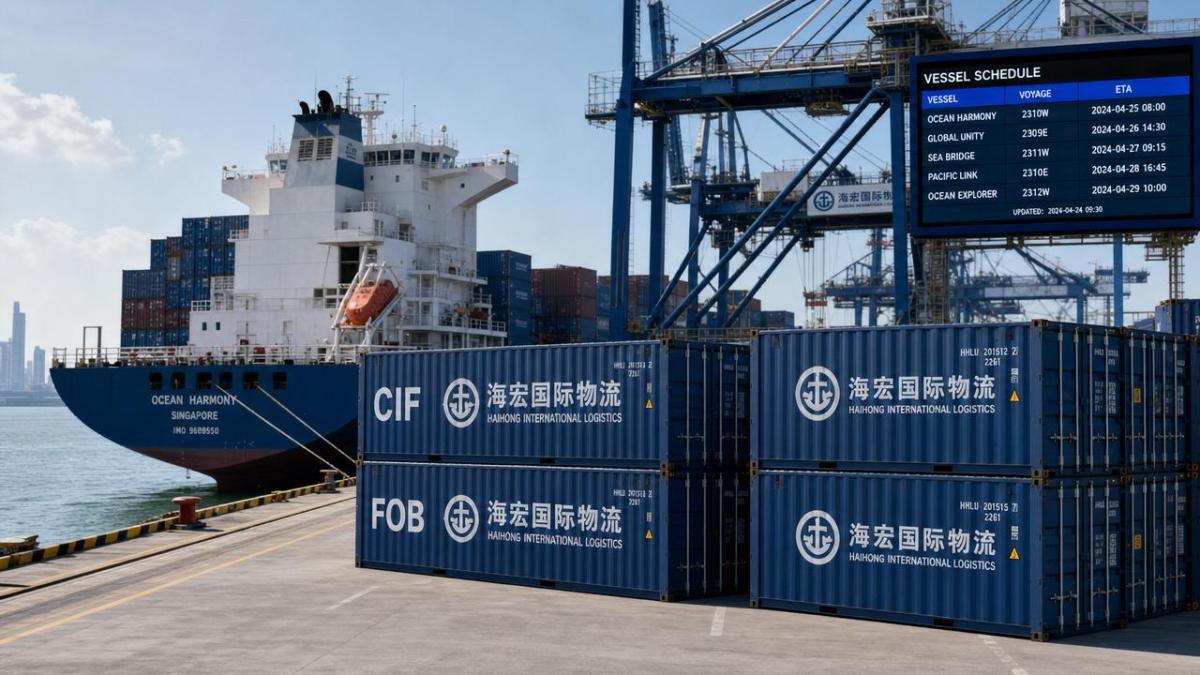
Article 93 of the newly revised Maritime Code of the People’s Republic of China, effective May 1, 2026, reassigns primary legal responsibility for uncollected cargo at the port of discharge from the consignee to the shipper. This replaces the prior regime under which liability attached first to the consignee upon arrival. The amendment is codified in the official revision promulgated by the Standing Committee of the National People’s Congress and published in the State Council Gazette (No. 2026–17).
Industries Affected
Direct Trading Enterprises: Exporters operating under FOB or CFR terms—especially those selling on open account or with extended payment terms—now bear upstream exposure to demurrage, storage fees, and potential cargo abandonment costs if overseas buyers fail to clear or collect shipments. This reshapes risk allocation in commercial contracts and increases pressure to formalize liability clauses, pre-arrival documentation protocols, and buyer credit vetting.
Raw Material Procurement Enterprises: Entities sourcing commodities or components via CIF or CIP arrangements may face cascading liability if their downstream contract partners (e.g., OEM manufacturers) delay pickup due to inventory constraints or demand shifts. Procurement teams must now verify whether supplier contracts incorporate updated force majeure or contingency clauses covering port-side non-collection—particularly where Chinese suppliers act as shippers under third-party export declarations.
Contract Manufacturing & Export-Oriented Manufacturers: Factories fulfilling orders for foreign brands often ship under the brand owner’s instructions but retain legal status as shipper on bills of lading. Under the new rule, they may be held liable—even when acting solely on behalf of the buyer—if documentation designates them as shipper and no contractual indemnity exists. This elevates the importance of precise bill-of-lading party designation and cross-border master service agreements.
Supply Chain Service Providers: Freight forwarders, customs brokers, and NVOCCs must reassess their role in cargo release workflows. While not legally liable as shippers, they face heightened operational scrutiny—and potential reputational or contractual exposure—if their systems fail to flag mismatched party responsibilities or delay transmission of arrival notices. Their standard terms of service now require explicit carve-outs regarding Article 93 liability boundaries.
Key Focus Areas and Recommended Actions
Review and revise Incoterms® usage in sales contracts
FOB and CFR users must explicitly allocate responsibility for post-discharge custody—including notice obligations, customs clearance timelines, and default consequences—in writing. Relying solely on Incoterms® definitions is no longer sufficient; supplementary clauses addressing Article 93 implications are strongly advised.
Strengthen pre-shipment coordination with overseas consignees
Exporters should implement mandatory pre-arrival confirmation protocols—e.g., requiring signed acknowledgment of estimated time of arrival (ETA), warehouse readiness, and import license validity—before releasing cargo to vessel operators. Digital tools supporting real-time consignee engagement (e.g., shared shipment dashboards) gain strategic relevance.
Update internal documentation and training for operations teams
Bill of lading issuance, shipping instruction forms, and export declaration templates must reflect accurate shipper/consignee/legal entity alignment. Staff responsible for documentation, compliance, and customer service require targeted training on Article 93’s practical application—not just theoretical scope.
Editorial Perspective / Industry Observation
Analysis shows this amendment reflects a broader regulatory pivot toward strengthening China’s export ecosystem’s legal predictability—not merely shifting burden. Observably, it incentivizes tighter integration between Chinese exporters and overseas distribution networks, pushing bilateral contract maturity beyond price and delivery terms into operational accountability frameworks. From an industry perspective, the change is better understood as a catalyst for supply chain digitization than a punitive measure: parties with robust track-and-trace, automated notice triggers, and documented handover evidence will absorb minimal incremental risk. Current more critical concern lies not in liability assignment per se, but in the asymmetry of awareness—many mid-tier overseas importers remain unfamiliar with the revision’s implications for their FOB-sourced inventory.
Conclusion
The entry into force of Article 93 does not signal a departure from international maritime norms—but rather a domestic calibration to align statutory liability with evolving global trade realities, especially in fragmented, multi-tiered supply chains. Its long-term significance lies less in immediate cost exposure and more in accelerating contractual discipline, documentation rigor, and cross-border operational transparency among China-linked trading partners.
Source Attribution
Official text: Maritime Code of the People’s Republic of China (2026 Revision), promulgated by Order No. 112 of the President of the PRC, effective May 1, 2026. Published in the State Council Gazette, Issue No. 2026–17.
Supplementary guidance pending from the Ministry of Transport and General Administration of Customs—these documents are under active drafting and warrant ongoing monitoring.
News Recommendations
 How to select laboratory instruments for reproducible test results
![51a6ab95581761cc26f4318be6520c15]()
Aris Katos
Future of Carbide Coatings
 When does a sheet metal prototype reveal design flaws early?
![51a6ab95581761cc26f4318be6520c15]()
Aris Katos
Future of Carbide Coatings
 When PE air column bags reduce damage in e-commerce fulfillment
![51a6ab95581761cc26f4318be6520c15]()
Aris Katos
Future of Carbide Coatings
 How energy-efficient design reduces operating costs in retail lighting
![51a6ab95581761cc26f4318be6520c15]()
Aris Katos
Future of Carbide Coatings
 When commercial aluminum storefronts make sense for a retail renovation
![51a6ab95581761cc26f4318be6520c15]()
Aris Katos
Future of Carbide Coatings
 What makes LED lights durable in high-use commercial spaces?
![51a6ab95581761cc26f4318be6520c15]()
Aris Katos
Future of Carbide Coatings
 Which industry categories offer the strongest export potential in Latin America?
![51a6ab95581761cc26f4318be6520c15]()
Aris Katos
Future of Carbide Coatings
 How to choose an ultra bright waterproof window display for storefronts
![51a6ab95581761cc26f4318be6520c15]()
Aris Katos
Future of Carbide Coatings
 How to verify suppliers on a trade portal for global sourcing
![51a6ab95581761cc26f4318be6520c15]()
Aris Katos
Future of Carbide Coatings
 How RoHS requirements should be stated in product specifications
![51a6ab95581761cc26f4318be6520c15]()
Aris Katos
Future of Carbide Coatings
 What affects the lead time for custom retail counter displays?
![51a6ab95581761cc26f4318be6520c15]()
Aris Katos
Future of Carbide Coatings
 What consumer packaging USA importers need to verify before ordering
![51a6ab95581761cc26f4318be6520c15]()
Aris Katos
Future of Carbide Coatings
 How commercial spaces interiors shape customer dwell time
![51a6ab95581761cc26f4318be6520c15]()
Aris Katos
Future of Carbide Coatings
 How LED commercial lighting design reduces glare in retail spaces
![51a6ab95581761cc26f4318be6520c15]()
Aris Katos
Future of Carbide Coatings
 How industrial technology information improves RFID inventory accuracy
![51a6ab95581761cc26f4318be6520c15]()
Aris Katos
Future of Carbide Coatings
 When drip garden watering systems make more sense than sprinklers
![51a6ab95581761cc26f4318be6520c15]()
Aris Katos
Future of Carbide Coatings
 When category comparison improves sourcing for industrial applications
![51a6ab95581761cc26f4318be6520c15]()
Aris Katos
Future of Carbide Coatings
 Industrial application guidance for selecting the right LED lighting
![51a6ab95581761cc26f4318be6520c15]()
Aris Katos
Future of Carbide Coatings
 Which commercial architecture standards apply to European retail fit-outs?
![51a6ab95581761cc26f4318be6520c15]()
Aris Katos
Future of Carbide Coatings
 How to verify FDA requirements for maternity care products
![51a6ab95581761cc26f4318be6520c15]()
Aris Katos
Future of Carbide Coatings
 How to verify BPA-free claims for food-contact products
![51a6ab95581761cc26f4318be6520c15]()
Aris Katos
Future of Carbide Coatings
 When does a European wholesale supplier suit modular office projects?
![51a6ab95581761cc26f4318be6520c15]()
Aris Katos
Future of Carbide Coatings
 When consumer ecosystem solutions improve the in-store shopping journey
![51a6ab95581761cc26f4318be6520c15]()
Aris Katos
Future of Carbide Coatings
 How a commercial developers network can reduce site selection risk
![51a6ab95581761cc26f4318be6520c15]()
Aris Katos
Future of Carbide Coatings
 How clear purchasing specifications prevent costly supplier deviations
![51a6ab95581761cc26f4318be6520c15]()
Aris Katos
Future of Carbide Coatings
 What an ISTA drop test lab checks before your packaging ships
![51a6ab95581761cc26f4318be6520c15]()
Aris Katos
Future of Carbide Coatings
 Which commercial furniture standards apply to workplace seating?
![51a6ab95581761cc26f4318be6520c15]()
Aris Katos
Future of Carbide Coatings
 How to evaluate smart lighting module OEM compatibility before sampling
![51a6ab95581761cc26f4318be6520c15]()
Aris Katos
Future of Carbide Coatings
 How to assess whether sustainable technology delivers real impact
![51a6ab95581761cc26f4318be6520c15]()
Aris Katos
Future of Carbide Coatings
 How to assess an OEM supplier’s quality control before ordering
![51a6ab95581761cc26f4318be6520c15]()
Aris Katos
Future of Carbide Coatings
 How consumer ecosystem solutions data can improve retail personalization
![51a6ab95581761cc26f4318be6520c15]()
Aris Katos
Future of Carbide Coatings
 When does consumer packaging design justify a higher product price?
![51a6ab95581761cc26f4318be6520c15]()
Aris Katos
Future of Carbide Coatings
 Supermarket Fixture Installation: Planning Layouts, Wiring, and Handover
![51a6ab95581761cc26f4318be6520c15]()
Aris Katos
Future of Carbide Coatings
 Automated Lighting and Smart Lighting Control in Bergerac: Key Project Considerations
![51a6ab95581761cc26f4318be6520c15]()
Aris Katos
Future of Carbide Coatings
 Segment Streetlight Controllers: Choosing Control Modes for Urban Roads
![51a6ab95581761cc26f4318be6520c15]()
Aris Katos
Future of Carbide Coatings
 IEC 62471-2 Explained: How to Assess Photobiological Risks in LED Lighting
![51a6ab95581761cc26f4318be6520c15]()
Aris Katos
Future of Carbide Coatings
 Food Grade Packaging Requirements by Product Type, Temperature, and Contact Risk
![51a6ab95581761cc26f4318be6520c15]()
Aris Katos
Future of Carbide Coatings
 Food Packaging Compliance Checklist: Tests, Records, and Labeling Before Shipment
![51a6ab95581761cc26f4318be6520c15]()
Aris Katos
Future of Carbide Coatings
 NSF Food Packaging Standards: When Certification Matters for Commercial Food Use
![51a6ab95581761cc26f4318be6520c15]()
Aris Katos
Future of Carbide Coatings