Frozen Food Packaging Solutions: Cost vs Shelf Protection
Time
Click Count
For procurement teams, choosing frozen food packaging solutions is a constant balance between unit cost, shelf protection, compliance, and brand performance.
The right packaging can reduce waste, preserve product integrity through cold-chain logistics, and support sustainability goals without inflating total sourcing costs.
This article explains how buyers can compare materials, structures, and total value so sourcing decisions are based on performance, risk, and long-term commercial impact.
What procurement teams really need from frozen food packaging solutions
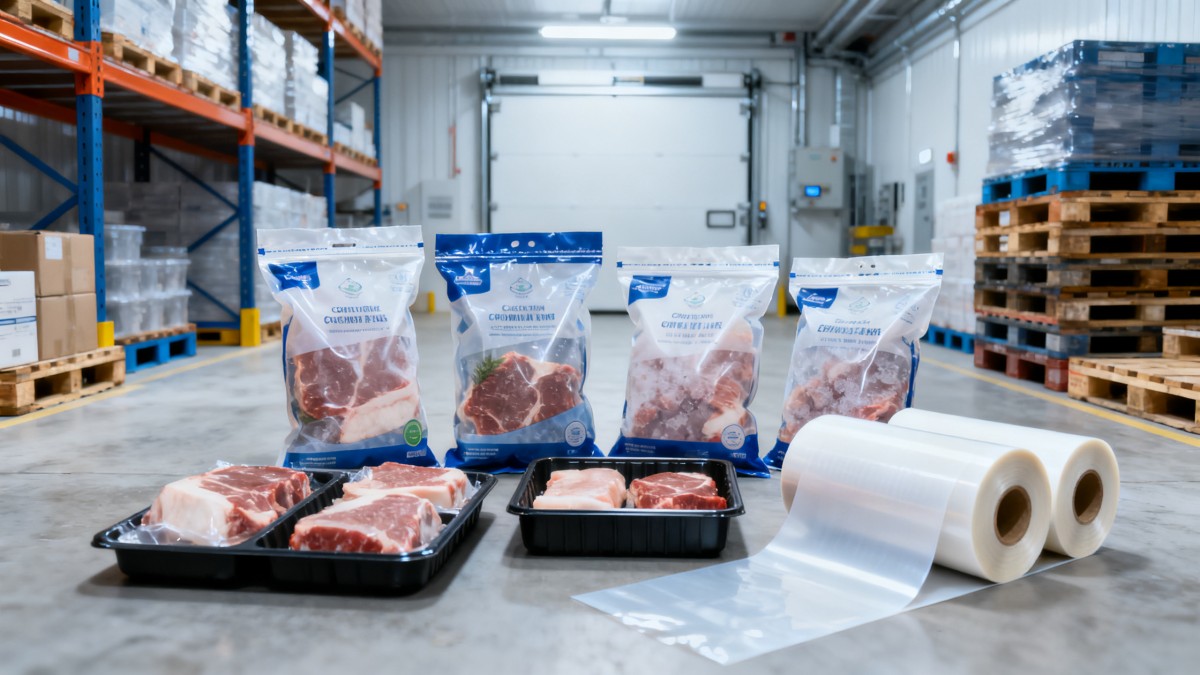
When buyers search for frozen food packaging solutions, they usually are not looking for generic packaging definitions or trend summaries.
They want to know which option protects products well enough to avoid losses, while still meeting target cost, compliance, and supplier stability requirements.
In practice, the best choice is rarely the cheapest format on a unit-price basis.
For frozen categories, weak packaging often creates hidden costs through product damage, freezer burn, seal failures, returns, and higher logistics claims.
That is why procurement should evaluate packaging through total landed cost and risk-adjusted performance, not only through piece price comparisons.
A low-cost pouch that fails in distribution can become more expensive than a slightly higher-cost structure with better seal integrity and moisture resistance.
For most buyers, the core decision comes down to four questions.
Will the packaging protect shelf life across the full cold chain, can it run efficiently on current filling lines, does it meet regulations, and is supplier quality dependable?
Why unit cost alone can mislead frozen packaging sourcing decisions
Frozen food packaging is exposed to low temperatures, condensation, abrasion, stacking pressure, and repeated handling from plant to warehouse to retail freezer.
Because of these stresses, packaging performance has a direct effect on waste rate, on-shelf appearance, and consumer satisfaction.
If procurement only compares quoted unit prices, it may ignore the cost impact of underperformance after shipment.
Typical hidden costs include film breakage, sealing inconsistency, punctures from product edges, label failure, and oxygen or moisture ingress during storage.
Each issue can reduce product shelf life or cause visual defects that make packages harder to sell.
For branded frozen foods, pack appearance matters almost as much as barrier protection.
Wrinkling, frost buildup, discoloration, and damaged print can weaken consumer trust even when the food inside remains technically safe.
Procurement teams therefore need to compare total ownership cost across sourcing scenarios.
This includes package price, freight efficiency, machine compatibility, spoilage rate, complaint rate, and the probability of emergency supplier substitution.
In many cases, a better-designed package reduces overall cost because it lowers failure frequency and improves line productivity.
Which packaging materials and formats offer the best balance of cost and shelf protection
There is no universal best material for all frozen food categories.
The right structure depends on product type, storage duration, fill process, retail environment, and brand positioning.
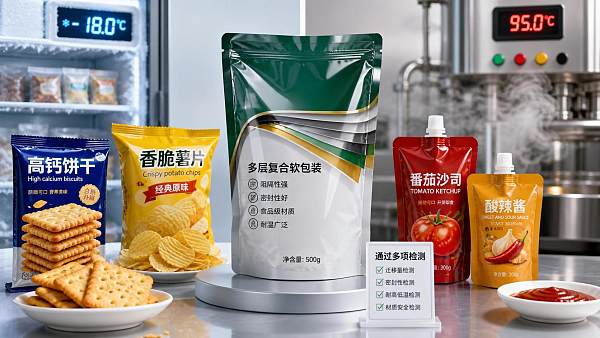
Flexible pouches and bags are often attractive because they use less material and ship efficiently.
They can work well for vegetables, fruits, seafood, and ready meals if the film structure delivers enough puncture resistance and seal strength.
Polyethylene-based structures are commonly used for toughness and sealability, while multilayer films add barrier and print performance.
Laminates can improve shelf protection, but they may also affect recyclability, cost, and sourcing complexity.
Cartons with inner liners are often used for premium presentation or product categories needing stronger shelf visibility.
They can support branding and stackability, but the inner bag still determines much of the actual moisture and oxygen protection.
Rigid trays or thermoformed containers are useful for frozen prepared meals and products requiring shape retention.
They improve presentation and handling, yet usually raise material and transport costs versus lighter flexible formats.
Vacuum packaging can extend protection for some proteins, but not every frozen product benefits enough to justify the extra processing and material expense.
For procurement, the key is to match material performance to product risk.
Sharp-edged seafood, oily foods, and long-storage items generally need stronger barrier or puncture resistance than low-risk short-cycle frozen products.
How to evaluate shelf protection without overbuying packaging performance
One common sourcing mistake is paying for advanced packaging features that the product does not actually need.
Another is under-specifying the package and creating avoidable losses later.
The practical solution is to define performance around real distribution conditions instead of abstract quality claims.
Buyers should start by mapping the full product journey.
That includes filling temperature, blast freezing conditions, warehouse dwell time, pallet configuration, export transit, retail freezer exposure, and expected consumer storage duration.
With that map, it becomes easier to test what matters most.
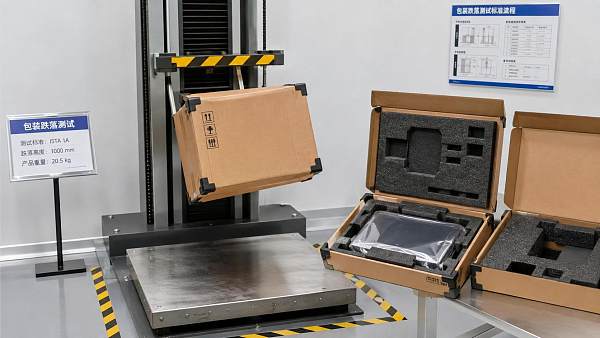
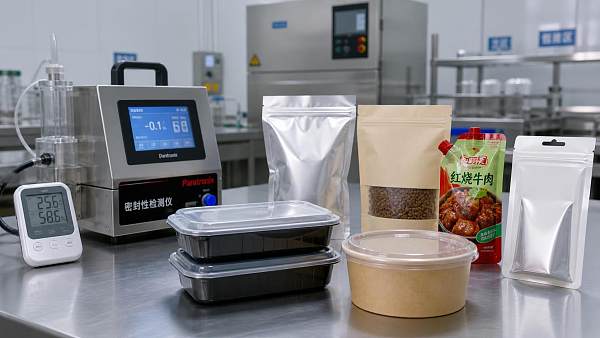
Critical metrics often include seal strength at low temperature, drop resistance, puncture resistance, oxygen transmission, moisture barrier, and print durability under condensation.
For products with long freezer residence, resistance to freezer burn is especially important because surface dehydration directly affects customer perception.
Procurement should also review how packaging performs after repeated handling.
Many failures do not appear in lab samples but emerge during pallet movement, carton opening, shelf replenishment, and consumer transport.
A structured trial should therefore include both laboratory testing and real-world logistics simulation.
This allows buyers to avoid paying for unnecessary high-barrier structures while still protecting the product where it is truly vulnerable.
What compliance and food safety checks buyers should not skip
For frozen food packaging solutions, compliance is not a side issue to be reviewed after price negotiation.
It is a sourcing gate that should be confirmed early.
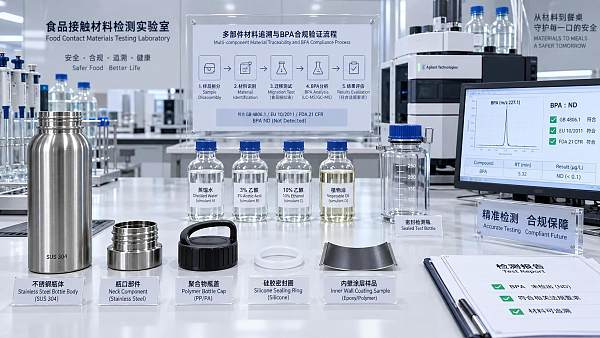
Buyers need documentation for food-contact compliance in the destination market, along with migration testing where applicable and material declarations from suppliers.
Depending on region and product, requirements may involve FDA, EU food-contact rules, or other national standards.
Procurement teams should also confirm whether inks, adhesives, and additives are appropriate for the intended use environment.
Cold conditions do not remove compliance risk, and multilayer structures can introduce documentation gaps if upstream suppliers are not well managed.
In addition, frozen packaging must maintain seal integrity and physical safety under production conditions.
That means auditing not just the material specification but the supplier's process control, traceability system, and change management discipline.
Unexpected resin substitutions, gauge variation, or sealing-layer inconsistency can create quality issues even when formal certificates are available.
For procurement professionals, a reliable document package should be paired with supplier verification, not treated as a substitute for it.
How packaging affects logistics, line efficiency, and total supply chain cost
Procurement decisions become stronger when packaging is evaluated beyond the material itself.
The same package can produce very different total costs depending on how it runs in production and moves through distribution.
For example, a lower-cost film that causes more sealing interruptions may reduce line efficiency and increase labor intervention.
That operational loss can quickly outweigh any nominal savings in packaging spend.
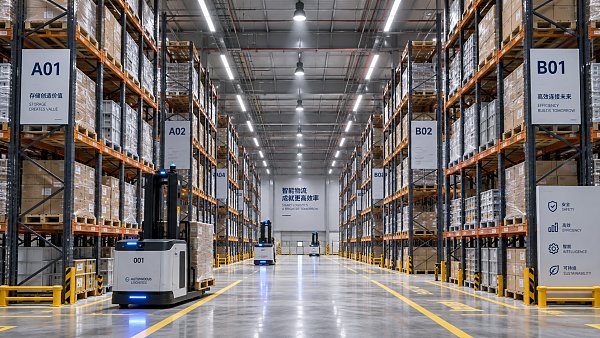
Case packing, pallet density, and cube utilization also matter.
Lighter flexible packaging may reduce freight cost, but only if it still protects the product during stacking and transport.
Rigid formats can protect shape-sensitive products better, yet they often reduce pallet efficiency and raise storage costs.
Procurement should therefore work with operations and logistics teams when comparing options.
Key questions include whether the package supports automation, whether dimensions optimize shipping, and whether outer-case requirements increase because primary packaging is weaker.
Another important factor is supply continuity.
A highly specialized material may perform well but create sourcing risk if qualified suppliers are limited or regional disruptions affect lead times.
Balanced frozen food packaging solutions should support resilience as well as shelf protection.
How to compare suppliers beyond the quotation sheet
Many suppliers can provide a competitive initial quote, but procurement value depends on repeatable performance over time.
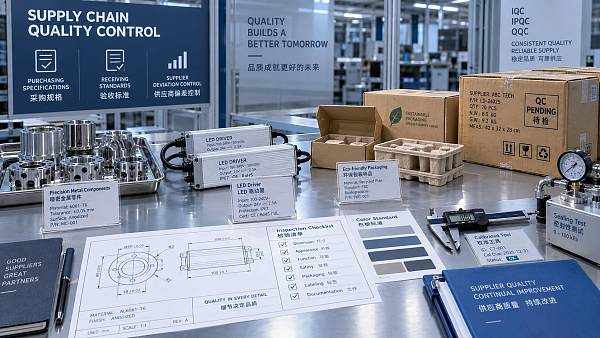
That is why supplier evaluation should include technical capability, quality systems, communication speed, and ability to support scale.
Buyers should ask whether the supplier has experience in frozen categories similar to their own product line.
Past performance in ambient snacks or dry goods does not automatically translate into cold-chain packaging expertise.
It is also useful to assess conversion capabilities such as lamination quality, printing consistency, sealing performance, and tolerance control.
Reliable frozen packaging requires stable execution at production scale, not just a successful sample run.
Supplier responsiveness matters as well.
When issues emerge, procurement needs timely root-cause analysis, corrective action, and transparent communication rather than delayed explanations.
Commercial terms should also be reviewed in context.
Minimum order quantities, tooling charges, lead times, inventory support, and forecasting flexibility all influence the real sourcing cost.
A slightly higher-priced supplier may still be the better choice if they reduce stock risk, improve fill-rate reliability, and support technical optimization.
How sustainability fits into the cost versus protection debate
Sustainability is increasingly part of frozen packaging sourcing, but it should be handled with commercial realism.
Procurement teams are often asked to reduce material use, improve recyclability, or incorporate lower-impact structures without compromising food protection.
In frozen applications, this balance can be difficult because product waste carries its own environmental burden.
If a lighter or simpler package leads to more spoilage, the sustainability result may actually become worse.
That is why buyers should evaluate environmental claims together with performance data.
Source reduction can be valuable where gauge optimization does not weaken seals or barrier protection.
Mono-material structures may improve recyclability in some markets, but they must still meet puncture, print, and freezer-performance requirements.
Procurement should also check whether sustainability claims are aligned with local infrastructure and customer expectations.
A package marketed as recyclable may offer limited practical benefit if collection systems in target regions are weak.
The most credible approach is to pursue measurable improvements that maintain product integrity and reduce total waste across the supply chain.
A practical procurement framework for choosing the right frozen packaging option
To make sourcing decisions easier, procurement teams can use a simple evaluation framework built around business impact.
First, define the product risk profile, including shelf-life needs, puncture exposure, moisture sensitivity, and distribution complexity.
Second, establish must-have compliance and documentation requirements before commercial negotiation begins.
Third, compare packaging options using total cost rather than unit price alone.
This should include material cost, conversion efficiency, freight effect, spoilage reduction, complaint risk, and expected supplier reliability.
Fourth, run controlled line trials and distribution testing with clear pass-fail criteria.
These trials should evaluate both technical performance and operational fit.
Fifth, review scalability and supply resilience.
Ask whether the supplier can support regional expansion, manage demand swings, and maintain quality consistency across production lots.
Finally, document trade-offs clearly for internal stakeholders.
Procurement often needs to align quality, operations, finance, and sustainability teams around one decision.
A structured comparison helps shift the discussion from opinion to evidence.
Conclusion: the best frozen food packaging solutions protect margin, not just product
For procurement professionals, the cost versus shelf protection debate is really a margin protection decision.
The right frozen food packaging solutions preserve product quality, support efficient operations, reduce risk, and strengthen brand performance across the cold chain.
Cheapest is not always lowest cost, and premium is not always best value.
The strongest sourcing decisions come from matching packaging performance to actual product and distribution needs, then validating that choice through testing and supplier review.
When buyers evaluate materials, compliance, logistics, and supplier capability together, packaging becomes a strategic lever rather than a commodity purchase.
That approach delivers better shelf protection, clearer commercial justification, and more resilient sourcing outcomes in a demanding global frozen food market.
News Recommendations
 How to select laboratory instruments for reproducible test results
![51a6ab95581761cc26f4318be6520c15]()
Aris Katos
Future of Carbide Coatings
 When does a sheet metal prototype reveal design flaws early?
![51a6ab95581761cc26f4318be6520c15]()
Aris Katos
Future of Carbide Coatings
 When PE air column bags reduce damage in e-commerce fulfillment
![51a6ab95581761cc26f4318be6520c15]()
Aris Katos
Future of Carbide Coatings
 How energy-efficient design reduces operating costs in retail lighting
![51a6ab95581761cc26f4318be6520c15]()
Aris Katos
Future of Carbide Coatings
 When commercial aluminum storefronts make sense for a retail renovation
![51a6ab95581761cc26f4318be6520c15]()
Aris Katos
Future of Carbide Coatings
 What makes LED lights durable in high-use commercial spaces?
![51a6ab95581761cc26f4318be6520c15]()
Aris Katos
Future of Carbide Coatings
 Which industry categories offer the strongest export potential in Latin America?
![51a6ab95581761cc26f4318be6520c15]()
Aris Katos
Future of Carbide Coatings
 How to choose an ultra bright waterproof window display for storefronts
![51a6ab95581761cc26f4318be6520c15]()
Aris Katos
Future of Carbide Coatings
 How to verify suppliers on a trade portal for global sourcing
![51a6ab95581761cc26f4318be6520c15]()
Aris Katos
Future of Carbide Coatings
 How RoHS requirements should be stated in product specifications
![51a6ab95581761cc26f4318be6520c15]()
Aris Katos
Future of Carbide Coatings
 What affects the lead time for custom retail counter displays?
![51a6ab95581761cc26f4318be6520c15]()
Aris Katos
Future of Carbide Coatings
 What consumer packaging USA importers need to verify before ordering
![51a6ab95581761cc26f4318be6520c15]()
Aris Katos
Future of Carbide Coatings
 How commercial spaces interiors shape customer dwell time
![51a6ab95581761cc26f4318be6520c15]()
Aris Katos
Future of Carbide Coatings
 How LED commercial lighting design reduces glare in retail spaces
![51a6ab95581761cc26f4318be6520c15]()
Aris Katos
Future of Carbide Coatings
 How industrial technology information improves RFID inventory accuracy
![51a6ab95581761cc26f4318be6520c15]()
Aris Katos
Future of Carbide Coatings
 When drip garden watering systems make more sense than sprinklers
![51a6ab95581761cc26f4318be6520c15]()
Aris Katos
Future of Carbide Coatings
 When category comparison improves sourcing for industrial applications
![51a6ab95581761cc26f4318be6520c15]()
Aris Katos
Future of Carbide Coatings
 Industrial application guidance for selecting the right LED lighting
![51a6ab95581761cc26f4318be6520c15]()
Aris Katos
Future of Carbide Coatings
 Which commercial architecture standards apply to European retail fit-outs?
![51a6ab95581761cc26f4318be6520c15]()
Aris Katos
Future of Carbide Coatings
 How to verify FDA requirements for maternity care products
![51a6ab95581761cc26f4318be6520c15]()
Aris Katos
Future of Carbide Coatings
 How to verify BPA-free claims for food-contact products
![51a6ab95581761cc26f4318be6520c15]()
Aris Katos
Future of Carbide Coatings
 When does a European wholesale supplier suit modular office projects?
![51a6ab95581761cc26f4318be6520c15]()
Aris Katos
Future of Carbide Coatings
 When consumer ecosystem solutions improve the in-store shopping journey
![51a6ab95581761cc26f4318be6520c15]()
Aris Katos
Future of Carbide Coatings
 How a commercial developers network can reduce site selection risk
![51a6ab95581761cc26f4318be6520c15]()
Aris Katos
Future of Carbide Coatings
 How clear purchasing specifications prevent costly supplier deviations
![51a6ab95581761cc26f4318be6520c15]()
Aris Katos
Future of Carbide Coatings
 What an ISTA drop test lab checks before your packaging ships
![51a6ab95581761cc26f4318be6520c15]()
Aris Katos
Future of Carbide Coatings
 Which commercial furniture standards apply to workplace seating?
![51a6ab95581761cc26f4318be6520c15]()
Aris Katos
Future of Carbide Coatings
 How to evaluate smart lighting module OEM compatibility before sampling
![51a6ab95581761cc26f4318be6520c15]()
Aris Katos
Future of Carbide Coatings
 How to assess whether sustainable technology delivers real impact
![51a6ab95581761cc26f4318be6520c15]()
Aris Katos
Future of Carbide Coatings
 How to assess an OEM supplier’s quality control before ordering
![51a6ab95581761cc26f4318be6520c15]()
Aris Katos
Future of Carbide Coatings
 How consumer ecosystem solutions data can improve retail personalization
![51a6ab95581761cc26f4318be6520c15]()
Aris Katos
Future of Carbide Coatings
 When does consumer packaging design justify a higher product price?
![51a6ab95581761cc26f4318be6520c15]()
Aris Katos
Future of Carbide Coatings
 Supermarket Fixture Installation: Planning Layouts, Wiring, and Handover
![51a6ab95581761cc26f4318be6520c15]()
Aris Katos
Future of Carbide Coatings
 Automated Lighting and Smart Lighting Control in Bergerac: Key Project Considerations
![51a6ab95581761cc26f4318be6520c15]()
Aris Katos
Future of Carbide Coatings
 Segment Streetlight Controllers: Choosing Control Modes for Urban Roads
![51a6ab95581761cc26f4318be6520c15]()
Aris Katos
Future of Carbide Coatings
 IEC 62471-2 Explained: How to Assess Photobiological Risks in LED Lighting
![51a6ab95581761cc26f4318be6520c15]()
Aris Katos
Future of Carbide Coatings
 Food Grade Packaging Requirements by Product Type, Temperature, and Contact Risk
![51a6ab95581761cc26f4318be6520c15]()
Aris Katos
Future of Carbide Coatings
 Food Packaging Compliance Checklist: Tests, Records, and Labeling Before Shipment
![51a6ab95581761cc26f4318be6520c15]()
Aris Katos
Future of Carbide Coatings
 NSF Food Packaging Standards: When Certification Matters for Commercial Food Use
![51a6ab95581761cc26f4318be6520c15]()
Aris Katos
Future of Carbide Coatings