Commercial Lighting Standards for Safer Project Specs
Time
Click Count
For project managers and engineering leads, commercial lighting standards are more than a compliance checklist—they shape safety, performance, energy efficiency, and long-term project value.
From specification planning to supplier evaluation, the right framework reduces risk, aligns technical expectations, and supports dependable commercial environments.
Across retail, office, hospitality, healthcare, and mixed-use projects, commercial lighting standards influence fixture quality, emergency readiness, visual comfort, and maintenance outcomes.
They also connect design intent with procurement discipline, especially when projects involve global sourcing, sustainability targets, and digital building systems.
Understanding Commercial Lighting Standards
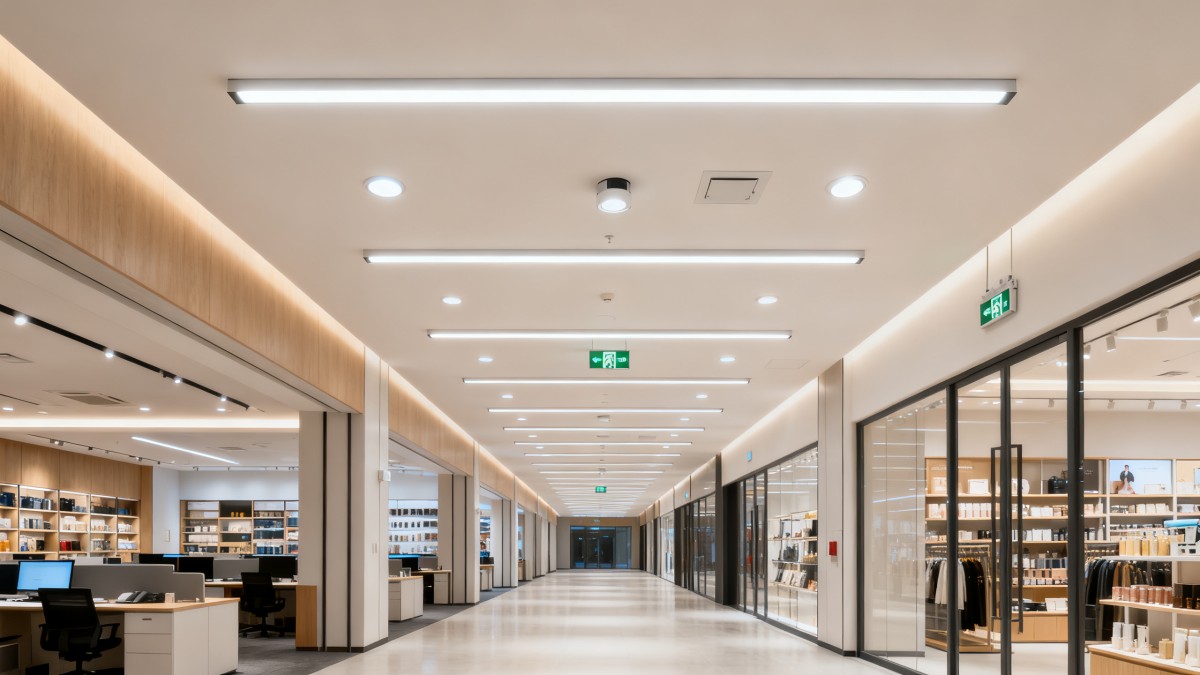
Commercial lighting standards are technical benchmarks that define how luminaires, controls, and related components should perform in real operating conditions.
They cover electrical safety, photometric consistency, ingress protection, fire considerations, energy efficiency, electromagnetic compatibility, and environmental claims.
Well-known references include UL, CE, IEC, EN, DLC, ENERGY STAR, IP ratings, and regional building or energy codes.
In practical terms, commercial lighting standards help confirm whether a lighting product can be installed, operated, and maintained with predictable results.
They are not all equal.
Some standards are mandatory for market access.
Others are voluntary but influential in performance benchmarking and specification quality.
Core dimensions commonly covered
- Electrical safety and insulation integrity
- Light output, efficacy, and color consistency
- Driver reliability and thermal management
- Emergency lighting compatibility
- Controls interoperability and dimming behavior
- Environmental resilience, including dust and moisture resistance
Industry Context and Current Attention Areas
The role of commercial lighting standards has expanded as commercial spaces become more connected, branded, and operationally data-driven.
A fixture now affects not only illumination, but also sensor integration, energy analytics, occupant comfort, and carbon reporting.
This broader impact explains why standards review is moving earlier into project planning.
In this environment, commercial lighting standards support both technical due diligence and long-term asset resilience.
Why Commercial Lighting Standards Matter in Project Specifications
A project specification is only as reliable as the standards behind it.
Without clear references, teams may compare products with inconsistent testing methods or incomplete compliance documentation.
That creates risk during submittals, inspections, installation, and final commissioning.
Key business value
- Improves safety by filtering out poorly validated fixtures and drivers
- Supports accurate bid comparison across brands and sourcing regions
- Reduces change orders linked to certification gaps or field failures
- Strengthens energy code compliance and operational efficiency
- Helps preserve design quality through stable color, glare, and output performance
For complex portfolios, commercial lighting standards also create a repeatable specification language across regions and project types.
That consistency is valuable when space concepts are rolled out across multiple stores, offices, or service environments.
Typical Standards by Application Category
Different environments prioritize different performance risks.
The table below shows how commercial lighting standards are often interpreted in common commercial settings.
These categories show why commercial lighting standards should be selected according to application realities, not only catalog appearance or nominal wattage.
Practical Review Points for Supplier and Product Evaluation
A strong review process turns commercial lighting standards into measurable decision criteria.
This is especially important when fixture families are customized, rebranded, or sourced through multiple channels.
Recommended checkpoints
- Verify certificates through recognized databases where available.
- Match test reports to the exact model, driver, optics, and voltage version.
- Confirm whether the listed standard is mandatory or voluntary in the target market.
- Review lumen maintenance, color shift, and thermal test conditions.
- Check control compatibility, including dimming curves and protocol support.
- Assess warranty language against expected operating hours and ambient temperature.
Commercial lighting standards are most useful when supported by traceable documentation rather than broad marketing claims.
That approach helps avoid substitutions that appear equivalent but perform differently in service.
Implementation Considerations and Common Pitfalls
Even compliant products can underperform if project assumptions are incomplete.
Commercial lighting standards should therefore be integrated with installation details, maintenance access, and controls commissioning plans.
Frequent issues to watch
- Using indoor-rated fixtures in semi-exposed environments
- Overlooking local emergency egress requirements
- Assuming all CE markings indicate identical test depth
- Ignoring flicker, glare, or color tolerance in occupant-facing spaces
- Approving alternates without revisiting controls and thermal conditions
The best results usually come from aligning lighting schedules, submittal requirements, and commissioning checklists around the same standards framework.
That alignment reduces interpretation gaps between design, engineering, and site execution.
A Structured Next Step for Better Specification Quality
Commercial lighting standards should be treated as a strategic project tool, not a late-stage approval task.
A practical next step is to build a standards matrix for each lighting package before tender release.
This matrix can map required certifications, target performance, control compatibility, and application conditions for every fixture type.
For organizations managing international sourcing or multi-site programs, technical benchmarking platforms such as G-BCE can support this process with cross-sector reference logic.
By linking commercial lighting standards with verified product data, teams can improve specification clarity, reduce compliance uncertainty, and deliver safer commercial spaces with stronger long-term value.
News Recommendations
 How to select laboratory instruments for reproducible test results
![51a6ab95581761cc26f4318be6520c15]()
Aris Katos
Future of Carbide Coatings
 When does a sheet metal prototype reveal design flaws early?
![51a6ab95581761cc26f4318be6520c15]()
Aris Katos
Future of Carbide Coatings
 When PE air column bags reduce damage in e-commerce fulfillment
![51a6ab95581761cc26f4318be6520c15]()
Aris Katos
Future of Carbide Coatings
 How energy-efficient design reduces operating costs in retail lighting
![51a6ab95581761cc26f4318be6520c15]()
Aris Katos
Future of Carbide Coatings
 When commercial aluminum storefronts make sense for a retail renovation
![51a6ab95581761cc26f4318be6520c15]()
Aris Katos
Future of Carbide Coatings
 What makes LED lights durable in high-use commercial spaces?
![51a6ab95581761cc26f4318be6520c15]()
Aris Katos
Future of Carbide Coatings
 Which industry categories offer the strongest export potential in Latin America?
![51a6ab95581761cc26f4318be6520c15]()
Aris Katos
Future of Carbide Coatings
 How to choose an ultra bright waterproof window display for storefronts
![51a6ab95581761cc26f4318be6520c15]()
Aris Katos
Future of Carbide Coatings
 How to verify suppliers on a trade portal for global sourcing
![51a6ab95581761cc26f4318be6520c15]()
Aris Katos
Future of Carbide Coatings
 How RoHS requirements should be stated in product specifications
![51a6ab95581761cc26f4318be6520c15]()
Aris Katos
Future of Carbide Coatings
 What affects the lead time for custom retail counter displays?
![51a6ab95581761cc26f4318be6520c15]()
Aris Katos
Future of Carbide Coatings
 What consumer packaging USA importers need to verify before ordering
![51a6ab95581761cc26f4318be6520c15]()
Aris Katos
Future of Carbide Coatings
 How commercial spaces interiors shape customer dwell time
![51a6ab95581761cc26f4318be6520c15]()
Aris Katos
Future of Carbide Coatings
 How LED commercial lighting design reduces glare in retail spaces
![51a6ab95581761cc26f4318be6520c15]()
Aris Katos
Future of Carbide Coatings
 How industrial technology information improves RFID inventory accuracy
![51a6ab95581761cc26f4318be6520c15]()
Aris Katos
Future of Carbide Coatings
 When drip garden watering systems make more sense than sprinklers
![51a6ab95581761cc26f4318be6520c15]()
Aris Katos
Future of Carbide Coatings
 When category comparison improves sourcing for industrial applications
![51a6ab95581761cc26f4318be6520c15]()
Aris Katos
Future of Carbide Coatings
 Industrial application guidance for selecting the right LED lighting
![51a6ab95581761cc26f4318be6520c15]()
Aris Katos
Future of Carbide Coatings
 Which commercial architecture standards apply to European retail fit-outs?
![51a6ab95581761cc26f4318be6520c15]()
Aris Katos
Future of Carbide Coatings
 How to verify FDA requirements for maternity care products
![51a6ab95581761cc26f4318be6520c15]()
Aris Katos
Future of Carbide Coatings
 How to verify BPA-free claims for food-contact products
![51a6ab95581761cc26f4318be6520c15]()
Aris Katos
Future of Carbide Coatings
 When does a European wholesale supplier suit modular office projects?
![51a6ab95581761cc26f4318be6520c15]()
Aris Katos
Future of Carbide Coatings
 When consumer ecosystem solutions improve the in-store shopping journey
![51a6ab95581761cc26f4318be6520c15]()
Aris Katos
Future of Carbide Coatings
 How a commercial developers network can reduce site selection risk
![51a6ab95581761cc26f4318be6520c15]()
Aris Katos
Future of Carbide Coatings
 How clear purchasing specifications prevent costly supplier deviations
![51a6ab95581761cc26f4318be6520c15]()
Aris Katos
Future of Carbide Coatings
 What an ISTA drop test lab checks before your packaging ships
![51a6ab95581761cc26f4318be6520c15]()
Aris Katos
Future of Carbide Coatings
 Which commercial furniture standards apply to workplace seating?
![51a6ab95581761cc26f4318be6520c15]()
Aris Katos
Future of Carbide Coatings
 How to evaluate smart lighting module OEM compatibility before sampling
![51a6ab95581761cc26f4318be6520c15]()
Aris Katos
Future of Carbide Coatings
 How to assess whether sustainable technology delivers real impact
![51a6ab95581761cc26f4318be6520c15]()
Aris Katos
Future of Carbide Coatings
 How to assess an OEM supplier’s quality control before ordering
![51a6ab95581761cc26f4318be6520c15]()
Aris Katos
Future of Carbide Coatings
 How consumer ecosystem solutions data can improve retail personalization
![51a6ab95581761cc26f4318be6520c15]()
Aris Katos
Future of Carbide Coatings
 When does consumer packaging design justify a higher product price?
![51a6ab95581761cc26f4318be6520c15]()
Aris Katos
Future of Carbide Coatings
 Supermarket Fixture Installation: Planning Layouts, Wiring, and Handover
![51a6ab95581761cc26f4318be6520c15]()
Aris Katos
Future of Carbide Coatings
 Automated Lighting and Smart Lighting Control in Bergerac: Key Project Considerations
![51a6ab95581761cc26f4318be6520c15]()
Aris Katos
Future of Carbide Coatings
 Segment Streetlight Controllers: Choosing Control Modes for Urban Roads
![51a6ab95581761cc26f4318be6520c15]()
Aris Katos
Future of Carbide Coatings
 IEC 62471-2 Explained: How to Assess Photobiological Risks in LED Lighting
![51a6ab95581761cc26f4318be6520c15]()
Aris Katos
Future of Carbide Coatings
 Food Grade Packaging Requirements by Product Type, Temperature, and Contact Risk
![51a6ab95581761cc26f4318be6520c15]()
Aris Katos
Future of Carbide Coatings
 Food Packaging Compliance Checklist: Tests, Records, and Labeling Before Shipment
![51a6ab95581761cc26f4318be6520c15]()
Aris Katos
Future of Carbide Coatings
 NSF Food Packaging Standards: When Certification Matters for Commercial Food Use
![51a6ab95581761cc26f4318be6520c15]()
Aris Katos
Future of Carbide Coatings