Australia's New Proton-Conducting Membrane Accelerates Fuel Cell Commercialization
Time
Click Count
Australia’s breakthrough in proton-conducting membrane technology—announced on 21 May 2026 by Monash University—signals a tangible inflection point for global fuel cell deployment, particularly in off-grid, modular, and low-infrastructure power applications. The development directly addresses longstanding thermal and hydration constraints that have impeded commercial scalability in hospitality, architectural lighting, and self-service terminal sectors—areas where Chinese hydrogen system integrators and power module suppliers are increasingly active.
Event Overview
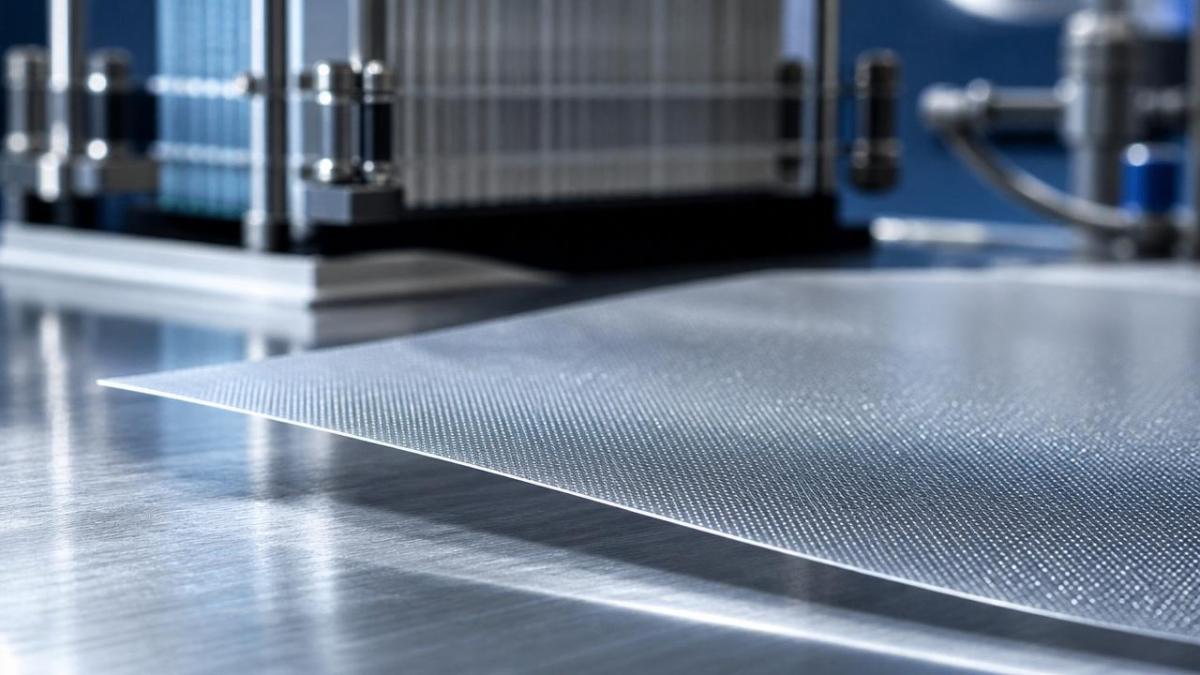
On 21 May 2026, Monash University announced the successful development of a water-free, ultra-thin proton-conducting membrane capable of stable, high-efficiency operation between 80–120°C. The membrane does not require humidification systems or complex water management, enabling simplified stack design and improved thermal resilience.
Industries Affected
Direct Trading Enterprises
Export-oriented trading firms specializing in hydrogen power systems face immediate recalibration of product positioning. With this membrane enabling higher-temperature operation, legacy PEMFC (proton exchange membrane fuel cell) systems certified for
Raw Material Procurement Enterprises
Suppliers sourcing perfluorosulfonic acid (PFSA) polymers, platinum-group metal catalysts, and gas diffusion layers must now assess compatibility with high-temperature, low-humidity operating envelopes. Observably, demand may shift toward thermally stabilized PFSA variants and non-humidified catalyst supports—prompting early engagement with upstream polymer chemists and ceramic coating providers. Price volatility in specialty fluoropolymers could rise as adoption scales.
Manufacturing Enterprises
Chinese manufacturers producing hydrogen-powered hospitality furniture, architectural LED drivers, and POS kiosk power units stand to gain first-mover advantage—if they rapidly adapt thermal interface designs and control firmware for wider temperature windows. The membrane’s thinness and dry-operation capability reduce cooling subsystem weight and volume, but require tighter tolerances in membrane electrode assembly (MEA) lamination and sealing. Manufacturing impact centers on process validation, not just component substitution.
Supply Chain Service Providers
Logistics and certification service providers supporting cross-border hydrogen equipment exports will encounter new technical annexes in IEC 62282-2 and AS/NZS 5139 updates—particularly around dry-start performance, thermal cycling durability, and non-humidified safety validation. Certification lead times may extend temporarily as test labs calibrate protocols; meanwhile, warehousing providers must review ambient temperature thresholds for pre-assembled fuel cell modules.
Key Focus Areas and Recommended Actions
Evaluate Thermal Management Architecture Compatibility
Assess whether existing heat sink designs, phase-change materials, and fan control logic can sustain stable operation across 80–120°C without derating. Prioritize lab validation using simulated load profiles from hospitality furniture (intermittent 2–5 kW) and kiosk use cases (peak 1.2 kW, 95% duty cycle).
Engage Early with Membrane Licensing or Co-Development Pathways
Monash University has indicated willingness to license the core IP to industrial partners meeting specific scale and localization criteria. Chinese manufacturers should initiate technical due diligence before Q3 2026 to align with 2027 product roadmap cycles—and avoid reliance on third-party integrators who may lock in exclusive regional terms.
Update Product Compliance Documentation for Target Markets
Prepare supplementary test reports covering dry-start success rate (>99.8% over 500 cycles), CO tolerance at >100°C, and thermal shock resistance (−20°C to 120°C in
Editorial Perspective / Industry Observation
This is not merely an incremental material improvement—it represents a paradigm shift in PEMFC system architecture. Analysis shows the elimination of humidification subsystems reduces BOP (balance-of-plant) part count by ~35% and cuts parasitic losses by up to 22%. However, it also raises new failure modes: long-term creep deformation under thermal cycling, and interfacial delamination at high-temperature interfaces. From an industry perspective, the real bottleneck is no longer membrane conductivity—but thermal interface reliability and automated MEA manufacturing yield at sub-5μm thicknesses. Current more critical challenge lies in scaling reproducible lamination processes—not in fundamental chemistry.
Conclusion
The Monash breakthrough lowers the technical barrier to deploying fuel cells in distributed, non-stationary, and climate-variable environments. It does not replace battery-dominant applications, but rather carves out a distinct niche: continuous, quiet, zero-emission power where grid access is unreliable or costly, and refueling logistics favor gaseous hydrogen over liquid fuels. For China’s hydrogen supply chain, this is less about competing on cost—and more about demonstrating rapid integration agility, thermal design maturity, and certification responsiveness.
Source Attribution
Official announcement: Monash University Media Release, 21 May 2026 (Ref: MU-ENG-PR-2026-0521). Technical details published in Nature Energy, Advance Online Publication, DOI: 10.1038/s41560-026-00842-w (pending final issue pagination). Regulatory implications remain under review by the International Electrotechnical Commission (IEC) Working Group 22 and the Australian Hydrogen Standards Committee—further updates expected by Q4 2026.
News Recommendations
 How to select laboratory instruments for reproducible test results
![51a6ab95581761cc26f4318be6520c15]()
Aris Katos
Future of Carbide Coatings
 When does a sheet metal prototype reveal design flaws early?
![51a6ab95581761cc26f4318be6520c15]()
Aris Katos
Future of Carbide Coatings
 When PE air column bags reduce damage in e-commerce fulfillment
![51a6ab95581761cc26f4318be6520c15]()
Aris Katos
Future of Carbide Coatings
 How energy-efficient design reduces operating costs in retail lighting
![51a6ab95581761cc26f4318be6520c15]()
Aris Katos
Future of Carbide Coatings
 When commercial aluminum storefronts make sense for a retail renovation
![51a6ab95581761cc26f4318be6520c15]()
Aris Katos
Future of Carbide Coatings
 What makes LED lights durable in high-use commercial spaces?
![51a6ab95581761cc26f4318be6520c15]()
Aris Katos
Future of Carbide Coatings
 Which industry categories offer the strongest export potential in Latin America?
![51a6ab95581761cc26f4318be6520c15]()
Aris Katos
Future of Carbide Coatings
 How to choose an ultra bright waterproof window display for storefronts
![51a6ab95581761cc26f4318be6520c15]()
Aris Katos
Future of Carbide Coatings
 How to verify suppliers on a trade portal for global sourcing
![51a6ab95581761cc26f4318be6520c15]()
Aris Katos
Future of Carbide Coatings
 How RoHS requirements should be stated in product specifications
![51a6ab95581761cc26f4318be6520c15]()
Aris Katos
Future of Carbide Coatings
 What affects the lead time for custom retail counter displays?
![51a6ab95581761cc26f4318be6520c15]()
Aris Katos
Future of Carbide Coatings
 What consumer packaging USA importers need to verify before ordering
![51a6ab95581761cc26f4318be6520c15]()
Aris Katos
Future of Carbide Coatings
 How commercial spaces interiors shape customer dwell time
![51a6ab95581761cc26f4318be6520c15]()
Aris Katos
Future of Carbide Coatings
 How LED commercial lighting design reduces glare in retail spaces
![51a6ab95581761cc26f4318be6520c15]()
Aris Katos
Future of Carbide Coatings
 How industrial technology information improves RFID inventory accuracy
![51a6ab95581761cc26f4318be6520c15]()
Aris Katos
Future of Carbide Coatings
 When drip garden watering systems make more sense than sprinklers
![51a6ab95581761cc26f4318be6520c15]()
Aris Katos
Future of Carbide Coatings
 When category comparison improves sourcing for industrial applications
![51a6ab95581761cc26f4318be6520c15]()
Aris Katos
Future of Carbide Coatings
 Industrial application guidance for selecting the right LED lighting
![51a6ab95581761cc26f4318be6520c15]()
Aris Katos
Future of Carbide Coatings
 Which commercial architecture standards apply to European retail fit-outs?
![51a6ab95581761cc26f4318be6520c15]()
Aris Katos
Future of Carbide Coatings
 How to verify FDA requirements for maternity care products
![51a6ab95581761cc26f4318be6520c15]()
Aris Katos
Future of Carbide Coatings
 How to verify BPA-free claims for food-contact products
![51a6ab95581761cc26f4318be6520c15]()
Aris Katos
Future of Carbide Coatings
 When does a European wholesale supplier suit modular office projects?
![51a6ab95581761cc26f4318be6520c15]()
Aris Katos
Future of Carbide Coatings
 When consumer ecosystem solutions improve the in-store shopping journey
![51a6ab95581761cc26f4318be6520c15]()
Aris Katos
Future of Carbide Coatings
 How a commercial developers network can reduce site selection risk
![51a6ab95581761cc26f4318be6520c15]()
Aris Katos
Future of Carbide Coatings
 How clear purchasing specifications prevent costly supplier deviations
![51a6ab95581761cc26f4318be6520c15]()
Aris Katos
Future of Carbide Coatings
 What an ISTA drop test lab checks before your packaging ships
![51a6ab95581761cc26f4318be6520c15]()
Aris Katos
Future of Carbide Coatings
 Which commercial furniture standards apply to workplace seating?
![51a6ab95581761cc26f4318be6520c15]()
Aris Katos
Future of Carbide Coatings
 How to evaluate smart lighting module OEM compatibility before sampling
![51a6ab95581761cc26f4318be6520c15]()
Aris Katos
Future of Carbide Coatings
 How to assess whether sustainable technology delivers real impact
![51a6ab95581761cc26f4318be6520c15]()
Aris Katos
Future of Carbide Coatings
 How to assess an OEM supplier’s quality control before ordering
![51a6ab95581761cc26f4318be6520c15]()
Aris Katos
Future of Carbide Coatings
 How consumer ecosystem solutions data can improve retail personalization
![51a6ab95581761cc26f4318be6520c15]()
Aris Katos
Future of Carbide Coatings
 When does consumer packaging design justify a higher product price?
![51a6ab95581761cc26f4318be6520c15]()
Aris Katos
Future of Carbide Coatings
 Supermarket Fixture Installation: Planning Layouts, Wiring, and Handover
![51a6ab95581761cc26f4318be6520c15]()
Aris Katos
Future of Carbide Coatings
 Automated Lighting and Smart Lighting Control in Bergerac: Key Project Considerations
![51a6ab95581761cc26f4318be6520c15]()
Aris Katos
Future of Carbide Coatings
 Segment Streetlight Controllers: Choosing Control Modes for Urban Roads
![51a6ab95581761cc26f4318be6520c15]()
Aris Katos
Future of Carbide Coatings
 IEC 62471-2 Explained: How to Assess Photobiological Risks in LED Lighting
![51a6ab95581761cc26f4318be6520c15]()
Aris Katos
Future of Carbide Coatings
 Food Grade Packaging Requirements by Product Type, Temperature, and Contact Risk
![51a6ab95581761cc26f4318be6520c15]()
Aris Katos
Future of Carbide Coatings
 Food Packaging Compliance Checklist: Tests, Records, and Labeling Before Shipment
![51a6ab95581761cc26f4318be6520c15]()
Aris Katos
Future of Carbide Coatings
 NSF Food Packaging Standards: When Certification Matters for Commercial Food Use
![51a6ab95581761cc26f4318be6520c15]()
Aris Katos
Future of Carbide Coatings