Second China-UK Export Control Working Group Meeting Held in London
Time
Click Count
On May 18, 2026, the second China–UK Export Control Working Group meeting took place in London. The session yielded preliminary consensus on harmonizing control lists for AI chips, high-end sensors, and commercial cryptographic modules — items directly relevant to POS & self-service kiosks, smart lighting controls, and inventory RFID systems with AI-enabled edge computing capabilities. This development signals a potential reduction in customs delays for UK distributors caused by misclassification of dual-use items.
Event Overview
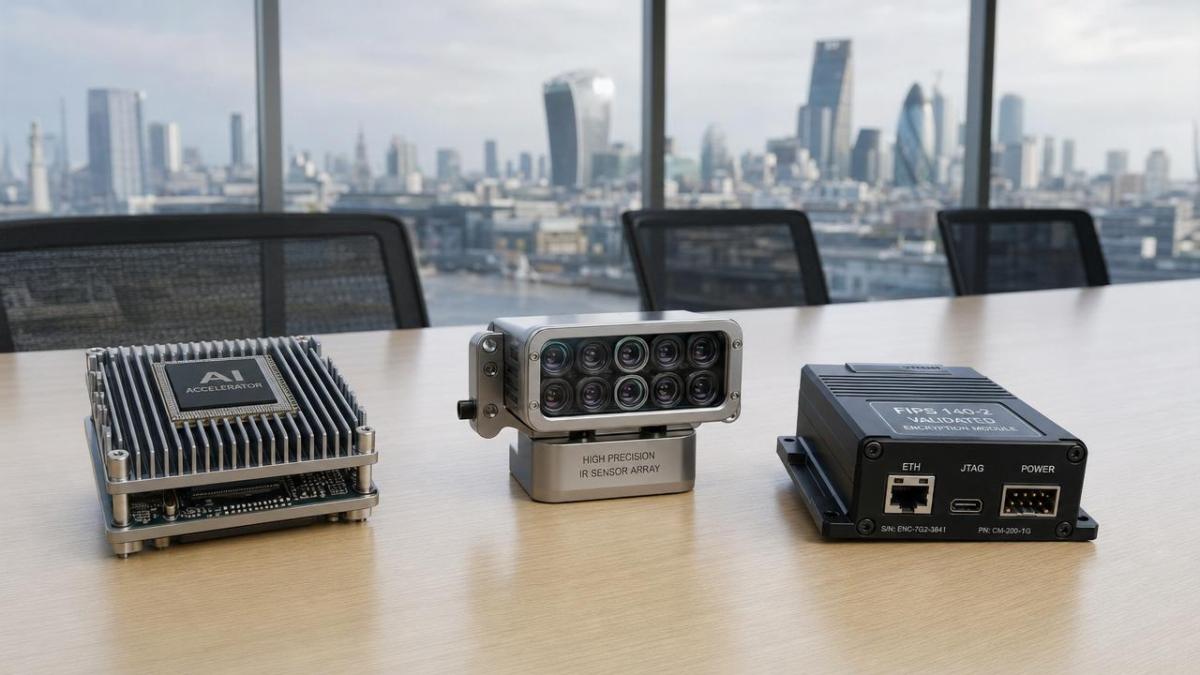
On May 18, 2026, the China–UK Export Control Working Group convened its second meeting in London. According to publicly confirmed information, participants reached preliminary agreement on aligning export control listings for three categories of items: artificial intelligence chips, high-end sensors, and commercial encryption modules.
Industries Affected
Direct Exporters and Trade Enterprises
These enterprises face direct exposure to UK import compliance requirements. Because AI chips, sensors, and encryption modules are embedded in POS & self-service kiosks, smart lighting controls, and inventory RFID systems, exporters must now reassess whether their product configurations trigger dual-use classification under revised coordination efforts.
Manufacturers Integrating AI Edge Computing Components
Companies building hardware with embedded AI inference capability (e.g., retail kiosks, smart building controllers, warehouse RFID readers) may find that previously unregulated subassemblies now fall under enhanced scrutiny. Impact manifests in documentation requirements, pre-shipment classification reviews, and potential delays if end-product functionality overlaps with controlled technical parameters.
Distributors and Channel Partners in the UK
UK-based distributors handling such equipment face reduced risk of customs hold-ups due to inconsistent interpretation of ‘dual-use’ status. However, they remain responsible for verifying correct Harmonized System (HS) code assignment and end-use declarations — particularly where encryption or sensor resolution thresholds approach regulatory thresholds.
Supply Chain and Compliance Service Providers
Firms offering classification support, licensing advisory, or customs brokerage services will see increased demand for granular technical assessments — especially for products combining multiple controlled elements (e.g., an RFID system integrating both AI-accelerated analytics and encrypted data transmission).
Key Considerations and Recommended Actions
Monitor official updates from both governments
Neither China’s Ministry of Commerce nor the UK’s Department for Business and Trade has published finalized joint guidance or updated control list annexes following this meeting. Stakeholders should track official notices for formal revisions to the UK Strategic Export Control List (SECL) and China’s Dual-Use Items Export Control Catalogue.
Review product technical specifications against emerging alignment points
Focus specifically on AI chip computational throughput (e.g., INT8 TOPS), sensor resolution/sensitivity limits (e.g., thermal imaging accuracy), and cryptographic module certification scope (e.g., FIPS 140-2/3 validation). These parameters are likely anchors for future harmonization.
Distinguish between policy signal and operational implementation
This meeting reflects coordination intent — not immediate regulatory change. Current export licensing procedures and classification obligations remain unchanged until formal amendments are issued and enter into force. Avoid premature process overhauls before official texts are released.
Prepare internal classification workflows and supplier communication plans
Exporters and manufacturers should update internal export control checklists to flag components falling within the three agreed categories. Proactively engage component suppliers for technical datasheets and export classification statements — especially for subsystems containing encryption or high-resolution sensing functions.
Editorial Observation / Industry Perspective
Observably, this meeting represents a procedural milestone rather than an immediate regulatory shift. It signals growing bilateral recognition of convergence challenges in controlling emerging technologies — particularly where civil applications overlap with national security considerations. Analysis shows the focus on AI chips, sensors, and crypto modules suggests regulators are prioritizing items enabling autonomous decision-making at the network edge. From an industry perspective, this is better understood as an early-stage alignment effort: it does not yet constitute harmonized rules, but it does indicate where future regulatory convergence — and divergence — may emerge. Continued attention is warranted, especially as both jurisdictions finalize their respective AI-related export control frameworks later in 2026.
In summary, the London meeting marks a coordinated step toward reducing friction in cross-border trade of AI-integrated hardware — but only at the technical dialogue level. Its practical significance remains contingent upon subsequent publication of aligned control parameters and integration into national licensing systems. For now, stakeholders are advised to treat this as a directional signal requiring monitoring and preparatory assessment — not as an operational trigger.
Source: Official announcements from the China Ministry of Commerce and the UK Department for Business and Trade (as of May 18, 2026). Note: Finalized control list revisions, joint guidance documents, and implementation timelines remain pending and require ongoing observation.
News Recommendations
 Uniguest and Extreme Networks Partner to Simplify Digital Signage Deployment
![51a6ab95581761cc26f4318be6520c15]()
Aris Katos
Future of Carbide Coatings
 How to assess electronics compliance whitepapers for regulatory accuracy
![51a6ab95581761cc26f4318be6520c15]()
Aris Katos
Future of Carbide Coatings
 Packaging Data Hub Launches With Plastic Recycling Findings for 50 Countries
![51a6ab95581761cc26f4318be6520c15]()
Aris Katos
Future of Carbide Coatings
 How to verify an ergonomic office chair supplier's warranty terms
![51a6ab95581761cc26f4318be6520c15]()
Aris Katos
Future of Carbide Coatings
 Curion Survey: 64% Value Sustainable Beauty Packaging, but Quality Comes First
![51a6ab95581761cc26f4318be6520c15]()
Aris Katos
Future of Carbide Coatings
 Can minimalist fit out solutions make a small office feel larger?
![51a6ab95581761cc26f4318be6520c15]()
Aris Katos
Future of Carbide Coatings
 Kiosk Industry Releases IAAPA 2026 Self-Service Guide
![51a6ab95581761cc26f4318be6520c15]()
Aris Katos
Future of Carbide Coatings
 How to improve global supply chain visibility beyond tier-one suppliers
![51a6ab95581761cc26f4318be6520c15]()
Aris Katos
Future of Carbide Coatings
 Austria’s MM Group to Sell 70% of Packaging Business to KPS for $2.7 Billion
![51a6ab95581761cc26f4318be6520c15]()
Aris Katos
Future of Carbide Coatings
 How to assess delivery reliability of airport terminal seating suppliers in Europe
![51a6ab95581761cc26f4318be6520c15]()
Aris Katos
Future of Carbide Coatings
 USTR Extends China-Linked Vessel Fee Pause and 178 Product Exemptions to January 2027
![51a6ab95581761cc26f4318be6520c15]()
Aris Katos
Future of Carbide Coatings
 How to choose smart sensors for automated lighting
![51a6ab95581761cc26f4318be6520c15]()
Aris Katos
Future of Carbide Coatings
 Shanghai Retail Buyers Sign Deals at Ninth China International Import Expo
![51a6ab95581761cc26f4318be6520c15]()
Aris Katos
Future of Carbide Coatings
 Which toys are subject to EN 71 toy safety requirements?
![51a6ab95581761cc26f4318be6520c15]()
Aris Katos
Future of Carbide Coatings
 Report: Global Kraft Paper Market Forecast to Reach $20.5 Billion by 2033
![51a6ab95581761cc26f4318be6520c15]()
Aris Katos
Future of Carbide Coatings
 How to verify Zigbee compatibility when sourcing lighting sensors
![51a6ab95581761cc26f4318be6520c15]()
Aris Katos
Future of Carbide Coatings
 How do packaging customization options affect minimum order quantities in Europe?
![51a6ab95581761cc26f4318be6520c15]()
Aris Katos
Future of Carbide Coatings
 Transom to Acquire Cree LED in Commercial Lighting Ownership Change
![51a6ab95581761cc26f4318be6520c15]()
Aris Katos
Future of Carbide Coatings
 How to plan customer flow in commercial design planning
![51a6ab95581761cc26f4318be6520c15]()
Aris Katos
Future of Carbide Coatings
 USTR Urged to Permanently Suspend Fees on China-Linked Ships
![51a6ab95581761cc26f4318be6520c15]()
Aris Katos
Future of Carbide Coatings
 How to choose comparable stores for retail benchmarking
![51a6ab95581761cc26f4318be6520c15]()
Aris Katos
Future of Carbide Coatings
 How does anchoring affect modular building wind load resistance?
![51a6ab95581761cc26f4318be6520c15]()
Aris Katos
Future of Carbide Coatings
 Amazon Raises European FBA Surcharge to 2% in Ten Markets From November 2
![51a6ab95581761cc26f4318be6520c15]()
Aris Katos
Future of Carbide Coatings
 How to verify a BPA-free test report for baby products
![51a6ab95581761cc26f4318be6520c15]()
Aris Katos
Future of Carbide Coatings
 China's Mandatory Classroom Lighting Standard GB 7793-2025 Takes Effect November 1
![51a6ab95581761cc26f4318be6520c15]()
Aris Katos
Future of Carbide Coatings
 How order volume affects the price of wholesale poly mailers
![51a6ab95581761cc26f4318be6520c15]()
Aris Katos
Future of Carbide Coatings
 US Imposes 50% Tariff on Certain Canadian PET Resin Imports
![51a6ab95581761cc26f4318be6520c15]()
Aris Katos
Future of Carbide Coatings
 How to read the maximum ratings in a semiconductor datasheet
![51a6ab95581761cc26f4318be6520c15]()
Aris Katos
Future of Carbide Coatings
 University of Maryland Develops Bio-Based Packaging to Extend Avocado and Cucumber Shelf Life
![51a6ab95581761cc26f4318be6520c15]()
Aris Katos
Future of Carbide Coatings
 How to verify a cookware manufacturer's induction compatibility claims
![51a6ab95581761cc26f4318be6520c15]()
Aris Katos
Future of Carbide Coatings
 Omdia Forecasts 11.6% Annual Growth in LED Display Revenue Through 2030
![51a6ab95581761cc26f4318be6520c15]()
Aris Katos
Future of Carbide Coatings
 How to verify a pulp molding packaging factory's production capacity
![51a6ab95581761cc26f4318be6520c15]()
Aris Katos
Future of Carbide Coatings
 Curion Survey: Half of Consumers Frustrated by Sustainable Packaging
![51a6ab95581761cc26f4318be6520c15]()
Aris Katos
Future of Carbide Coatings
 How to assess the credibility of market insight content
![51a6ab95581761cc26f4318be6520c15]()
Aris Katos
Future of Carbide Coatings
 US Removes 50% Additional Tariff on Selected Canadian Packaging Products
![51a6ab95581761cc26f4318be6520c15]()
Aris Katos
Future of Carbide Coatings
 Will a waterproof dimmable LED driver work with your existing dimmer?
![51a6ab95581761cc26f4318be6520c15]()
Aris Katos
Future of Carbide Coatings
 Charter Next Generation Raises Film PCR Use 30%, Advances Food-Grade Applications
![51a6ab95581761cc26f4318be6520c15]()
Aris Katos
Future of Carbide Coatings
 How to choose a dog harness and leash for a dog that pulls hard
![51a6ab95581761cc26f4318be6520c15]()
Aris Katos
Future of Carbide Coatings
 How to respect local customs when negotiating with overseas suppliers
![51a6ab95581761cc26f4318be6520c15]()
Aris Katos
Future of Carbide Coatings