Custom Printed Poly Mailers: When Branding Adds Real ROI
Time
Click Count
For business decision-makers balancing brand visibility, shipping efficiency, and customer experience, custom printed poly mailers are more than packaging—they are a measurable growth tool.
In complex retail and supply ecosystems, every shipped unit carries cost, perception, and operational impact.
Well-designed custom printed poly mailers help convert routine fulfillment into a branded, trackable, and more efficient logistics touchpoint.
They also align with the broader industry shift toward data-backed sourcing, sustainable materials, and stronger customer retention across channels.
What Custom Printed Poly Mailers Mean in Modern Commerce
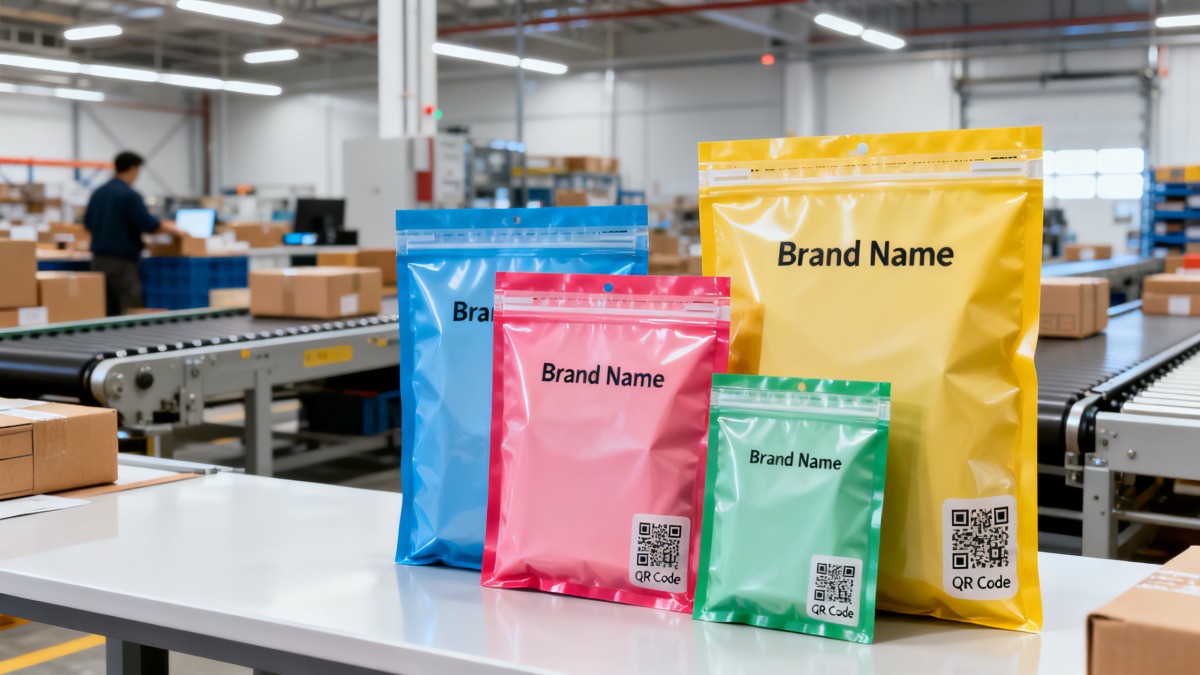
Custom printed poly mailers are lightweight shipping envelopes made from polymer-based films and printed with brand graphics, handling instructions, or operational data.
They are commonly used for apparel, accessories, soft goods, promotional kits, documents, and selected non-fragile consumer products.
Unlike plain packaging, custom printed poly mailers add a visible identity layer before the parcel is opened.
That moment matters because packaging now acts as part of brand communication, fulfillment performance, and post-purchase experience.
Most custom printed poly mailers include pressure-sensitive closures, moisture resistance, puncture protection, and optional recycled or recyclable material content.
Advanced versions may include dual adhesive strips for returns, tamper evidence, QR codes, or variable printing for campaign tracking.
From an ROI perspective, the format matters because it combines branding and shipping utility in one item.
That combination can reduce separate labeling steps, lower dimensional shipping weight, and improve customer recall without adding bulky packaging components.
Industry Signals Shaping Packaging Decisions
Across the broader commercial ecosystem, packaging choices are increasingly judged on performance, consistency, and sustainability outcomes.
This is especially relevant where digital commerce and physical brand experience must support one another.
- Shipping cost pressure favors lighter formats with lower cube utilization.
- Customer acquisition costs make repeat recognition more valuable.
- Return flows require packaging that is simple, durable, and easy to reseal.
- Sustainability reporting increases scrutiny on material selection and waste reduction.
- Global sourcing needs more stable quality benchmarks across print and film performance.
Within this context, custom printed poly mailers sit at the intersection of marketing, logistics, and material strategy.
They are no longer a minor purchasing item.
They are a packaging decision with direct implications for cost-to-serve, unboxing quality, and supply chain standardization.
Where Branding Creates Measurable ROI
The value of custom printed poly mailers becomes clearer when branding is linked to operational metrics rather than aesthetics alone.
Lower shipping and handling costs
Compared with corrugated boxes, poly mailers usually weigh less and occupy less space.
That difference may lower postage, storage volume, and packing material usage.
When graphics are pre-printed, separate branded inserts or outer labels may also be reduced.
Stronger brand memory at delivery
Delivery is one of the few physical brand moments in digital commerce.
Custom printed poly mailers make that moment recognizable, even before opening.
Consistent color, typography, and messaging can increase recall and strengthen social sharing potential.
Improved returns experience
A dual-seal custom printed poly mailer can simplify reverse logistics.
That lowers friction for exchanges and returns, which can protect customer satisfaction in high-return categories.
Better campaign measurement
Printed QR codes, offer messages, or region-specific graphics help connect packaging with measurable outcomes.
This turns custom printed poly mailers into a practical offline-to-online conversion tool.
Typical Use Cases Across the Broader Market
Not every product fits a mailer format, but many sectors gain value from this packaging approach.
In each case, custom printed poly mailers work best when the shipped product is durable enough for flexible packaging.
The strongest results come from pairing material selection with product weight, transit risk, and channel expectations.
Material, Print, and Compliance Considerations
High-quality custom printed poly mailers depend on more than graphic design.
Film structure, seal strength, opacity, print durability, and recyclability claims all affect real performance.
- Choose film thickness according to item weight and puncture risk.
- Confirm print adhesion to avoid scuffing during transport.
- Review adhesive reliability in hot, cold, and humid conditions.
- Check recycled content statements against applicable market requirements.
- Align artwork with scanning zones for labels and barcodes.
For global programs, consistency matters across production batches and shipping destinations.
Benchmarking packaging against broader quality frameworks helps reduce avoidable variation and customer complaints.
While standards such as UL, CE, or BIFMA do not directly define poly mailers, the same discipline of documented performance still matters.
Practical Steps for Selecting the Right Solution
A disciplined selection process improves the ROI of custom printed poly mailers.
- Map the product mix by size, weight, and damage sensitivity.
- Compare current packaging cost against projected mailer conversion savings.
- Test print visibility, sealing, and transit resistance with real shipment samples.
- Evaluate return-friendly features if the category has frequent reverse logistics.
- Set KPI targets for freight cost, return rate, review sentiment, and repeat purchase.
This process keeps custom printed poly mailers tied to measurable business outcomes instead of design preference alone.
It also supports more resilient sourcing across regional suppliers and evolving sustainability expectations.
Next-Step Evaluation for Long-Term Packaging ROI
Custom printed poly mailers deliver the strongest returns when they are assessed as a cross-functional asset.
They influence freight efficiency, customer experience, brand visibility, and material performance at the same time.
For organizations modernizing commercial and consumer supply chains, this makes packaging a strategic benchmark category rather than a routine expense.
A useful next step is to audit current shipment formats, identify products suited to mailer conversion, and compare lifecycle value across branding, logistics, and waste reduction.
With that approach, custom printed poly mailers can move from a packaging line item to a proven contributor to real ROI.
News Recommendations
 Which consumer goods need CE marking in Europe?
![51a6ab95581761cc26f4318be6520c15]()
Aris Katos
Future of Carbide Coatings
 Uniguest and Extreme Networks Partner to Simplify Digital Signage Deployment
![51a6ab95581761cc26f4318be6520c15]()
Aris Katos
Future of Carbide Coatings
 How to assess electronics compliance whitepapers for regulatory accuracy
![51a6ab95581761cc26f4318be6520c15]()
Aris Katos
Future of Carbide Coatings
 Packaging Data Hub Launches With Plastic Recycling Findings for 50 Countries
![51a6ab95581761cc26f4318be6520c15]()
Aris Katos
Future of Carbide Coatings
 How to verify an ergonomic office chair supplier's warranty terms
![51a6ab95581761cc26f4318be6520c15]()
Aris Katos
Future of Carbide Coatings
 Curion Survey: 64% Value Sustainable Beauty Packaging, but Quality Comes First
![51a6ab95581761cc26f4318be6520c15]()
Aris Katos
Future of Carbide Coatings
 Can minimalist fit out solutions make a small office feel larger?
![51a6ab95581761cc26f4318be6520c15]()
Aris Katos
Future of Carbide Coatings
 Kiosk Industry Releases IAAPA 2026 Self-Service Guide
![51a6ab95581761cc26f4318be6520c15]()
Aris Katos
Future of Carbide Coatings
 How to improve global supply chain visibility beyond tier-one suppliers
![51a6ab95581761cc26f4318be6520c15]()
Aris Katos
Future of Carbide Coatings
 Austria’s MM Group to Sell 70% of Packaging Business to KPS for $2.7 Billion
![51a6ab95581761cc26f4318be6520c15]()
Aris Katos
Future of Carbide Coatings
 How to assess delivery reliability of airport terminal seating suppliers in Europe
![51a6ab95581761cc26f4318be6520c15]()
Aris Katos
Future of Carbide Coatings
 USTR Extends China-Linked Vessel Fee Pause and 178 Product Exemptions to January 2027
![51a6ab95581761cc26f4318be6520c15]()
Aris Katos
Future of Carbide Coatings
 How to choose smart sensors for automated lighting
![51a6ab95581761cc26f4318be6520c15]()
Aris Katos
Future of Carbide Coatings
 Shanghai Retail Buyers Sign Deals at Ninth China International Import Expo
![51a6ab95581761cc26f4318be6520c15]()
Aris Katos
Future of Carbide Coatings
 Which toys are subject to EN 71 toy safety requirements?
![51a6ab95581761cc26f4318be6520c15]()
Aris Katos
Future of Carbide Coatings
 Report: Global Kraft Paper Market Forecast to Reach $20.5 Billion by 2033
![51a6ab95581761cc26f4318be6520c15]()
Aris Katos
Future of Carbide Coatings
 How to verify Zigbee compatibility when sourcing lighting sensors
![51a6ab95581761cc26f4318be6520c15]()
Aris Katos
Future of Carbide Coatings
 How do packaging customization options affect minimum order quantities in Europe?
![51a6ab95581761cc26f4318be6520c15]()
Aris Katos
Future of Carbide Coatings
 Transom to Acquire Cree LED in Commercial Lighting Ownership Change
![51a6ab95581761cc26f4318be6520c15]()
Aris Katos
Future of Carbide Coatings
 How to plan customer flow in commercial design planning
![51a6ab95581761cc26f4318be6520c15]()
Aris Katos
Future of Carbide Coatings
 USTR Urged to Permanently Suspend Fees on China-Linked Ships
![51a6ab95581761cc26f4318be6520c15]()
Aris Katos
Future of Carbide Coatings
 How to choose comparable stores for retail benchmarking
![51a6ab95581761cc26f4318be6520c15]()
Aris Katos
Future of Carbide Coatings
 How does anchoring affect modular building wind load resistance?
![51a6ab95581761cc26f4318be6520c15]()
Aris Katos
Future of Carbide Coatings
 Amazon Raises European FBA Surcharge to 2% in Ten Markets From November 2
![51a6ab95581761cc26f4318be6520c15]()
Aris Katos
Future of Carbide Coatings
 How to verify a BPA-free test report for baby products
![51a6ab95581761cc26f4318be6520c15]()
Aris Katos
Future of Carbide Coatings
 China's Mandatory Classroom Lighting Standard GB 7793-2025 Takes Effect November 1
![51a6ab95581761cc26f4318be6520c15]()
Aris Katos
Future of Carbide Coatings
 How order volume affects the price of wholesale poly mailers
![51a6ab95581761cc26f4318be6520c15]()
Aris Katos
Future of Carbide Coatings
 US Imposes 50% Tariff on Certain Canadian PET Resin Imports
![51a6ab95581761cc26f4318be6520c15]()
Aris Katos
Future of Carbide Coatings
 How to read the maximum ratings in a semiconductor datasheet
![51a6ab95581761cc26f4318be6520c15]()
Aris Katos
Future of Carbide Coatings
 University of Maryland Develops Bio-Based Packaging to Extend Avocado and Cucumber Shelf Life
![51a6ab95581761cc26f4318be6520c15]()
Aris Katos
Future of Carbide Coatings
 How to verify a cookware manufacturer's induction compatibility claims
![51a6ab95581761cc26f4318be6520c15]()
Aris Katos
Future of Carbide Coatings
 Omdia Forecasts 11.6% Annual Growth in LED Display Revenue Through 2030
![51a6ab95581761cc26f4318be6520c15]()
Aris Katos
Future of Carbide Coatings
 How to verify a pulp molding packaging factory's production capacity
![51a6ab95581761cc26f4318be6520c15]()
Aris Katos
Future of Carbide Coatings
 Curion Survey: Half of Consumers Frustrated by Sustainable Packaging
![51a6ab95581761cc26f4318be6520c15]()
Aris Katos
Future of Carbide Coatings
 How to assess the credibility of market insight content
![51a6ab95581761cc26f4318be6520c15]()
Aris Katos
Future of Carbide Coatings
 US Removes 50% Additional Tariff on Selected Canadian Packaging Products
![51a6ab95581761cc26f4318be6520c15]()
Aris Katos
Future of Carbide Coatings
 Will a waterproof dimmable LED driver work with your existing dimmer?
![51a6ab95581761cc26f4318be6520c15]()
Aris Katos
Future of Carbide Coatings
 Charter Next Generation Raises Film PCR Use 30%, Advances Food-Grade Applications
![51a6ab95581761cc26f4318be6520c15]()
Aris Katos
Future of Carbide Coatings
 How to choose a dog harness and leash for a dog that pulls hard
![51a6ab95581761cc26f4318be6520c15]()
Aris Katos
Future of Carbide Coatings