Commercial Architecture Trends Shaping Retail Spaces in 2026
Time
Click Count
Commercial architecture is redefining retail in 2026 as brands compete on experience, operational efficiency, and long-term resilience. For business decision-makers, the most important question is no longer whether stores should evolve, but which architectural investments will create measurable commercial value.
The core search intent behind commercial architecture trends is practical and strategic. Readers want to know which design directions are worth funding, how retail spaces should adapt to omnichannel behavior, and what physical upgrades will improve customer flow, brand positioning, compliance, and lifecycle costs.
For enterprise leaders, the real concern is decision quality. They need to understand where architecture supports revenue growth, where smart infrastructure reduces friction, and where sustainable materials or modular systems protect capital against changing consumer expectations and operational risks.
This article examines the commercial architecture trends shaping retail spaces in 2026, with a focus on business value, investment logic, implementation priorities, and the criteria decision-makers can use to evaluate future-ready commercial environments.
Why commercial architecture has become a board-level retail decision
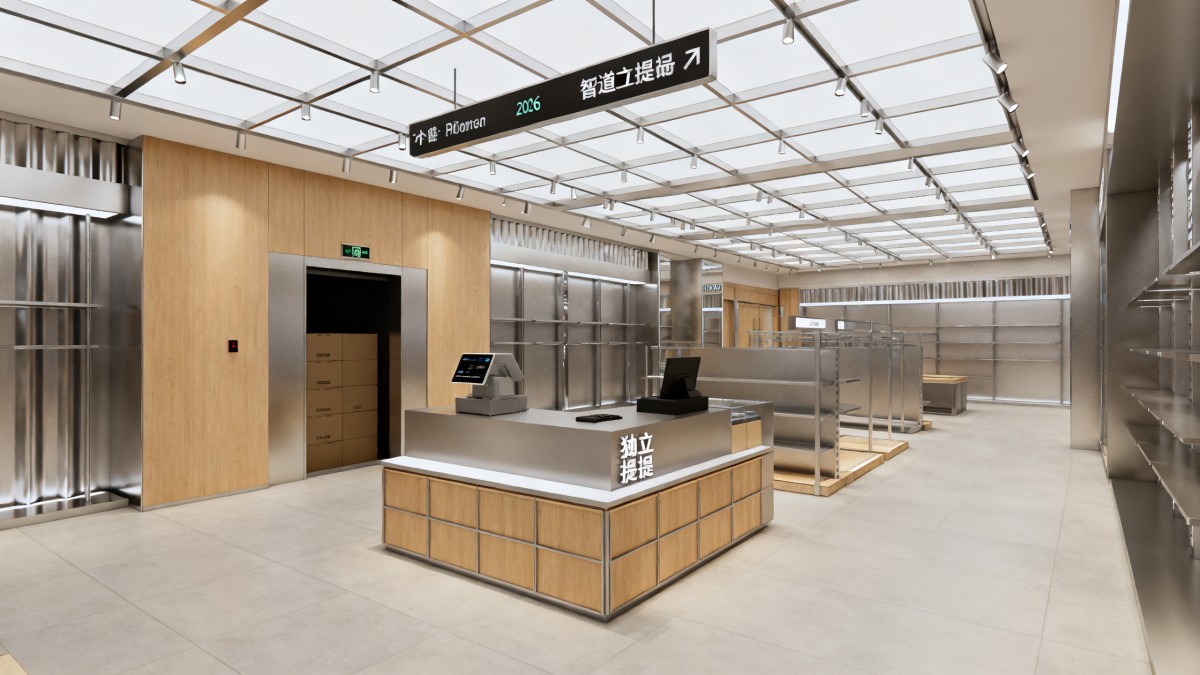
In 2026, commercial architecture is no longer a downstream design matter. It directly affects store productivity, staffing efficiency, digital service delivery, energy performance, and the ability of a retail format to scale across regions and consumer segments.
Retailers now operate in an environment where customers move fluidly between online research, in-store experience, mobile payment, fulfillment options, and post-purchase engagement. Architecture must support that journey physically, not just aesthetically.
This shift changes how leaders assess store investments. The strongest projects are not those with the most dramatic visual statements, but those that combine spatial intelligence, durable material selection, smart systems integration, and operational flexibility.
For chain operators and commercial developers, architecture has also become a risk management tool. Better layouts reduce congestion, modular fixtures simplify reconfiguration, and energy-conscious systems lower exposure to volatile operating costs over time.
What business decision-makers should prioritize when evaluating retail space trends
Most executives are not looking for abstract trend forecasts. They want a framework for deciding which commercial architecture ideas can improve return on capital, support brand strategy, and remain useful as consumer behavior continues to evolve.
The first priority is adaptability. Retail concepts now change faster than traditional fit-out cycles. Spaces must accommodate assortment shifts, seasonal campaigns, hybrid service models, and new retail technology without requiring expensive reconstruction.
The second priority is measurable experience value. Customer experience matters, but it must translate into stronger dwell time, clearer wayfinding, higher conversion, better basket size, or improved premium brand perception.
The third priority is operational integration. A well-designed space should help associates work faster, support inventory visibility, improve replenishment logic, and reduce service bottlenecks at checkout, pickup, fitting, or consultation zones.
The fourth priority is lifecycle performance. Material durability, maintenance needs, lighting efficiency, and compliance with international standards increasingly influence total cost of ownership more than upfront construction cost alone.
Trend 1: Flexible layouts built for rapid retail reconfiguration
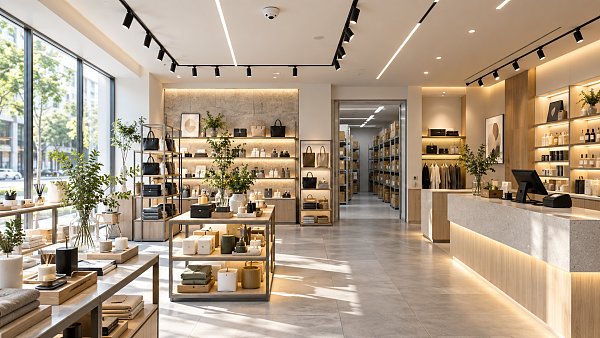
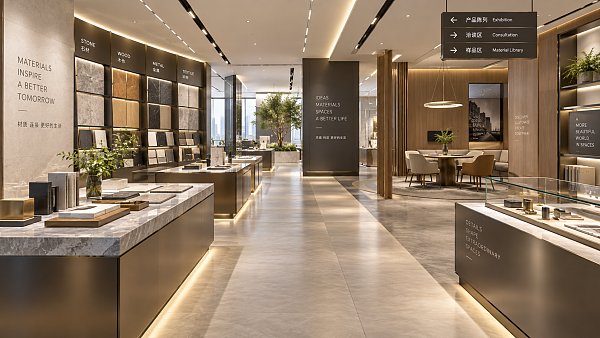
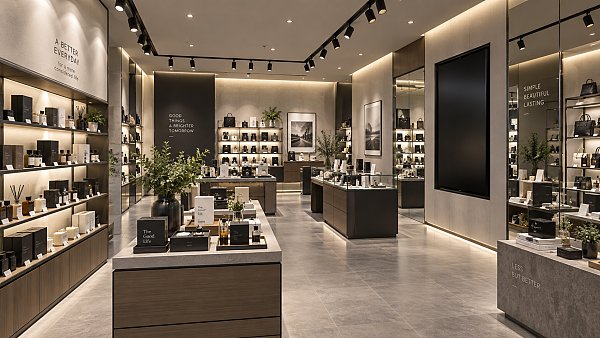
One of the most important commercial architecture trends in 2026 is the move toward layouts that can be changed quickly with minimal disruption. Retailers want stores that evolve as fast as promotions, product categories, and local demand signals.
This is driving wider adoption of modular walls, movable fixtures, adaptable display islands, and back-of-house planning that supports multiple service models. Instead of designing one fixed customer path, architects are creating systems that can be reset efficiently.
For decision-makers, the value is straightforward. Flexible layouts reduce refit frequency, lower downtime during campaign changes, and extend the useful life of a store concept across different markets and merchandising strategies.
This approach is especially relevant for flagship stores, high-end lifestyle brands, electronics retailers, beauty concepts, and mixed-format urban stores where traffic patterns vary by season, event, and channel interaction.
Trend 2: Architecture that supports omnichannel retail operations
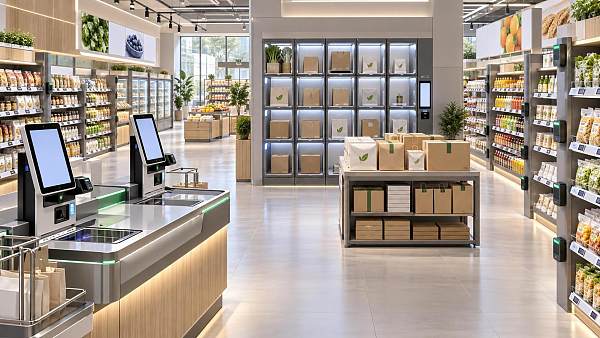
Commercial architecture in 2026 must do more than attract foot traffic. It must also support pickup, returns, assisted selling, mobile transactions, micro-fulfillment, and customer service workflows that increasingly overlap within one footprint.
Many retailers are redesigning store entrances, service counters, storage zones, and circulation paths to reduce friction between browsing customers and transaction-focused visitors. The goal is to prevent omnichannel features from disrupting the selling environment.
Well-planned omnichannel architecture often includes dedicated click-and-collect points, integrated consultation areas, concealed but accessible staging zones, and smart traffic separation that preserves both convenience and premium experience.
For executives, this matters because operationally weak omnichannel layouts create hidden costs. Congestion, labor inefficiency, delayed handoffs, and poor space utilization can erode the commercial benefits of digital retail investments.
Trend 3: Smart infrastructure becomes part of the architectural brief
Retail technology is no longer added after architectural decisions are made. In leading projects, smart infrastructure is now embedded from the beginning, influencing ceiling planning, fixture integration, power distribution, network pathways, and service access.
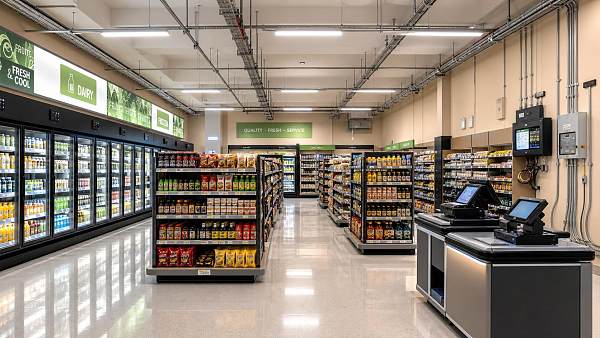
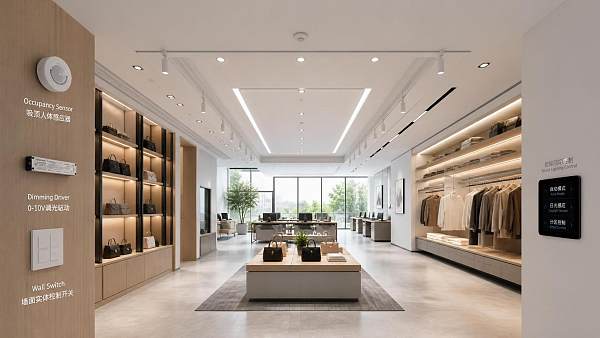
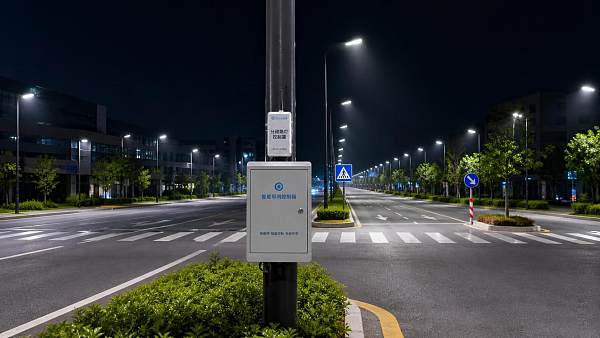
AI-enabled POS terminals, occupancy sensing, digital signage, smart lighting controls, analytics cameras, and connected shelving all require coordinated planning. If these systems are treated as separate layers, stores become visually cluttered and operationally inefficient.
The architectural advantage of early integration is cleaner execution and better scalability. Technology works best when hardware placement, maintenance access, customer visibility, and data collection needs are solved within the built environment.
Business leaders should also consider upgrade cycles. A future-ready retail space is not defined by the amount of technology installed today, but by whether the architecture can support future systems without costly structural retrofits.
Trend 4: Sustainable materials shift from brand messaging to performance strategy
Sustainability remains central to commercial architecture, but the conversation in 2026 is more disciplined. Retail brands are moving beyond symbolic green claims and focusing on materials, systems, and sourcing choices that improve actual long-term performance.
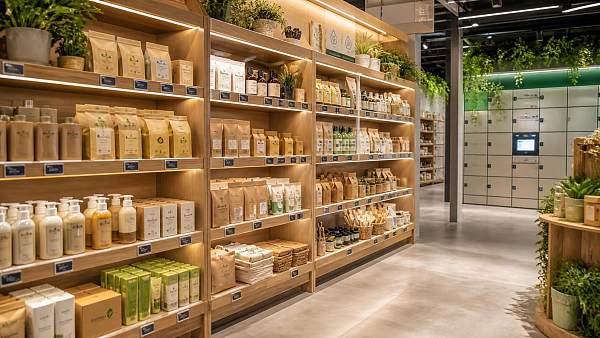
This includes low-emission finishes, recycled-content surfaces, durable commercial furniture, energy-efficient lighting, and packaging-aware display strategies that align physical environments with broader supply chain sustainability goals.
For decision-makers, the key issue is not whether sustainable materials matter, but how to evaluate trade-offs. The best choices balance visual quality, maintenance demands, certification alignment, supplier reliability, and lifespan under real retail conditions.
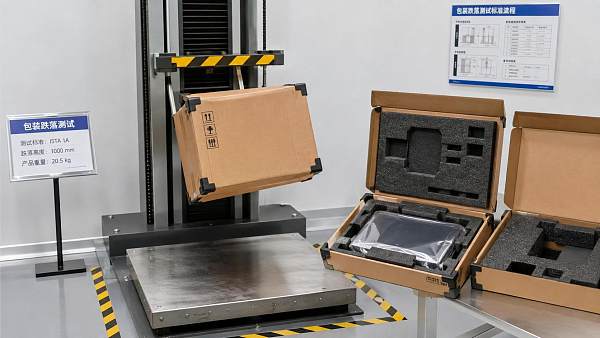
Global operators also need sourcing transparency. Cross-border projects require confidence that specified materials and fixtures can meet local regulations and international benchmarks such as UL, CE, and BIFMA where applicable.
That is why data-backed specification has become more important. Sustainable commercial architecture now depends on credible benchmarking, not trend language, particularly for brands managing premium standards across multiple markets.
Trend 5: Experiential zoning replaces one-size-fits-all store planning
Another defining trend is the shift from uniform floor plans to layered experiential zoning. Retailers are increasingly organizing stores around different behavioral missions, including discovery, trial, consultation, community engagement, and rapid transaction.
This model reflects how modern customers actually use physical spaces. Some arrive to explore a brand, some need immediate fulfillment, and others want expert guidance before making a high-value purchase. Architecture must support these different intentions simultaneously.
As a result, architects are creating more deliberate transitions between high-energy display zones, quieter advisory areas, hospitality-inspired waiting spaces, and technology-supported service points. The layout becomes a commercial narrative, not just a circulation plan.
For enterprise leaders, this approach can strengthen premium positioning and improve conversion quality. It also creates clearer performance metrics because each zone can be evaluated by dwell time, engagement type, service output, or category impact.
Trend 6: Lighting and signage are now architectural systems, not accessories
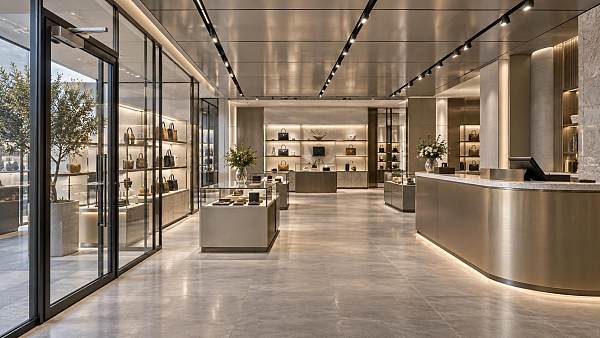
In high-performing retail environments, lighting and signage are increasingly treated as core architectural infrastructure. They shape navigation, reinforce brand identity, influence mood, and support merchandising clarity across both physical and digital touchpoints.
Layered commercial lighting strategies are being used to guide customer attention, differentiate product categories, and improve comfort without raising energy intensity unnecessarily. This is especially important in stores blending ambient experience with task-based service zones.
Signage is also evolving beyond branding panels. Digital and static communication systems now work together to deliver real-time pricing, category guidance, campaign messaging, and interactive wayfinding within a coherent spatial language.
For business decision-makers, the payoff is stronger customer orientation and better presentation efficiency. Poorly integrated lighting and signage often lead to inconsistent brand expression, lower display effectiveness, and missed opportunities for guided conversion.
How to judge whether a commercial architecture trend is worth the investment
Not every trend deserves immediate adoption. The right question is whether a design direction improves commercial outcomes for a specific retail model, operating geography, and customer profile. Leaders need evaluation criteria, not trend enthusiasm.
Start with business alignment. Ask whether the proposed architectural change supports a clear objective such as higher conversion, better omnichannel throughput, stronger premium positioning, lower energy use, or easier multi-site replication.
Next, assess implementation complexity. Some trends look attractive in concept but create procurement challenges, unreliable maintenance burdens, or store-level training needs that dilute their value in practice.
It is also essential to model lifecycle economics. Compare not only installation cost, but also replacement cycles, utility impact, labor effects, and flexibility benefits over time. In many cases, resilient systems outperform cheaper static solutions.
Finally, test supplier and standards readiness. Commercial architecture depends on a chain of execution that includes fixtures, technology, lighting, signage, and material sourcing. Weak alignment across these elements can undermine even a strong design concept.
What future-ready retail architecture looks like in practice
The most successful retail spaces in 2026 are not defined by a single style. They combine flexible planning, integrated smart infrastructure, credible sustainability, and customer-centered zoning within a disciplined commercial framework.
In practice, that means stores are being designed as adaptive operating platforms. They can host immersive experiences, process digital orders, support premium consultations, and maintain efficient day-to-day workflows without sacrificing brand coherence.
For global chain operators and developers, future readiness also means standardization where possible and localization where valuable. Core systems should scale efficiently, while surface expression and spatial emphasis can respond to local market behavior.
This is where intelligence platforms and technical benchmarking become increasingly useful. Better architecture decisions come from comparing materials, hardware, lighting systems, and retail technologies against recognized standards and real operating requirements.
Commercial architecture, in this sense, becomes a strategic connector between design ambition and operational evidence. It allows decision-makers to build retail spaces that are not only attractive today, but commercially resilient tomorrow.
Conclusion: commercial architecture is now a strategic lever for retail growth
The commercial architecture trends shaping retail spaces in 2026 point to a clear conclusion: physical environments remain highly valuable, but only when they are designed to support modern consumer behavior, digital integration, and long-term operational performance.
For business leaders, the priority is not chasing every new concept. It is selecting the architectural strategies that improve flexibility, strengthen experience quality, reduce lifecycle risk, and align space planning with broader supply chain and brand objectives.
Retailers that treat commercial architecture as a strategic investment rather than a visual exercise will be better positioned to scale, adapt, and differentiate. In 2026, the best retail spaces will not simply look modern. They will perform intelligently.
News Recommendations
 How to select laboratory instruments for reproducible test results
![51a6ab95581761cc26f4318be6520c15]()
Aris Katos
Future of Carbide Coatings
 When does a sheet metal prototype reveal design flaws early?
![51a6ab95581761cc26f4318be6520c15]()
Aris Katos
Future of Carbide Coatings
 When PE air column bags reduce damage in e-commerce fulfillment
![51a6ab95581761cc26f4318be6520c15]()
Aris Katos
Future of Carbide Coatings
 How energy-efficient design reduces operating costs in retail lighting
![51a6ab95581761cc26f4318be6520c15]()
Aris Katos
Future of Carbide Coatings
 When commercial aluminum storefronts make sense for a retail renovation
![51a6ab95581761cc26f4318be6520c15]()
Aris Katos
Future of Carbide Coatings
 What makes LED lights durable in high-use commercial spaces?
![51a6ab95581761cc26f4318be6520c15]()
Aris Katos
Future of Carbide Coatings
 Which industry categories offer the strongest export potential in Latin America?
![51a6ab95581761cc26f4318be6520c15]()
Aris Katos
Future of Carbide Coatings
 How to choose an ultra bright waterproof window display for storefronts
![51a6ab95581761cc26f4318be6520c15]()
Aris Katos
Future of Carbide Coatings
 How to verify suppliers on a trade portal for global sourcing
![51a6ab95581761cc26f4318be6520c15]()
Aris Katos
Future of Carbide Coatings
 How RoHS requirements should be stated in product specifications
![51a6ab95581761cc26f4318be6520c15]()
Aris Katos
Future of Carbide Coatings
 What affects the lead time for custom retail counter displays?
![51a6ab95581761cc26f4318be6520c15]()
Aris Katos
Future of Carbide Coatings
 What consumer packaging USA importers need to verify before ordering
![51a6ab95581761cc26f4318be6520c15]()
Aris Katos
Future of Carbide Coatings
 How commercial spaces interiors shape customer dwell time
![51a6ab95581761cc26f4318be6520c15]()
Aris Katos
Future of Carbide Coatings
 How LED commercial lighting design reduces glare in retail spaces
![51a6ab95581761cc26f4318be6520c15]()
Aris Katos
Future of Carbide Coatings
 How industrial technology information improves RFID inventory accuracy
![51a6ab95581761cc26f4318be6520c15]()
Aris Katos
Future of Carbide Coatings
 When drip garden watering systems make more sense than sprinklers
![51a6ab95581761cc26f4318be6520c15]()
Aris Katos
Future of Carbide Coatings
 When category comparison improves sourcing for industrial applications
![51a6ab95581761cc26f4318be6520c15]()
Aris Katos
Future of Carbide Coatings
 Industrial application guidance for selecting the right LED lighting
![51a6ab95581761cc26f4318be6520c15]()
Aris Katos
Future of Carbide Coatings
 Which commercial architecture standards apply to European retail fit-outs?
![51a6ab95581761cc26f4318be6520c15]()
Aris Katos
Future of Carbide Coatings
 How to verify FDA requirements for maternity care products
![51a6ab95581761cc26f4318be6520c15]()
Aris Katos
Future of Carbide Coatings
 How to verify BPA-free claims for food-contact products
![51a6ab95581761cc26f4318be6520c15]()
Aris Katos
Future of Carbide Coatings
 When does a European wholesale supplier suit modular office projects?
![51a6ab95581761cc26f4318be6520c15]()
Aris Katos
Future of Carbide Coatings
 When consumer ecosystem solutions improve the in-store shopping journey
![51a6ab95581761cc26f4318be6520c15]()
Aris Katos
Future of Carbide Coatings
 How a commercial developers network can reduce site selection risk
![51a6ab95581761cc26f4318be6520c15]()
Aris Katos
Future of Carbide Coatings
 How clear purchasing specifications prevent costly supplier deviations
![51a6ab95581761cc26f4318be6520c15]()
Aris Katos
Future of Carbide Coatings
 What an ISTA drop test lab checks before your packaging ships
![51a6ab95581761cc26f4318be6520c15]()
Aris Katos
Future of Carbide Coatings
 Which commercial furniture standards apply to workplace seating?
![51a6ab95581761cc26f4318be6520c15]()
Aris Katos
Future of Carbide Coatings
 How to evaluate smart lighting module OEM compatibility before sampling
![51a6ab95581761cc26f4318be6520c15]()
Aris Katos
Future of Carbide Coatings
 How to assess whether sustainable technology delivers real impact
![51a6ab95581761cc26f4318be6520c15]()
Aris Katos
Future of Carbide Coatings
 How to assess an OEM supplier’s quality control before ordering
![51a6ab95581761cc26f4318be6520c15]()
Aris Katos
Future of Carbide Coatings
 How consumer ecosystem solutions data can improve retail personalization
![51a6ab95581761cc26f4318be6520c15]()
Aris Katos
Future of Carbide Coatings
 When does consumer packaging design justify a higher product price?
![51a6ab95581761cc26f4318be6520c15]()
Aris Katos
Future of Carbide Coatings
 Supermarket Fixture Installation: Planning Layouts, Wiring, and Handover
![51a6ab95581761cc26f4318be6520c15]()
Aris Katos
Future of Carbide Coatings
 Automated Lighting and Smart Lighting Control in Bergerac: Key Project Considerations
![51a6ab95581761cc26f4318be6520c15]()
Aris Katos
Future of Carbide Coatings
 Segment Streetlight Controllers: Choosing Control Modes for Urban Roads
![51a6ab95581761cc26f4318be6520c15]()
Aris Katos
Future of Carbide Coatings
 IEC 62471-2 Explained: How to Assess Photobiological Risks in LED Lighting
![51a6ab95581761cc26f4318be6520c15]()
Aris Katos
Future of Carbide Coatings
 Food Grade Packaging Requirements by Product Type, Temperature, and Contact Risk
![51a6ab95581761cc26f4318be6520c15]()
Aris Katos
Future of Carbide Coatings
 Food Packaging Compliance Checklist: Tests, Records, and Labeling Before Shipment
![51a6ab95581761cc26f4318be6520c15]()
Aris Katos
Future of Carbide Coatings
 NSF Food Packaging Standards: When Certification Matters for Commercial Food Use
![51a6ab95581761cc26f4318be6520c15]()
Aris Katos
Future of Carbide Coatings