Global Sourcing Red Flags Before You Approve a Supplier
Time
Click Count
In global sourcing, approving the wrong supplier can trigger quality failures, compliance gaps, hidden costs, and severe delivery disruption.
These risks affect commercial interiors, retail technology, consumer goods, packaging, lighting systems, and other cross-industry procurement categories.
A reliable supplier review process protects continuity, supports brand standards, and strengthens long-term sourcing resilience across international markets.
This guide explains the most important global sourcing red flags before supplier approval, with practical checkpoints for better, data-driven decisions.
What global sourcing red flags usually mean
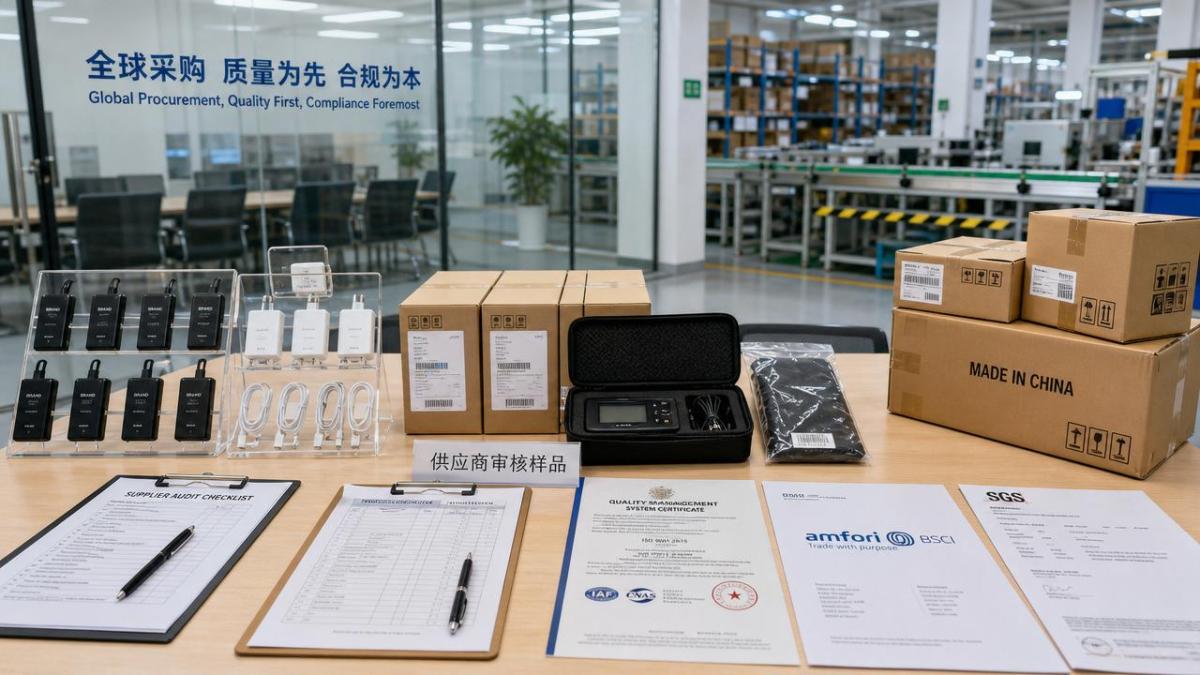
In global sourcing, a red flag is any signal that suggests elevated operational, legal, financial, or quality risk.
Some red flags appear early, such as inconsistent documentation, vague answers, or unclear factory ownership.
Others emerge later through failed samples, delayed audits, changing quotations, or unstable production performance.
Not every issue disqualifies a supplier immediately. However, repeated warning signs usually indicate weak control systems.
For global sourcing programs, the goal is not only finding low cost. It is securing repeatable, compliant, scalable delivery.
Why supplier approval is under greater pressure today
Global supply chains now face stricter product standards, sustainability expectations, geopolitical volatility, and faster product cycles.
That makes global sourcing more complex across furniture, fixtures, smart devices, lighting, packaging, and consumer product categories.
A supplier may appear competitive on price, yet still create downstream losses through rework, recalls, penalties, or project delays.
The table below highlights common pressure points that increase supplier approval risk.
Core red flags before you approve a supplier
1. Unclear business identity
One of the earliest global sourcing concerns is uncertainty around who actually owns or operates the business.
Check registration records, legal entity names, export licenses, tax details, and factory addresses.
If quotation documents, bank details, and production sites do not align, pause approval.
2. Inconsistent quality systems
A polished sample does not prove stable production capability in global sourcing.
Look for inspection plans, incoming material controls, corrective action records, and process traceability.
Weak documentation often signals inconsistent output, especially across custom or multi-component products.
3. Dubious compliance claims
Certificates should match the actual product, model, factory, and market requirements.
Be careful when labels such as UL, CE, BIFMA, RoHS, or FSC are mentioned without supporting files.
In global sourcing, false or outdated compliance data can create major border and liability problems.
4. Unstable communication patterns
Delayed answers, contradictory responses, or evasion during technical review are strong warning signs.
Reliable global sourcing depends on clear escalation paths, structured follow-up, and transparent issue reporting.
Poor communication often becomes worse during peak production or post-shipment disputes.
5. Unrealistic pricing
A quote far below market level may indicate hidden substitutions, missing process steps, or underreported logistics costs.
Compare material specifications, tolerances, packaging, tooling, and test scope before treating a low price as an advantage.
In global sourcing, the cheapest approved supplier may become the most expensive after field failure.
6. Capacity without evidence
Claims about monthly output should be supported by machine lists, staffing plans, shift data, and customer history.
This matters when sourcing retail fixtures, electronics assemblies, lighting systems, or seasonal consumer goods.
Overloaded factories often accept orders they cannot deliver on time.
How these red flags affect business performance
Global sourcing mistakes rarely stay inside procurement files. They spread into operations, customer experience, finance, and expansion schedules.
- Quality instability can delay store openings or product launches.
- Compliance failures can stop customs clearance or force market withdrawal.
- Supplier insolvency can interrupt replenishment and spare parts support.
- Weak packaging controls can increase damage rates and reverse logistics costs.
- Inaccurate lead times can break project sequencing across multiple contractors.
This is why mature global sourcing requires approval based on evidence, not promises.
Typical supplier risk patterns across categories
Different product groups show different global sourcing warning patterns. A category-based review helps expose hidden weakness earlier.
Practical review steps before final approval
A disciplined workflow improves global sourcing outcomes and reduces approval bias.
- Verify corporate identity, ownership, and export legality.
- Match certificates to product scope, model numbers, and target markets.
- Review production flow, subcontracting points, and critical process controls.
- Test samples against commercial specifications, not visual impression alone.
- Audit packaging, labeling, and shipping readiness for destination requirements.
- Check financial stability and dispute history where possible.
- Start with a controlled pilot order before scale approval.
This sequence makes global sourcing more measurable and less vulnerable to assumption-based decisions.
What to document for stronger sourcing decisions
Good documentation converts supplier evaluation into a repeatable governance system.
Maintain records for quotations, technical drawings, test reports, audit findings, nonconformance history, and communication logs.
In global sourcing, documented evidence supports faster comparison across regions, factories, and product families.
It also helps when supplier performance changes after ownership shifts or production relocation.
Next-step actions for safer global sourcing
Before approving any supplier, use a structured red-flag checklist and score each risk area objectively.
Prioritize evidence from audits, tests, certifications, and pilot orders over verbal reassurance.
For complex global sourcing programs, compare suppliers across quality maturity, compliance readiness, capacity depth, and transparency.
A careful approval process reduces disruption, protects commercial outcomes, and builds a more resilient international supply base.
News Recommendations
 How to select laboratory instruments for reproducible test results
![51a6ab95581761cc26f4318be6520c15]()
Aris Katos
Future of Carbide Coatings
 When does a sheet metal prototype reveal design flaws early?
![51a6ab95581761cc26f4318be6520c15]()
Aris Katos
Future of Carbide Coatings
 When PE air column bags reduce damage in e-commerce fulfillment
![51a6ab95581761cc26f4318be6520c15]()
Aris Katos
Future of Carbide Coatings
 How energy-efficient design reduces operating costs in retail lighting
![51a6ab95581761cc26f4318be6520c15]()
Aris Katos
Future of Carbide Coatings
 When commercial aluminum storefronts make sense for a retail renovation
![51a6ab95581761cc26f4318be6520c15]()
Aris Katos
Future of Carbide Coatings
 What makes LED lights durable in high-use commercial spaces?
![51a6ab95581761cc26f4318be6520c15]()
Aris Katos
Future of Carbide Coatings
 Which industry categories offer the strongest export potential in Latin America?
![51a6ab95581761cc26f4318be6520c15]()
Aris Katos
Future of Carbide Coatings
 How to choose an ultra bright waterproof window display for storefronts
![51a6ab95581761cc26f4318be6520c15]()
Aris Katos
Future of Carbide Coatings
 How to verify suppliers on a trade portal for global sourcing
![51a6ab95581761cc26f4318be6520c15]()
Aris Katos
Future of Carbide Coatings
 How RoHS requirements should be stated in product specifications
![51a6ab95581761cc26f4318be6520c15]()
Aris Katos
Future of Carbide Coatings
 What affects the lead time for custom retail counter displays?
![51a6ab95581761cc26f4318be6520c15]()
Aris Katos
Future of Carbide Coatings
 What consumer packaging USA importers need to verify before ordering
![51a6ab95581761cc26f4318be6520c15]()
Aris Katos
Future of Carbide Coatings
 How commercial spaces interiors shape customer dwell time
![51a6ab95581761cc26f4318be6520c15]()
Aris Katos
Future of Carbide Coatings
 How LED commercial lighting design reduces glare in retail spaces
![51a6ab95581761cc26f4318be6520c15]()
Aris Katos
Future of Carbide Coatings
 How industrial technology information improves RFID inventory accuracy
![51a6ab95581761cc26f4318be6520c15]()
Aris Katos
Future of Carbide Coatings
 When drip garden watering systems make more sense than sprinklers
![51a6ab95581761cc26f4318be6520c15]()
Aris Katos
Future of Carbide Coatings
 When category comparison improves sourcing for industrial applications
![51a6ab95581761cc26f4318be6520c15]()
Aris Katos
Future of Carbide Coatings
 Industrial application guidance for selecting the right LED lighting
![51a6ab95581761cc26f4318be6520c15]()
Aris Katos
Future of Carbide Coatings
 Which commercial architecture standards apply to European retail fit-outs?
![51a6ab95581761cc26f4318be6520c15]()
Aris Katos
Future of Carbide Coatings
 How to verify FDA requirements for maternity care products
![51a6ab95581761cc26f4318be6520c15]()
Aris Katos
Future of Carbide Coatings
 How to verify BPA-free claims for food-contact products
![51a6ab95581761cc26f4318be6520c15]()
Aris Katos
Future of Carbide Coatings
 When does a European wholesale supplier suit modular office projects?
![51a6ab95581761cc26f4318be6520c15]()
Aris Katos
Future of Carbide Coatings
 When consumer ecosystem solutions improve the in-store shopping journey
![51a6ab95581761cc26f4318be6520c15]()
Aris Katos
Future of Carbide Coatings
 How a commercial developers network can reduce site selection risk
![51a6ab95581761cc26f4318be6520c15]()
Aris Katos
Future of Carbide Coatings
 How clear purchasing specifications prevent costly supplier deviations
![51a6ab95581761cc26f4318be6520c15]()
Aris Katos
Future of Carbide Coatings
 What an ISTA drop test lab checks before your packaging ships
![51a6ab95581761cc26f4318be6520c15]()
Aris Katos
Future of Carbide Coatings
 Which commercial furniture standards apply to workplace seating?
![51a6ab95581761cc26f4318be6520c15]()
Aris Katos
Future of Carbide Coatings
 How to evaluate smart lighting module OEM compatibility before sampling
![51a6ab95581761cc26f4318be6520c15]()
Aris Katos
Future of Carbide Coatings
 How to assess whether sustainable technology delivers real impact
![51a6ab95581761cc26f4318be6520c15]()
Aris Katos
Future of Carbide Coatings
 How to assess an OEM supplier’s quality control before ordering
![51a6ab95581761cc26f4318be6520c15]()
Aris Katos
Future of Carbide Coatings
 How consumer ecosystem solutions data can improve retail personalization
![51a6ab95581761cc26f4318be6520c15]()
Aris Katos
Future of Carbide Coatings
 When does consumer packaging design justify a higher product price?
![51a6ab95581761cc26f4318be6520c15]()
Aris Katos
Future of Carbide Coatings
 Supermarket Fixture Installation: Planning Layouts, Wiring, and Handover
![51a6ab95581761cc26f4318be6520c15]()
Aris Katos
Future of Carbide Coatings
 Automated Lighting and Smart Lighting Control in Bergerac: Key Project Considerations
![51a6ab95581761cc26f4318be6520c15]()
Aris Katos
Future of Carbide Coatings
 Segment Streetlight Controllers: Choosing Control Modes for Urban Roads
![51a6ab95581761cc26f4318be6520c15]()
Aris Katos
Future of Carbide Coatings
 IEC 62471-2 Explained: How to Assess Photobiological Risks in LED Lighting
![51a6ab95581761cc26f4318be6520c15]()
Aris Katos
Future of Carbide Coatings
 Food Grade Packaging Requirements by Product Type, Temperature, and Contact Risk
![51a6ab95581761cc26f4318be6520c15]()
Aris Katos
Future of Carbide Coatings
 Food Packaging Compliance Checklist: Tests, Records, and Labeling Before Shipment
![51a6ab95581761cc26f4318be6520c15]()
Aris Katos
Future of Carbide Coatings
 NSF Food Packaging Standards: When Certification Matters for Commercial Food Use
![51a6ab95581761cc26f4318be6520c15]()
Aris Katos
Future of Carbide Coatings