Modern Marketplace Shifts Changing Brand Visibility
Time
Click Count
As the modern marketplace evolves, brand visibility is no longer shaped by advertising alone but by the seamless integration of retail design, smart technology, supply chain agility, and sustainable presentation. For business evaluators, understanding these shifts is essential to identifying which brands can adapt to global commercial standards and win long-term consumer trust.
For commercial developers, sourcing teams, and brand assessment professionals, visibility now depends on operational proof as much as creative messaging. A strong presence in the modern marketplace is built through measurable store performance, compliance readiness, and a supply chain that supports consistent customer experience across regions.
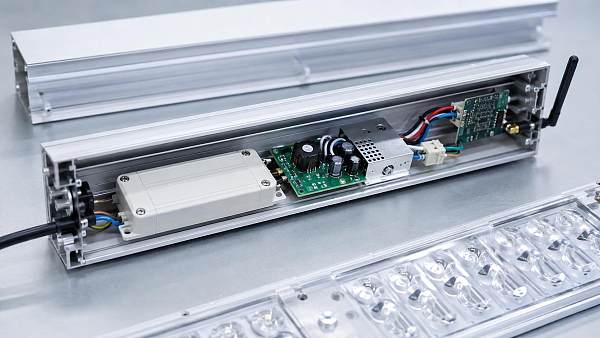
This shift is especially relevant in global retail and consumer ecosystems, where furniture, fixtures, retail technology, lighting, packaging, and logistics must work together. Platforms such as G-BCE help evaluators compare these interdependent layers against recognized benchmarks including UL, CE, and BIFMA, turning visibility into an assessable business capability rather than a vague branding outcome.
Why Brand Visibility in the Modern Marketplace Is Now Operational

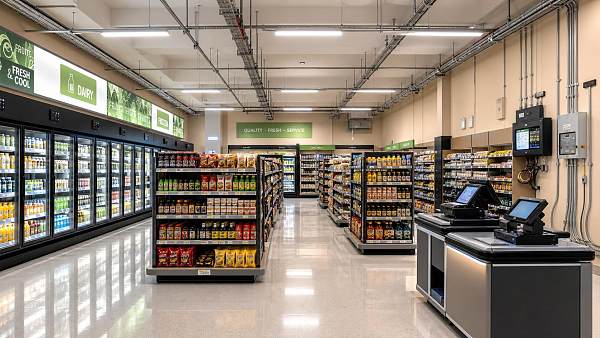
In the past, a brand could gain attention through campaign frequency alone. In today’s modern marketplace, visibility is reinforced or weakened at 4 practical touchpoints: physical presentation, digital interaction, product availability, and sustainability credibility. If even 1 of these layers fails, customer confidence often drops before conversion happens.
Business evaluators increasingly review brands through a performance lens. They look at fixture durability over 3–5 years, checkout speed in seconds, replenishment cycles measured in days, and packaging efficiency across shipping volumes. The modern marketplace rewards brands that convert these details into consistent experiences across stores, channels, and markets.
From Visual Presence to Experience Architecture
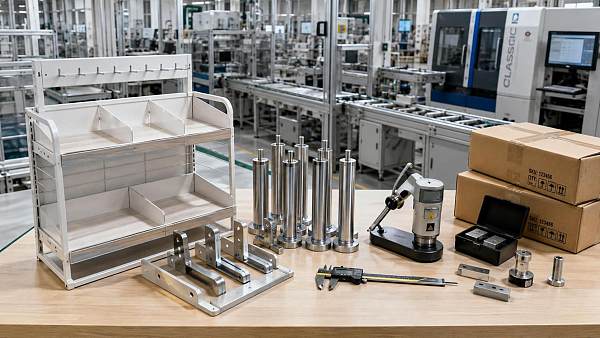
A premium display no longer stands on aesthetics alone. Commercial furniture and fixtures must support traffic flow, product accessibility, and easy maintenance. In many retail settings, evaluators check load-bearing capacity, surface wear resistance, replacement intervals, and installation precision within tolerances such as ±1–2 mm for visible components.
Smart retail technology adds another layer. AI-assisted POS terminals, digital signage, traffic analytics, and inventory synchronization shape how visible a brand feels in practice. If a shelf is empty for 48 hours or a POS queue exceeds 3–5 minutes during peak periods, visibility turns negative because the brand experience becomes inconsistent.
Four signals evaluators track
- Store readiness: fixture stability, lighting consistency, signage clarity, and installation quality.
- Digital responsiveness: POS speed, data integration, and promotion update frequency.
- Supply continuity: lead times, MOQ alignment, replenishment windows, and packaging protection rate.
- Compliance confidence: alignment with UL, CE, BIFMA, and destination-market safety requirements.
The table below shows how visibility is being redefined in the modern marketplace from a business evaluation perspective. It highlights the movement away from impression-based review toward benchmarked commercial performance.
The key takeaway is that visibility in the modern marketplace is now earned through coordinated execution. A brand may look strong in a campaign, but if its commercial hardware, logistics discipline, or packaging strategy cannot support scaling across 10, 50, or 200 locations, its visibility becomes fragile.
Why This Matters for Global Assessment Teams
Assessment teams often compare brands entering new retail, hospitality, workplace, or mixed-use projects. Their challenge is to identify whether a supplier ecosystem can meet both regional expectations and international technical standards. In a modern marketplace environment, a visually appealing concept without sourcing discipline can create cost overruns within 6–12 months.
G-BCE’s value in this process lies in cross-sector transparency. Evaluators can review how ergonomic systems, signage hardware, smart terminals, and sustainable packaging contribute to a single outcome: a reliable, scalable, and brand-consistent commercial environment. This is where visibility becomes a technical and strategic asset, not just a marketing phrase.
The Five Marketplace Shifts Reshaping Brand Visibility
The modern marketplace is changing through five linked shifts that directly affect how brands are judged by investors, procurement teams, and commercial planners. Each shift influences both front-end perception and back-end performance, making cross-functional evaluation essential.
1. Commercial Spaces Are Becoming Data-Guided
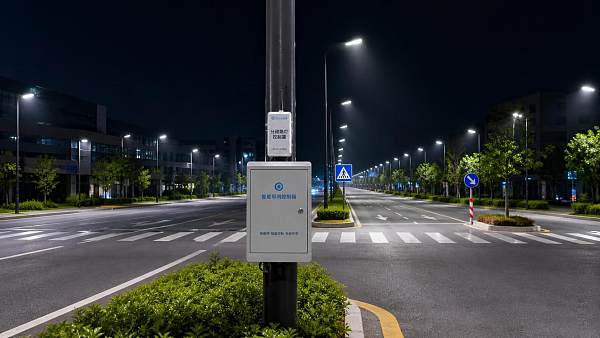
Retail and branded commercial spaces are increasingly expected to produce usable data. Smart POS systems, occupancy sensors, shelf analytics, and connected signage allow operators to measure dwell time, conversion zones, and restocking frequency. Even a 10%–15% reduction in checkout delay can materially improve perceived service quality.
For evaluators, the main question is whether a brand’s technology stack is interoperable. A standalone tool may look advanced, but if it cannot sync with inventory, promotions, or customer service systems within 1 platform environment, it weakens the overall marketplace model.
2. Supply Chain Agility Now Shapes Customer Trust
Visibility drops quickly when stockouts, damaged packaging, or delayed launches interrupt customer expectations. In the modern marketplace, business evaluators often review lead-time ranges such as 15–30 days for standard components and 30–60 days for custom fixture programs, depending on complexity and certification needs.
Agility is not only about speed. It also includes multi-sourcing readiness, packaging standardization, and quality consistency across batches. A brand with strong supply continuity tends to maintain shelf presence, promotional timing, and cross-border rollout discipline more effectively than one focused only on initial cost.
3. Sustainable Presentation Is Becoming a Commercial Requirement
Sustainable packaging, lower-emission materials, and longer-life fixtures increasingly influence how brands are screened. Commercial buyers are less interested in general green claims and more interested in practical questions: Can the packaging reduce cube volume by 8%–20%? Can fixture surfaces be replaced without discarding the full assembly? Is the signage solution energy-efficient across long operating hours?
This shift matters because sustainability is now tied to freight cost, compliance exposure, and brand reputation. In a modern marketplace, sustainable presentation is visible both to consumers and to procurement teams managing lifecycle value.
4. International Standards Influence Perceived Reliability
Products and systems used in global commercial spaces are often assessed against standards such as UL, CE, and BIFMA. These references do not guarantee success on their own, but they help evaluators compare safety, durability, and usability. A fixture or lighting component aligned with known standards usually reduces approval friction during project review.
In many cross-border developments, non-compliant components trigger delays of 2–6 weeks because redesign, retesting, or substitute sourcing becomes necessary. That delay can compromise store opening schedules, marketing calendars, and launch momentum in the modern marketplace.
5. Brand Experience Must Scale Without Quality Drift
Scaling from a flagship location to a multi-site rollout is where many brands lose visibility strength. Variations in fixture finish, lighting temperature, packaging quality, or digital interface performance can make 20 stores feel like 20 different brands. Evaluators now look for modular systems, documented tolerances, and repeatable installation methods.
A scalable brand ecosystem usually includes 3 layers of control: approved materials, standardized component libraries, and field-level acceptance criteria. This reduces variation and protects the visual and functional integrity of the modern marketplace experience across countries and formats.
How Business Evaluators Should Assess Marketplace Readiness
For business evaluators, assessing brand visibility in the modern marketplace requires more than reviewing catalogs or campaign concepts. A structured evaluation model should connect commercial design, hardware performance, supply chain control, and sustainability metrics into one decision framework.
A Practical 5-Point Evaluation Framework
- Verify standards alignment for fixtures, electrical components, seating systems, and signage hardware.
- Review average lead times, replenishment windows, and custom production complexity.
- Measure interoperability between POS, digital signage, inventory systems, and store analytics.
- Assess sustainability in material selection, packaging volume, and replacement strategy.
- Confirm rollout consistency through installation manuals, inspection checklists, and sample validation.
The following table can help evaluators compare supplier or brand readiness across the most critical dimensions of the modern marketplace. It is especially useful during vendor prequalification, project bidding, or expansion planning.
This framework helps separate surface-level branding from repeatable commercial value. In the modern marketplace, the most visible brands are often those with fewer operational surprises, shorter correction cycles, and better coordination between design intent and sourcing execution.
Common Mistakes During Brand Evaluation
One common mistake is overweighting showroom appearance while underweighting lifecycle cost. A fixture program that looks premium on day 1 may require replacement parts every 9–12 months if materials are not suited to heavy footfall. That weakens both profitability and brand credibility.
Another error is assuming digital tools alone will modernize visibility. Without data governance, training, and maintenance planning, smart retail devices can become underused assets. Evaluators should ask who manages updates, how often systems are calibrated, and what service response target applies within 24–72 hours.
Questions worth asking before approval
- Can the supplier support regional code differences without redesigning the full commercial concept?
- Are spare parts, packaging revisions, and signage updates available during a 2–3 year operating cycle?
- Does the technology layer improve customer flow, or does it add complexity at the point of sale?
- Can the same brand experience be reproduced across flagship, mall, travel retail, and mixed-use formats?
Applying Marketplace Intelligence to Better Sourcing Decisions
The modern marketplace rewards brands that connect intelligence with execution. For sourcing directors and commercial architects, this means using technical benchmarking not as a compliance exercise alone, but as a way to protect brand visibility at scale.
G-BCE’s cross-sector approach is valuable because visibility is rarely determined by one component. A lighting choice affects mood and energy use. Packaging affects freight and shelf readiness. Furniture affects comfort, dwell time, and space efficiency. Smart retail systems affect both data clarity and service speed. Evaluating these elements together creates stronger procurement decisions.
Where Intelligence Creates the Most Value
Benchmarking is most useful during 3 moments: concept development, supplier prequalification, and expansion rollout. At concept stage, it helps align materials and systems with target standards. During prequalification, it reduces vendor risk. During rollout, it improves replication across multiple locations and minimizes rework.
For business evaluators, the real advantage is decision speed with fewer blind spots. Instead of comparing claims in isolation, they can assess how fixture engineering, smart technology, consumer goods packaging, and commercial signage contribute to a resilient modern marketplace strategy.
Brand visibility is being redefined by what customers can experience and what operators can sustain. In the modern marketplace, the strongest brands are not simply the loudest; they are the most coherent across design, technology, sourcing, standards, and sustainability. If you are assessing suppliers, planning expansion, or refining a commercial ecosystem, now is the time to use deeper technical benchmarks and cross-sector intelligence. Contact us to get a tailored evaluation framework, explore product and sourcing details, or learn more solutions for building durable brand visibility.
- commercial furniture
- smart retail
- POS terminals
- supply chain
- consumer goods
- signage
- sustainable packaging
- commercial hardware
- retail technology
- commercial spaces
- commercial developers
- commercial architects
- international standards
- modern marketplace
- consumer ecosystems
- technical benchmarking
- smart retail systems
- smart retail technology
- consumer ecosystem
- commercial design
News Recommendations
 How to select laboratory instruments for reproducible test results
![51a6ab95581761cc26f4318be6520c15]()
Aris Katos
Future of Carbide Coatings
 When does a sheet metal prototype reveal design flaws early?
![51a6ab95581761cc26f4318be6520c15]()
Aris Katos
Future of Carbide Coatings
 When PE air column bags reduce damage in e-commerce fulfillment
![51a6ab95581761cc26f4318be6520c15]()
Aris Katos
Future of Carbide Coatings
 How energy-efficient design reduces operating costs in retail lighting
![51a6ab95581761cc26f4318be6520c15]()
Aris Katos
Future of Carbide Coatings
 When commercial aluminum storefronts make sense for a retail renovation
![51a6ab95581761cc26f4318be6520c15]()
Aris Katos
Future of Carbide Coatings
 What makes LED lights durable in high-use commercial spaces?
![51a6ab95581761cc26f4318be6520c15]()
Aris Katos
Future of Carbide Coatings
 Which industry categories offer the strongest export potential in Latin America?
![51a6ab95581761cc26f4318be6520c15]()
Aris Katos
Future of Carbide Coatings
 How to choose an ultra bright waterproof window display for storefronts
![51a6ab95581761cc26f4318be6520c15]()
Aris Katos
Future of Carbide Coatings
 How to verify suppliers on a trade portal for global sourcing
![51a6ab95581761cc26f4318be6520c15]()
Aris Katos
Future of Carbide Coatings
 How RoHS requirements should be stated in product specifications
![51a6ab95581761cc26f4318be6520c15]()
Aris Katos
Future of Carbide Coatings
 What affects the lead time for custom retail counter displays?
![51a6ab95581761cc26f4318be6520c15]()
Aris Katos
Future of Carbide Coatings
 What consumer packaging USA importers need to verify before ordering
![51a6ab95581761cc26f4318be6520c15]()
Aris Katos
Future of Carbide Coatings
 How commercial spaces interiors shape customer dwell time
![51a6ab95581761cc26f4318be6520c15]()
Aris Katos
Future of Carbide Coatings
 How LED commercial lighting design reduces glare in retail spaces
![51a6ab95581761cc26f4318be6520c15]()
Aris Katos
Future of Carbide Coatings
 How industrial technology information improves RFID inventory accuracy
![51a6ab95581761cc26f4318be6520c15]()
Aris Katos
Future of Carbide Coatings
 When drip garden watering systems make more sense than sprinklers
![51a6ab95581761cc26f4318be6520c15]()
Aris Katos
Future of Carbide Coatings
 When category comparison improves sourcing for industrial applications
![51a6ab95581761cc26f4318be6520c15]()
Aris Katos
Future of Carbide Coatings
 Industrial application guidance for selecting the right LED lighting
![51a6ab95581761cc26f4318be6520c15]()
Aris Katos
Future of Carbide Coatings
 Which commercial architecture standards apply to European retail fit-outs?
![51a6ab95581761cc26f4318be6520c15]()
Aris Katos
Future of Carbide Coatings
 How to verify FDA requirements for maternity care products
![51a6ab95581761cc26f4318be6520c15]()
Aris Katos
Future of Carbide Coatings
 How to verify BPA-free claims for food-contact products
![51a6ab95581761cc26f4318be6520c15]()
Aris Katos
Future of Carbide Coatings
 When does a European wholesale supplier suit modular office projects?
![51a6ab95581761cc26f4318be6520c15]()
Aris Katos
Future of Carbide Coatings
 When consumer ecosystem solutions improve the in-store shopping journey
![51a6ab95581761cc26f4318be6520c15]()
Aris Katos
Future of Carbide Coatings
 How a commercial developers network can reduce site selection risk
![51a6ab95581761cc26f4318be6520c15]()
Aris Katos
Future of Carbide Coatings
 How clear purchasing specifications prevent costly supplier deviations
![51a6ab95581761cc26f4318be6520c15]()
Aris Katos
Future of Carbide Coatings
 What an ISTA drop test lab checks before your packaging ships
![51a6ab95581761cc26f4318be6520c15]()
Aris Katos
Future of Carbide Coatings
 Which commercial furniture standards apply to workplace seating?
![51a6ab95581761cc26f4318be6520c15]()
Aris Katos
Future of Carbide Coatings
 How to evaluate smart lighting module OEM compatibility before sampling
![51a6ab95581761cc26f4318be6520c15]()
Aris Katos
Future of Carbide Coatings
 How to assess whether sustainable technology delivers real impact
![51a6ab95581761cc26f4318be6520c15]()
Aris Katos
Future of Carbide Coatings
 How to assess an OEM supplier’s quality control before ordering
![51a6ab95581761cc26f4318be6520c15]()
Aris Katos
Future of Carbide Coatings
 How consumer ecosystem solutions data can improve retail personalization
![51a6ab95581761cc26f4318be6520c15]()
Aris Katos
Future of Carbide Coatings
 When does consumer packaging design justify a higher product price?
![51a6ab95581761cc26f4318be6520c15]()
Aris Katos
Future of Carbide Coatings
 Supermarket Fixture Installation: Planning Layouts, Wiring, and Handover
![51a6ab95581761cc26f4318be6520c15]()
Aris Katos
Future of Carbide Coatings
 Automated Lighting and Smart Lighting Control in Bergerac: Key Project Considerations
![51a6ab95581761cc26f4318be6520c15]()
Aris Katos
Future of Carbide Coatings
 Segment Streetlight Controllers: Choosing Control Modes for Urban Roads
![51a6ab95581761cc26f4318be6520c15]()
Aris Katos
Future of Carbide Coatings
 IEC 62471-2 Explained: How to Assess Photobiological Risks in LED Lighting
![51a6ab95581761cc26f4318be6520c15]()
Aris Katos
Future of Carbide Coatings
 Food Grade Packaging Requirements by Product Type, Temperature, and Contact Risk
![51a6ab95581761cc26f4318be6520c15]()
Aris Katos
Future of Carbide Coatings
 Food Packaging Compliance Checklist: Tests, Records, and Labeling Before Shipment
![51a6ab95581761cc26f4318be6520c15]()
Aris Katos
Future of Carbide Coatings
 NSF Food Packaging Standards: When Certification Matters for Commercial Food Use
![51a6ab95581761cc26f4318be6520c15]()
Aris Katos
Future of Carbide Coatings