Pylon Sign Factory Selection: Materials, Wind Load, Code
Time
Click Count
Choosing the right pylon sign factory is more than a sourcing decision—it directly affects structural safety, visual impact, compliance, and long-term maintenance costs. For project managers and engineering leaders, understanding how materials, wind load performance, and local code requirements shape factory capability is essential to delivering durable, compliant, and brand-consistent signage across commercial environments.
In retail parks, fuel stations, hospitality sites, mixed-use developments, and chain rollouts, a pylon sign is both a structural asset and a branding instrument. A weak factory selection process can lead to rework, delayed permits, excessive maintenance, and avoidable field modifications.
For buyers managing multiple stakeholders across design, engineering, procurement, and installation, the best pylon sign factory is rarely the one with the lowest quote. It is the one that can document material quality, calculate wind resistance, align with jurisdictional codes, and support consistent execution from prototype to shipment.
Why Factory Selection Matters in Commercial Signage Projects
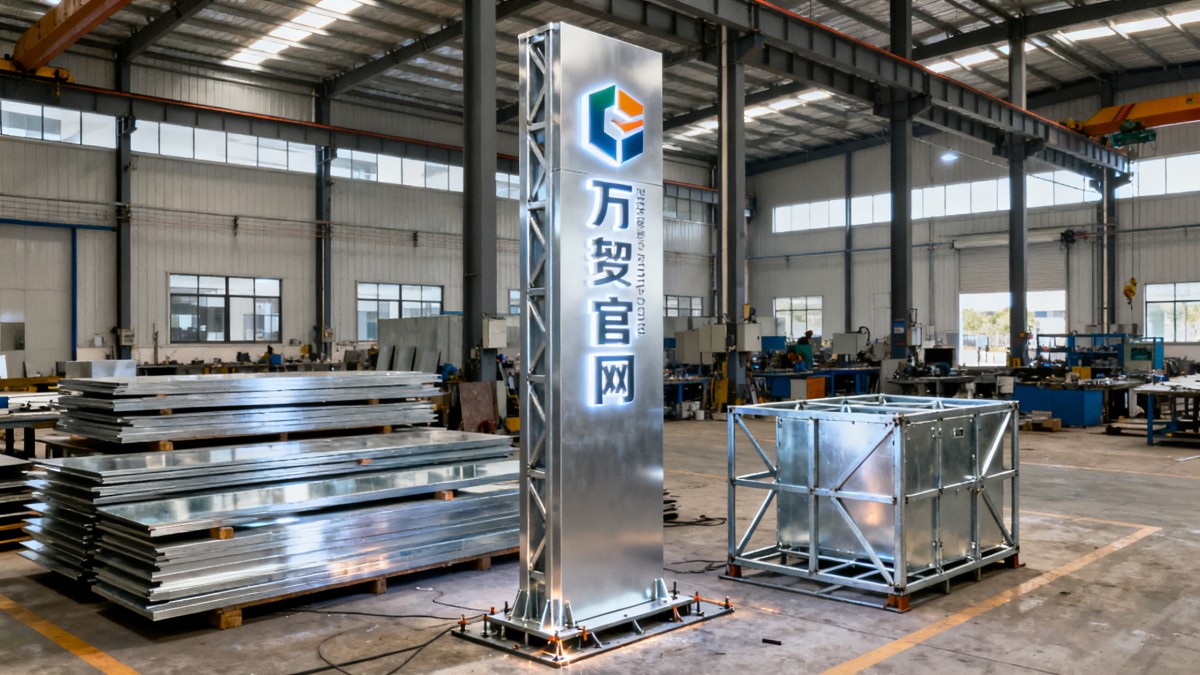
A pylon sign factory influences at least 4 critical project outcomes: structural reliability, finish consistency, permitting readiness, and lifecycle service cost. For project managers, these factors affect budget control over 12–36 months, not just initial fabrication pricing.
In cross-border sourcing environments, especially where Asian manufacturing serves North American, European, Middle Eastern, or Oceania commercial standards, the factory must bridge design intent with local execution rules. That requires more than fabrication capacity; it requires technical translation and disciplined documentation.
The Hidden Cost of Poor Factory Qualification
A low-cost supplier may still become an expensive choice if the sign requires redesign after engineering review. Common issues include undersized steel sections, incompatible coatings, weak anchor details, or illumination components that do not meet project specifications.
In practical terms, one redesign cycle can add 7–14 days. A permit rejection can add 2–6 weeks. If a sign face fades early or internal electrical components fail within the first 12 months, site service costs often exceed the original factory savings.
What Project Leaders Should Verify Early
- Whether the pylon sign factory provides structural calculations or coordinates with licensed engineers
- Whether material grades are documented for steel, aluminum, acrylic, fasteners, and coatings
- Whether wind load assumptions are clearly stated for sign height, area, and site exposure
- Whether shop drawings include footing interface, electrical routing, and maintenance access
- Whether packaging and shipping methods protect large-format components during 20–45 day transit cycles
Material Selection: The Foundation of Durability and Finish Quality
Material selection is often the first signal of a factory’s technical maturity. A capable pylon sign factory will explain not only what material is used, but why that specification fits the site, climate, brand finish, and maintenance plan.
Common Structural and Cladding Materials
Most pylon signs combine a structural steel frame with aluminum cladding, acrylic or polycarbonate faces, and internal LED systems. Typical steel thickness may range from 3mm to 12mm depending on sign height and loading, while aluminum skins often fall between 2mm and 4mm for exterior panel work.
Material choice also changes by exposure. Coastal and high-humidity markets generally require stronger corrosion resistance. Desert climates may demand better UV stability and thermal expansion control. Cold regions may require more attention to brittleness, water ingress, and sealant performance across freeze-thaw cycles.
How to Compare Material Options
The following comparison helps project teams evaluate what a pylon sign factory is actually offering rather than relying on broad terms like “premium metal” or “outdoor grade.”
For most chain or developer-led projects, the key is not choosing the most expensive material set. It is choosing the correct combination for the expected service life, which often falls in the 7–15 year range for exterior pylon signage before major refurbishment.
Questions to Ask the Factory About Materials
- What metal thicknesses are proposed for the pole, cabinet, and access panels?
- Is corrosion protection applied before assembly, after fabrication, or both?
- How are dissimilar metals isolated to reduce galvanic corrosion risk?
- What is the expected exterior finish performance in UV-heavy or marine conditions?
- Can the pylon sign factory supply sample panels or mockups within 5–10 working days?
Wind Load Performance: The Engineering Test Every Pylon Sign Factory Must Pass
Wind load is one of the most important technical filters when selecting a pylon sign factory. A visually attractive sign that lacks structural reserve can become a safety risk, especially for freestanding installations above 6 meters or in open exposure zones.
A qualified factory should define design assumptions for wind speed, projected area, panel configuration, and support geometry. In many markets, wind criteria differ by municipality, terrain category, hurricane zone, or proximity to coastlines. That means a single default design cannot serve all projects.
Key Engineering Variables
- Overall sign height, often ranging from 4m to 20m in retail and roadside applications
- Effective sign area, including decorative caps, tenant panels, and raceways
- Single-pole versus double-pole structure and resulting moment distribution
- Foundation interface, anchor layout, and load transfer to civil works
- Dynamic effects from open terrain, corner lots, and high-speed traffic corridors
Typical Wind Load Review Points
Before final purchase order release, project teams should compare the factory’s engineering package against these common review points.
If a pylon sign factory cannot explain these factors in plain technical language, that is usually a warning sign. Project managers do not need the factory to replace the local engineer of record, but they do need a fabrication partner that understands load paths, tolerances, and review workflows.
Practical Risk Signals
Be cautious if the supplier uses the same standard drawing for every market, omits wind assumptions, or treats foundation coordination as an installer problem. These shortcuts often create mismatches between shop drawings, permit submissions, and site conditions.
A stronger pylon sign factory will issue revised drawings within 3–7 working days after engineering comments, provide weld maps when required, and separate structural framing details from cosmetic skin details so both can be reviewed efficiently.
Code Compliance and Documentation: Where Projects Are Won or Delayed
Code compliance is not a final checkpoint. It should shape the factory selection process from the RFQ stage. A pylon sign factory serving international commercial projects must work with local permit pathways, electrical requirements, access provisions, and installation constraints.
What Compliance Usually Includes
Depending on the region, compliance may involve structural review, electrical component acceptability, illumination safety, zoning restrictions, height limitations, monument-to-pylon classification rules, and visibility standards. Even when the factory does not submit permits directly, its documentation quality determines approval speed.
- Shop drawings with dimensions, sections, and mounting details
- Material schedules and finish specifications
- Electrical layout and access panel locations
- Structural calculations or support data for engineer review
- Installation guidance tied to tolerances and base conditions
Documentation Checklist for Procurement Teams
This checklist can help buyers compare factories before award, especially on multi-site rollouts where one missing document can disrupt 10 or more parallel schedules.
Well-prepared documentation can cut approval friction significantly. In many projects, the difference between a 2-week and 5-week pre-production phase is not factory speed alone, but how complete the first submittal package is.
Common Code-Related Misunderstandings
One common mistake is assuming that a sign accepted in one city will be accepted everywhere. Another is treating electrical listing, structural adequacy, and zoning approval as the same issue. In reality, these are often 3 separate review streams with different reviewers and timelines.
Experienced project teams therefore ask the pylon sign factory to identify what is standard, what is optional, and what must be localized. That distinction is especially important for chain operators expanding into new jurisdictions with different sign ordinances.
How to Evaluate a Pylon Sign Factory for Multi-Site Delivery
Factory selection should balance engineering capability with operational consistency. For one-off signs, craftsmanship may be enough. For rollouts across 5, 20, or 100 sites, repeatability becomes just as important as design quality.
Five Evaluation Dimensions
- Technical depth: Can the factory explain structural logic, material systems, and review assumptions?
- Production control: Are there checkpoints for welding, surface preparation, assembly, and illumination testing?
- Documentation quality: Are drawings and revision records clear enough for architects, engineers, and installers?
- Logistics readiness: Can it crate oversized sections, label components, and support phased shipping?
- After-sales support: Can replacement faces, LED modules, or access components be supplied within a reasonable service window?
Typical Lead Time Framework
While each project differs, a realistic commercial timeline may include 1–3 weeks for drawing and engineering coordination, 2–5 weeks for fabrication, and additional transit time based on destination and packaging complexity. Rush projects are possible, but they often require narrower design changes and faster approval responses from the client side.
Where G-BCE Adds Benchmarking Value
For commercial developers, sourcing directors, and engineering managers comparing international vendors, G-BCE helps frame the decision beyond price sheets. In commercial lighting and signage, benchmarking the pylon sign factory across materials, structural logic, documentation discipline, and standards alignment creates a more reliable procurement pathway.
This is especially relevant when global design intent must be manufactured with Asian precision and deployed into markets that expect strict aesthetic control, durable finishes, and code-aware execution. The better the benchmark, the lower the risk of field surprises.
Final Procurement Guidance for Project Managers
A strong pylon sign factory should be able to show how it thinks, not just what it sells. Materials should be traceable, wind load assumptions should be reviewable, and code-related documentation should be organized early enough to protect schedule certainty.
For project managers and engineering leaders, the most effective buying approach is to align 3 tracks at the same time: design intent, structural compliance, and lifecycle maintenance. When these tracks are coordinated from the RFQ stage, the result is a sign package that performs better in the field and creates fewer downstream costs.
If you are assessing a pylon sign factory for a new development, chain rollout, or international sourcing program, G-BCE can help you benchmark specifications, compare factory capability, and refine your technical evaluation criteria. Contact us to get a tailored solution, review your project requirements, and explore more commercial signage sourcing strategies.
News Recommendations
 How to select laboratory instruments for reproducible test results
![51a6ab95581761cc26f4318be6520c15]()
Aris Katos
Future of Carbide Coatings
 When does a sheet metal prototype reveal design flaws early?
![51a6ab95581761cc26f4318be6520c15]()
Aris Katos
Future of Carbide Coatings
 When PE air column bags reduce damage in e-commerce fulfillment
![51a6ab95581761cc26f4318be6520c15]()
Aris Katos
Future of Carbide Coatings
 How energy-efficient design reduces operating costs in retail lighting
![51a6ab95581761cc26f4318be6520c15]()
Aris Katos
Future of Carbide Coatings
 When commercial aluminum storefronts make sense for a retail renovation
![51a6ab95581761cc26f4318be6520c15]()
Aris Katos
Future of Carbide Coatings
 What makes LED lights durable in high-use commercial spaces?
![51a6ab95581761cc26f4318be6520c15]()
Aris Katos
Future of Carbide Coatings
 Which industry categories offer the strongest export potential in Latin America?
![51a6ab95581761cc26f4318be6520c15]()
Aris Katos
Future of Carbide Coatings
 How to choose an ultra bright waterproof window display for storefronts
![51a6ab95581761cc26f4318be6520c15]()
Aris Katos
Future of Carbide Coatings
 How to verify suppliers on a trade portal for global sourcing
![51a6ab95581761cc26f4318be6520c15]()
Aris Katos
Future of Carbide Coatings
 How RoHS requirements should be stated in product specifications
![51a6ab95581761cc26f4318be6520c15]()
Aris Katos
Future of Carbide Coatings
 What affects the lead time for custom retail counter displays?
![51a6ab95581761cc26f4318be6520c15]()
Aris Katos
Future of Carbide Coatings
 What consumer packaging USA importers need to verify before ordering
![51a6ab95581761cc26f4318be6520c15]()
Aris Katos
Future of Carbide Coatings
 How commercial spaces interiors shape customer dwell time
![51a6ab95581761cc26f4318be6520c15]()
Aris Katos
Future of Carbide Coatings
 How LED commercial lighting design reduces glare in retail spaces
![51a6ab95581761cc26f4318be6520c15]()
Aris Katos
Future of Carbide Coatings
 How industrial technology information improves RFID inventory accuracy
![51a6ab95581761cc26f4318be6520c15]()
Aris Katos
Future of Carbide Coatings
 When drip garden watering systems make more sense than sprinklers
![51a6ab95581761cc26f4318be6520c15]()
Aris Katos
Future of Carbide Coatings
 When category comparison improves sourcing for industrial applications
![51a6ab95581761cc26f4318be6520c15]()
Aris Katos
Future of Carbide Coatings
 Industrial application guidance for selecting the right LED lighting
![51a6ab95581761cc26f4318be6520c15]()
Aris Katos
Future of Carbide Coatings
 Which commercial architecture standards apply to European retail fit-outs?
![51a6ab95581761cc26f4318be6520c15]()
Aris Katos
Future of Carbide Coatings
 How to verify FDA requirements for maternity care products
![51a6ab95581761cc26f4318be6520c15]()
Aris Katos
Future of Carbide Coatings
 How to verify BPA-free claims for food-contact products
![51a6ab95581761cc26f4318be6520c15]()
Aris Katos
Future of Carbide Coatings
 When does a European wholesale supplier suit modular office projects?
![51a6ab95581761cc26f4318be6520c15]()
Aris Katos
Future of Carbide Coatings
 When consumer ecosystem solutions improve the in-store shopping journey
![51a6ab95581761cc26f4318be6520c15]()
Aris Katos
Future of Carbide Coatings
 How a commercial developers network can reduce site selection risk
![51a6ab95581761cc26f4318be6520c15]()
Aris Katos
Future of Carbide Coatings
 How clear purchasing specifications prevent costly supplier deviations
![51a6ab95581761cc26f4318be6520c15]()
Aris Katos
Future of Carbide Coatings
 What an ISTA drop test lab checks before your packaging ships
![51a6ab95581761cc26f4318be6520c15]()
Aris Katos
Future of Carbide Coatings
 Which commercial furniture standards apply to workplace seating?
![51a6ab95581761cc26f4318be6520c15]()
Aris Katos
Future of Carbide Coatings
 How to evaluate smart lighting module OEM compatibility before sampling
![51a6ab95581761cc26f4318be6520c15]()
Aris Katos
Future of Carbide Coatings
 How to assess whether sustainable technology delivers real impact
![51a6ab95581761cc26f4318be6520c15]()
Aris Katos
Future of Carbide Coatings
 How to assess an OEM supplier’s quality control before ordering
![51a6ab95581761cc26f4318be6520c15]()
Aris Katos
Future of Carbide Coatings
 How consumer ecosystem solutions data can improve retail personalization
![51a6ab95581761cc26f4318be6520c15]()
Aris Katos
Future of Carbide Coatings
 When does consumer packaging design justify a higher product price?
![51a6ab95581761cc26f4318be6520c15]()
Aris Katos
Future of Carbide Coatings
 Supermarket Fixture Installation: Planning Layouts, Wiring, and Handover
![51a6ab95581761cc26f4318be6520c15]()
Aris Katos
Future of Carbide Coatings
 Automated Lighting and Smart Lighting Control in Bergerac: Key Project Considerations
![51a6ab95581761cc26f4318be6520c15]()
Aris Katos
Future of Carbide Coatings
 Segment Streetlight Controllers: Choosing Control Modes for Urban Roads
![51a6ab95581761cc26f4318be6520c15]()
Aris Katos
Future of Carbide Coatings
 IEC 62471-2 Explained: How to Assess Photobiological Risks in LED Lighting
![51a6ab95581761cc26f4318be6520c15]()
Aris Katos
Future of Carbide Coatings
 Food Grade Packaging Requirements by Product Type, Temperature, and Contact Risk
![51a6ab95581761cc26f4318be6520c15]()
Aris Katos
Future of Carbide Coatings
 Food Packaging Compliance Checklist: Tests, Records, and Labeling Before Shipment
![51a6ab95581761cc26f4318be6520c15]()
Aris Katos
Future of Carbide Coatings
 NSF Food Packaging Standards: When Certification Matters for Commercial Food Use
![51a6ab95581761cc26f4318be6520c15]()
Aris Katos
Future of Carbide Coatings