Wholesale LED Signs: Margin, MOQ, and Warranty Risks
Time
Click Count
For financial decision-makers evaluating wholesale led signs, margin potential is only part of the equation. MOQ exposure, warranty liabilities, and supplier consistency can quickly reshape total cost and long-term ROI. This article examines how to assess wholesale led signs through a risk-adjusted sourcing lens, helping buyers balance pricing, quality assurance, and scalable procurement with greater confidence.
What makes wholesale LED signs attractive, and where do margins really come from?
The appeal of wholesale led signs starts with customization, repeatability, and broad commercial demand across retail, hospitality, exhibitions, offices, and public venues.
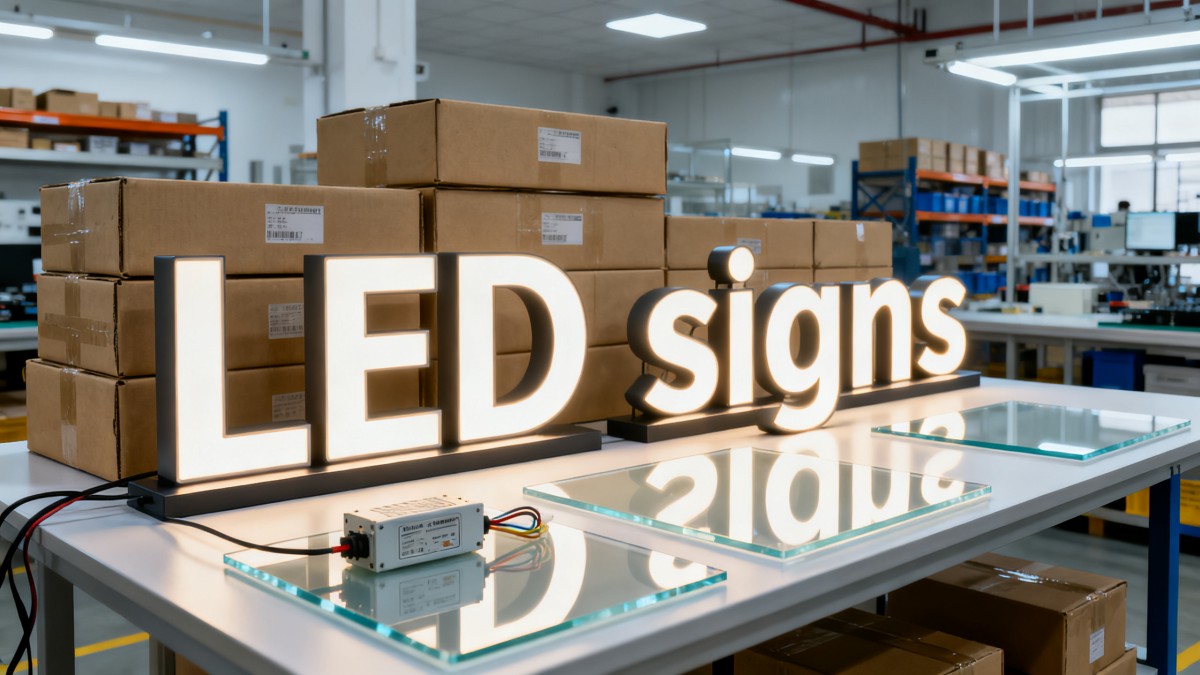
However, gross margin should never be judged only by unit price. Real profitability depends on specification stability, freight efficiency, returns, and install performance.
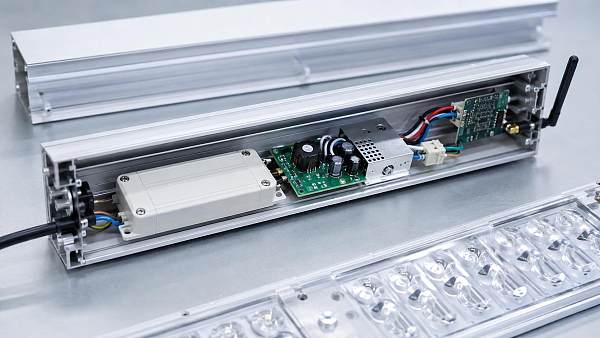
A low quotation may hide thinner acrylic, lower CRI LEDs, weaker power supplies, or inconsistent soldering. Those shortcuts often resurface as service calls and brand damage.
In commercial lighting and signage, perceived value rises when brightness, color consistency, and enclosure quality support premium environments. Better execution can preserve pricing power.
Margin also comes from standardization. When sign dimensions, transformers, mounting kits, and packaging formats stay consistent, handling costs and replacement complexity drop sharply.
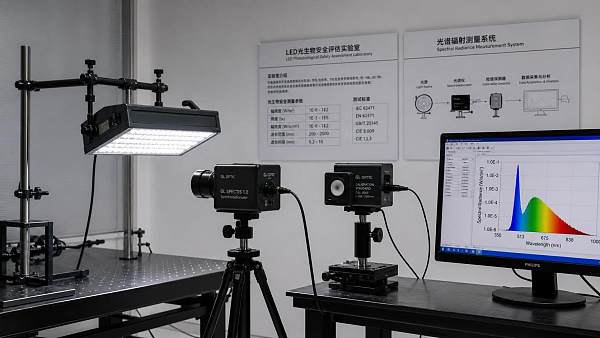
For cross-border sourcing, margin is also affected by compliance readiness. UL, CE, RoHS, and market-specific wiring requirements can change resale viability and project acceptance.
- Healthy margin usually combines stable specs, low defect rates, and efficient packaging.
- Weak margin often comes from hidden after-sales costs rather than invoice price.
- Premium segments reward better finish quality and documented reliability.
How should MOQ be evaluated when sourcing wholesale LED signs?
MOQ is one of the most underestimated risks in wholesale led signs. It locks cash into inventory before demand, installation timelines, and replacement needs are fully proven.
A supplier may offer a lower unit cost at 300 pieces, yet the effective cost increases if only 140 units move within the expected sales window.
MOQ should be separated into three categories: production MOQ, customization MOQ, and packaging MOQ. Each affects flexibility in a different way.
Production MOQ reflects factory efficiency. Customization MOQ applies when shapes, logos, voltage options, or dimming controls differ. Packaging MOQ appears with branded cartons or inserts.
For wholesale led signs used across multiple regions, mixed-model ordering can reduce dead stock. Shared components across different face designs improve spare compatibility.
Questions that help test MOQ exposure
- Can standard housings support several faceplate variations?
- Can the first order be split into pilot and mass phases?
- Do spare drivers and LED modules share the same MOQ?
- Will seasonal demand create obsolete inventory?
In many projects, a slightly higher unit cost with a lower MOQ creates stronger cash flow and better portfolio flexibility than an aggressive price break.
Which warranty risks can erase the value of a low price?
Warranty terms in wholesale led signs should be read beyond the headline period. A two-year warranty may still leave major replacement costs with the buyer.
The most common issue is limited coverage. Some suppliers replace only failed components, not labor, shipping, reinstallation, or local service coordination.
Another risk is ambiguous failure definition. Brightness decay, color shift, adhesive failure, water ingress, and driver noise may not be recognized as valid claims.
For indoor decorative signs, visual consistency matters as much as electrical function. A sign that still lights up but looks uneven can still damage commercial presentation.
Outdoor or semi-outdoor installations introduce additional warranty pressure. UV exposure, temperature swings, and moisture can accelerate enclosure and seal failure.
What should a workable warranty include?
- Clear coverage period for LEDs, drivers, power supplies, and housings.
- Defined thresholds for lumen maintenance and color consistency.
- Response timelines for technical review and replacement approval.
- Agreed responsibility for freight and field replacement parts.
- Traceability by batch number or production date.
Good warranty structure reduces uncertainty. It also signals whether the supplier truly understands lifecycle performance instead of focusing only on shipment completion.
How can supplier consistency be verified before scaling wholesale LED signs?
Consistency is the backbone of scalable wholesale led signs. One excellent sample does not guarantee repeatable output across larger volumes or later reorder cycles.
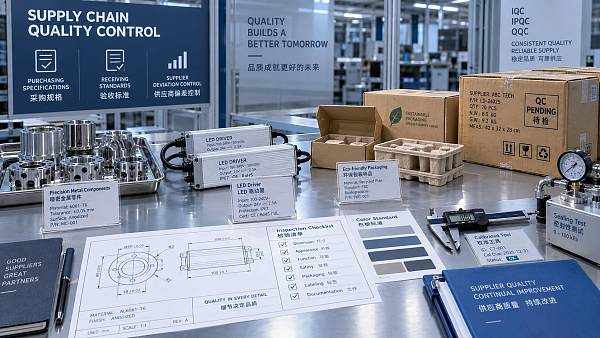
Verification starts with component control. Ask whether LED chips, drivers, acrylic sheets, and aluminum profiles remain fixed or shift according to spot availability.
Color temperature deviation, brightness variance, and uneven edge illumination often appear when component substitutions are not tightly managed.
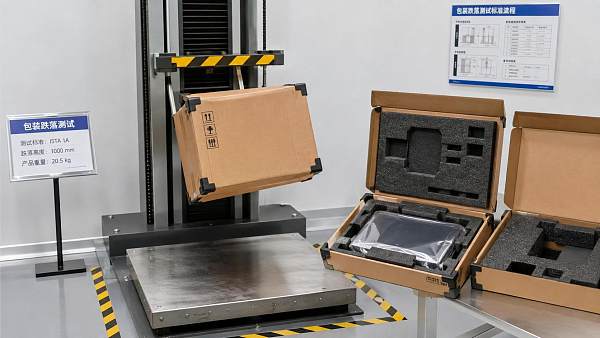
Packaging consistency matters too. Inadequate foam density or carton design can turn a technically sound product into a freight damage problem.
A practical review should include pre-production samples, production photos, carton drop logic, and documented inspection points for every batch.
Reliable suppliers of wholesale led signs usually welcome process questions. Evasive answers on components, testing, or change control deserve extra caution.
What cost factors are often missed in wholesale LED signs comparisons?
Price comparison tables often ignore the wider ownership cost of wholesale led signs. That creates false savings during vendor selection.
Freight density is one hidden factor. Bulky sign geometry can make shipping cost disproportionate, especially when packaging is not optimized for stacking.
Installation complexity is another. Poorly designed mounting systems add labor time, alignment issues, and field modifications that quickly consume margin.
Voltage compatibility can also create cost leakage. Reworking power supplies for different markets delays deployment and increases failure opportunities.
Documentation matters more than many expect. Missing wiring diagrams, certification records, or maintenance instructions can stall commercial approvals.
Commonly overlooked cost items
- Sample revisions and engineering changes.
- Custom packaging and label compliance.
- Import duties and certification testing.
- Spare parts stocking for service continuity.
- Field failure replacements and reverse logistics.
The best wholesale led signs decision is usually a total-cost decision, not a factory-price decision.
How can a safer sourcing framework improve long-term ROI?
A safer framework starts with segmentation. Not all wholesale led signs need the same specification depth, warranty length, or packaging investment.
High-visibility flagship environments deserve tighter color control, stronger materials, and stricter testing. Short-cycle promotional programs may prioritize flexibility and lower MOQ.
This is where benchmarking platforms such as G-BCE add value. Cross-sector reference points help compare signage hardware against broader commercial performance expectations.
Risk-adjusted sourcing also benefits from staged procurement. Start with a pilot, validate install performance, then expand after reviewing defects, delivery, and service responsiveness.
A disciplined framework turns wholesale led signs into a managed asset category instead of a recurring operational surprise.
In the end, successful sourcing balances margin ambition with evidence-based control over MOQ, warranty structure, and production consistency. Before scaling any wholesale led signs program, validate specification stability, clarify claim responsibility, and test whether supplier discipline holds across repeat batches. With a structured review process and benchmark-driven comparison, better pricing can align with better resilience, creating stronger long-term ROI for commercial environments.
News Recommendations
 How to select laboratory instruments for reproducible test results
![51a6ab95581761cc26f4318be6520c15]()
Aris Katos
Future of Carbide Coatings
 When does a sheet metal prototype reveal design flaws early?
![51a6ab95581761cc26f4318be6520c15]()
Aris Katos
Future of Carbide Coatings
 When PE air column bags reduce damage in e-commerce fulfillment
![51a6ab95581761cc26f4318be6520c15]()
Aris Katos
Future of Carbide Coatings
 How energy-efficient design reduces operating costs in retail lighting
![51a6ab95581761cc26f4318be6520c15]()
Aris Katos
Future of Carbide Coatings
 When commercial aluminum storefronts make sense for a retail renovation
![51a6ab95581761cc26f4318be6520c15]()
Aris Katos
Future of Carbide Coatings
 What makes LED lights durable in high-use commercial spaces?
![51a6ab95581761cc26f4318be6520c15]()
Aris Katos
Future of Carbide Coatings
 Which industry categories offer the strongest export potential in Latin America?
![51a6ab95581761cc26f4318be6520c15]()
Aris Katos
Future of Carbide Coatings
 How to choose an ultra bright waterproof window display for storefronts
![51a6ab95581761cc26f4318be6520c15]()
Aris Katos
Future of Carbide Coatings
 How to verify suppliers on a trade portal for global sourcing
![51a6ab95581761cc26f4318be6520c15]()
Aris Katos
Future of Carbide Coatings
 How RoHS requirements should be stated in product specifications
![51a6ab95581761cc26f4318be6520c15]()
Aris Katos
Future of Carbide Coatings
 What affects the lead time for custom retail counter displays?
![51a6ab95581761cc26f4318be6520c15]()
Aris Katos
Future of Carbide Coatings
 What consumer packaging USA importers need to verify before ordering
![51a6ab95581761cc26f4318be6520c15]()
Aris Katos
Future of Carbide Coatings
 How commercial spaces interiors shape customer dwell time
![51a6ab95581761cc26f4318be6520c15]()
Aris Katos
Future of Carbide Coatings
 How LED commercial lighting design reduces glare in retail spaces
![51a6ab95581761cc26f4318be6520c15]()
Aris Katos
Future of Carbide Coatings
 How industrial technology information improves RFID inventory accuracy
![51a6ab95581761cc26f4318be6520c15]()
Aris Katos
Future of Carbide Coatings
 When drip garden watering systems make more sense than sprinklers
![51a6ab95581761cc26f4318be6520c15]()
Aris Katos
Future of Carbide Coatings
 When category comparison improves sourcing for industrial applications
![51a6ab95581761cc26f4318be6520c15]()
Aris Katos
Future of Carbide Coatings
 Industrial application guidance for selecting the right LED lighting
![51a6ab95581761cc26f4318be6520c15]()
Aris Katos
Future of Carbide Coatings
 Which commercial architecture standards apply to European retail fit-outs?
![51a6ab95581761cc26f4318be6520c15]()
Aris Katos
Future of Carbide Coatings
 How to verify FDA requirements for maternity care products
![51a6ab95581761cc26f4318be6520c15]()
Aris Katos
Future of Carbide Coatings
 How to verify BPA-free claims for food-contact products
![51a6ab95581761cc26f4318be6520c15]()
Aris Katos
Future of Carbide Coatings
 When does a European wholesale supplier suit modular office projects?
![51a6ab95581761cc26f4318be6520c15]()
Aris Katos
Future of Carbide Coatings
 When consumer ecosystem solutions improve the in-store shopping journey
![51a6ab95581761cc26f4318be6520c15]()
Aris Katos
Future of Carbide Coatings
 How a commercial developers network can reduce site selection risk
![51a6ab95581761cc26f4318be6520c15]()
Aris Katos
Future of Carbide Coatings
 How clear purchasing specifications prevent costly supplier deviations
![51a6ab95581761cc26f4318be6520c15]()
Aris Katos
Future of Carbide Coatings
 What an ISTA drop test lab checks before your packaging ships
![51a6ab95581761cc26f4318be6520c15]()
Aris Katos
Future of Carbide Coatings
 Which commercial furniture standards apply to workplace seating?
![51a6ab95581761cc26f4318be6520c15]()
Aris Katos
Future of Carbide Coatings
 How to evaluate smart lighting module OEM compatibility before sampling
![51a6ab95581761cc26f4318be6520c15]()
Aris Katos
Future of Carbide Coatings
 How to assess whether sustainable technology delivers real impact
![51a6ab95581761cc26f4318be6520c15]()
Aris Katos
Future of Carbide Coatings
 How to assess an OEM supplier’s quality control before ordering
![51a6ab95581761cc26f4318be6520c15]()
Aris Katos
Future of Carbide Coatings
 How consumer ecosystem solutions data can improve retail personalization
![51a6ab95581761cc26f4318be6520c15]()
Aris Katos
Future of Carbide Coatings
 When does consumer packaging design justify a higher product price?
![51a6ab95581761cc26f4318be6520c15]()
Aris Katos
Future of Carbide Coatings
 Supermarket Fixture Installation: Planning Layouts, Wiring, and Handover
![51a6ab95581761cc26f4318be6520c15]()
Aris Katos
Future of Carbide Coatings
 Automated Lighting and Smart Lighting Control in Bergerac: Key Project Considerations
![51a6ab95581761cc26f4318be6520c15]()
Aris Katos
Future of Carbide Coatings
 Segment Streetlight Controllers: Choosing Control Modes for Urban Roads
![51a6ab95581761cc26f4318be6520c15]()
Aris Katos
Future of Carbide Coatings
 IEC 62471-2 Explained: How to Assess Photobiological Risks in LED Lighting
![51a6ab95581761cc26f4318be6520c15]()
Aris Katos
Future of Carbide Coatings
 Food Grade Packaging Requirements by Product Type, Temperature, and Contact Risk
![51a6ab95581761cc26f4318be6520c15]()
Aris Katos
Future of Carbide Coatings
 Food Packaging Compliance Checklist: Tests, Records, and Labeling Before Shipment
![51a6ab95581761cc26f4318be6520c15]()
Aris Katos
Future of Carbide Coatings
 NSF Food Packaging Standards: When Certification Matters for Commercial Food Use
![51a6ab95581761cc26f4318be6520c15]()
Aris Katos
Future of Carbide Coatings