Bagasse Food Container OEM: Key Food Safety Checks
Time
Click Count
When evaluating a bagasse food container OEM, food safety checks should lead the discussion, not price or delivery speed.
Across retail, foodservice, and cross-border packaging, safety expectations are rising with sustainability demands.
That shift makes supplier verification more technical.
A compliant molded fiber tray is no longer enough.
The real benchmark is whether a bagasse food container OEM can prove raw material purity, hygienic processing, migration safety, and batch traceability.
For global commercial ecosystems, these checks reduce contamination risk, support regulatory alignment, and protect brand consistency in every market.
Food safety scrutiny around bagasse food container OEMs is clearly intensifying

Sustainable packaging has moved from a niche preference to a mainstream commercial requirement.
Yet as adoption grows, regulators and buyers are asking harder questions about molded fiber inputs and process controls.
This is especially true for takeaway meals, chilled foods, and hot-fill applications.
In these settings, a bagasse food container OEM must show more than eco claims.
It must demonstrate that the product remains safe when exposed to heat, moisture, oil, storage pressure, and transport variation.
The strongest trend signal is the shift from document-based approval to evidence-based approval.
Declarations still matter, but buyers increasingly request lab reports, process records, retention samples, and supplier audit results.
Several market forces are driving stricter bagasse food container OEM checks
The tightening of controls is not random.
It reflects deeper changes in packaging regulation, consumer expectations, and supply chain complexity.
These forces are reshaping how a bagasse food container OEM is assessed.
The key question is no longer whether the factory can produce volume.
It is whether the factory can sustain food-safe quality under commercial pressure.
The first inspection priority is raw material purity and source consistency
Bagasse is a byproduct of sugarcane processing, but not every feedstock stream is equally suitable for food contact packaging.
The safest bagasse food container OEM programs begin with strict incoming material controls.
What should be verified at the raw material stage
- Bagasse source records and supplier qualification status
- Absence of post-consumer recycled fiber in food contact layers
- Screening for heavy metals, pesticide residues, and foreign particles
- Moisture stability and storage conditions before pulping
- Control of bleaching agents, wet strength additives, and release chemicals
Feedstock contamination can enter before production even begins.
If storage is humid or mixed with non-food fibers, microbial and physical risks rise quickly.
For that reason, a credible bagasse food container OEM should maintain lot segregation and documented intake inspection.
Production hygiene now determines whether sustainable packaging can truly stay food-safe
Clean feedstock alone does not guarantee a safe final container.
Contamination often appears during pulping, molding, trimming, drying, packing, or storage.
That makes factory hygiene one of the most revealing indicators in any bagasse food container OEM assessment.
Critical hygiene checkpoints inside the plant
- Water quality used in pulping and cleaning
- Equipment sanitation frequency and verification logs
- Worker hygiene controls, clothing rules, and handwashing access
- Pest prevention, dust management, and air exposure control
- Separation of raw areas, semi-finished areas, and finished goods zones
Dry molded products may appear low-risk, but open handling still matters.
Surface debris, mold growth, and packaging dust can affect both food safety and customer perception.
A strong bagasse food container OEM should also define nonconformance actions for any sanitation failure.
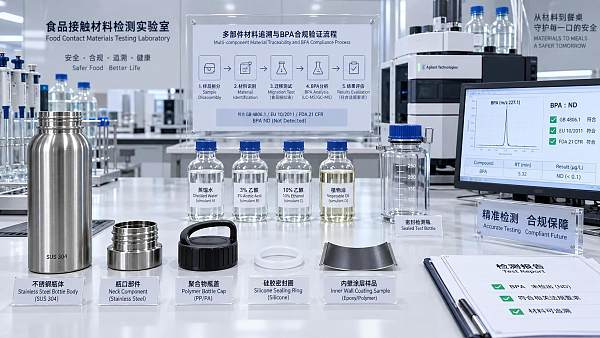
Compliance testing is shifting from a paperwork exercise to a use-case test
Many failures occur because generic test reports are treated as universal proof.
In reality, food contact safety depends on product structure, additives, food type, and temperature profile.
A reliable bagasse food container OEM should align testing with actual usage.
Testing areas that deserve close review
Reports should show dates, standards, sample descriptions, and accredited laboratories where possible.
Old or mismatched reports reduce confidence fast.
Traceability and batch discipline are becoming decisive trust signals
As packaging portfolios expand, traceability is becoming a practical requirement rather than an administrative extra.
If a complaint emerges, the response window is short.
A capable bagasse food container OEM should identify what was produced, when, with which input lot, and under which process conditions.
This affects more than recalls.
It also supports trend analysis, corrective action, and consistency across future orders.
Key records worth reviewing
- Finished goods lot coding and carton labeling rules
- Retention sample policy and storage duration
- Process deviation logs and corrective action reports
- Supplier batch linkage for fibers and additives
- Complaint closure records and response timelines
These food safety checks influence multiple business links, not just factory approval
The impact of a weak bagasse food container OEM reaches far beyond product quality.
It can affect retail presentation, consumer trust, border clearance, and waste reduction goals.
In commercial ecosystems, packaging safety and packaging performance now move together.
When safety checks are robust, product launches become more predictable.
Returns decline, complaint handling improves, and sustainability claims carry more credibility.
The smartest next step is building a verification framework before scaling orders
A practical review framework helps convert food safety from a reactive issue into a controllable sourcing standard.
For any bagasse food container OEM, focus on these priority actions first.
- Match test reports to exact product type, coating status, and end-use temperature
- Request a documented raw material control plan with additive disclosure
- Audit hygiene zoning, water control, and finished goods protection
- Confirm batch coding, retention samples, and recall response procedures
- Recheck compliance whenever formulation, fiber source, or process settings change
In a market shaped by sustainable materials and tighter compliance expectations, selecting a bagasse food container OEM is ultimately a risk decision.
The safest choice is usually the supplier that can explain, measure, and document every critical control point.
That evidence creates stronger packaging programs and more resilient global consumer supply chains.
For deeper benchmarking across sustainable packaging, commercial standards, and cross-border supply chain performance, G-BCE can support the next stage of technical evaluation.
News Recommendations
 How to verify international standards compliance for Middle East exports
![51a6ab95581761cc26f4318be6520c15]()
Aris Katos
Future of Carbide Coatings
 How to select laboratory instruments for reproducible test results
![51a6ab95581761cc26f4318be6520c15]()
Aris Katos
Future of Carbide Coatings
 When does a sheet metal prototype reveal design flaws early?
![51a6ab95581761cc26f4318be6520c15]()
Aris Katos
Future of Carbide Coatings
 When PE air column bags reduce damage in e-commerce fulfillment
![51a6ab95581761cc26f4318be6520c15]()
Aris Katos
Future of Carbide Coatings
 How energy-efficient design reduces operating costs in retail lighting
![51a6ab95581761cc26f4318be6520c15]()
Aris Katos
Future of Carbide Coatings
 When commercial aluminum storefronts make sense for a retail renovation
![51a6ab95581761cc26f4318be6520c15]()
Aris Katos
Future of Carbide Coatings
 What makes LED lights durable in high-use commercial spaces?
![51a6ab95581761cc26f4318be6520c15]()
Aris Katos
Future of Carbide Coatings
 Which industry categories offer the strongest export potential in Latin America?
![51a6ab95581761cc26f4318be6520c15]()
Aris Katos
Future of Carbide Coatings
 How to choose an ultra bright waterproof window display for storefronts
![51a6ab95581761cc26f4318be6520c15]()
Aris Katos
Future of Carbide Coatings
 How to verify suppliers on a trade portal for global sourcing
![51a6ab95581761cc26f4318be6520c15]()
Aris Katos
Future of Carbide Coatings
 How RoHS requirements should be stated in product specifications
![51a6ab95581761cc26f4318be6520c15]()
Aris Katos
Future of Carbide Coatings
 What affects the lead time for custom retail counter displays?
![51a6ab95581761cc26f4318be6520c15]()
Aris Katos
Future of Carbide Coatings
 What consumer packaging USA importers need to verify before ordering
![51a6ab95581761cc26f4318be6520c15]()
Aris Katos
Future of Carbide Coatings
 How commercial spaces interiors shape customer dwell time
![51a6ab95581761cc26f4318be6520c15]()
Aris Katos
Future of Carbide Coatings
 How LED commercial lighting design reduces glare in retail spaces
![51a6ab95581761cc26f4318be6520c15]()
Aris Katos
Future of Carbide Coatings
 How industrial technology information improves RFID inventory accuracy
![51a6ab95581761cc26f4318be6520c15]()
Aris Katos
Future of Carbide Coatings
 When drip garden watering systems make more sense than sprinklers
![51a6ab95581761cc26f4318be6520c15]()
Aris Katos
Future of Carbide Coatings
 When category comparison improves sourcing for industrial applications
![51a6ab95581761cc26f4318be6520c15]()
Aris Katos
Future of Carbide Coatings
 Industrial application guidance for selecting the right LED lighting
![51a6ab95581761cc26f4318be6520c15]()
Aris Katos
Future of Carbide Coatings
 Which commercial architecture standards apply to European retail fit-outs?
![51a6ab95581761cc26f4318be6520c15]()
Aris Katos
Future of Carbide Coatings
 How to verify FDA requirements for maternity care products
![51a6ab95581761cc26f4318be6520c15]()
Aris Katos
Future of Carbide Coatings
 How to verify BPA-free claims for food-contact products
![51a6ab95581761cc26f4318be6520c15]()
Aris Katos
Future of Carbide Coatings
 When does a European wholesale supplier suit modular office projects?
![51a6ab95581761cc26f4318be6520c15]()
Aris Katos
Future of Carbide Coatings
 When consumer ecosystem solutions improve the in-store shopping journey
![51a6ab95581761cc26f4318be6520c15]()
Aris Katos
Future of Carbide Coatings
 How a commercial developers network can reduce site selection risk
![51a6ab95581761cc26f4318be6520c15]()
Aris Katos
Future of Carbide Coatings
 How clear purchasing specifications prevent costly supplier deviations
![51a6ab95581761cc26f4318be6520c15]()
Aris Katos
Future of Carbide Coatings
 What an ISTA drop test lab checks before your packaging ships
![51a6ab95581761cc26f4318be6520c15]()
Aris Katos
Future of Carbide Coatings
 Which commercial furniture standards apply to workplace seating?
![51a6ab95581761cc26f4318be6520c15]()
Aris Katos
Future of Carbide Coatings
 How to evaluate smart lighting module OEM compatibility before sampling
![51a6ab95581761cc26f4318be6520c15]()
Aris Katos
Future of Carbide Coatings
 How to assess whether sustainable technology delivers real impact
![51a6ab95581761cc26f4318be6520c15]()
Aris Katos
Future of Carbide Coatings
 How to assess an OEM supplier’s quality control before ordering
![51a6ab95581761cc26f4318be6520c15]()
Aris Katos
Future of Carbide Coatings
 How consumer ecosystem solutions data can improve retail personalization
![51a6ab95581761cc26f4318be6520c15]()
Aris Katos
Future of Carbide Coatings
 When does consumer packaging design justify a higher product price?
![51a6ab95581761cc26f4318be6520c15]()
Aris Katos
Future of Carbide Coatings
 Supermarket Fixture Installation: Planning Layouts, Wiring, and Handover
![51a6ab95581761cc26f4318be6520c15]()
Aris Katos
Future of Carbide Coatings
 Automated Lighting and Smart Lighting Control in Bergerac: Key Project Considerations
![51a6ab95581761cc26f4318be6520c15]()
Aris Katos
Future of Carbide Coatings
 Segment Streetlight Controllers: Choosing Control Modes for Urban Roads
![51a6ab95581761cc26f4318be6520c15]()
Aris Katos
Future of Carbide Coatings
 IEC 62471-2 Explained: How to Assess Photobiological Risks in LED Lighting
![51a6ab95581761cc26f4318be6520c15]()
Aris Katos
Future of Carbide Coatings
 Food Grade Packaging Requirements by Product Type, Temperature, and Contact Risk
![51a6ab95581761cc26f4318be6520c15]()
Aris Katos
Future of Carbide Coatings
 Food Packaging Compliance Checklist: Tests, Records, and Labeling Before Shipment
![51a6ab95581761cc26f4318be6520c15]()
Aris Katos
Future of Carbide Coatings