How to Vet a Pulp Molding Packaging Supplier
Time
Click Count
Choosing the right pulp molding packaging supplier can directly affect product quality, compliance, sustainability performance, and long-term supply stability. For business evaluators, supplier vetting is not just about price—it requires a clear review of manufacturing capability, certification standards, customization flexibility, and delivery reliability. This guide outlines the key criteria to help you assess suppliers with greater confidence and make smarter sourcing decisions.
In cross-border sourcing, a qualified pulp molding packaging supplier is often expected to do more than produce trays or inserts. Buyers increasingly need support on packaging engineering, retail presentation, transit protection, documentation, and ongoing supply continuity across multiple SKUs and regions.
For commercial evaluators working with consumer goods, retail packaging, electronics accessories, cosmetics, food-adjacent items, or premium gift products, the review process should combine factory capability, risk control, and business fit. A lower unit price can quickly lose value if the supplier struggles with tooling, moisture control, lead times, or compliance paperwork.
Define the Commercial Requirements Before Screening Suppliers

A supplier review starts with internal clarity. Before contacting any pulp molding packaging supplier, business teams should define the product category, annual demand, packaging function, target markets, and approval criteria. This first step reduces wasted sampling cycles and helps distinguish suitable manufacturers from trading intermediaries.
In many sourcing projects, 4 baseline variables determine supplier fit: product fragility, surface finish expectations, required certifications, and volume stability. For example, a protective electronics insert may prioritize drop resistance and dimensional accuracy within a ±1.0 mm to ±2.0 mm range, while a cosmetics box insert may place higher weight on edge definition, color consistency, and retail appearance.
Clarify End-Use and Performance Targets
Pulp molded packaging is not a single-grade commodity. Dry-pressed, wet-pressed, and transfer-molded formats serve different commercial goals. A business evaluator should confirm whether the packaging is intended for primary display, secondary protection, e-commerce shipment, or point-of-sale presentation.
If the packaging will be used in premium retail environments, surface smoothness and uniformity may matter more than basic stackability. If it will be used in export logistics, compression resistance, nesting efficiency, and carton loading ratio may have more influence on total landed cost.
Common evaluation questions
- Does the packaging protect the product through 3 stages: warehouse handling, transport, and shelf display?
- Is the design optimized for a MOQ of 5,000 units, 20,000 units, or 100,000+ units?
- Will the supplier support custom tooling revisions within 7–14 days if fit issues appear?
- Can the factory maintain stable quality over repeat orders every 30–90 days?
Build a Supplier Shortlist Using Measurable Filters
A practical shortlist should usually include 3 to 5 candidate suppliers. More than that often slows comparison without improving decision quality. The shortlist should be based on material capability, export experience, factory type, tooling response, and documented quality systems.
The table below helps business evaluators translate broad sourcing goals into clear screening criteria when comparing each pulp molding packaging supplier.
The strongest candidates are usually not the cheapest on paper. They are the ones that can explain process limits, quantify lead times, and provide repeatable answers on tolerances, defects, and delivery controls. This is especially important for buyers operating within multi-market commercial supply chains.
Assess Manufacturing Capability and Process Stability
Once a shortlist is formed, the next step is operational verification. A reliable pulp molding packaging supplier should be able to explain raw material sourcing, pulp formulation, mold development, drying method, trimming, inspection, and packing. If these answers remain vague, the sourcing risk usually rises.
For business evaluators, process stability matters more than isolated sample quality. A supplier may deliver 10 excellent prototypes but still struggle to hold consistency over a 50,000-unit or 200,000-unit production run. The review should focus on repeatability, not just first impressions.
Check Tooling, Sample Development, and Scale-Up Readiness
Tooling lead time for molded pulp packaging often falls within 10–20 days for standard structures, while more complex premium forms may require 3–5 weeks. Ask whether tooling is produced in-house or outsourced, how many revision rounds are included, and whether sample feedback is documented.
A mature supplier should also explain how sample approval transitions into mass production. This includes mold storage, first article confirmation, in-process inspection frequency, and final carton packing standards. Without a clear handoff process, approved samples may not match production output.
Operational signs worth checking
- Separate areas for pulp preparation, molding, drying, trimming, and finished goods packing.
- Documented inspection points at least 3 times: first-off sample, in-line checks, and pre-shipment review.
- Backup plans for power interruption, mold maintenance, or seasonal labor fluctuation.
- Recorded defect categories such as cracking, burrs, warping, color variation, and poor fit.
Review Capacity Against Your Demand Profile
Capacity should be reviewed in relation to actual sourcing patterns. A supplier that claims high output but depends on one line or one major customer may still be risky. Ask about average monthly throughput, peak utilization, and the percentage of capacity already booked during busy months.
For example, if your project needs 80,000 units per month with a replenishment window of 21 days, a supplier operating at 90% utilization may be less dependable than one running at 65% to 75% utilization with two redundant forming lines.
Inspect Quality Control Through Specific Metrics
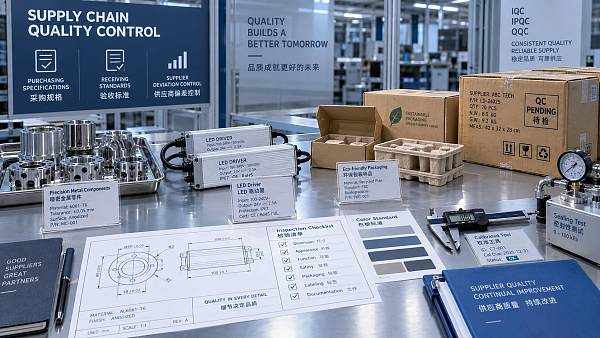
Ask the supplier what dimensional checks are routine, how moisture is monitored after drying, and how finished parts are packed to prevent deformation. In many projects, consistency in thickness, edge cleanliness, and nesting behavior affects downstream packing efficiency as much as visual quality.
The table below shows a practical quality review framework for any pulp molding packaging supplier under consideration.
A useful takeaway is that quality cannot be judged by appearance alone. A clean-looking sample may still perform poorly in humid storage or high-stack loading. Evaluators should request both visual and functional verification before approving a supplier.
Verify Compliance, Sustainability, and Documentation Discipline
For global sourcing teams, compliance review is often where supplier qualification either becomes stronger or stalls. A professional pulp molding packaging supplier should be comfortable discussing material origin, restricted substance controls, packaging declarations, and region-specific documentation requirements.
Business evaluators should avoid assuming that “paper-based” automatically means compliant in every market. Requirements vary by product category, contact conditions, destination country, and retailer policy. Even when formal certification is not mandatory, buyers may still need material statements, test records, or traceability files for internal approval.
What Documentation Should Be Requested
At a minimum, request a supplier profile, quality process overview, sample approval records, and material declarations relevant to the destination market. If the packaging is used with sensitive consumer goods, the evaluator may also need migration-related or substance-related test documentation from a recognized testing workflow.
It is also useful to ask how often documents are updated. A certificate or declaration that is 24 months old may not reflect current raw material inputs or revised production conditions. Update cycles every 6–12 months are generally easier to manage in ongoing procurement.
Key compliance checkpoints
- Material source consistency and any use of recycled fiber content.
- Ability to provide supporting declarations for customer or market review.
- Internal lot traceability from raw pulp input to packed finished goods.
- Change notification process if material, mold, or process parameters shift.
Sustainability Claims Need Proof, Not Marketing Language
Sustainability has become a major purchasing factor, but vague claims can create risk. If a pulp molding packaging supplier promotes compostable, recyclable, or plastic-reduction benefits, ask how those claims are supported in practice. Business buyers should verify material composition, coatings, and any secondary components such as labels, inks, or laminated layers.
From a commercial standpoint, the best sustainability profile is one that aligns environmental intent with stable production and usable packaging performance. A package that looks eco-friendly but fails during transport may increase waste, replacement shipments, and total supply chain cost.
Evaluate Commercial Fit: Cost, Lead Time, and Service Reliability
After technical and compliance reviews, the decision usually comes down to commercial fit. A dependable pulp molding packaging supplier should offer transparent quotations, realistic lead times, and clear communication on tooling cost, sampling charges, packing methods, and order change rules.
Price comparison only becomes meaningful when the quotation basis is aligned. Buyers should confirm whether pricing includes tooling amortization, trimming, surface finishing, custom color, export cartons, palletization, and inspection. A quote that appears 8% lower may later become 12% higher once hidden cost items are added.
Lead Time Discipline Matters More Than Best-Case Promises
Production lead time for molded pulp packaging commonly falls within 15–35 days after sample approval, depending on complexity, volume, and season. Evaluators should ask for both normal lead time and peak season lead time, plus the cut-off point for rush orders.
It is also worth reviewing on-time delivery performance over the last 6–12 months, even if the supplier provides only an internal record. What matters is whether the explanation is detailed and operational, not simply promotional.
Service Quality Is a Procurement Risk-Control Tool
In B2B sourcing, responsiveness can directly affect launch dates. A strong supplier should answer technical questions within 24–48 hours, provide revised drawings promptly, and clarify deviations before shipment. Slow or incomplete communication often signals future execution issues.
Business evaluators should also examine whether the supplier can support multi-department coordination. Packaging sourcing rarely involves only purchasing. Quality, design, compliance, logistics, and merchandising teams may all need aligned information within one review cycle.
Commercial review checklist
- Confirm MOQ, price breaks, and tooling terms for at least 3 volume tiers.
- Review standard lead time, peak lead time, and emergency order options.
- Verify defect handling, replacement policy, and photo-based claim procedure.
- Check whether the supplier can support annual forecast planning and rolling orders.
Run a Practical Supplier Vetting Process
A consistent vetting process improves decision quality, especially when multiple departments or regions are involved. Rather than relying on informal impressions, buyers should use a step-by-step framework with weighted criteria. This creates a more defensible sourcing decision and reduces post-award disputes.
A typical commercial review can be completed in 5 stages over 3–6 weeks, depending on sampling speed and document readiness. Faster decisions are possible, but compressed timelines often reduce comparison depth and increase downstream change costs.
Suggested 5-Step Evaluation Workflow
- Define packaging function, demand forecast, and approval standards.
- Screen 3–5 suppliers based on process fit and export readiness.
- Request samples, tooling details, and compliance documentation.
- Score quality, service response, cost structure, and lead time realism.
- Approve one primary supplier and keep one backup source for continuity.
Common Mistakes Business Evaluators Should Avoid
One common mistake is evaluating a pulp molding packaging supplier only by the initial sample. Samples are useful, but they do not reveal enough about line stability, raw material variation, or packing discipline. Another mistake is selecting a supplier with strong presentation materials but weak engineering response.
A third issue is overlooking backup capacity. If the selected supplier has no contingency plan for mold damage, machine downtime, or labor shortage, the buyer may face a full stop in supply. For important product lines, dual-source planning is often worth the extra setup effort.
Questions to Ask During Final Review
- What is the typical deviation between approved sample and mass production output?
- How are moisture, warping, and stacking risks controlled in storage and export transit?
- What is the standard response time for quality claims after delivery?
- Can the supplier support design optimization to reduce material use by 5%–15% without harming protection?
Selecting the right pulp molding packaging supplier requires balancing manufacturing reality, compliance discipline, commercial clarity, and long-term service reliability. The best sourcing outcomes usually come from suppliers that can explain their process in detail, support packaging development with data, and maintain stable performance across both launch and replenishment orders.
For business evaluators managing modern retail and consumer goods supply chains, a structured supplier review is not just a procurement exercise. It is a way to protect brand presentation, control operational risk, and improve sustainability performance without sacrificing delivery consistency. If you are reviewing molded pulp options for commercial packaging programs, contact us to discuss your sourcing criteria, compare supplier benchmarks, and obtain a more tailored evaluation framework.
News Recommendations
 How to select laboratory instruments for reproducible test results
![51a6ab95581761cc26f4318be6520c15]()
Aris Katos
Future of Carbide Coatings
 When does a sheet metal prototype reveal design flaws early?
![51a6ab95581761cc26f4318be6520c15]()
Aris Katos
Future of Carbide Coatings
 When PE air column bags reduce damage in e-commerce fulfillment
![51a6ab95581761cc26f4318be6520c15]()
Aris Katos
Future of Carbide Coatings
 How energy-efficient design reduces operating costs in retail lighting
![51a6ab95581761cc26f4318be6520c15]()
Aris Katos
Future of Carbide Coatings
 When commercial aluminum storefronts make sense for a retail renovation
![51a6ab95581761cc26f4318be6520c15]()
Aris Katos
Future of Carbide Coatings
 What makes LED lights durable in high-use commercial spaces?
![51a6ab95581761cc26f4318be6520c15]()
Aris Katos
Future of Carbide Coatings
 Which industry categories offer the strongest export potential in Latin America?
![51a6ab95581761cc26f4318be6520c15]()
Aris Katos
Future of Carbide Coatings
 How to choose an ultra bright waterproof window display for storefronts
![51a6ab95581761cc26f4318be6520c15]()
Aris Katos
Future of Carbide Coatings
 How to verify suppliers on a trade portal for global sourcing
![51a6ab95581761cc26f4318be6520c15]()
Aris Katos
Future of Carbide Coatings
 How RoHS requirements should be stated in product specifications
![51a6ab95581761cc26f4318be6520c15]()
Aris Katos
Future of Carbide Coatings
 What affects the lead time for custom retail counter displays?
![51a6ab95581761cc26f4318be6520c15]()
Aris Katos
Future of Carbide Coatings
 What consumer packaging USA importers need to verify before ordering
![51a6ab95581761cc26f4318be6520c15]()
Aris Katos
Future of Carbide Coatings
 How commercial spaces interiors shape customer dwell time
![51a6ab95581761cc26f4318be6520c15]()
Aris Katos
Future of Carbide Coatings
 How LED commercial lighting design reduces glare in retail spaces
![51a6ab95581761cc26f4318be6520c15]()
Aris Katos
Future of Carbide Coatings
 How industrial technology information improves RFID inventory accuracy
![51a6ab95581761cc26f4318be6520c15]()
Aris Katos
Future of Carbide Coatings
 When drip garden watering systems make more sense than sprinklers
![51a6ab95581761cc26f4318be6520c15]()
Aris Katos
Future of Carbide Coatings
 When category comparison improves sourcing for industrial applications
![51a6ab95581761cc26f4318be6520c15]()
Aris Katos
Future of Carbide Coatings
 Industrial application guidance for selecting the right LED lighting
![51a6ab95581761cc26f4318be6520c15]()
Aris Katos
Future of Carbide Coatings
 Which commercial architecture standards apply to European retail fit-outs?
![51a6ab95581761cc26f4318be6520c15]()
Aris Katos
Future of Carbide Coatings
 How to verify FDA requirements for maternity care products
![51a6ab95581761cc26f4318be6520c15]()
Aris Katos
Future of Carbide Coatings
 How to verify BPA-free claims for food-contact products
![51a6ab95581761cc26f4318be6520c15]()
Aris Katos
Future of Carbide Coatings
 When does a European wholesale supplier suit modular office projects?
![51a6ab95581761cc26f4318be6520c15]()
Aris Katos
Future of Carbide Coatings
 When consumer ecosystem solutions improve the in-store shopping journey
![51a6ab95581761cc26f4318be6520c15]()
Aris Katos
Future of Carbide Coatings
 How a commercial developers network can reduce site selection risk
![51a6ab95581761cc26f4318be6520c15]()
Aris Katos
Future of Carbide Coatings
 How clear purchasing specifications prevent costly supplier deviations
![51a6ab95581761cc26f4318be6520c15]()
Aris Katos
Future of Carbide Coatings
 What an ISTA drop test lab checks before your packaging ships
![51a6ab95581761cc26f4318be6520c15]()
Aris Katos
Future of Carbide Coatings
 Which commercial furniture standards apply to workplace seating?
![51a6ab95581761cc26f4318be6520c15]()
Aris Katos
Future of Carbide Coatings
 How to evaluate smart lighting module OEM compatibility before sampling
![51a6ab95581761cc26f4318be6520c15]()
Aris Katos
Future of Carbide Coatings
 How to assess whether sustainable technology delivers real impact
![51a6ab95581761cc26f4318be6520c15]()
Aris Katos
Future of Carbide Coatings
 How to assess an OEM supplier’s quality control before ordering
![51a6ab95581761cc26f4318be6520c15]()
Aris Katos
Future of Carbide Coatings
 How consumer ecosystem solutions data can improve retail personalization
![51a6ab95581761cc26f4318be6520c15]()
Aris Katos
Future of Carbide Coatings
 When does consumer packaging design justify a higher product price?
![51a6ab95581761cc26f4318be6520c15]()
Aris Katos
Future of Carbide Coatings
 Supermarket Fixture Installation: Planning Layouts, Wiring, and Handover
![51a6ab95581761cc26f4318be6520c15]()
Aris Katos
Future of Carbide Coatings
 Automated Lighting and Smart Lighting Control in Bergerac: Key Project Considerations
![51a6ab95581761cc26f4318be6520c15]()
Aris Katos
Future of Carbide Coatings
 Segment Streetlight Controllers: Choosing Control Modes for Urban Roads
![51a6ab95581761cc26f4318be6520c15]()
Aris Katos
Future of Carbide Coatings
 IEC 62471-2 Explained: How to Assess Photobiological Risks in LED Lighting
![51a6ab95581761cc26f4318be6520c15]()
Aris Katos
Future of Carbide Coatings
 Food Grade Packaging Requirements by Product Type, Temperature, and Contact Risk
![51a6ab95581761cc26f4318be6520c15]()
Aris Katos
Future of Carbide Coatings
 Food Packaging Compliance Checklist: Tests, Records, and Labeling Before Shipment
![51a6ab95581761cc26f4318be6520c15]()
Aris Katos
Future of Carbide Coatings
 NSF Food Packaging Standards: When Certification Matters for Commercial Food Use
![51a6ab95581761cc26f4318be6520c15]()
Aris Katos
Future of Carbide Coatings