Omnichannel Retail Integration: Common Failure Points
Time
Click Count
Omnichannel retail integration promises a seamless path between stores, apps, marketplaces, service desks, and fulfillment networks. Yet many programs stall after launch.
The core issue is rarely one software purchase. It is the weak alignment of data, operations, physical space, hardware, packaging, and supplier standards.
Within a global commercial ecosystem, disconnected systems create costly friction. Returns rise, visibility falls, and customer trust weakens across every touchpoint.
This guide explains common omnichannel retail integration failure points, why they happen, and how a benchmark-driven framework reduces operational risk over time.
What does omnichannel retail integration actually require?
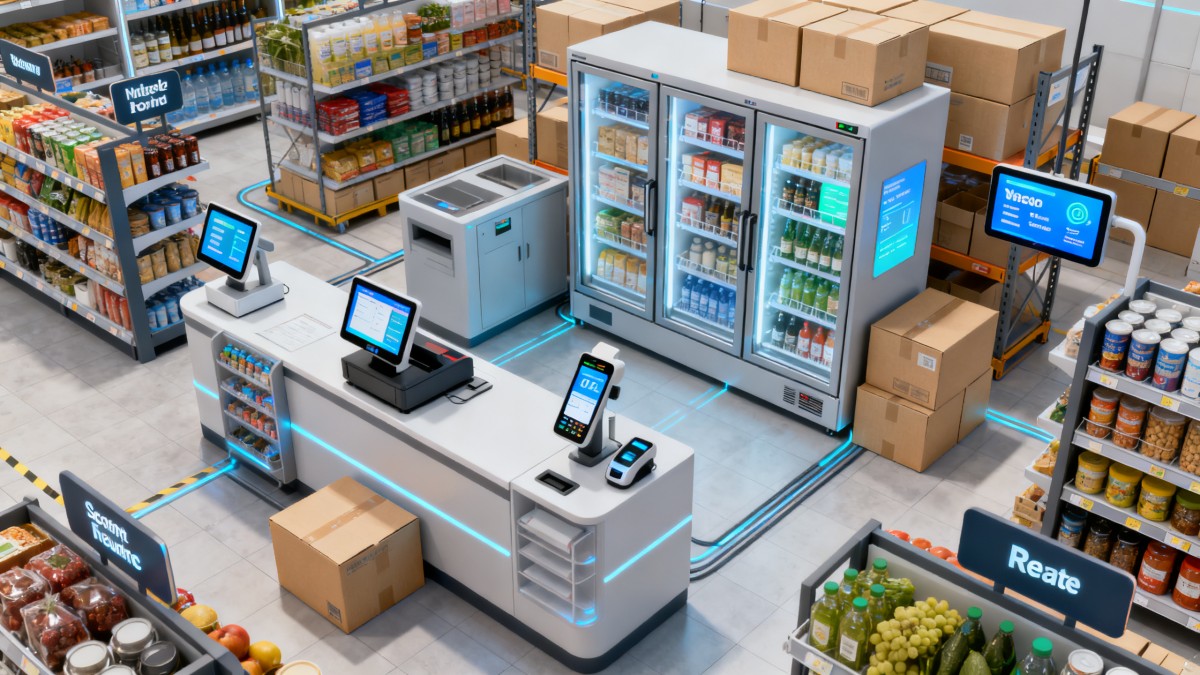
Many teams define omnichannel retail integration too narrowly. They focus on e-commerce links, but ignore store fixtures, POS hardware, packaging flows, and inventory logic.
Real integration means every customer-facing and back-end system supports one consistent commercial experience. Data, service, fulfillment, and physical execution must work together.
A complete model usually includes these connected layers:
- Commerce platforms, marketplaces, and mobile applications
- POS terminals, payment systems, and in-store devices
- Inventory visibility across warehouses, stores, and suppliers
- Store layouts, pickup areas, digital signage, and service counters
- Packaging, returns handling, and reverse logistics processes
- Data governance, standards compliance, and performance measurement
When even one layer is isolated, omnichannel retail integration becomes a marketing concept rather than an operational capability.
Why do data silos remain the biggest failure point?
Data silos are still the most common reason omnichannel retail integration fails. Different channels often use separate product definitions, stock rules, and customer records.
One system may show available stock, while another reserves it for store pickup. The result is canceled orders, broken promises, and inefficient labor allocation.
The problem grows when international operations add multiple ERP systems, regional suppliers, and different compliance formats. Small mismatches become enterprise-wide friction.
Common data-level warning signs
- Different SKU naming across channels
- Inconsistent inventory update frequency
- No shared product attribute standard
- Separate loyalty, order, and return histories
- No master ownership for customer and item data
A practical fix starts with governance, not dashboards. Define one product truth, one inventory logic, and one exception process before scaling any omnichannel retail integration project.
How do physical retail environments disrupt digital integration?
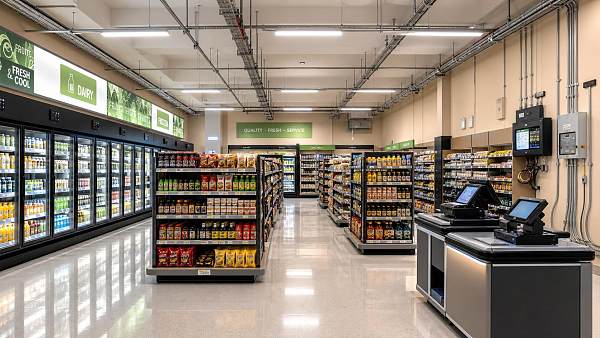
Digital plans often overlook physical constraints. Stores may lack pickup storage, power access for devices, ergonomic counters, or sightlines for digital signage.
That gap matters because omnichannel retail integration happens in real spaces. Hardware placement, queue design, fixture quality, and service flow directly affect fulfillment speed.
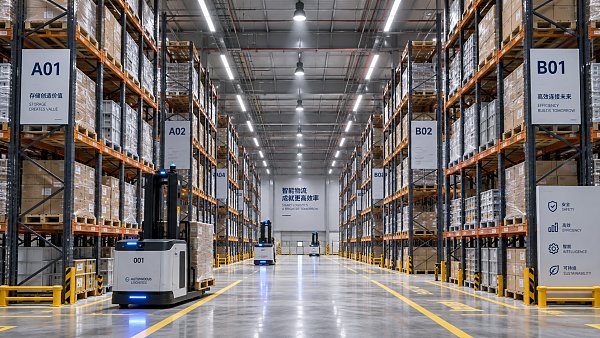
For example, buy-online-pickup-in-store can fail when backrooms are overcrowded, scanners are unreliable, and customer collection zones are poorly marked.
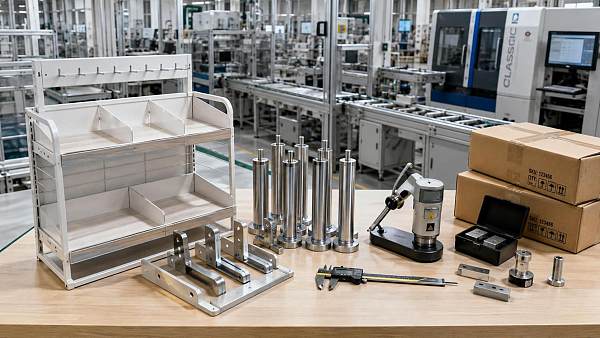
Commercial environments also need standardized performance. Fixtures, lighting, digital displays, and POS stations should support global usability, maintenance, and safety requirements.
Physical integration checkpoints
- Check service counters for ergonomic and traffic efficiency.
- Confirm power, connectivity, and device mounting reliability.
- Review signage clarity for pickup, returns, and assisted selling.
- Assess storage capacity for reserve stock and return staging.
- Benchmark hardware against UL, CE, and BIFMA-related expectations where relevant.
Without these checks, omnichannel retail integration may look complete in software while failing in daily execution.
What supply chain issues most often break omnichannel retail integration?
Supply chain fragmentation quietly undermines omnichannel retail integration. Channel promises depend on fulfillment precision, packaging consistency, routing logic, and return visibility.
A business may support same-day pickup online, yet its replenishment model was built only for weekly store shipments. The promise and the network do not match.
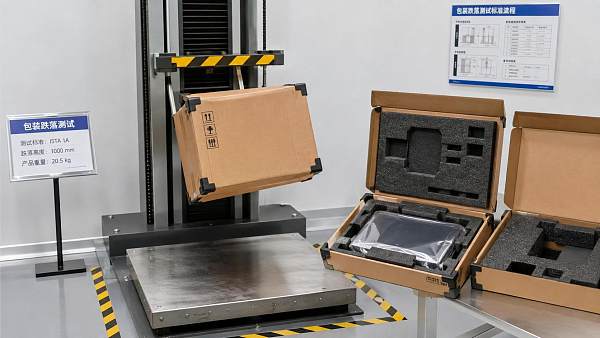
Packaging can also become a hidden failure point. Oversized, fragile, or non-standard packaging increases damage, waste, and repacking labor across channels.
Reverse logistics is another common weakness. If returns from stores, websites, and marketplaces follow different rules, stock recovery slows and margin leakage expands.
Strong omnichannel retail integration requires supply chain design that reflects customer promises, not just legacy distribution structures.
How can businesses tell whether technology is the problem or the process?
This is a frequent search question around omnichannel retail integration. The answer usually lies in execution patterns, not vendor marketing.
If staff create manual workarounds every day, the process is likely weak. If stable processes fail under volume, the technology stack may be the bottleneck.
A useful diagnosis compares five dimensions:
- System interoperability and API reliability
- Store-level task design and labor timing
- Device durability and user interface clarity
- Exception handling for stockouts and returns
- Data ownership and reporting consistency
Technology problems often appear as latency, failed synchronization, poor scan accuracy, or missing interoperability. Process problems appear as confusion, delays, and uneven channel behavior.
The best approach tests both together. Pilot one use case, measure failure reasons, and benchmark physical, digital, and supply chain performance at the same time.
What implementation mistakes increase cost and delay results?
Large omnichannel retail integration programs often fail because the rollout sequence is unrealistic. Too many channels, geographies, and systems are changed at once.
Another mistake is measuring success only by launch milestones. Go-live does not prove that order accuracy, service speed, and return recovery are actually improving.
Cost inflation usually comes from hidden dependencies. These include store refits, barcode relabeling, device replacement, packaging redesign, and compliance revalidation.
Mistakes to avoid early
- Starting without a channel-by-channel operating model
- Ignoring commercial furniture and fixture readiness
- Underestimating returns and reverse logistics volume
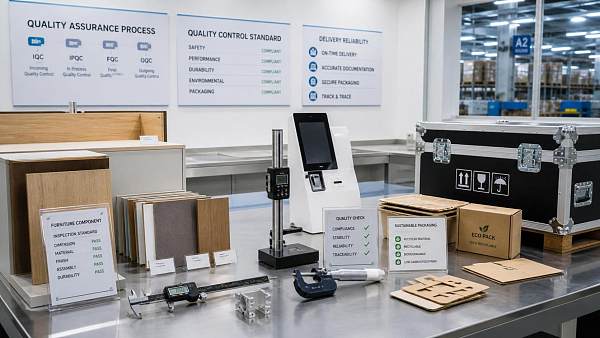
- Skipping supplier and packaging benchmarks
- Treating all stores as physically identical
A phased plan works better. Start with high-value journeys such as store pickup, endless aisle, or cross-channel returns, then expand after measurable stabilization.
What does a lower-risk omnichannel retail integration strategy look like?
Lower-risk omnichannel retail integration starts with standards and benchmarking. That means aligning digital systems with physical assets and supply chain realities before major rollout.
A resilient strategy should include:
- A shared data model for products, inventory, and returns
- Commercial hardware and fixture standards for each format
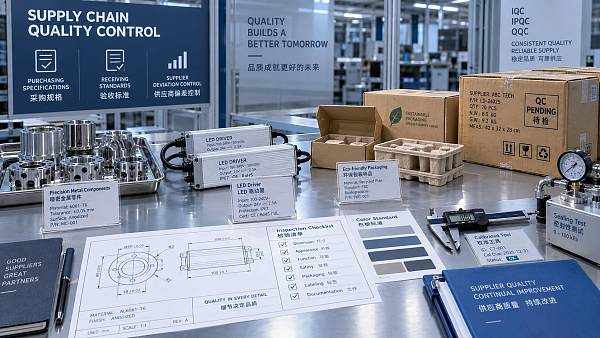
- Supply chain benchmarks for lead time, fill rate, and damage
- Sustainable packaging criteria across channels
- Clear governance for exception management and reporting
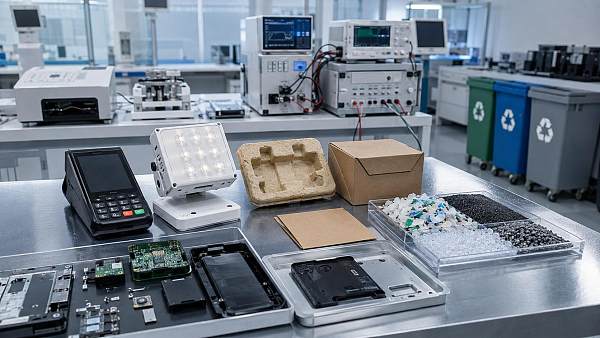
This approach reflects the realities of modern commercial ecosystems. It connects smart retail technology, commercial environments, and consumer goods supply chains into one decision framework.
FAQ snapshot: quick judgment table
Omnichannel retail integration fails when commercial systems are connected superficially but managed separately in practice. The damage appears in stock errors, slow service, weak returns, and rising cost.
A stronger path begins with measurable standards across data, commercial fixtures, retail technology, packaging, and supply chain execution. That is how seamless customer experience becomes operationally real.
For the next step, map one customer journey end to end, audit every failure point, and benchmark each layer before expanding the omnichannel retail integration roadmap.
News Recommendations
 Which industry categories offer the strongest export potential in Latin America?
![51a6ab95581761cc26f4318be6520c15]()
Aris Katos
Future of Carbide Coatings
 How to choose an ultra bright waterproof window display for storefronts
![51a6ab95581761cc26f4318be6520c15]()
Aris Katos
Future of Carbide Coatings
 How to verify suppliers on a trade portal for global sourcing
![51a6ab95581761cc26f4318be6520c15]()
Aris Katos
Future of Carbide Coatings
 How RoHS requirements should be stated in product specifications
![51a6ab95581761cc26f4318be6520c15]()
Aris Katos
Future of Carbide Coatings
 What affects the lead time for custom retail counter displays?
![51a6ab95581761cc26f4318be6520c15]()
Aris Katos
Future of Carbide Coatings
 What consumer packaging USA importers need to verify before ordering
![51a6ab95581761cc26f4318be6520c15]()
Aris Katos
Future of Carbide Coatings
 How commercial spaces interiors shape customer dwell time
![51a6ab95581761cc26f4318be6520c15]()
Aris Katos
Future of Carbide Coatings
 How LED commercial lighting design reduces glare in retail spaces
![51a6ab95581761cc26f4318be6520c15]()
Aris Katos
Future of Carbide Coatings
 How industrial technology information improves RFID inventory accuracy
![51a6ab95581761cc26f4318be6520c15]()
Aris Katos
Future of Carbide Coatings
 When drip garden watering systems make more sense than sprinklers
![51a6ab95581761cc26f4318be6520c15]()
Aris Katos
Future of Carbide Coatings
 When category comparison improves sourcing for industrial applications
![51a6ab95581761cc26f4318be6520c15]()
Aris Katos
Future of Carbide Coatings
 Industrial application guidance for selecting the right LED lighting
![51a6ab95581761cc26f4318be6520c15]()
Aris Katos
Future of Carbide Coatings
 Which commercial architecture standards apply to European retail fit-outs?
![51a6ab95581761cc26f4318be6520c15]()
Aris Katos
Future of Carbide Coatings
 How to verify FDA requirements for maternity care products
![51a6ab95581761cc26f4318be6520c15]()
Aris Katos
Future of Carbide Coatings
 How to verify BPA-free claims for food-contact products
![51a6ab95581761cc26f4318be6520c15]()
Aris Katos
Future of Carbide Coatings
 When does a European wholesale supplier suit modular office projects?
![51a6ab95581761cc26f4318be6520c15]()
Aris Katos
Future of Carbide Coatings
 When consumer ecosystem solutions improve the in-store shopping journey
![51a6ab95581761cc26f4318be6520c15]()
Aris Katos
Future of Carbide Coatings
 How a commercial developers network can reduce site selection risk
![51a6ab95581761cc26f4318be6520c15]()
Aris Katos
Future of Carbide Coatings
 How clear purchasing specifications prevent costly supplier deviations
![51a6ab95581761cc26f4318be6520c15]()
Aris Katos
Future of Carbide Coatings
 What an ISTA drop test lab checks before your packaging ships
![51a6ab95581761cc26f4318be6520c15]()
Aris Katos
Future of Carbide Coatings
 Which commercial furniture standards apply to workplace seating?
![51a6ab95581761cc26f4318be6520c15]()
Aris Katos
Future of Carbide Coatings
 How to evaluate smart lighting module OEM compatibility before sampling
![51a6ab95581761cc26f4318be6520c15]()
Aris Katos
Future of Carbide Coatings
 How to assess whether sustainable technology delivers real impact
![51a6ab95581761cc26f4318be6520c15]()
Aris Katos
Future of Carbide Coatings
 How to assess an OEM supplier’s quality control before ordering
![51a6ab95581761cc26f4318be6520c15]()
Aris Katos
Future of Carbide Coatings
 How consumer ecosystem solutions data can improve retail personalization
![51a6ab95581761cc26f4318be6520c15]()
Aris Katos
Future of Carbide Coatings
 When does consumer packaging design justify a higher product price?
![51a6ab95581761cc26f4318be6520c15]()
Aris Katos
Future of Carbide Coatings
 Supermarket Fixture Installation: Planning Layouts, Wiring, and Handover
![51a6ab95581761cc26f4318be6520c15]()
Aris Katos
Future of Carbide Coatings
 Automated Lighting and Smart Lighting Control in Bergerac: Key Project Considerations
![51a6ab95581761cc26f4318be6520c15]()
Aris Katos
Future of Carbide Coatings
 Segment Streetlight Controllers: Choosing Control Modes for Urban Roads
![51a6ab95581761cc26f4318be6520c15]()
Aris Katos
Future of Carbide Coatings
 IEC 62471-2 Explained: How to Assess Photobiological Risks in LED Lighting
![51a6ab95581761cc26f4318be6520c15]()
Aris Katos
Future of Carbide Coatings
 Food Grade Packaging Requirements by Product Type, Temperature, and Contact Risk
![51a6ab95581761cc26f4318be6520c15]()
Aris Katos
Future of Carbide Coatings
 Food Packaging Compliance Checklist: Tests, Records, and Labeling Before Shipment
![51a6ab95581761cc26f4318be6520c15]()
Aris Katos
Future of Carbide Coatings
 NSF Food Packaging Standards: When Certification Matters for Commercial Food Use
![51a6ab95581761cc26f4318be6520c15]()
Aris Katos
Future of Carbide Coatings
 FDA Food Grade Compliance: Which Materials and Documents Do Buyers Need?
![51a6ab95581761cc26f4318be6520c15]()
Aris Katos
Future of Carbide Coatings
 What Should a Food Grade Declaration Include for Packaging Compliance?
![51a6ab95581761cc26f4318be6520c15]()
Aris Katos
Future of Carbide Coatings
 Housewares Importing: How to Evaluate Suppliers, Costs, and Compliance Risks
![51a6ab95581761cc26f4318be6520c15]()
Aris Katos
Future of Carbide Coatings
 Why Freeze-Dried Fruit Ingredients Lose Crispness—and How to Prevent It
![51a6ab95581761cc26f4318be6520c15]()
Aris Katos
Future of Carbide Coatings
 What industry veterans look for before choosing a new supplier
![51a6ab95581761cc26f4318be6520c15]()
Aris Katos
Future of Carbide Coatings
 How material fatigue can shorten the service life of retail shelving
![51a6ab95581761cc26f4318be6520c15]()
Aris Katos
Future of Carbide Coatings