Silicone Kitchen Utensils Factory Price: Cost Factors and Quality Trade-Offs
Time
Click Count
Silicone Kitchen Utensils Factory Price: Cost Factors and Quality Trade-Offs
For procurement teams evaluating silicone kitchen utensils factory price, the real challenge is rarely the quoted unit price itself. The harder part is reading what sits behind that number: silicone grade, mold complexity, finishing consistency, compliance risk, packaging assumptions, and how the supplier manages repeat production. A cheap spatula or ladle can become expensive very quickly if it fails odor tests, changes color after heat exposure, or arrives with inconsistent hardness across batches.
If you source for retail, private label, foodservice, or multi-market distribution, this is the checklist that usually matters more than the sales pitch. It is written from a buyer's point of view: what to verify, where quotations get distorted, and which trade-offs are acceptable depending on your channel.
Start with the silicone itself, not the sample color
A factory can quote the same-looking utensil at very different prices because "silicone" is not one uniform input. For kitchen tools, buyers usually need to clarify whether the product uses food-contact silicone and what supporting test documents exist for the target market. The commercial risk here is simple: the visual sample may look fine, while the material formula behind it is doing the real cost work.
- Ask what grade of silicone is being used for the food-contact portion of the utensil.
- Confirm whether the quote assumes virgin silicone or includes any filler content. If the supplier avoids the question, treat that as a pricing warning.
- Request test reports relevant to your destination market, but check that the report applies to the actual product structure or material family, not just a generic statement.
- Verify odor performance and heat resistance claims through samples. Those two points often reveal quality shortcuts faster than catalog language does.
This is where a low silicone kitchen utensils factory price often hides its biggest compromise. A supplier may not be lying; they may simply be quoting a formulation that fits a low-end promotional channel rather than a serious kitchenware program.
Check whether the tool is solid silicone or silicone over a core
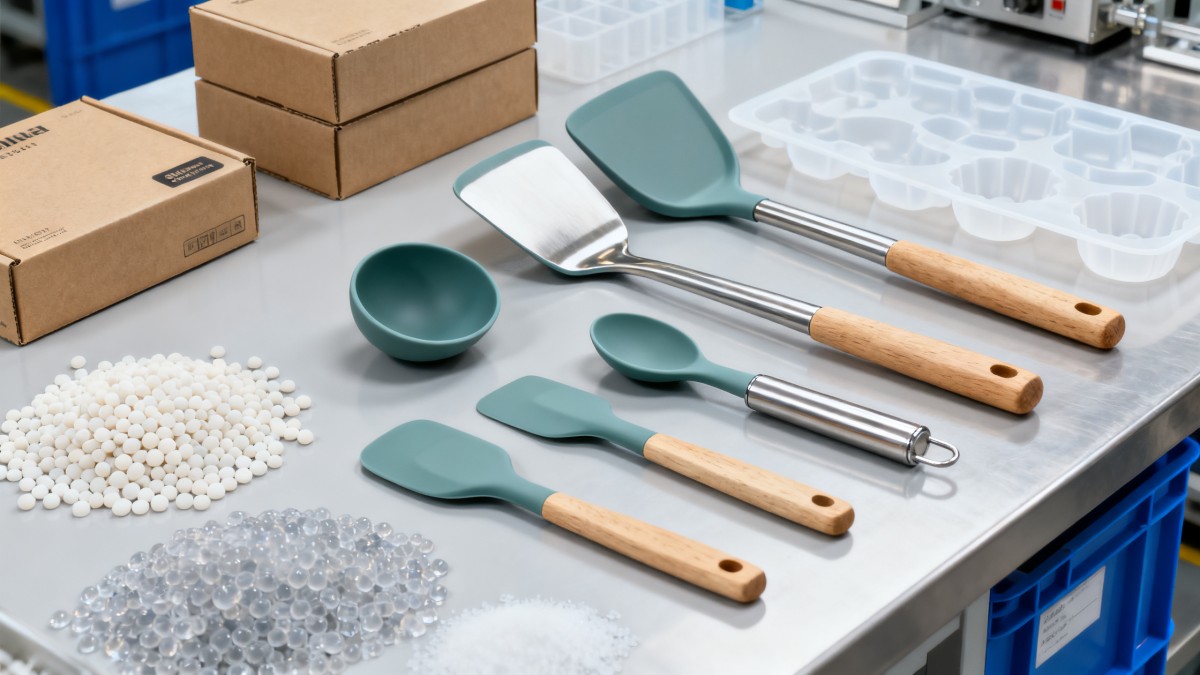
Many utensils are not one-piece silicone. They may include a nylon core, stainless steel insert, wooden handle, or plastic internal structure. Each option changes price, durability, and failure mode.
A one-piece silicone scraper usually costs more in material but removes the common handle separation problem. A stainless-steel-core spatula may feel premium and perform better under load, but the bond quality between silicone and metal matters. Wooden handles can lower the silicone content and improve shelf appeal, yet they bring moisture, finish, and assembly consistency issues. None of these are automatically wrong. They just belong in the cost discussion from day one.
If you are comparing quotes from different factories, make sure the internal construction is identical. Buyers lose time on false price comparisons more often than they admit.
Tooling is not just an upfront fee
For custom utensils, mold cost affects more than the opening investment. It also affects flash lines, surface texture, dimensional repeatability, logo clarity, and how stable the output remains after multiple production runs. A cheap mold can lower your launch budget and raise your rejection rate later.
A few practical checks:
- Ask whether tooling cost includes sampling revisions or only the first trial.
- Check if the factory owns mold maintenance or charges separately after a volume threshold.
- Clarify cavity count. A multi-cavity mold can improve output economics, but only if process control is good enough to keep cavity-to-cavity consistency.
- Review the parting line and logo area on actual samples, not renderings.
For buyers managing repeat programs, ask early about mold life and replacement responsibility. Exact lifespan claims vary by design and production conditions, so treat any fixed number without supporting context as 【待核实】.
Color costs more than people expect
Custom color matching on silicone can affect scrap rate, lead time, and rework risk. Dark, standard colors are usually easier. Light neutrals, skin tones, and complex branded shades can be less forgiving, especially when the product has a matte finish that makes contamination or swirl marks easier to spot.
If your retail program depends on exact brand colors, include a defined color approval step and keep a signed reference sample. Do not assume the first approved pre-production sample will automatically match future lots if the supplier changes raw material source or pigment batch.
Also ask whether the quote assumes one color per SKU or mixed-color production within one order. The second option is usually more expensive operationally, even when the overall quantity looks healthy on paper.
Surface finish and feel are cost drivers, not cosmetic extras
Buyers often focus on heat resistance and forget tactile quality until the product reaches retail review pages. In silicone utensils, the finish affects both appearance and user perception. A smooth, clean surface with stable edges usually signals better mold control and finishing discipline. Rough trimming, oily feel, visible gate marks, and powder residue usually signal trouble somewhere in the process.
This matters because post-molding labor can shift the price. Manual trimming, extra cleaning, special surface treatment, deburring, and premium packaging handling all add cost. If one factory quote is much lower, ask what finishing steps are excluded.
Do not separate compliance from cost evaluation
For procurement teams selling into multiple markets, compliance is part of price, not an afterthought. Requirements may differ by destination, product positioning, and retailer policy. Depending on the market, buyers may need to review food-contact documentation, chemical testing scope, labeling content, and packaging material declarations. The exact requirement set should be validated against current local rules and customer standards.
The expensive mistake is choosing a supplier that can make the product but cannot support the paperwork discipline behind it. That usually shows up late: before shipment, at retailer onboarding, or when customs documentation is reviewed. Ask who prepares compliance files, whether test reports are product-specific, and how they manage changes in raw material source.
If the supplier mentions FDA, LFGB, or other standards, ask for the actual report package and issue date. Do not accept broad claims without documents tied to the material or finished item. Standards and retailer requirements evolve, so older reports may need updating.
Packaging choices can distort the factory price comparison
Many quotations for silicone utensils look competitive because the packaging basis is stripped down. Bulk polybag packing, no barcode application, no inner box, and minimal carton reinforcement can make the initial number look good. Then the buyer adds retail-ready packaging, multilingual inserts, carton drop requirements, and assortment control, and the quote changes completely.
A reliable RFQ should specify at least:
- unit packing format
- hang tag, sleeve, gift box, or blister requirement
- barcode placement and label standard
- master carton limits for weight and dimensions
- assorted color ratio by carton, if applicable
Without that, you are not comparing real landed sourcing options. You are comparing assumptions.
Small MOQ does not always mean better buying flexibility
Factories know MOQ is a buyer pressure point, so many will offer a small minimum for sampling or order capture. The question is what happens to the price structure and process stability below their efficient run size. You may get a manageable MOQ with a hidden penalty in unit cost, color limitations, longer lead time, or looser consistency.
For trial orders, it is often better to negotiate a realistic pilot quantity with stable specifications than to force an artificially low MOQ on a custom build. That gives you cleaner data for reorder decisions.
Inspect the supplier's process discipline, not only the finished sample
A polished sample can be outsourced, hand-finished, or selectively screened. For recurring procurement, what matters is whether the supplier can repeat that output at volume. Ask how they control incoming raw materials, color batching, curing conditions, assembly torque or bonding where relevant, and final inspection criteria.
Good questions in supplier review meetings are often plain ones:
- What defects trigger sorting or rework?
- How do they separate approved and non-approved lots?
- What changes require buyer notification?
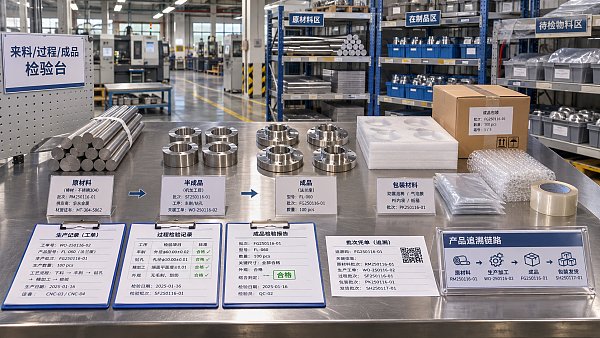
- Can they provide batch traceability for materials and finished goods?
If the answers stay vague, the low price is carrying process risk you will eventually pay for somewhere else.
Freight, duties, and lead time belong in the decision before you place the order
Procurement decisions get distorted when teams focus too narrowly on ex-works pricing. Silicone utensils are generally lightweight, but packaging volume, assortment packing, and carton efficiency still matter. A supplier with a slightly higher unit quote may produce a better landed result if carton utilization is stronger and defect rates are lower.
The same goes for lead time. If the cheapest factory repeatedly misses ship windows, the price gap can disappear through airfreight, stockouts, or delayed launches. Ask for the breakdown: sampling, mold build if needed, color approval, production, packaging, and booking readiness.
A workable buying checklist before you approve the quote
Before signing off on a silicone kitchen utensils factory price, make sure your team can answer these points with documents or approved samples, not assumptions.
- Material specification for every food-contact component is defined.
- Internal structure and handle construction are confirmed.
- Target market compliance documents have been reviewed and dated for relevance.
- Color, hardness, finish, and logo standard are approved against actual samples.
- Packaging basis matches the real sales channel.
- MOQ, lead time, and reorder conditions are commercially realistic.
- Quality control checkpoints and defect standards are understood.
- The quote has been compared on a landed-cost basis, not just factory price.
That is usually where the better decision appears. Not in the lowest line item, but in the quote that remains credible after all the easy omissions have been removed. For sourcing teams under cost pressure, that distinction matters. A lower opening price can still be the right choice, but only when you know exactly what has been simplified and you are willing to own the resulting risk.
News Recommendations
 Which consumer goods need CE marking in Europe?
![51a6ab95581761cc26f4318be6520c15]()
Aris Katos
Future of Carbide Coatings
 Uniguest and Extreme Networks Partner to Simplify Digital Signage Deployment
![51a6ab95581761cc26f4318be6520c15]()
Aris Katos
Future of Carbide Coatings
 How to assess electronics compliance whitepapers for regulatory accuracy
![51a6ab95581761cc26f4318be6520c15]()
Aris Katos
Future of Carbide Coatings
 Packaging Data Hub Launches With Plastic Recycling Findings for 50 Countries
![51a6ab95581761cc26f4318be6520c15]()
Aris Katos
Future of Carbide Coatings
 How to verify an ergonomic office chair supplier's warranty terms
![51a6ab95581761cc26f4318be6520c15]()
Aris Katos
Future of Carbide Coatings
 Curion Survey: 64% Value Sustainable Beauty Packaging, but Quality Comes First
![51a6ab95581761cc26f4318be6520c15]()
Aris Katos
Future of Carbide Coatings
 Can minimalist fit out solutions make a small office feel larger?
![51a6ab95581761cc26f4318be6520c15]()
Aris Katos
Future of Carbide Coatings
 Kiosk Industry Releases IAAPA 2026 Self-Service Guide
![51a6ab95581761cc26f4318be6520c15]()
Aris Katos
Future of Carbide Coatings
 How to improve global supply chain visibility beyond tier-one suppliers
![51a6ab95581761cc26f4318be6520c15]()
Aris Katos
Future of Carbide Coatings
 Austria’s MM Group to Sell 70% of Packaging Business to KPS for $2.7 Billion
![51a6ab95581761cc26f4318be6520c15]()
Aris Katos
Future of Carbide Coatings
 How to assess delivery reliability of airport terminal seating suppliers in Europe
![51a6ab95581761cc26f4318be6520c15]()
Aris Katos
Future of Carbide Coatings
 USTR Extends China-Linked Vessel Fee Pause and 178 Product Exemptions to January 2027
![51a6ab95581761cc26f4318be6520c15]()
Aris Katos
Future of Carbide Coatings
 How to choose smart sensors for automated lighting
![51a6ab95581761cc26f4318be6520c15]()
Aris Katos
Future of Carbide Coatings
 Shanghai Retail Buyers Sign Deals at Ninth China International Import Expo
![51a6ab95581761cc26f4318be6520c15]()
Aris Katos
Future of Carbide Coatings
 Which toys are subject to EN 71 toy safety requirements?
![51a6ab95581761cc26f4318be6520c15]()
Aris Katos
Future of Carbide Coatings
 Report: Global Kraft Paper Market Forecast to Reach $20.5 Billion by 2033
![51a6ab95581761cc26f4318be6520c15]()
Aris Katos
Future of Carbide Coatings
 How to verify Zigbee compatibility when sourcing lighting sensors
![51a6ab95581761cc26f4318be6520c15]()
Aris Katos
Future of Carbide Coatings
 How do packaging customization options affect minimum order quantities in Europe?
![51a6ab95581761cc26f4318be6520c15]()
Aris Katos
Future of Carbide Coatings
 Transom to Acquire Cree LED in Commercial Lighting Ownership Change
![51a6ab95581761cc26f4318be6520c15]()
Aris Katos
Future of Carbide Coatings
 How to plan customer flow in commercial design planning
![51a6ab95581761cc26f4318be6520c15]()
Aris Katos
Future of Carbide Coatings
 USTR Urged to Permanently Suspend Fees on China-Linked Ships
![51a6ab95581761cc26f4318be6520c15]()
Aris Katos
Future of Carbide Coatings
 How to choose comparable stores for retail benchmarking
![51a6ab95581761cc26f4318be6520c15]()
Aris Katos
Future of Carbide Coatings
 How does anchoring affect modular building wind load resistance?
![51a6ab95581761cc26f4318be6520c15]()
Aris Katos
Future of Carbide Coatings
 Amazon Raises European FBA Surcharge to 2% in Ten Markets From November 2
![51a6ab95581761cc26f4318be6520c15]()
Aris Katos
Future of Carbide Coatings
 How to verify a BPA-free test report for baby products
![51a6ab95581761cc26f4318be6520c15]()
Aris Katos
Future of Carbide Coatings
 China's Mandatory Classroom Lighting Standard GB 7793-2025 Takes Effect November 1
![51a6ab95581761cc26f4318be6520c15]()
Aris Katos
Future of Carbide Coatings
 How order volume affects the price of wholesale poly mailers
![51a6ab95581761cc26f4318be6520c15]()
Aris Katos
Future of Carbide Coatings
 US Imposes 50% Tariff on Certain Canadian PET Resin Imports
![51a6ab95581761cc26f4318be6520c15]()
Aris Katos
Future of Carbide Coatings
 How to read the maximum ratings in a semiconductor datasheet
![51a6ab95581761cc26f4318be6520c15]()
Aris Katos
Future of Carbide Coatings
 University of Maryland Develops Bio-Based Packaging to Extend Avocado and Cucumber Shelf Life
![51a6ab95581761cc26f4318be6520c15]()
Aris Katos
Future of Carbide Coatings
 How to verify a cookware manufacturer's induction compatibility claims
![51a6ab95581761cc26f4318be6520c15]()
Aris Katos
Future of Carbide Coatings
 Omdia Forecasts 11.6% Annual Growth in LED Display Revenue Through 2030
![51a6ab95581761cc26f4318be6520c15]()
Aris Katos
Future of Carbide Coatings
 How to verify a pulp molding packaging factory's production capacity
![51a6ab95581761cc26f4318be6520c15]()
Aris Katos
Future of Carbide Coatings
 Curion Survey: Half of Consumers Frustrated by Sustainable Packaging
![51a6ab95581761cc26f4318be6520c15]()
Aris Katos
Future of Carbide Coatings
 How to assess the credibility of market insight content
![51a6ab95581761cc26f4318be6520c15]()
Aris Katos
Future of Carbide Coatings
 US Removes 50% Additional Tariff on Selected Canadian Packaging Products
![51a6ab95581761cc26f4318be6520c15]()
Aris Katos
Future of Carbide Coatings
 Will a waterproof dimmable LED driver work with your existing dimmer?
![51a6ab95581761cc26f4318be6520c15]()
Aris Katos
Future of Carbide Coatings
 Charter Next Generation Raises Film PCR Use 30%, Advances Food-Grade Applications
![51a6ab95581761cc26f4318be6520c15]()
Aris Katos
Future of Carbide Coatings
 How to choose a dog harness and leash for a dog that pulls hard
![51a6ab95581761cc26f4318be6520c15]()
Aris Katos
Future of Carbide Coatings