
Are Solar Water Heaters Worth It? Cost, Climate, and Payback Factors
Time
Click Count
What makes a solar water heater worth it in the first place?
For most homeowners, the answer comes down to one simple question: will the system save enough on water-heating bills to justify the upfront cost and the hassle of installation? A solar water heater can be a smart buy, but it is not an automatic win in every home.
Water heating is usually one of the bigger energy loads in a house, so there is real room for savings. That matters even more when utility costs keep rising. But the payoff depends on your climate, roof conditions, household hot water use, and what system you are replacing. If your home uses a lot of hot water and gets decent sun through much of the year, solar water heaters tend to make more sense. If your demand is low or your site has poor solar exposure, the economics get weaker fast.
The practical way to look at it is this: solar water heating works best when the system can offset a meaningful share of a large, steady bill. It is less compelling when buyers are mainly chasing the idea of solar without checking how much hot water they actually use.
How much do solar water heaters usually cost?
The installed cost varies a lot because this is not a one-box purchase. You are paying for collectors, storage, pumps or controls in some designs, roof or ground mounting, plumbing integration, and labor. In some homes, the installation is straightforward. In others, access, roof layout, and code-related upgrades push the price up.
That is why two quotes for what sounds like the same solar water heater can land far apart. A lower price may reflect a simpler system, fewer freeze protections, or less complicated installation conditions. A higher price may include better components, more durable materials, or extra work needed to connect the system properly to the existing water heater.
When comparing bids, do not focus only on the headline number. Ask what is included, how the backup heater works, what maintenance items are expected, and whether roof work or electrical work is part of the quote or still sitting outside it.
Why does climate matter so much?
Climate is one of the biggest deal-breakers. Solar water heaters need sunlight, but they also need the right design for local weather. A sunny, warm region gives the system more productive days and often a simpler installation path. Cold climates can still work, but only when the system is designed to handle freezing conditions and seasonal swings.
That means homeowners should look beyond annual sunshine. Freeze risk, cloudy winters, snow cover, and overheating risk in very hot seasons all affect performance and maintenance. A system that is ideal in one region may be a poor fit in another.
If you are evaluating solar water heaters seriously, check these conditions before you get attached to the idea:
- How many hours of unobstructed sun your collector area gets
- Whether freezing temperatures are routine
- If your roof orientation and tilt are favorable
- Whether nearby trees, chimneys, or taller buildings create shade
- How much hot water your household uses in winter, not just summer
A lot of disappointment comes from buying a system based on sunny summer conditions when the real test is cold-season performance.
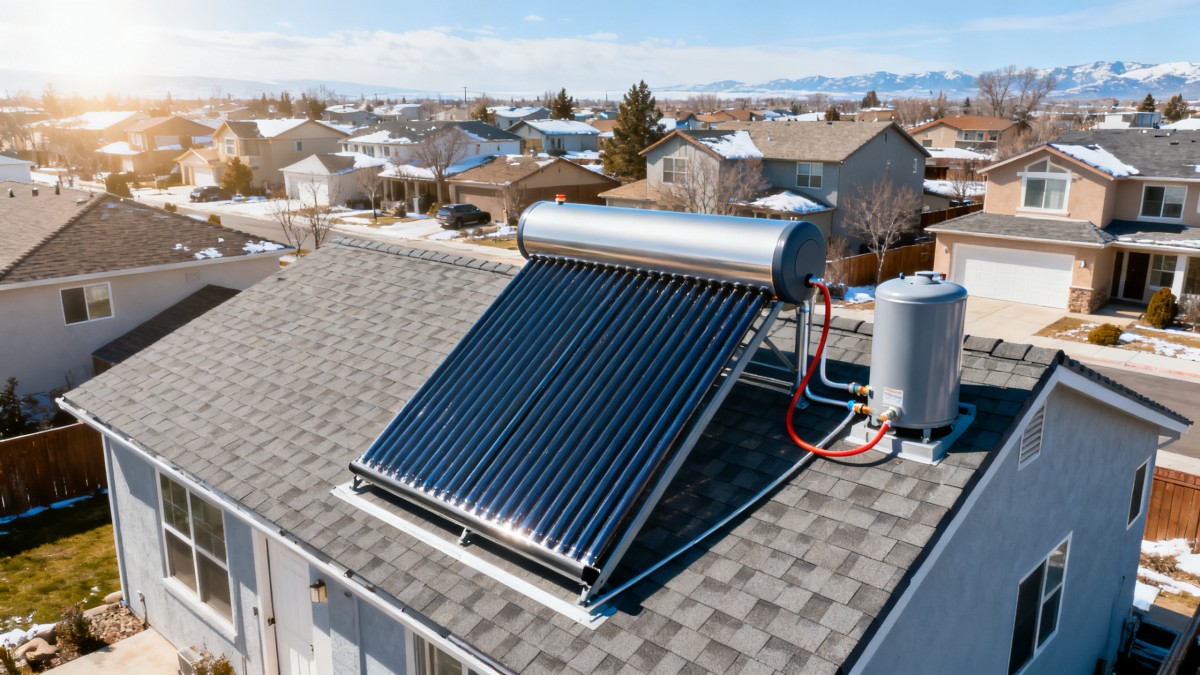
Do solar water heaters still make sense in colder regions?
They can, but the answer is more conditional. In colder areas, the question is not whether solar water heating is possible. It is whether the system design matches the climate well enough to produce useful savings without becoming a maintenance burden.
Homes in freezing climates usually need systems built with freeze protection and a reliable backup heater. That backup matters because there will be stretches when solar contribution drops. If the installer glosses over this and presents solar as a complete replacement for all conditions, treat that as a warning sign.
In colder regions, payback often stretches out because the system tends to cost more to install and may produce less consistent year-round output. That does not kill the case, but it means the economics need a harder look.
How long does payback usually take?
There is no single timeline that fits every home. Payback depends on the installed cost, energy prices, available incentives, system performance, maintenance costs, and how much hot water your household actually uses. That is why a neighbor’s result is interesting but not especially useful as a decision tool.
A shorter payback usually shows up when several conditions line up at once: high utility rates, strong solar exposure, a household with steady hot water demand, and a system replacing an expensive water-heating fuel. A long payback is more common when demand is low, installation is complex, or the home already has relatively cheap water heating.
The cleanest way to estimate it is:
- Start with total installed cost.
- Subtract any incentives, rebates, or tax benefits you are clearly eligible to claim.
- Estimate annual energy savings based on current water-heating costs, not total household energy use.
- Add expected maintenance and replacement items over time.
- Divide the net cost by realistic annual savings.
If the calculation only works under perfect conditions or inflated savings assumptions, the purchase case is weak.
What kind of household gets the best return?
Usually, larger households or homes with consistent daily hot water use get better value. Think families that run showers, laundry, and dishwashing on a regular pattern. Solar water heaters perform better financially when there is enough demand to use the heat they produce.
A smaller household with low hot water consumption may still like the environmental angle, but the financial case is often less convincing. The system has less bill to offset, so it takes longer to recover the upfront investment.
This is one of the most common buying mistakes: people size the decision around roof space or equipment marketing instead of actual hot water demand.
What should you compare before choosing one system over another?
Buyers often compare collector type first, but that is only one piece. The better comparison is system suitability. You want to know how the full setup fits your house, climate, and usage pattern.
That comparison usually tells you more than a brochure full of efficiency language.
Are maintenance and repairs a serious concern?
They should be part of the buying decision, yes. Solar water heaters are not set-and-forget forever. Pumps, valves, controls, storage tanks, and heat-transfer components may need inspection or replacement over time, depending on the system design.
Maintenance risk is higher when the installation is overly complicated or poorly matched to local conditions. Hard water can also affect long-term performance in some systems. That does not mean the technology is unreliable. It means the cheapest quote is not always the least expensive system to own.
Before signing, ask for the expected service schedule, the parts most likely to wear, and who handles warranty-related labor. Those details shape real ownership cost more than many buyers expect.
Can a solar water heater replace a conventional water heater completely?
In most homes, no. A backup heat source is still part of the practical setup. Solar contribution changes with weather, season, and usage spikes. A household still needs reliable hot water on cloudy days and during periods of high demand.
This is not a flaw. It is simply how the system should be evaluated. A solar water heater is usually a bill-reduction tool, not a total stand-alone solution. Buyers who understand that tend to make better choices and set more realistic expectations.
What are the red flags when reviewing quotes?
Watch for promises that sound clean and simple when the project is not. Solar water heating is site-specific. A quote that skips site shading, roof condition, freeze protection, or backup heating details is missing key parts of the decision.
- Savings estimates with no explanation of usage assumptions
- No mention of maintenance responsibilities
- Vague language around warranties
- Little detail on how the system connects to your existing water heater
- One-size-fits-all recommendations without asking about your household size or climate
A solid quote should show that the seller has looked at your home as a system, not just as a sales opportunity.
So, are solar water heaters worth it for the average homeowner?
They are worth serious consideration when your home has good sun exposure, your household uses a meaningful amount of hot water, and the installed cost lines up with realistic savings over time. They are much less attractive when buyers ignore climate fit, underestimate maintenance, or expect the system to carry the full hot water load in every season.
The best buying rule is straightforward: judge solar water heaters as a long-term utility investment, not as a symbolic upgrade. Check your roof, your weather pattern, your hot water demand, your backup heating setup, and the full installed cost. If those pieces make sense together, the system can deliver real value. If they do not, skipping it is often the smarter purchase.
News Recommendations
 How do packaging customization options affect minimum order quantities in Europe?
![51a6ab95581761cc26f4318be6520c15]()
Aris Katos
Future of Carbide Coatings
 Transom to Acquire Cree LED in Commercial Lighting Ownership Change
![51a6ab95581761cc26f4318be6520c15]()
Aris Katos
Future of Carbide Coatings
 How to plan customer flow in commercial design planning
![51a6ab95581761cc26f4318be6520c15]()
Aris Katos
Future of Carbide Coatings
 USTR Urged to Permanently Suspend Fees on China-Linked Ships
![51a6ab95581761cc26f4318be6520c15]()
Aris Katos
Future of Carbide Coatings
 How to choose comparable stores for retail benchmarking
![51a6ab95581761cc26f4318be6520c15]()
Aris Katos
Future of Carbide Coatings
 How does anchoring affect modular building wind load resistance?
![51a6ab95581761cc26f4318be6520c15]()
Aris Katos
Future of Carbide Coatings
 Amazon Raises European FBA Surcharge to 2% in Ten Markets From November 2
![51a6ab95581761cc26f4318be6520c15]()
Aris Katos
Future of Carbide Coatings
 How to verify a BPA-free test report for baby products
![51a6ab95581761cc26f4318be6520c15]()
Aris Katos
Future of Carbide Coatings
 China's Mandatory Classroom Lighting Standard GB 7793-2025 Takes Effect November 1
![51a6ab95581761cc26f4318be6520c15]()
Aris Katos
Future of Carbide Coatings
 How order volume affects the price of wholesale poly mailers
![51a6ab95581761cc26f4318be6520c15]()
Aris Katos
Future of Carbide Coatings
 US Imposes 50% Tariff on Certain Canadian PET Resin Imports
![51a6ab95581761cc26f4318be6520c15]()
Aris Katos
Future of Carbide Coatings
 How to read the maximum ratings in a semiconductor datasheet
![51a6ab95581761cc26f4318be6520c15]()
Aris Katos
Future of Carbide Coatings
 University of Maryland Develops Bio-Based Packaging to Extend Avocado and Cucumber Shelf Life
![51a6ab95581761cc26f4318be6520c15]()
Aris Katos
Future of Carbide Coatings
 How to verify a cookware manufacturer's induction compatibility claims
![51a6ab95581761cc26f4318be6520c15]()
Aris Katos
Future of Carbide Coatings
 Omdia Forecasts 11.6% Annual Growth in LED Display Revenue Through 2030
![51a6ab95581761cc26f4318be6520c15]()
Aris Katos
Future of Carbide Coatings
 How to verify a pulp molding packaging factory's production capacity
![51a6ab95581761cc26f4318be6520c15]()
Aris Katos
Future of Carbide Coatings
 Curion Survey: Half of Consumers Frustrated by Sustainable Packaging
![51a6ab95581761cc26f4318be6520c15]()
Aris Katos
Future of Carbide Coatings
 How to assess the credibility of market insight content
![51a6ab95581761cc26f4318be6520c15]()
Aris Katos
Future of Carbide Coatings
 US Removes 50% Additional Tariff on Selected Canadian Packaging Products
![51a6ab95581761cc26f4318be6520c15]()
Aris Katos
Future of Carbide Coatings
 Will a waterproof dimmable LED driver work with your existing dimmer?
![51a6ab95581761cc26f4318be6520c15]()
Aris Katos
Future of Carbide Coatings
 Charter Next Generation Raises Film PCR Use 30%, Advances Food-Grade Applications
![51a6ab95581761cc26f4318be6520c15]()
Aris Katos
Future of Carbide Coatings
 How to choose a dog harness and leash for a dog that pulls hard
![51a6ab95581761cc26f4318be6520c15]()
Aris Katos
Future of Carbide Coatings
 How to respect local customs when negotiating with overseas suppliers
![51a6ab95581761cc26f4318be6520c15]()
Aris Katos
Future of Carbide Coatings
 RFID Recycling Challenges Bring Paper-Based and Chipless Tags Into Focus
![51a6ab95581761cc26f4318be6520c15]()
Aris Katos
Future of Carbide Coatings
 How to choose commercial lighting for offices that reduces glare
![51a6ab95581761cc26f4318be6520c15]()
Aris Katos
Future of Carbide Coatings
 Queue Launches Fully Automated Robotic Pharmacy Kiosk for 30-Second Dispensing
![51a6ab95581761cc26f4318be6520c15]()
Aris Katos
Future of Carbide Coatings
 Can your supermarket store fixtures supplier meet your opening date?
![51a6ab95581761cc26f4318be6520c15]()
Aris Katos
Future of Carbide Coatings
 Shopify POS UI Extensions 2026-10 Adds Virtual Lists and Custom Row Templates
![51a6ab95581761cc26f4318be6520c15]()
Aris Katos
Future of Carbide Coatings
 How to assess smart office furniture suppliers’ North American support
![51a6ab95581761cc26f4318be6520c15]()
Aris Katos
Future of Carbide Coatings
 Aqara Launches Smart Lighting Range to Advance AI Spatial Intelligence
![51a6ab95581761cc26f4318be6520c15]()
Aris Katos
Future of Carbide Coatings
 How to assess demand forecasts in a lighting intelligence report
![51a6ab95581761cc26f4318be6520c15]()
Aris Katos
Future of Carbide Coatings
 Billerud推出PharmaKraft纤维基医药包装材料
![51a6ab95581761cc26f4318be6520c15]()
Aris Katos
Future of Carbide Coatings
 How to assess supplier reliability in global supply chain sourcing
![51a6ab95581761cc26f4318be6520c15]()
Aris Katos
Future of Carbide Coatings
 Omdia Forecasts 11.6% CAGR for Global LED Video Display Market in 2026–2030
![51a6ab95581761cc26f4318be6520c15]()
Aris Katos
Future of Carbide Coatings
 How to verify an LFGB testing laboratory's accreditation scope
![51a6ab95581761cc26f4318be6520c15]()
Aris Katos
Future of Carbide Coatings
 How to assess a workplace interior supplier's installation scope
![51a6ab95581761cc26f4318be6520c15]()
Aris Katos
Future of Carbide Coatings
 What records are needed for an ISO 9001 furniture factory audit?
![51a6ab95581761cc26f4318be6520c15]()
Aris Katos
Future of Carbide Coatings
 How to choose AI marketing tools that work with your existing CRM
![51a6ab95581761cc26f4318be6520c15]()
Aris Katos
Future of Carbide Coatings
 Do freight costs erase savings when buying retail fixtures wholesale?
![51a6ab95581761cc26f4318be6520c15]()
Aris Katos
Future of Carbide Coatings







































