Retail Technology Solutions That Reduce Checkout Friction
Time
Click Count
As consumer expectations rise and labor costs increase, retail technology solutions have become essential for reducing checkout friction and protecting in-store revenue. From AI-powered POS systems to smart queue management and seamless payment integration, the right tools help business leaders create faster, more accurate, and more engaging retail experiences while improving operational efficiency across modern commercial environments.
For enterprise decision-makers, the core question is not whether checkout modernization matters. It is which technologies reduce friction measurably, integrate cleanly with existing operations, and deliver a defensible return on investment.
Search intent behind this topic is strongly commercial and evaluative. Readers want to understand which retail technology solutions solve real checkout bottlenecks, where they create the most value, and how to prioritize investment without adding complexity.
That makes the discussion less about futuristic concepts and more about business outcomes. Leaders need practical guidance on throughput, labor efficiency, accuracy, customer satisfaction, system compatibility, and implementation risk.
Why checkout friction has become a board-level retail issue
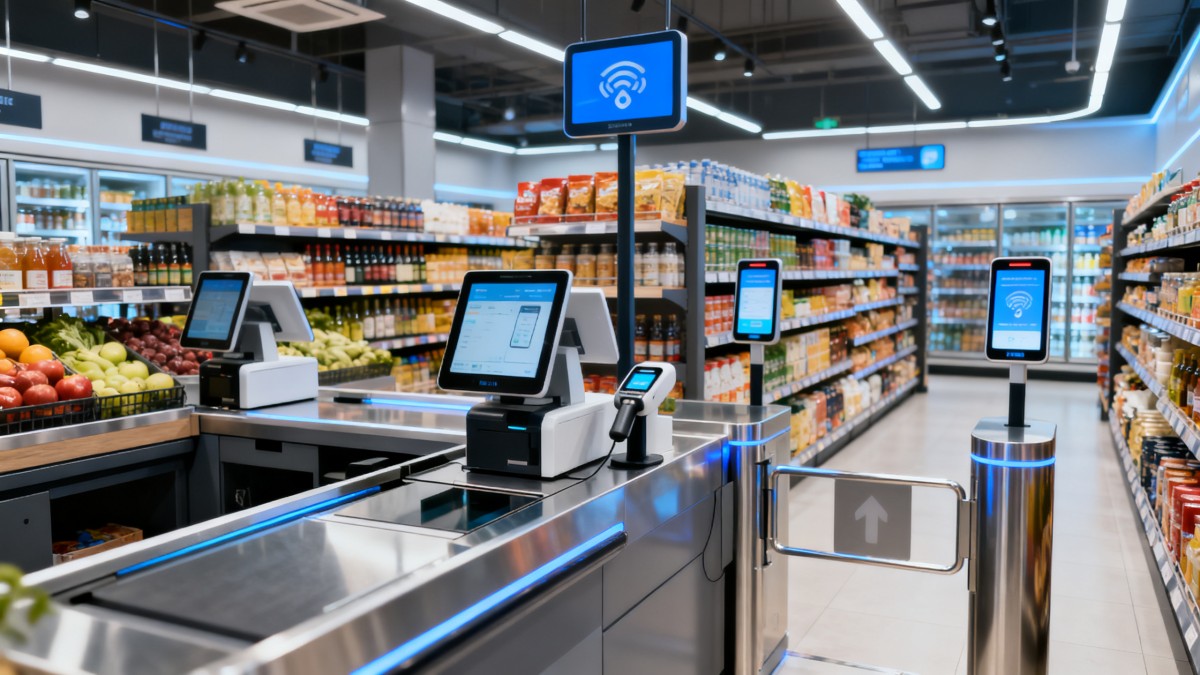
Checkout friction is no longer a minor operational inconvenience. It directly affects conversion, basket size, repeat visits, and labor productivity, especially in environments where margin pressure and shopper impatience are both increasing.
When lines grow too long, payment options fail, or staff must manually correct frequent errors, customers experience delay at the precise moment they expect simplicity. That is where revenue leakage becomes both immediate and measurable.
For business leaders, the issue extends beyond front-end speed. Checkout friction often signals deeper structural weaknesses, including disconnected systems, poor inventory visibility, inconsistent store processes, and hardware that cannot support modern payment behavior.
This is why investment in retail technology solutions should be tied to strategic outcomes. The right system can increase transaction speed, reduce shrink, improve data quality, and create a more resilient in-store operating model.
What decision-makers are really looking for in retail technology solutions
Most enterprise buyers are not searching for a single device. They are evaluating a connected checkout ecosystem that includes hardware, software, payments, analytics, and support across different store formats and regional compliance requirements.
Their first concern is business impact. Will the technology reduce queue abandonment, lower labor hours per transaction, or improve upsell performance without disrupting existing customer journeys?
The second concern is integration risk. Even strong point solutions can become liabilities if they do not connect reliably with ERP platforms, loyalty systems, inventory tools, e-commerce channels, or fiscal compliance frameworks.
Third is scalability. A pilot may perform well in one flagship location, but enterprise value depends on repeatable deployment across chains, geographies, and store types with consistent service levels and manageable maintenance costs.
Finally, decision-makers care about usability. If store associates require extensive retraining, or if customer-facing interfaces are confusing, adoption will stall and expected efficiency gains will not materialize.
Which checkout technologies reduce friction most effectively
Not all retail technology solutions deliver equal value. The strongest results usually come from targeting specific friction points rather than attempting a complete transformation all at once.
Modern cloud-connected POS platforms are often the foundation. They enable faster updates, centralized management, flexible integrations, and unified transaction data across physical and digital channels.
AI-assisted POS systems can further reduce friction by identifying common transaction exceptions, recommending next actions to staff, and improving item recognition in high-SKU environments. That reduces manual intervention and speeds up line movement.
Self-checkout remains valuable when matched to the right format. In grocery, convenience, and high-volume retail, it can improve throughput and labor allocation. In luxury or service-led environments, however, assisted checkout may still support the brand better.
Mobile POS is another high-impact option. By allowing associates to transact anywhere on the floor, it removes the bottleneck of fixed counters and helps convert demand during peak periods or high-touch consultations.
Smart queue management systems add value where waiting is the main pain point. Digital line visibility, lane balancing, and predictive staffing alerts help stores respond faster before customer frustration escalates.
Seamless payment integration is equally important. Support for contactless cards, mobile wallets, QR-based payment, buy now pay later methods, and local payment preferences can shorten transaction time while increasing acceptance rates.
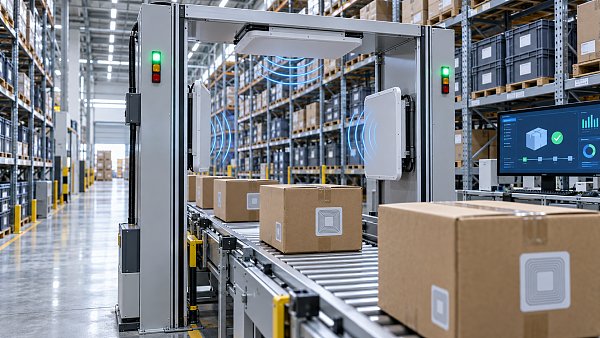
Computer vision and RFID-enabled item identification can also reduce checkout effort in selected environments. These tools are especially useful where manual scanning is slow, inaccurate, or difficult due to packaging or basket complexity.
How to evaluate value beyond speed alone
Faster checkout is important, but executive decisions should be based on a broader value model. The best retail technology solutions improve both customer experience and operating economics at the same time.
Start with throughput. Measure average transaction time, peak-hour transactions per lane, and queue abandonment. These indicators show whether the technology addresses friction where it matters most.
Next, examine labor productivity. A successful deployment should reduce repetitive manual tasks, allow better staff redeployment, and lower the operational strain caused by rush periods, promotions, and uneven foot traffic.
Accuracy is another key metric. Fewer pricing mismatches, payment errors, and item lookup delays mean better customer trust and less manager intervention at the point of sale.
Do not ignore the data layer. Modern systems generate richer insight into basket behavior, promotion response, staffing needs, and payment preferences. That intelligence can improve planning well beyond the checkout zone.
For many enterprises, resilience is now part of value. Systems that support remote diagnostics, modular replacement, and software-driven updates reduce downtime and improve continuity across distributed store networks.
How to build a realistic ROI case for executive approval
Many checkout transformation projects fail at the budgeting stage because the business case is either too technical or too abstract. Executive approval requires a clear model linking investment to measurable operational outcomes.
Begin with the cost of friction today. Include lost sales from line abandonment, labor inefficiencies, manager time spent on exceptions, hardware downtime, and service complaints tied to checkout delays.
Then calculate savings and upside by scenario. For example, if a new POS platform reduces average transaction time by even a few seconds, the cumulative impact during peak trading windows can be substantial.
Labor savings should be framed carefully. In many cases, the biggest gain is not direct headcount reduction but more productive allocation of labor toward customer service, replenishment, and conversion-supporting activities.
Also account for softer but still strategic benefits. Improved shopper satisfaction, better omnichannel consistency, and stronger data visibility can increase long-term customer value even if they do not appear immediately on a single store P&L.
The most credible ROI cases usually combine three levels of evidence: baseline operational data, pilot results from representative stores, and implementation assumptions that include maintenance, training, and change management costs.
Common implementation risks and how to avoid them
Even attractive retail technology solutions can underperform if implementation discipline is weak. One of the most common failures is choosing technology based on feature lists rather than actual store workflow.
Another risk is underestimating systems integration. Payment gateways, loyalty engines, tax rules, promotions, returns logic, and inventory synchronization all affect checkout performance. A weak integration layer will recreate friction digitally.
Store environment also matters. Hardware durability, cable management, counter ergonomics, lighting conditions, network stability, and fixture design can all influence transaction speed and user comfort.
Training is often treated as a secondary task, but it directly affects adoption. Associates need fast, role-specific guidance on exception handling, device troubleshooting, and customer assistance across new checkout workflows.
Security and compliance cannot be an afterthought. Payment security, consumer data protection, regional regulatory requirements, and equipment certification should be addressed early, especially in multinational retail environments.
To reduce risk, phased rollouts are usually more effective than large simultaneous deployments. Pilot in stores with different traffic patterns and customer profiles, then refine before scaling across the wider network.
How checkout strategy should vary by retail format
There is no universal checkout model. The right retail technology solutions depend heavily on store format, average basket size, service expectations, and brand positioning.
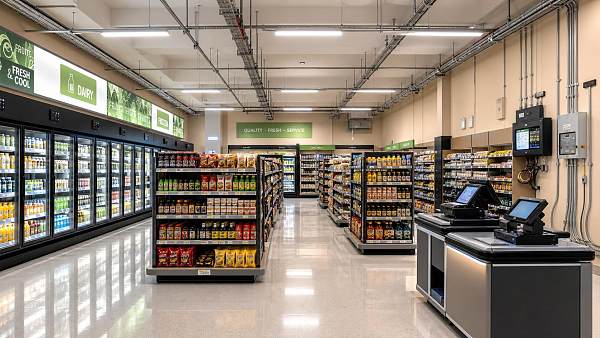
In grocery and convenience, speed and volume are usually the top priorities. Self-checkout, contactless payment, and smart queue visibility often produce the strongest payoff because transaction frequency is high and waits are highly visible.
In specialty retail, flexibility matters more. Mobile POS, clienteling-linked checkout, and integrated inventory visibility can help associates close sales without forcing customers into a separate payment queue.
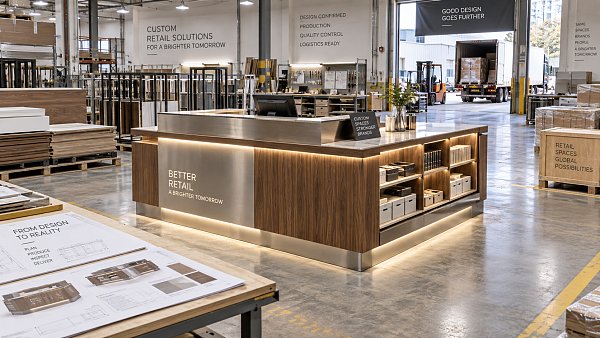
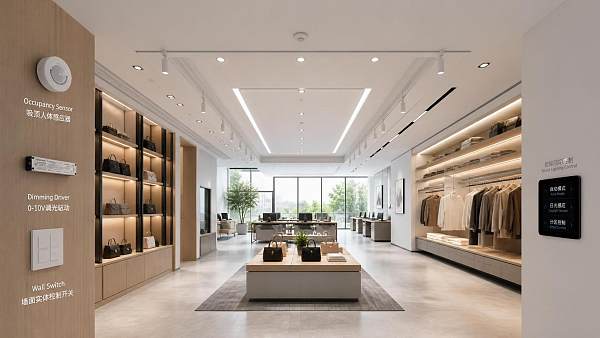
For luxury and premium environments, checkout should feel embedded in service rather than mechanical. Assisted mobile payment, elegant fixture integration, and minimal hardware intrusion often matter more than maximizing terminal density.
Big-box and department formats need stronger orchestration. Complex promotions, returns, omnichannel pickups, and mixed basket types require checkout systems that can handle high variability without slowing staff productivity.
This is where technical benchmarking becomes valuable. Enterprises comparing hardware reliability, software adaptability, and standards compliance across vendors are better positioned to select solutions aligned with both brand and operational reality.
What a future-ready checkout ecosystem looks like
The future of checkout is not simply cashierless retail or AI for its own sake. It is a modular, interoperable ecosystem that supports low-friction transactions across different customer journeys and physical environments.
That means POS software must integrate with payment platforms, inventory systems, CRM data, digital signage, loyalty infrastructure, and potentially smart shelving or packaging intelligence over time.
It also means store hardware must be chosen with lifecycle value in mind. Durable terminals, ergonomic fixtures, certified components, and maintainable peripherals help retailers avoid hidden replacement and service costs later.
For international operators, future readiness also depends on adaptability across regions. Local payment preferences, language requirements, certification standards, and consumer privacy rules all influence what scalable modernization really looks like.
Organizations that perform best are usually those treating checkout as part of the broader commercial environment. They align technology, fixture design, staff workflow, and customer experience rather than optimizing each in isolation.
Conclusion: reduce friction where it matters most
For enterprise leaders, the value of retail technology solutions lies in measurable friction reduction, not technology theater. The best investments shorten transactions, improve accuracy, support staff, and strengthen the wider retail operating model.
The most effective path is usually focused rather than expansive. Identify where checkout friction is damaging revenue or experience, benchmark the right technologies, validate through pilots, and scale with integration and usability in mind.
In a market where consumers expect speed and consistency, checkout is no longer the end of the journey. It is a decisive moment that shapes conversion, trust, and long-term brand perception.
Retailers that modernize this moment intelligently will be better equipped to protect in-store revenue, manage rising costs, and deliver the seamless commercial experience that modern customers increasingly consider standard.
News Recommendations
 How to prevent O-rings and seals from failing in food equipment
![51a6ab95581761cc26f4318be6520c15]()
Aris Katos
Future of Carbide Coatings
 How to compare commercial linear light wholesale quotes accurately
![51a6ab95581761cc26f4318be6520c15]()
Aris Katos
Future of Carbide Coatings
 How to verify international standards compliance for Middle East exports
![51a6ab95581761cc26f4318be6520c15]()
Aris Katos
Future of Carbide Coatings
 How to select laboratory instruments for reproducible test results
![51a6ab95581761cc26f4318be6520c15]()
Aris Katos
Future of Carbide Coatings
 When does a sheet metal prototype reveal design flaws early?
![51a6ab95581761cc26f4318be6520c15]()
Aris Katos
Future of Carbide Coatings
 When PE air column bags reduce damage in e-commerce fulfillment
![51a6ab95581761cc26f4318be6520c15]()
Aris Katos
Future of Carbide Coatings
 How energy-efficient design reduces operating costs in retail lighting
![51a6ab95581761cc26f4318be6520c15]()
Aris Katos
Future of Carbide Coatings
 When commercial aluminum storefronts make sense for a retail renovation
![51a6ab95581761cc26f4318be6520c15]()
Aris Katos
Future of Carbide Coatings
 What makes LED lights durable in high-use commercial spaces?
![51a6ab95581761cc26f4318be6520c15]()
Aris Katos
Future of Carbide Coatings
 Which industry categories offer the strongest export potential in Latin America?
![51a6ab95581761cc26f4318be6520c15]()
Aris Katos
Future of Carbide Coatings
 How to choose an ultra bright waterproof window display for storefronts
![51a6ab95581761cc26f4318be6520c15]()
Aris Katos
Future of Carbide Coatings
 How to verify suppliers on a trade portal for global sourcing
![51a6ab95581761cc26f4318be6520c15]()
Aris Katos
Future of Carbide Coatings
 How RoHS requirements should be stated in product specifications
![51a6ab95581761cc26f4318be6520c15]()
Aris Katos
Future of Carbide Coatings
 What affects the lead time for custom retail counter displays?
![51a6ab95581761cc26f4318be6520c15]()
Aris Katos
Future of Carbide Coatings
 What consumer packaging USA importers need to verify before ordering
![51a6ab95581761cc26f4318be6520c15]()
Aris Katos
Future of Carbide Coatings
 How commercial spaces interiors shape customer dwell time
![51a6ab95581761cc26f4318be6520c15]()
Aris Katos
Future of Carbide Coatings
 How LED commercial lighting design reduces glare in retail spaces
![51a6ab95581761cc26f4318be6520c15]()
Aris Katos
Future of Carbide Coatings
 How industrial technology information improves RFID inventory accuracy
![51a6ab95581761cc26f4318be6520c15]()
Aris Katos
Future of Carbide Coatings
 When drip garden watering systems make more sense than sprinklers
![51a6ab95581761cc26f4318be6520c15]()
Aris Katos
Future of Carbide Coatings
 When category comparison improves sourcing for industrial applications
![51a6ab95581761cc26f4318be6520c15]()
Aris Katos
Future of Carbide Coatings
 Industrial application guidance for selecting the right LED lighting
![51a6ab95581761cc26f4318be6520c15]()
Aris Katos
Future of Carbide Coatings
 Which commercial architecture standards apply to European retail fit-outs?
![51a6ab95581761cc26f4318be6520c15]()
Aris Katos
Future of Carbide Coatings
 How to verify FDA requirements for maternity care products
![51a6ab95581761cc26f4318be6520c15]()
Aris Katos
Future of Carbide Coatings
 How to verify BPA-free claims for food-contact products
![51a6ab95581761cc26f4318be6520c15]()
Aris Katos
Future of Carbide Coatings
 When does a European wholesale supplier suit modular office projects?
![51a6ab95581761cc26f4318be6520c15]()
Aris Katos
Future of Carbide Coatings
 When consumer ecosystem solutions improve the in-store shopping journey
![51a6ab95581761cc26f4318be6520c15]()
Aris Katos
Future of Carbide Coatings
 How a commercial developers network can reduce site selection risk
![51a6ab95581761cc26f4318be6520c15]()
Aris Katos
Future of Carbide Coatings
 How clear purchasing specifications prevent costly supplier deviations
![51a6ab95581761cc26f4318be6520c15]()
Aris Katos
Future of Carbide Coatings
 What an ISTA drop test lab checks before your packaging ships
![51a6ab95581761cc26f4318be6520c15]()
Aris Katos
Future of Carbide Coatings
 Which commercial furniture standards apply to workplace seating?
![51a6ab95581761cc26f4318be6520c15]()
Aris Katos
Future of Carbide Coatings
 How to evaluate smart lighting module OEM compatibility before sampling
![51a6ab95581761cc26f4318be6520c15]()
Aris Katos
Future of Carbide Coatings
 How to assess whether sustainable technology delivers real impact
![51a6ab95581761cc26f4318be6520c15]()
Aris Katos
Future of Carbide Coatings
 How to assess an OEM supplier’s quality control before ordering
![51a6ab95581761cc26f4318be6520c15]()
Aris Katos
Future of Carbide Coatings
 How consumer ecosystem solutions data can improve retail personalization
![51a6ab95581761cc26f4318be6520c15]()
Aris Katos
Future of Carbide Coatings
 When does consumer packaging design justify a higher product price?
![51a6ab95581761cc26f4318be6520c15]()
Aris Katos
Future of Carbide Coatings
 Supermarket Fixture Installation: Planning Layouts, Wiring, and Handover
![51a6ab95581761cc26f4318be6520c15]()
Aris Katos
Future of Carbide Coatings
 Automated Lighting and Smart Lighting Control in Bergerac: Key Project Considerations
![51a6ab95581761cc26f4318be6520c15]()
Aris Katos
Future of Carbide Coatings
 Segment Streetlight Controllers: Choosing Control Modes for Urban Roads
![51a6ab95581761cc26f4318be6520c15]()
Aris Katos
Future of Carbide Coatings
 IEC 62471-2 Explained: How to Assess Photobiological Risks in LED Lighting
![51a6ab95581761cc26f4318be6520c15]()
Aris Katos
Future of Carbide Coatings