POS Terminals for Retail: Key Features That Matter
Time
Click Count
Choosing the right POS terminals for retail can directly improve checkout speed, reduce operator errors, and create a smoother in-store experience. For retail staff and daily users, the most valuable features go beyond basic payment processing—they include intuitive interfaces, reliable performance, smart connectivity, and seamless integration with modern store systems.
What matters most in POS terminals for retail from an operator’s perspective?
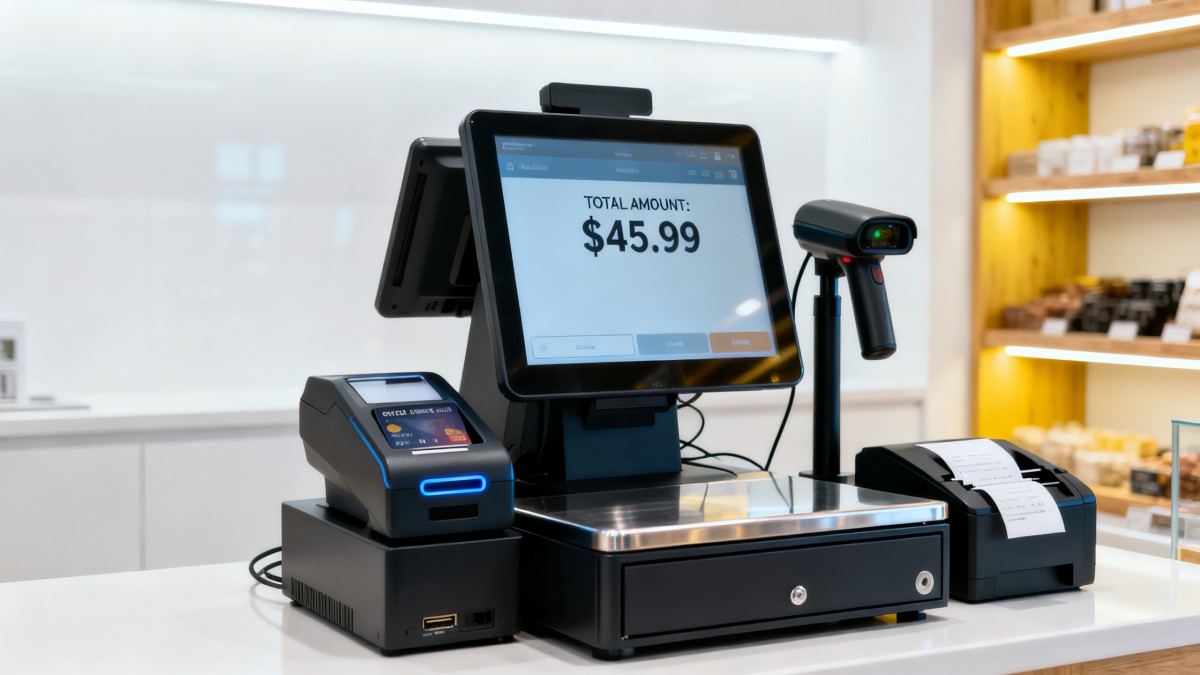
For store operators, a POS terminal is not just a payment device. It is a daily working tool that affects queue length, shift efficiency, training time, and even customer mood at the counter.
That is why POS terminals for retail should be judged by practical use conditions, not by feature lists alone. A terminal may support many payment methods, but if the interface is confusing or the printer fails during peak hours, staff productivity still suffers.
In modern retail environments, physical stores also need digital intelligence. This means the terminal must connect smoothly with inventory tools, promotions, loyalty systems, cloud dashboards, and back-office reporting.
G-BCE focuses on this broader operational picture. By benchmarking smart retail hardware against international expectations for usability, durability, and compliance, it helps commercial decision-makers compare solutions beyond surface specifications.
- Operators need a touch interface that responds quickly and remains readable under different lighting conditions, including bright storefronts and dim service counters.
- Cashiers benefit from stable connectivity because failed card authorization, delayed receipt printing, or frozen screens create immediate customer-facing problems.
- Managers need terminals that integrate with store workflows, including barcode scanning, stock lookup, staff login control, and promotion validation.
- Procurement teams need systems that meet practical deployment conditions, including regional payment requirements, compliance expectations, and long-term maintenance availability.
Why user experience at the counter affects business performance
Retail transactions are repetitive. Even a two-second delay per transaction can become a serious issue over hundreds of daily checkouts. Staff fatigue also increases when systems require too many taps or manual corrections.
Well-designed POS terminals for retail reduce friction. They simplify payment selection, speed up product lookup, and lower the chance of pricing or item-entry mistakes. In busy convenience, fashion, beauty, or specialty stores, these details directly affect service quality.
Key features of POS terminals for retail that should not be overlooked
The best retail POS setup depends on store format, traffic volume, and staff workflow. Still, several features consistently matter across sectors. The table below summarizes the core functional areas that operators and buyers should evaluate before selecting POS terminals for retail.
This comparison shows that a reliable terminal is part hardware, part workflow tool. A store that only focuses on transaction acceptance may overlook integration and peripheral stability, which often become the real source of operator frustration later.
Interface simplicity
Cashiers often work under time pressure. A cluttered interface increases training time and creates mistakes in discounts, returns, or split payments. Clear button hierarchy and consistent navigation are more valuable than decorative visual design.
Stable payment processing
Consumers now expect tap, chip, mobile wallet, and contactless transactions to work immediately. A delay at the payment stage feels more serious than a delay elsewhere because the customer is already ready to leave.
Durability in commercial use
Retail counters are high-touch environments. Screens, ports, printers, and card readers must tolerate repeated use, dust exposure, and long operating hours. In food-adjacent or cosmetics settings, spill resistance and easy cleaning also matter.
Which POS terminals for retail fit different store scenarios?
Not every store needs the same terminal type. A compact boutique, a high-volume supermarket lane, and a pop-up location all have different checkout patterns. Selecting the right format reduces wasted budget and improves user comfort.
The following table helps map common retail environments to suitable POS terminals for retail and the feature priorities that operators should focus on.
Scenario matching prevents a common purchasing mistake: overbuying features that operators never use or underbuying system capacity in stores with heavy transaction peaks. The right choice should reflect both service style and operational pressure.
Fixed terminals vs mobile-assisted setups
Fixed terminals remain the preferred choice for stores with stable checkout counters and continuous volume. They usually offer stronger peripheral integration and easier cable management.
Mobile-assisted setups are useful where staff move across the sales floor. They help with line-busting, assisted selling, and inventory checks, but they require careful control of battery management, wireless coverage, and device security.
How to evaluate performance, integration, and reliability before procurement
When comparing POS terminals for retail, procurement teams often focus first on price. Operators, however, usually experience the long-term impact of hidden weaknesses such as lag, failed synchronization, or difficult maintenance.
A more practical evaluation should include transaction speed, software compatibility, environmental fit, and support readiness. This is where cross-sector benchmarking adds value, especially for chains operating across different markets or store formats.
- Test real transaction flow, not just demo mode. Include barcode scan, discount application, refund path, receipt printing, and digital payment confirmation.
- Check integration depth with existing retail systems. A basic connection is not the same as full synchronization for inventory status, customer profiles, and reporting fields.
- Review maintenance structure. Ask how peripherals are replaced, how firmware updates are managed, and what happens when network connectivity is temporarily lost.
- Confirm deployment conditions. Power standards, local payment ecosystem, counter space, cable routing, and regional compliance can all affect the final installation.
Why standards and certification still matter
For international retail environments, hardware quality should be considered alongside recognized standards. Depending on market destination and product scope, buyers may review common references such as UL or CE for electrical and market access considerations.
G-BCE’s broader benchmarking perspective is useful here because retail hardware does not stand alone. It interacts with fixtures, lighting, layout planning, and supply chain demands. A POS decision should support the entire commercial environment, not disrupt it.
Common buying mistakes and how operators can avoid them
Many retail teams encounter problems not because the terminal is unusable, but because the selection process missed operational details. These mistakes often appear only after rollout, when replacement becomes more costly and disruptive.
- Choosing based only on hardware appearance. A sleek unit may fit the counter visually but still perform poorly in transaction speed or peripheral stability.
- Ignoring operator training needs. If seasonal or part-time staff need long onboarding, checkout consistency will decline during busy periods.
- Assuming all software integrations are equal. Some systems can only export limited data, creating manual work for inventory reconciliation or campaign reporting.
- Overlooking after-sales structure. Spare parts, local technical response, and remote troubleshooting can matter more than a small upfront price reduction.
Operators should be included in pilot testing whenever possible. Their feedback on screen layout, payment flow, and daily comfort often reveals issues that management or vendors may not see during presentations.
FAQ about POS terminals for retail
How do I choose POS terminals for retail if my store has limited counter space?
Start with the actual checkout footprint. Measure room for the main screen, printer, scanner, cable exit, and customer card interaction. Compact all-in-one units can save space, but only if they still support the peripherals your staff uses every day.
What is more important: processing speed or integration?
Both matter, but their priority depends on store type. High-volume counters usually feel speed issues first. Multi-branch retailers often feel integration problems more strongly because reporting errors and stock mismatches spread across locations.
Are mobile POS options enough for all retail environments?
Not always. Mobile options are effective for flexible service and temporary sales environments, but they may not replace fixed terminals where receipt volume, drawer control, and constant peripheral use are critical.
What should operators ask before finalizing a purchase?
Ask about software compatibility, network behavior during interruptions, printer replacement process, payment method support, update management, and expected lead time for deployment. Also ask whether sample testing or pilot validation is available.
Why choose us for guidance on POS terminals for retail
Selecting POS terminals for retail should not be treated as an isolated equipment purchase. It should be aligned with store design, operator workflow, compliance expectations, and supply chain practicality. That is the value of G-BCE’s intelligence-driven approach.
G-BCE helps commercial teams compare smart retail hardware through a broader lens that connects Asian manufacturing capability with global commercial standards, aesthetic expectations, and functional demands. This is especially useful for chain operators, sourcing directors, and commercial developers managing complex rollout decisions.
- You can consult us on parameter confirmation for different store formats, including counter layout, peripheral compatibility, and operator workflow priorities.
- You can discuss product selection logic for fixed, compact, or mobile-assisted POS terminals for retail based on transaction volume and service style.
- You can ask about delivery timing, deployment sequencing, and how to reduce risk when coordinating store hardware with wider commercial fit-out plans.
- You can review certification expectations, sample support options, and quotation communication needs for international sourcing and benchmarking projects.
If your team is comparing POS terminals for retail and needs clearer guidance on specifications, use cases, implementation constraints, or sourcing direction, G-BCE can help structure the decision with practical, benchmark-based insight.
News Recommendations
 How to compare commercial linear light wholesale quotes accurately
![51a6ab95581761cc26f4318be6520c15]()
Aris Katos
Future of Carbide Coatings
 How to verify international standards compliance for Middle East exports
![51a6ab95581761cc26f4318be6520c15]()
Aris Katos
Future of Carbide Coatings
 How to select laboratory instruments for reproducible test results
![51a6ab95581761cc26f4318be6520c15]()
Aris Katos
Future of Carbide Coatings
 When does a sheet metal prototype reveal design flaws early?
![51a6ab95581761cc26f4318be6520c15]()
Aris Katos
Future of Carbide Coatings
 When PE air column bags reduce damage in e-commerce fulfillment
![51a6ab95581761cc26f4318be6520c15]()
Aris Katos
Future of Carbide Coatings
 How energy-efficient design reduces operating costs in retail lighting
![51a6ab95581761cc26f4318be6520c15]()
Aris Katos
Future of Carbide Coatings
 When commercial aluminum storefronts make sense for a retail renovation
![51a6ab95581761cc26f4318be6520c15]()
Aris Katos
Future of Carbide Coatings
 What makes LED lights durable in high-use commercial spaces?
![51a6ab95581761cc26f4318be6520c15]()
Aris Katos
Future of Carbide Coatings
 Which industry categories offer the strongest export potential in Latin America?
![51a6ab95581761cc26f4318be6520c15]()
Aris Katos
Future of Carbide Coatings
 How to choose an ultra bright waterproof window display for storefronts
![51a6ab95581761cc26f4318be6520c15]()
Aris Katos
Future of Carbide Coatings
 How to verify suppliers on a trade portal for global sourcing
![51a6ab95581761cc26f4318be6520c15]()
Aris Katos
Future of Carbide Coatings
 How RoHS requirements should be stated in product specifications
![51a6ab95581761cc26f4318be6520c15]()
Aris Katos
Future of Carbide Coatings
 What affects the lead time for custom retail counter displays?
![51a6ab95581761cc26f4318be6520c15]()
Aris Katos
Future of Carbide Coatings
 What consumer packaging USA importers need to verify before ordering
![51a6ab95581761cc26f4318be6520c15]()
Aris Katos
Future of Carbide Coatings
 How commercial spaces interiors shape customer dwell time
![51a6ab95581761cc26f4318be6520c15]()
Aris Katos
Future of Carbide Coatings
 How LED commercial lighting design reduces glare in retail spaces
![51a6ab95581761cc26f4318be6520c15]()
Aris Katos
Future of Carbide Coatings
 How industrial technology information improves RFID inventory accuracy
![51a6ab95581761cc26f4318be6520c15]()
Aris Katos
Future of Carbide Coatings
 When drip garden watering systems make more sense than sprinklers
![51a6ab95581761cc26f4318be6520c15]()
Aris Katos
Future of Carbide Coatings
 When category comparison improves sourcing for industrial applications
![51a6ab95581761cc26f4318be6520c15]()
Aris Katos
Future of Carbide Coatings
 Industrial application guidance for selecting the right LED lighting
![51a6ab95581761cc26f4318be6520c15]()
Aris Katos
Future of Carbide Coatings
 Which commercial architecture standards apply to European retail fit-outs?
![51a6ab95581761cc26f4318be6520c15]()
Aris Katos
Future of Carbide Coatings
 How to verify FDA requirements for maternity care products
![51a6ab95581761cc26f4318be6520c15]()
Aris Katos
Future of Carbide Coatings
 How to verify BPA-free claims for food-contact products
![51a6ab95581761cc26f4318be6520c15]()
Aris Katos
Future of Carbide Coatings
 When does a European wholesale supplier suit modular office projects?
![51a6ab95581761cc26f4318be6520c15]()
Aris Katos
Future of Carbide Coatings
 When consumer ecosystem solutions improve the in-store shopping journey
![51a6ab95581761cc26f4318be6520c15]()
Aris Katos
Future of Carbide Coatings
 How a commercial developers network can reduce site selection risk
![51a6ab95581761cc26f4318be6520c15]()
Aris Katos
Future of Carbide Coatings
 How clear purchasing specifications prevent costly supplier deviations
![51a6ab95581761cc26f4318be6520c15]()
Aris Katos
Future of Carbide Coatings
 What an ISTA drop test lab checks before your packaging ships
![51a6ab95581761cc26f4318be6520c15]()
Aris Katos
Future of Carbide Coatings
 Which commercial furniture standards apply to workplace seating?
![51a6ab95581761cc26f4318be6520c15]()
Aris Katos
Future of Carbide Coatings
 How to evaluate smart lighting module OEM compatibility before sampling
![51a6ab95581761cc26f4318be6520c15]()
Aris Katos
Future of Carbide Coatings
 How to assess whether sustainable technology delivers real impact
![51a6ab95581761cc26f4318be6520c15]()
Aris Katos
Future of Carbide Coatings
 How to assess an OEM supplier’s quality control before ordering
![51a6ab95581761cc26f4318be6520c15]()
Aris Katos
Future of Carbide Coatings
 How consumer ecosystem solutions data can improve retail personalization
![51a6ab95581761cc26f4318be6520c15]()
Aris Katos
Future of Carbide Coatings
 When does consumer packaging design justify a higher product price?
![51a6ab95581761cc26f4318be6520c15]()
Aris Katos
Future of Carbide Coatings
 Supermarket Fixture Installation: Planning Layouts, Wiring, and Handover
![51a6ab95581761cc26f4318be6520c15]()
Aris Katos
Future of Carbide Coatings
 Automated Lighting and Smart Lighting Control in Bergerac: Key Project Considerations
![51a6ab95581761cc26f4318be6520c15]()
Aris Katos
Future of Carbide Coatings
 Segment Streetlight Controllers: Choosing Control Modes for Urban Roads
![51a6ab95581761cc26f4318be6520c15]()
Aris Katos
Future of Carbide Coatings
 IEC 62471-2 Explained: How to Assess Photobiological Risks in LED Lighting
![51a6ab95581761cc26f4318be6520c15]()
Aris Katos
Future of Carbide Coatings
 Food Grade Packaging Requirements by Product Type, Temperature, and Contact Risk
![51a6ab95581761cc26f4318be6520c15]()
Aris Katos
Future of Carbide Coatings