Sustainable Commercial Solutions Worth the Investment?
Time
Click Count
Are sustainable commercial solutions truly worth the investment for organizations focused on long-term returns? For financial decision-makers, the answer is usually yes—when projects are selected through lifecycle cost analysis, operational risk reduction, and measurable performance benchmarks rather than marketing claims alone.
In practice, sustainable upgrades can lower energy and maintenance costs, extend asset life, improve compliance readiness, and strengthen customer-facing brand value. The strongest business case appears when sustainability is treated as a capital efficiency strategy, not simply an environmental initiative.
For finance approvers, the real question is not whether sustainability sounds beneficial. It is which sustainable commercial solutions create defensible returns, how fast those returns appear, and what risks are reduced across facilities, procurement, and supply chains.
This article examines those questions from a commercial investment perspective. It focuses on the financial logic behind sustainable materials, lighting, fixtures, smart retail systems, and packaging decisions, with an emphasis on how to separate high-value upgrades from expensive but low-impact ones.
What Is the Real Search Intent Behind “Sustainable Commercial Solutions”?

When financial decision-makers search for sustainable commercial solutions, they are rarely looking for broad environmental theory. They want evidence that sustainability can improve margins, reduce volatility, and support capital allocation decisions across commercial spaces and product ecosystems.
The core intent is evaluative and commercial. Readers want to know whether sustainable investments pay back through lower lifecycle costs, reduced disruption, stronger compliance, better procurement resilience, and enhanced customer perception in increasingly competitive physical and omnichannel environments.
They also want a framework for judgment. Many sustainable proposals promise savings, but finance leaders need to identify which claims are credible, what metrics matter most, and where implementation risks can erode the expected return.
Why Financial Approvers Often Hesitate—and Why That Hesitation Is Rational
Caution is justified because sustainability projects often arrive with higher upfront pricing, uncertain assumptions, and benefits spread across departments. Procurement may see higher unit cost, operations may expect savings, and marketing may claim brand upside without quantifying it clearly.
That creates a familiar approval problem: costs are immediate and visible, while benefits are delayed and partially indirect. Finance teams therefore need stronger evidence than they would for routine replacement or standard efficiency projects.
Another concern is greenwashing risk. If a supplier promotes eco-friendly specifications without recognized testing, certification, or durability evidence, the organization may pay more while gaining little practical value and exposing itself to reputation or compliance issues later.
There is also execution risk. A sustainable commercial solution may look attractive on paper, but if installation disrupts operations, staff adoption is weak, or maintenance requirements are misunderstood, the expected return can quickly narrow.
When Sustainable Commercial Solutions Are Most Worth the Investment
Not every upgrade deserves funding. The strongest candidates usually share three characteristics: they lower recurring operating costs, they improve asset longevity, and they reduce future regulatory or supply-chain exposure in measurable ways.
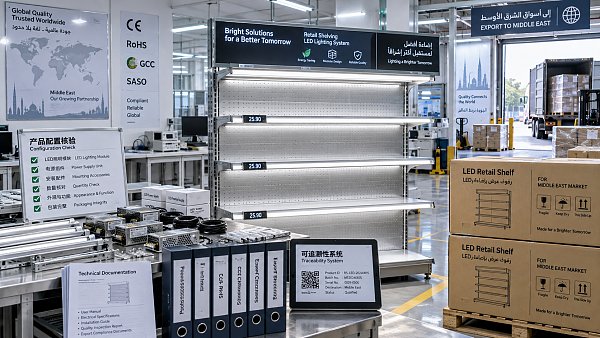
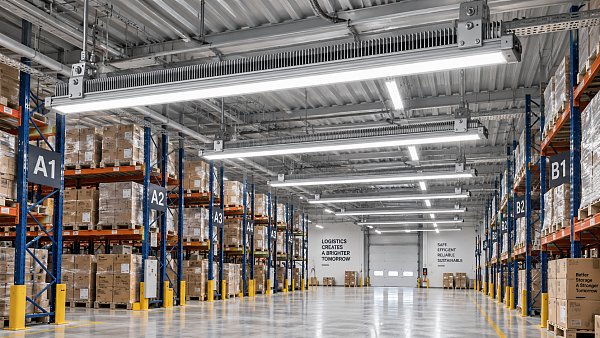
For example, commercial LED lighting with intelligent controls often produces a relatively clear investment case. It can reduce energy consumption, lower replacement frequency, improve visual consistency, and support better store or workplace experience simultaneously.
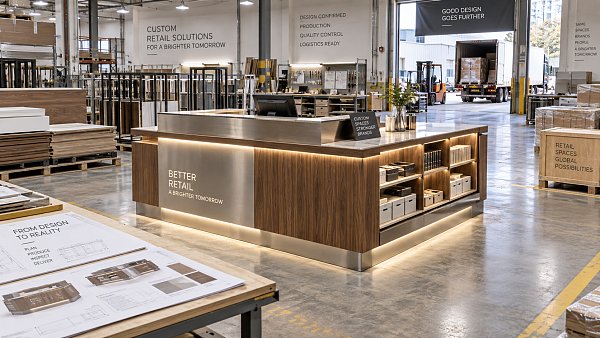
Sustainable fixtures and furniture can also justify investment when they combine certified materials with durable construction, modular repairability, and long service life. In those cases, lower replacement cycles can outweigh a higher initial purchase price.
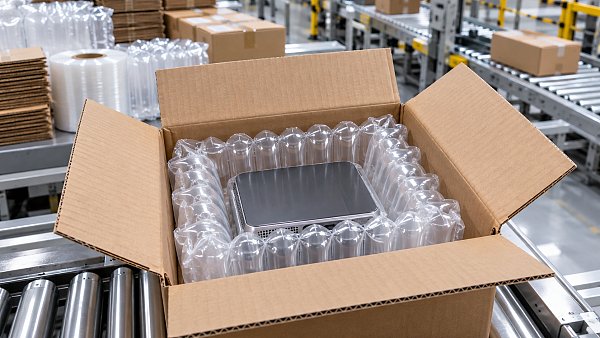
Packaging changes become compelling when they reduce freight volume, cut material waste, improve compliance with regional regulations, and support premium brand positioning without compromising product protection or fulfillment efficiency.
Smart retail technology can strengthen the case further when it improves energy visibility, asset monitoring, or demand planning. The most valuable sustainable initiatives are often those that combine physical efficiency with better commercial intelligence.
The Metrics That Matter Most to Finance Teams
To approve investment confidently, financial decision-makers need a disciplined measurement model. Upfront price alone is insufficient, because many sustainable commercial solutions deliver value through operating performance over several years rather than at the point of purchase.
Lifecycle cost should be the first lens. This includes acquisition, installation, maintenance, downtime, repair, replacement frequency, disposal, and energy or material consumption over the useful life of the asset.
Payback period remains important, especially in capital-constrained environments. However, it should be paired with net present value and internal rate of return where possible, since some durable solutions generate superior value after the initial payback horizon.
Risk-adjusted return is equally important. A project that moderately reduces cost but significantly lowers disruption, compliance exposure, or supplier volatility may be strategically stronger than a project with faster but less resilient savings.
Finance teams should also assess residual value and flexibility. Modular systems, repairable fixtures, and interoperable technology platforms often preserve more value because they can be adapted rather than fully replaced when business requirements change.
Where the Best Returns Often Appear Across Commercial Environments
In commercial interiors, returns often come from high-use categories. Lighting, HVAC-related controls, point-of-sale hardware, workspace systems, and customer-facing fixtures are used daily, making efficiency gains more meaningful over time.
In retail and service environments, durable and sustainable furnishings can reduce maintenance events while supporting a more premium customer experience. That matters because financial returns are not limited to utility savings; they can also influence dwell time, conversion, and brand trust.
Across supply chains, sustainable packaging and material optimization often create broader value than companies initially expect. Reduced dimensional weight, lower breakage, improved storage efficiency, and easier regulatory alignment can materially improve unit economics.
In sourcing strategy, working with manufacturers that meet recognized international benchmarks such as UL, CE, or BIFMA can reduce hidden risk. Verified performance standards give finance leaders more confidence that specifications will translate into real-world reliability.
How to Distinguish High-Value Sustainability from Expensive Signaling
One of the most useful questions a finance approver can ask is simple: what operational problem does this solution solve better than the current option? If the answer is vague, the proposal is probably too immature for approval.
High-value sustainable commercial solutions usually come with measurable proof. That may include energy performance data, material certifications, maintenance records, failure rates, expected service life, recyclability documentation, and case-specific deployment assumptions.
Low-value proposals rely too heavily on broad claims such as “eco-conscious,” “green,” or “future-ready” without connecting those labels to commercial outcomes. If benefits cannot be translated into cost, resilience, or revenue support, approval should remain cautious.
It is also important to challenge inflated payback assumptions. If savings depend on perfect usage patterns, unrealistic occupancy behavior, or unusually low maintenance estimates, the financial model should be revised before any commitment is made.
A Practical Approval Framework for Financial Decision-Makers
Start by classifying the proposal into one of three categories: cost reduction, risk mitigation, or strategic value creation. Some projects fit all three, but identifying the primary value driver helps determine the correct approval threshold and evaluation method.
Next, compare the sustainable option against a true baseline, not an idealized one. The baseline should reflect the real cost of continuing with current assets, including inefficiency, repairs, downtime, future replacement, and compliance risk.
Then request evidence at the specification level. Finance teams should ask for testing standards, warranty terms, maintenance assumptions, installation timelines, and any historical performance data from similar commercial settings.
After that, model outcomes under conservative, moderate, and optimistic scenarios. Scenario planning is especially helpful for projects involving supply-chain changes, customer-facing environments, or technology-enabled sustainability claims.
Finally, prioritize scalable pilots when uncertainty is high. A limited rollout can validate energy savings, material performance, customer response, and operational fit before broader capital is committed.
Common Investment Areas and Their Typical Financial Logic
For lighting and signage, the financial case often rests on reduced electricity use, lower maintenance labor, and stronger visual consistency. These projects are attractive when locations operate long hours or when brand presentation directly affects traffic and sales.
For commercial furniture and fixtures, value depends on longevity, repairability, and adaptability. A product made with sustainable materials is more investable when it also resists wear, supports ergonomic performance, and avoids early replacement.
For smart retail technology, the strongest justification comes from data visibility. Sensors, intelligent controls, and connected equipment can reveal energy waste, service issues, and usage patterns that support both sustainability and better operational planning.
For packaging, the business case becomes especially strong in high-volume distribution environments. Material reduction, improved cube efficiency, and easier recycling can affect transportation cost, fulfillment productivity, and customer perception at the same time.
Why Compliance and Global Benchmarking Strengthen the Business Case
Financial value is easier to defend when sustainable commercial solutions are backed by recognized standards rather than subjective supplier narratives. Certifications and technical benchmarks reduce uncertainty by validating safety, durability, and performance characteristics.
For organizations operating across regions, compliance alignment also reduces friction. Products and materials that already match international expectations can shorten approval cycles, lower redesign risk, and support smoother rollout across multiple markets.
This is especially relevant when commercial developers, chain operators, and premium consumer brands source across borders. Bridging manufacturing efficiency with international commercial requirements helps ensure that cost savings do not come at the expense of quality or acceptance.
Platforms that provide cross-sector data transparency can therefore create indirect financial value. Better benchmarking enables more informed vendor selection, stronger specification control, and improved confidence in the durability of long-term capital decisions.
Final Verdict: Are Sustainable Commercial Solutions Worth the Investment?
Yes—provided they are evaluated as performance assets rather than symbolic purchases. The best sustainable commercial solutions deliver lower lifecycle costs, greater supply-chain resilience, stronger compliance readiness, and better customer-facing quality over time.
For financial approvers, the winning approach is disciplined rather than ideological. Focus on verified specifications, total cost of ownership, realistic scenario modeling, and strategic fit within the broader commercial environment.
Organizations that take this approach often find that sustainability is not a separate budget burden. It becomes a practical tool for protecting margins, modernizing assets, and building more resilient commercial ecosystems in a market that increasingly rewards both efficiency and credibility.
In short, sustainable investment is worth it when the numbers, standards, and operational logic are strong. The goal is not to fund every green proposal, but to identify the solutions that create durable business value.
News Recommendations
 How to compare commercial linear light wholesale quotes accurately
![51a6ab95581761cc26f4318be6520c15]()
Aris Katos
Future of Carbide Coatings
 How to verify international standards compliance for Middle East exports
![51a6ab95581761cc26f4318be6520c15]()
Aris Katos
Future of Carbide Coatings
 How to select laboratory instruments for reproducible test results
![51a6ab95581761cc26f4318be6520c15]()
Aris Katos
Future of Carbide Coatings
 When does a sheet metal prototype reveal design flaws early?
![51a6ab95581761cc26f4318be6520c15]()
Aris Katos
Future of Carbide Coatings
 When PE air column bags reduce damage in e-commerce fulfillment
![51a6ab95581761cc26f4318be6520c15]()
Aris Katos
Future of Carbide Coatings
 How energy-efficient design reduces operating costs in retail lighting
![51a6ab95581761cc26f4318be6520c15]()
Aris Katos
Future of Carbide Coatings
 When commercial aluminum storefronts make sense for a retail renovation
![51a6ab95581761cc26f4318be6520c15]()
Aris Katos
Future of Carbide Coatings
 What makes LED lights durable in high-use commercial spaces?
![51a6ab95581761cc26f4318be6520c15]()
Aris Katos
Future of Carbide Coatings
 Which industry categories offer the strongest export potential in Latin America?
![51a6ab95581761cc26f4318be6520c15]()
Aris Katos
Future of Carbide Coatings
 How to choose an ultra bright waterproof window display for storefronts
![51a6ab95581761cc26f4318be6520c15]()
Aris Katos
Future of Carbide Coatings
 How to verify suppliers on a trade portal for global sourcing
![51a6ab95581761cc26f4318be6520c15]()
Aris Katos
Future of Carbide Coatings
 How RoHS requirements should be stated in product specifications
![51a6ab95581761cc26f4318be6520c15]()
Aris Katos
Future of Carbide Coatings
 What affects the lead time for custom retail counter displays?
![51a6ab95581761cc26f4318be6520c15]()
Aris Katos
Future of Carbide Coatings
 What consumer packaging USA importers need to verify before ordering
![51a6ab95581761cc26f4318be6520c15]()
Aris Katos
Future of Carbide Coatings
 How commercial spaces interiors shape customer dwell time
![51a6ab95581761cc26f4318be6520c15]()
Aris Katos
Future of Carbide Coatings
 How LED commercial lighting design reduces glare in retail spaces
![51a6ab95581761cc26f4318be6520c15]()
Aris Katos
Future of Carbide Coatings
 How industrial technology information improves RFID inventory accuracy
![51a6ab95581761cc26f4318be6520c15]()
Aris Katos
Future of Carbide Coatings
 When drip garden watering systems make more sense than sprinklers
![51a6ab95581761cc26f4318be6520c15]()
Aris Katos
Future of Carbide Coatings
 When category comparison improves sourcing for industrial applications
![51a6ab95581761cc26f4318be6520c15]()
Aris Katos
Future of Carbide Coatings
 Industrial application guidance for selecting the right LED lighting
![51a6ab95581761cc26f4318be6520c15]()
Aris Katos
Future of Carbide Coatings
 Which commercial architecture standards apply to European retail fit-outs?
![51a6ab95581761cc26f4318be6520c15]()
Aris Katos
Future of Carbide Coatings
 How to verify FDA requirements for maternity care products
![51a6ab95581761cc26f4318be6520c15]()
Aris Katos
Future of Carbide Coatings
 How to verify BPA-free claims for food-contact products
![51a6ab95581761cc26f4318be6520c15]()
Aris Katos
Future of Carbide Coatings
 When does a European wholesale supplier suit modular office projects?
![51a6ab95581761cc26f4318be6520c15]()
Aris Katos
Future of Carbide Coatings
 When consumer ecosystem solutions improve the in-store shopping journey
![51a6ab95581761cc26f4318be6520c15]()
Aris Katos
Future of Carbide Coatings
 How a commercial developers network can reduce site selection risk
![51a6ab95581761cc26f4318be6520c15]()
Aris Katos
Future of Carbide Coatings
 How clear purchasing specifications prevent costly supplier deviations
![51a6ab95581761cc26f4318be6520c15]()
Aris Katos
Future of Carbide Coatings
 What an ISTA drop test lab checks before your packaging ships
![51a6ab95581761cc26f4318be6520c15]()
Aris Katos
Future of Carbide Coatings
 Which commercial furniture standards apply to workplace seating?
![51a6ab95581761cc26f4318be6520c15]()
Aris Katos
Future of Carbide Coatings
 How to evaluate smart lighting module OEM compatibility before sampling
![51a6ab95581761cc26f4318be6520c15]()
Aris Katos
Future of Carbide Coatings
 How to assess whether sustainable technology delivers real impact
![51a6ab95581761cc26f4318be6520c15]()
Aris Katos
Future of Carbide Coatings
 How to assess an OEM supplier’s quality control before ordering
![51a6ab95581761cc26f4318be6520c15]()
Aris Katos
Future of Carbide Coatings
 How consumer ecosystem solutions data can improve retail personalization
![51a6ab95581761cc26f4318be6520c15]()
Aris Katos
Future of Carbide Coatings
 When does consumer packaging design justify a higher product price?
![51a6ab95581761cc26f4318be6520c15]()
Aris Katos
Future of Carbide Coatings
 Supermarket Fixture Installation: Planning Layouts, Wiring, and Handover
![51a6ab95581761cc26f4318be6520c15]()
Aris Katos
Future of Carbide Coatings
 Automated Lighting and Smart Lighting Control in Bergerac: Key Project Considerations
![51a6ab95581761cc26f4318be6520c15]()
Aris Katos
Future of Carbide Coatings
 Segment Streetlight Controllers: Choosing Control Modes for Urban Roads
![51a6ab95581761cc26f4318be6520c15]()
Aris Katos
Future of Carbide Coatings
 IEC 62471-2 Explained: How to Assess Photobiological Risks in LED Lighting
![51a6ab95581761cc26f4318be6520c15]()
Aris Katos
Future of Carbide Coatings
 Food Grade Packaging Requirements by Product Type, Temperature, and Contact Risk
![51a6ab95581761cc26f4318be6520c15]()
Aris Katos
Future of Carbide Coatings