Sustainable Packaging Solutions for Safer Shipping
Time
Click Count
For project managers responsible for shipping performance, cost control, and compliance, sustainable packaging solutions are no longer optional. They reduce material waste, improve product protection, and support stronger brand credibility across global supply chains. This article explores how to evaluate smarter packaging strategies that balance durability, efficiency, and environmental goals in safer shipping operations.
In complex B2B distribution networks, packaging is no longer a secondary purchasing item. It affects damage rates, freight efficiency, warehouse handling, retail presentation, and environmental reporting at the same time.
For project leaders managing multi-site rollouts, export shipments, or high-value consumer goods, the right packaging choice must meet at least 4 targets: protection, material efficiency, compliance, and predictable delivery performance.
Why Sustainable Packaging Solutions Matter in Safer Shipping

Sustainable packaging solutions support safer shipping by reducing unnecessary material volume while improving structural design. In many supply chains, damage does not come from weak materials alone, but from poor fit, excess void space, and inconsistent pallet stability.
A project manager typically balances 3 operational pressures at once: transit protection, landed cost, and compliance with customer or regional sustainability requirements. When packaging fails in one area, the downstream cost can multiply across returns, rework, and delivery delays.
The operational cost of poor packaging design
Even a 1% to 3% product damage rate can create measurable disruption when shipments move across several warehouses or retail destinations. For fragile, premium, or display-sensitive goods, one damaged unit can also affect merchandising readiness and brand perception.
Oversized cartons create another hidden problem. They increase dimensional weight, consume more container space, and often require more dunnage. In export programs, a 5% to 10% reduction in packaging cube can improve loading efficiency without changing product count.
What sustainable packaging improves
- Better fit-to-product ratios for lower movement during transit
- Reduced corrugated, plastic, or foam usage per shipment unit
- Improved pallet stacking strength and load consistency
- Simpler recycling pathways for end users and distribution partners
- More transparent material documentation for procurement and compliance teams
These improvements are especially relevant in cross-border programs where handling points may exceed 5 to 7 touch events, including packing, palletizing, port transfer, customs inspection, warehouse receiving, and final delivery.
Key shipping risks project managers should assess
The safest packaging is not always the heaviest. It is the system that can absorb compression, shock, vibration, and moisture exposure within the product’s actual transport profile, which may range from parcel delivery to full-container ocean freight.
- Compression failure during stacking over 24 to 72 hours
- Corner crush from conveyor or handling impacts
- Moisture softening in humid storage or port conditions
- Internal abrasion caused by loose components
- Labeling failure that disrupts sorting and receiving
A sustainable design program should therefore evaluate both environmental material reduction and protective performance under realistic logistics conditions, not just material substitution alone.
How to Evaluate Materials, Formats, and Protective Performance
Selecting sustainable packaging solutions requires a structured comparison of material behavior, pack format, shipping method, and product sensitivity. The best choice for an e-commerce consumer item may not work for retail fixtures, electronics, or premium packaged goods.
Common material options and where they fit
Project teams should compare not only recycled content but also cushioning performance, moisture tolerance, and ease of disposal. A mono-material design may simplify recycling, while a hybrid structure may provide stronger protection for long-distance shipping.
The table below outlines practical packaging formats often reviewed in global procurement programs, especially when balancing product protection, freight efficiency, and sustainability requirements.
The main takeaway is that sustainable packaging solutions should be selected as complete systems, not isolated materials. Carton strength, insert geometry, closure method, and pallet pattern all influence final shipping safety.
Performance criteria that should be specified early
1. Compression and stacking load
If goods are stacked 3 to 5 layers high in a warehouse or container, carton strength must reflect both static and dynamic load. Packaging that performs well in single-parcel handling may fail in palletized export storage.
2. Drop and impact exposure
For parcel or courier channels, drop events from 60cm to 100cm are common planning conditions. Inner supports should hold product position consistently after repeated movement, not just one test cycle.
3. Moisture and climate tolerance
In humid climates or long ocean routes, paper-based structures may require coatings, liners, or upgraded board grades. Teams should define whether expected storage conditions are indoor dry, mixed humidity, or port-exposed environments.
4. Pack-out efficiency
A packaging design that saves material but adds 20 to 30 seconds per pack station can increase labor cost significantly at scale. Efficient assembly matters for projects with daily throughput above 500 or 1,000 units.
Procurement Criteria for Project Managers and Sourcing Teams
For B2B buyers, sustainable packaging solutions should be reviewed through a procurement lens, not only a design lens. The decision must align with lead time, supplier reliability, test consistency, and downstream operational requirements.
The 5-point evaluation framework
- Material suitability for product risk level and transit mode
- Total packaging cost per shipped unit, including void fill and labor
- Supplier repeatability across 2 or more production batches
- Compliance documentation for material composition and labeling
- Compatibility with warehouse, pallet, and retail handling requirements
This framework helps teams avoid a narrow unit-price comparison. A lower-cost insert may become more expensive if it increases cube, slows packing, or drives higher claims and replacement costs.
Questions to ask during supplier review
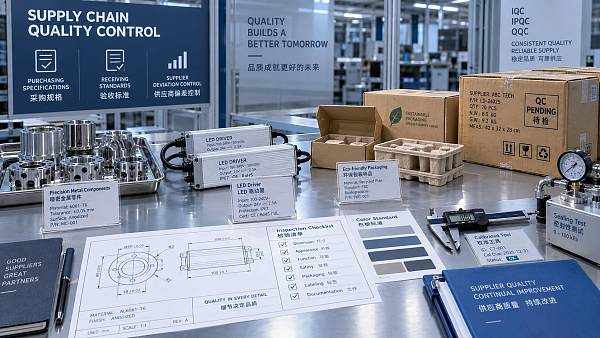
Before approving a new packaging vendor or redesign, project managers should request measurable answers on testing, lead times, and quality control. The review process is often more effective when standardized into a scorecard.
The following table can be used as a practical sourcing checklist when comparing vendors offering sustainable packaging solutions for safer shipping programs.
A strong supplier does not simply provide eco claims. It supports consistent production, transparent material information, and practical recommendations that reduce shipping risk over repeated project cycles.
Common procurement mistakes
- Approving a redesign based only on material reduction targets
- Ignoring pallet footprint and warehouse handling limits
- Skipping trial shipments across 2 or 3 logistics routes
- Not aligning packaging specs with retail or installer requirements
- Assuming recyclable means operationally suitable for every product type
In commercial ecosystems like those tracked by G-BCE, packaging decisions connect directly to fixture delivery, store launch timing, consumer product quality, and brand presentation. That is why benchmarking across sectors adds value during sourcing.
Implementation Steps for Safer, More Efficient Packaging Programs
A successful transition to sustainable packaging solutions usually happens in stages. For most organizations, a 4-step implementation path delivers better results than a full immediate change across all SKUs.
Step 1: Segment products by risk and shipping profile
Group SKUs into at least 3 categories: low-risk, medium-risk, and high-risk. Variables should include fragility, surface sensitivity, product weight, route length, and whether the item ships as parcel, LTL, or full pallet.
Step 2: Build packaging specifications around real handling conditions
Use actual warehouse and transit data where possible. If not available, define standard assumptions such as 4-layer pallet stacking, 7-day storage, and mixed humidity exposure. This prevents under-engineering during the design phase.
Step 3: Pilot before scale-up
Run a pilot for 2 to 6 weeks across selected lanes or customer groups. Track packing time, damage feedback, pallet density, and material consumption per unit. A pilot often reveals assembly issues that lab samples do not show.
Step 4: Review total cost instead of unit cost
The final decision should combine packaging material cost, labor minutes, freight cube, claim reduction potential, and disposal simplicity. In many cases, a slightly higher material cost produces a lower total delivered cost.
Ongoing control points after rollout
- Quarterly review of damage patterns by route and SKU group
- Material consistency checks on each major production batch
- Annual redesign review for freight and sustainability improvements
- Feedback loop between procurement, warehouse, and customer teams
These control points are essential because packaging performance often changes when order profiles, product mix, or shipping destinations change over time.
Practical FAQ for Commercial Shipping Projects
Are sustainable packaging solutions only suitable for lightweight products?
No. They can support lightweight and heavy items alike when the structure is engineered correctly. Heavy loads may require reinforced corrugated grades, stronger corner protection, or multi-material systems with optimized material use.
How quickly can a business switch to a new packaging format?
For straightforward carton or void-fill updates, the process may take 2 to 4 weeks. If molded pulp tooling, transit testing, or multi-country packaging approvals are involved, the timeline can extend to 6 to 10 weeks.
What matters more: recycled content or protective performance?
Both matter, but protective performance must not be compromised. A package that uses less plastic yet increases breakage, reverse logistics, and replacement shipments is not an efficient sustainability outcome.
How does benchmarking improve decision-making?
Benchmarking helps project managers compare materials, formats, and handling performance across commercial environments. Platforms such as G-BCE are valuable because they connect packaging choices to broader supply-chain, retail, and compliance expectations.
Sustainable packaging solutions create the most value when they are treated as operational infrastructure rather than a cosmetic sustainability upgrade. The right program improves shipping safety, supports procurement discipline, and reduces waste without weakening protection.
For project managers, sourcing directors, and commercial delivery teams, the next step is a structured review of current packaging performance, material mix, and route-specific risk. If you are planning safer shipping with smarter material use, now is the right time to get a customized solution, discuss packaging details, and explore more data-driven options with G-BCE.
News Recommendations
 How to prevent O-rings and seals from failing in food equipment
![51a6ab95581761cc26f4318be6520c15]()
Aris Katos
Future of Carbide Coatings
 How to compare commercial linear light wholesale quotes accurately
![51a6ab95581761cc26f4318be6520c15]()
Aris Katos
Future of Carbide Coatings
 How to verify international standards compliance for Middle East exports
![51a6ab95581761cc26f4318be6520c15]()
Aris Katos
Future of Carbide Coatings
 How to select laboratory instruments for reproducible test results
![51a6ab95581761cc26f4318be6520c15]()
Aris Katos
Future of Carbide Coatings
 When does a sheet metal prototype reveal design flaws early?
![51a6ab95581761cc26f4318be6520c15]()
Aris Katos
Future of Carbide Coatings
 When PE air column bags reduce damage in e-commerce fulfillment
![51a6ab95581761cc26f4318be6520c15]()
Aris Katos
Future of Carbide Coatings
 How energy-efficient design reduces operating costs in retail lighting
![51a6ab95581761cc26f4318be6520c15]()
Aris Katos
Future of Carbide Coatings
 When commercial aluminum storefronts make sense for a retail renovation
![51a6ab95581761cc26f4318be6520c15]()
Aris Katos
Future of Carbide Coatings
 What makes LED lights durable in high-use commercial spaces?
![51a6ab95581761cc26f4318be6520c15]()
Aris Katos
Future of Carbide Coatings
 Which industry categories offer the strongest export potential in Latin America?
![51a6ab95581761cc26f4318be6520c15]()
Aris Katos
Future of Carbide Coatings
 How to choose an ultra bright waterproof window display for storefronts
![51a6ab95581761cc26f4318be6520c15]()
Aris Katos
Future of Carbide Coatings
 How to verify suppliers on a trade portal for global sourcing
![51a6ab95581761cc26f4318be6520c15]()
Aris Katos
Future of Carbide Coatings
 How RoHS requirements should be stated in product specifications
![51a6ab95581761cc26f4318be6520c15]()
Aris Katos
Future of Carbide Coatings
 What affects the lead time for custom retail counter displays?
![51a6ab95581761cc26f4318be6520c15]()
Aris Katos
Future of Carbide Coatings
 What consumer packaging USA importers need to verify before ordering
![51a6ab95581761cc26f4318be6520c15]()
Aris Katos
Future of Carbide Coatings
 How commercial spaces interiors shape customer dwell time
![51a6ab95581761cc26f4318be6520c15]()
Aris Katos
Future of Carbide Coatings
 How LED commercial lighting design reduces glare in retail spaces
![51a6ab95581761cc26f4318be6520c15]()
Aris Katos
Future of Carbide Coatings
 How industrial technology information improves RFID inventory accuracy
![51a6ab95581761cc26f4318be6520c15]()
Aris Katos
Future of Carbide Coatings
 When drip garden watering systems make more sense than sprinklers
![51a6ab95581761cc26f4318be6520c15]()
Aris Katos
Future of Carbide Coatings
 When category comparison improves sourcing for industrial applications
![51a6ab95581761cc26f4318be6520c15]()
Aris Katos
Future of Carbide Coatings
 Industrial application guidance for selecting the right LED lighting
![51a6ab95581761cc26f4318be6520c15]()
Aris Katos
Future of Carbide Coatings
 Which commercial architecture standards apply to European retail fit-outs?
![51a6ab95581761cc26f4318be6520c15]()
Aris Katos
Future of Carbide Coatings
 How to verify FDA requirements for maternity care products
![51a6ab95581761cc26f4318be6520c15]()
Aris Katos
Future of Carbide Coatings
 How to verify BPA-free claims for food-contact products
![51a6ab95581761cc26f4318be6520c15]()
Aris Katos
Future of Carbide Coatings
 When does a European wholesale supplier suit modular office projects?
![51a6ab95581761cc26f4318be6520c15]()
Aris Katos
Future of Carbide Coatings
 When consumer ecosystem solutions improve the in-store shopping journey
![51a6ab95581761cc26f4318be6520c15]()
Aris Katos
Future of Carbide Coatings
 How a commercial developers network can reduce site selection risk
![51a6ab95581761cc26f4318be6520c15]()
Aris Katos
Future of Carbide Coatings
 How clear purchasing specifications prevent costly supplier deviations
![51a6ab95581761cc26f4318be6520c15]()
Aris Katos
Future of Carbide Coatings
 What an ISTA drop test lab checks before your packaging ships
![51a6ab95581761cc26f4318be6520c15]()
Aris Katos
Future of Carbide Coatings
 Which commercial furniture standards apply to workplace seating?
![51a6ab95581761cc26f4318be6520c15]()
Aris Katos
Future of Carbide Coatings
 How to evaluate smart lighting module OEM compatibility before sampling
![51a6ab95581761cc26f4318be6520c15]()
Aris Katos
Future of Carbide Coatings
 How to assess whether sustainable technology delivers real impact
![51a6ab95581761cc26f4318be6520c15]()
Aris Katos
Future of Carbide Coatings
 How to assess an OEM supplier’s quality control before ordering
![51a6ab95581761cc26f4318be6520c15]()
Aris Katos
Future of Carbide Coatings
 How consumer ecosystem solutions data can improve retail personalization
![51a6ab95581761cc26f4318be6520c15]()
Aris Katos
Future of Carbide Coatings
 When does consumer packaging design justify a higher product price?
![51a6ab95581761cc26f4318be6520c15]()
Aris Katos
Future of Carbide Coatings
 Supermarket Fixture Installation: Planning Layouts, Wiring, and Handover
![51a6ab95581761cc26f4318be6520c15]()
Aris Katos
Future of Carbide Coatings
 Automated Lighting and Smart Lighting Control in Bergerac: Key Project Considerations
![51a6ab95581761cc26f4318be6520c15]()
Aris Katos
Future of Carbide Coatings
 Segment Streetlight Controllers: Choosing Control Modes for Urban Roads
![51a6ab95581761cc26f4318be6520c15]()
Aris Katos
Future of Carbide Coatings
 IEC 62471-2 Explained: How to Assess Photobiological Risks in LED Lighting
![51a6ab95581761cc26f4318be6520c15]()
Aris Katos
Future of Carbide Coatings