Wireless lighting sensor factory: how to avoid delays
Time
Click Count
When evaluating a wireless lighting sensor factory, avoiding delays starts with verified specifications and supply chain visibility. Buyers comparing unified glare rating (UGR) standards, color rendering index (CRI) data, and lumen output per watt benchmarks also need to assess partner readiness across iot lighting node oem, smart street light controller integration, dimmable led driver supplier coordination, and compatibility with KNX smart lighting wholesale and DALI lighting control system requirements.
Why do wireless lighting sensor projects get delayed so often?
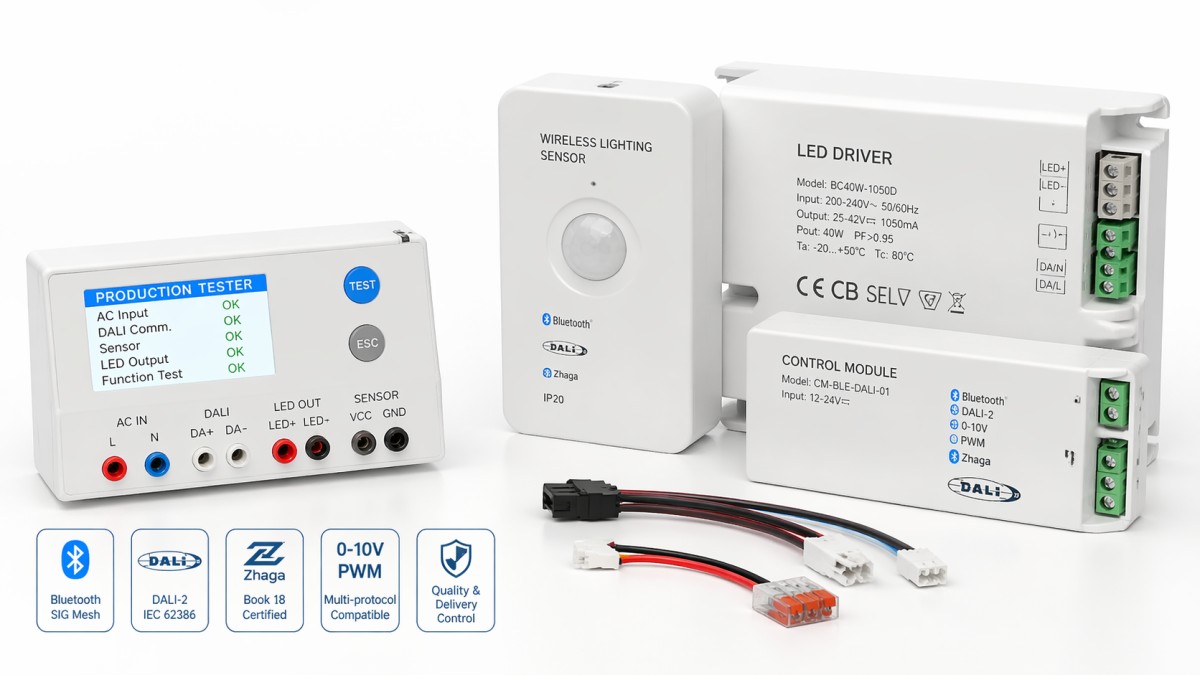
A delayed shipment is rarely caused by one single issue. In most commercial lighting and smart control projects, timing slips happen when specification review, firmware compatibility, sample approval, and mass production planning are handled by different parties without a shared verification process. For procurement teams, the risk becomes higher when the wireless lighting sensor factory can quote quickly but cannot clearly map component lead times, protocol support, and test checkpoints.
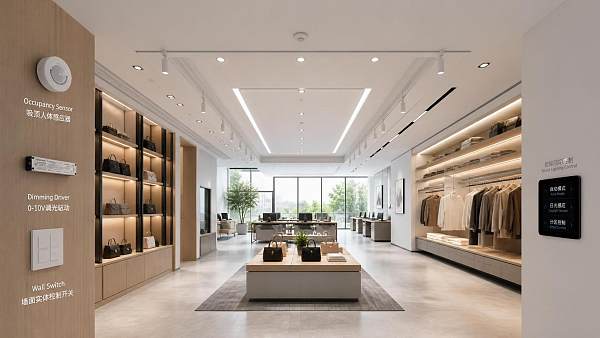
This is especially important in mixed-use commercial environments, where a sensor may need to work with DALI lighting control system devices, KNX smart lighting wholesale networks, dimmable LED drivers, and building automation gateways. A factory that only focuses on sensor assembly, but not system fit, can create a 2–6 week delay during integration. In retail, office, hospitality, and urban lighting projects, that delay can disrupt store opening plans, contractor schedules, and cash flow forecasting.
For information researchers and business evaluators, the first practical question is not only “Can the supplier make the sensor?” but “Can the supplier keep the project moving through all 4 stages: specification lock, engineering validation, pilot batch, and mass delivery?” This shift in evaluation logic helps prevent late-stage surprises such as radio instability, enclosure mismatch, or certification document gaps.
G-BCE is positioned for this type of decision environment. By connecting Asian manufacturing execution with international commercial requirements, it supports buyers who need more than catalog claims. Cross-sector benchmarking matters because wireless lighting sensors today are no longer isolated components; they are part of a broader commercial ecosystem involving controls, luminaires, fixtures, and digital retail infrastructure.
The 5 most common delay triggers in factory selection
- Unverified protocol scope: the supplier lists BLE, Zigbee, or proprietary wireless support, but does not define gateway dependency, commissioning method, or DALI/KNX bridging limits.
- Incomplete component coordination: the sensor works in the lab, but the dimmable led driver supplier uses a different dimming curve, response timing, or wiring logic.
- Late enclosure and mounting review: ceiling cutout, IP level, lens angle, and housing material are approved too late, forcing tooling changes or rework.
- Missing compliance alignment: UL, CE, EMC, or market-entry file preparation starts after sampling instead of before pilot production.
- Weak supply chain transparency: the factory cannot identify which items have 7–15 day availability and which critical chips require 4–10 weeks.
If a buyer checks these 5 points before releasing a deposit or pilot order, many preventable delays can be identified early. For operators and installers, this also reduces the risk of receiving products that fit the purchase order but fail on site.
What should buyers verify first in a wireless lighting sensor factory?
The most efficient review starts with a structured parameter and process checklist. Many teams focus only on price, wireless range, or a general motion-detection claim. In reality, commercial projects need layered confirmation across electrical compatibility, sensing behavior, installation method, software support, and delivery control. A factory with strong documentation can usually provide most of this within 3–5 working days.
For procurement personnel, the core objective is simple: reduce ambiguity before sample approval. For operators, the goal is different: avoid commissioning friction and unstable field behavior. For business evaluators, the emphasis often sits on whether the factory’s process maturity supports predictable expansion from small batch to regional rollout. These priorities overlap, so a good evaluation framework should support all 3 perspectives at once.
The table below can be used as an early-stage screening tool when comparing a wireless lighting sensor factory, an iot lighting node oem partner, or a source that claims compatibility with smart street light controller and intelligent building systems.
This comparison shows why parameter verification must be connected to project execution. A supplier may look technically acceptable on paper, yet still create schedule risk if protocol details, driver coordination, and document traceability are weak. In practical sourcing, these are often more decisive than a small unit-price difference.
Which technical details deserve the closest attention?
Commercial buyers should not treat sensor data in isolation. If the project also includes luminaires, glare-sensitive spaces, or branded customer environments, ask how the sensor strategy interacts with UGR targets, CRI expectations, lumen output per watt, and dimming consistency. In premium retail or hospitality, lighting quality and control reliability are linked. A technically acceptable sensor that causes unstable scene switching can damage perceived brand quality.
For indoor applications, check detection range, hold time, standby settings, daylight threshold, and commissioning interface. For outdoor or semi-outdoor use, also review ingress protection, temperature range, and housing durability. Common discussions involve 3 mounting types, 2 control pathways, and at least 4 commissioning parameters, so the factory should provide a clear matrix instead of fragmented answers across different emails.
A practical pre-sample checklist
- Confirm whether the wireless lighting sensor factory supports your intended protocol natively or through an external gateway.
- Request pairing confirmation with the dimmable led driver supplier, including dimming response and fail-safe behavior.
- Verify enclosure dimensions and installation conditions before finalizing samples.
- Ask for a batch-level document list covering datasheet version, inspection items, and compliance scope.
If the factory cannot answer these 4 points clearly, the project is likely to lose time later. Early clarity saves far more time than urgent corrections during production.
How to compare factories by delivery reliability, not just quotation
Many sourcing teams compare offers using only EXW or FOB price, sample fee, and nominal lead time. That approach is incomplete. Two factories may both quote 25–35 days for production, but one has in-house test capability, stable material planning, and better coordination with an iot lighting node oem ecosystem, while the other depends on scattered subcontractors. The second option often becomes more expensive once delays, resampling, and engineering changes are counted.
A more useful comparison method is to measure delivery reliability across 4 dimensions: engineering responsiveness, component visibility, pilot-to-mass consistency, and change-control discipline. This is where G-BCE’s benchmarking perspective adds value. In cross-border sourcing, factory maturity is not only about manufacturing capacity; it is also about how clearly the supplier can align with international commercial use cases, compliance expectations, and design-driven environments.
The table below helps buyers compare suppliers in a way that reflects project execution risk rather than headline price alone.
The table highlights a common sourcing mistake: assuming speed equals readiness. A supplier that speaks clearly about constraints, alternatives, and checkpoints often performs better than one that promises broad compatibility without process detail. Procurement teams should reward transparency, because transparent factories are easier to plan with.
What timeline should buyers expect?
For a standard wireless lighting sensor project, a realistic schedule often includes 3–7 working days for document review, 7–15 days for samples, 1–2 weeks for test feedback, and 3–5 weeks for mass production after final approval. Customized housings, protocol adjustments, or integrated packaging can extend that timeline. If a supplier quotes much shorter periods without defining assumptions, buyers should ask what has been excluded.
Projects involving KNX smart lighting wholesale channels or DALI lighting control system integration may also require additional coordination with software teams, installers, or lighting designers. It is better to plan one extra review cycle than to compress testing and discover incompatibility during site installation.
Which procurement process best prevents delays from sample to mass production?
A disciplined procurement workflow is one of the strongest delay-prevention tools. In practical B2B sourcing, the handoff from product selection to operational execution is where mistakes accumulate. Commercial developers, chain operators, and sourcing directors benefit from a process that turns technical uncertainty into documented checkpoints. This is fully aligned with G-BCE’s role as a benchmarking and intelligence platform for resilient commercial ecosystems.
Instead of treating the factory as a simple vendor, buyers should treat it as an execution partner that must pass 6 review nodes: requirement definition, technical matching, sample validation, compliance review, pilot run confirmation, and shipment release. Each node should have a named owner, a document set, and a decision date. Without that discipline, even good factories can become late factories.
The process below is useful for information researchers building an evaluation report, operators preparing for installation, and procurement teams seeking repeatable supplier control.
A 6-step procurement flow for wireless lighting sensors
- Define the application boundary: indoor, outdoor, retail, office, street, or mixed-use; identify required control system links and environmental conditions.
- Lock the key specification set: protocol, installation form, driver interface, detection logic, dimming behavior, and compliance target market.
- Run sample validation: test at least 3 areas including control response, mounting fit, and interaction with the dimmable led driver supplier setup.
- Review delivery readiness: component lead times, backup materials, production slot, and packaging or labeling requirements.
- Approve pilot batch: check consistency, firmware version, labeling accuracy, and field feedback before full release.
- Release shipment with final document package: packing list, inspection records, applicable conformity files, and installation guidance.
This 6-step structure helps convert fragmented communication into a controlled implementation sequence. For large or multi-site rollouts, buyers may also add a 7th step for post-installation review after the first 30–60 days of operation. That extra checkpoint is valuable when a wireless lighting sensor factory will become a long-term sourcing partner rather than a one-off supplier.
Common misconceptions that increase delay risk
- “If the sample works, mass production will be fine.” This ignores batch consistency, material substitution, and firmware version control.
- “The control protocol is standard, so integration will be simple.” In reality, configuration method and device behavior still vary.
- “Certification can be arranged later.” Late compliance review often blocks shipment or market entry.
Buyers who actively challenge these assumptions usually reduce schedule volatility. The goal is not to slow down purchasing, but to remove unknowns before they become expensive.
FAQ and next step: how to move faster with less sourcing risk
The final stage of supplier evaluation often comes down to a few recurring questions. These questions matter because they reveal whether the project team is ready to decide, or still operating on assumptions. For wireless lighting sensor sourcing, the right answers should combine technical clarity, delivery realism, and commercial fit.
How do I know if a wireless lighting sensor factory is suitable for my project?
Start by matching 3 layers: application scenario, control ecosystem, and delivery process. If the factory can explain how its sensor behaves in your exact environment, how it connects to DALI lighting control system or KNX smart lighting wholesale requirements, and how long each approval stage normally takes, it is more likely to be suitable. Ask for specific limits, not only broad compatibility claims.
What should be confirmed before requesting samples?
Confirm at least 5 items: protocol path, driver compatibility, installation dimensions, environmental rating, and expected test purpose. If you skip this step, you may receive a sample that looks correct but does not represent the final use case. This is a major source of wasted 1–3 week cycles in commercial sourcing.
Are low quotations a reliable indicator of factory efficiency?
Not by themselves. A lower quotation may exclude firmware support, compliance documentation, packaging detail, or post-sample revision work. A better indicator is whether the supplier can show clear review steps, delivery assumptions, and coordination with related partners such as the dimmable led driver supplier or smart street light controller integrator.
Why choose us for sourcing support and benchmarking?
G-BCE helps commercial architects, sourcing directors, operators, and evaluators make faster decisions with stronger evidence. Instead of looking at a wireless lighting sensor factory in isolation, we benchmark it within the broader commercial ecosystem: lighting quality requirements, control integration, supply chain transparency, and market-entry expectations. This cross-sector view is useful when your project spans store environments, smart retail systems, signage, fixtures, and international sourcing constraints.
You can contact us for parameter confirmation, product selection guidance, delivery timeline review, protocol and integration discussion, certification requirement mapping, sample support planning, and quotation comparison. If you are evaluating multiple suppliers, we can help structure the review around technical fit, commercial readiness, and delay-risk reduction so your team can move from research to decision with fewer blind spots.
- smart retail
- supply chain
- commercial lighting
- signage
- commercial developers
- commercial architects
- commercial environments
- smart retail systems
- dali lighting control system
- knx smart lighting wholesale
- wireless lighting sensor factory
- dimmable led driver supplier
- smart street light controller
- iot lighting node oem
- lumen output per watt benchmarks
- color rendering index (CRI) data
- unified glare rating (UGR) standards
News Recommendations
 Which industry categories offer the strongest export potential in Latin America?
![51a6ab95581761cc26f4318be6520c15]()
Aris Katos
Future of Carbide Coatings
 How to choose an ultra bright waterproof window display for storefronts
![51a6ab95581761cc26f4318be6520c15]()
Aris Katos
Future of Carbide Coatings
 How to verify suppliers on a trade portal for global sourcing
![51a6ab95581761cc26f4318be6520c15]()
Aris Katos
Future of Carbide Coatings
 How RoHS requirements should be stated in product specifications
![51a6ab95581761cc26f4318be6520c15]()
Aris Katos
Future of Carbide Coatings
 What affects the lead time for custom retail counter displays?
![51a6ab95581761cc26f4318be6520c15]()
Aris Katos
Future of Carbide Coatings
 What consumer packaging USA importers need to verify before ordering
![51a6ab95581761cc26f4318be6520c15]()
Aris Katos
Future of Carbide Coatings
 How commercial spaces interiors shape customer dwell time
![51a6ab95581761cc26f4318be6520c15]()
Aris Katos
Future of Carbide Coatings
 How LED commercial lighting design reduces glare in retail spaces
![51a6ab95581761cc26f4318be6520c15]()
Aris Katos
Future of Carbide Coatings
 How industrial technology information improves RFID inventory accuracy
![51a6ab95581761cc26f4318be6520c15]()
Aris Katos
Future of Carbide Coatings
 When drip garden watering systems make more sense than sprinklers
![51a6ab95581761cc26f4318be6520c15]()
Aris Katos
Future of Carbide Coatings
 When category comparison improves sourcing for industrial applications
![51a6ab95581761cc26f4318be6520c15]()
Aris Katos
Future of Carbide Coatings
 Industrial application guidance for selecting the right LED lighting
![51a6ab95581761cc26f4318be6520c15]()
Aris Katos
Future of Carbide Coatings
 Which commercial architecture standards apply to European retail fit-outs?
![51a6ab95581761cc26f4318be6520c15]()
Aris Katos
Future of Carbide Coatings
 How to verify FDA requirements for maternity care products
![51a6ab95581761cc26f4318be6520c15]()
Aris Katos
Future of Carbide Coatings
 How to verify BPA-free claims for food-contact products
![51a6ab95581761cc26f4318be6520c15]()
Aris Katos
Future of Carbide Coatings
 When does a European wholesale supplier suit modular office projects?
![51a6ab95581761cc26f4318be6520c15]()
Aris Katos
Future of Carbide Coatings
 When consumer ecosystem solutions improve the in-store shopping journey
![51a6ab95581761cc26f4318be6520c15]()
Aris Katos
Future of Carbide Coatings
 How a commercial developers network can reduce site selection risk
![51a6ab95581761cc26f4318be6520c15]()
Aris Katos
Future of Carbide Coatings
 How clear purchasing specifications prevent costly supplier deviations
![51a6ab95581761cc26f4318be6520c15]()
Aris Katos
Future of Carbide Coatings
 What an ISTA drop test lab checks before your packaging ships
![51a6ab95581761cc26f4318be6520c15]()
Aris Katos
Future of Carbide Coatings
 Which commercial furniture standards apply to workplace seating?
![51a6ab95581761cc26f4318be6520c15]()
Aris Katos
Future of Carbide Coatings
 How to evaluate smart lighting module OEM compatibility before sampling
![51a6ab95581761cc26f4318be6520c15]()
Aris Katos
Future of Carbide Coatings
 How to assess whether sustainable technology delivers real impact
![51a6ab95581761cc26f4318be6520c15]()
Aris Katos
Future of Carbide Coatings
 How to assess an OEM supplier’s quality control before ordering
![51a6ab95581761cc26f4318be6520c15]()
Aris Katos
Future of Carbide Coatings
 How consumer ecosystem solutions data can improve retail personalization
![51a6ab95581761cc26f4318be6520c15]()
Aris Katos
Future of Carbide Coatings
 When does consumer packaging design justify a higher product price?
![51a6ab95581761cc26f4318be6520c15]()
Aris Katos
Future of Carbide Coatings
 Supermarket Fixture Installation: Planning Layouts, Wiring, and Handover
![51a6ab95581761cc26f4318be6520c15]()
Aris Katos
Future of Carbide Coatings
 Automated Lighting and Smart Lighting Control in Bergerac: Key Project Considerations
![51a6ab95581761cc26f4318be6520c15]()
Aris Katos
Future of Carbide Coatings
 Segment Streetlight Controllers: Choosing Control Modes for Urban Roads
![51a6ab95581761cc26f4318be6520c15]()
Aris Katos
Future of Carbide Coatings
 IEC 62471-2 Explained: How to Assess Photobiological Risks in LED Lighting
![51a6ab95581761cc26f4318be6520c15]()
Aris Katos
Future of Carbide Coatings
 Food Grade Packaging Requirements by Product Type, Temperature, and Contact Risk
![51a6ab95581761cc26f4318be6520c15]()
Aris Katos
Future of Carbide Coatings
 Food Packaging Compliance Checklist: Tests, Records, and Labeling Before Shipment
![51a6ab95581761cc26f4318be6520c15]()
Aris Katos
Future of Carbide Coatings
 NSF Food Packaging Standards: When Certification Matters for Commercial Food Use
![51a6ab95581761cc26f4318be6520c15]()
Aris Katos
Future of Carbide Coatings
 FDA Food Grade Compliance: Which Materials and Documents Do Buyers Need?
![51a6ab95581761cc26f4318be6520c15]()
Aris Katos
Future of Carbide Coatings
 What Should a Food Grade Declaration Include for Packaging Compliance?
![51a6ab95581761cc26f4318be6520c15]()
Aris Katos
Future of Carbide Coatings
 Housewares Importing: How to Evaluate Suppliers, Costs, and Compliance Risks
![51a6ab95581761cc26f4318be6520c15]()
Aris Katos
Future of Carbide Coatings
 Why Freeze-Dried Fruit Ingredients Lose Crispness—and How to Prevent It
![51a6ab95581761cc26f4318be6520c15]()
Aris Katos
Future of Carbide Coatings
 What industry veterans look for before choosing a new supplier
![51a6ab95581761cc26f4318be6520c15]()
Aris Katos
Future of Carbide Coatings
 How material fatigue can shorten the service life of retail shelving
![51a6ab95581761cc26f4318be6520c15]()
Aris Katos
Future of Carbide Coatings