Dimmable LED driver supplier: what to compare first?
Time
Click Count
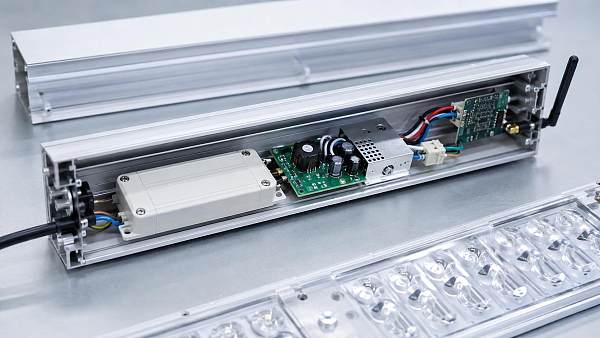
Choosing a dimmable LED driver supplier should start with measurable performance, not price alone. Buyers, operators, and sourcing teams need to compare color rendering index (CRI) data, lumen output per watt benchmarks, and unified glare rating (UGR) standards, while also checking compatibility with a DALI lighting control system, KNX smart lighting wholesale networks, and smart street light controller applications.
For most professional buyers, the first comparison point is simple: can this supplier prove stable dimming performance in your real application? Before discussing unit cost, lead time, or catalog breadth, you need to verify whether the supplier can deliver flicker-controlled, compatible, efficient, and compliant LED drivers for your target environment. A low-cost driver that fails with your control protocol, creates visible flicker, or causes maintenance issues will usually cost more over time than a higher-spec option from a reliable dimmable LED driver supplier.
What should you compare first when evaluating a dimmable LED driver supplier?
The best starting point is not branding or price positioning. It is the supplier’s ability to meet five core requirements at the same time:
- Dimming compatibility: Does the driver work with your chosen control method, such as DALI, 0-10V, TRIAC, PWM, KNX integration, or smart street light controller systems?
- Output stability: Can it maintain smooth dimming without flicker, dropout, shimmer, or audible noise?
- Electrical efficiency: What are the real lumen output per watt results in the final luminaire system, not just on paper?
- Lighting quality support: Does the driver help the fixture achieve target CRI consistency, low glare design goals, and stable color performance?
- Compliance and reliability: Does the supplier provide certifications, test records, surge protection data, thermal performance data, and long-term quality control?
If a supplier cannot clearly answer these five areas with documents, test evidence, and project references, it should not be your first choice for commercial sourcing.
Why dimming compatibility matters more than the lowest quote
Many sourcing mistakes happen because buyers compare wattage and price before they compare control compatibility. In real projects, incompatibility is one of the most expensive failures. A driver may look acceptable in a quotation sheet but still fail when connected to the intended dimming ecosystem.
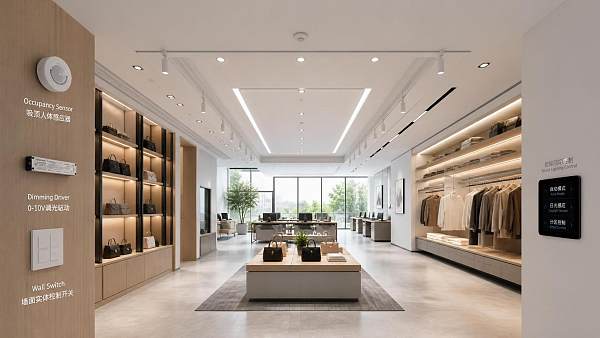
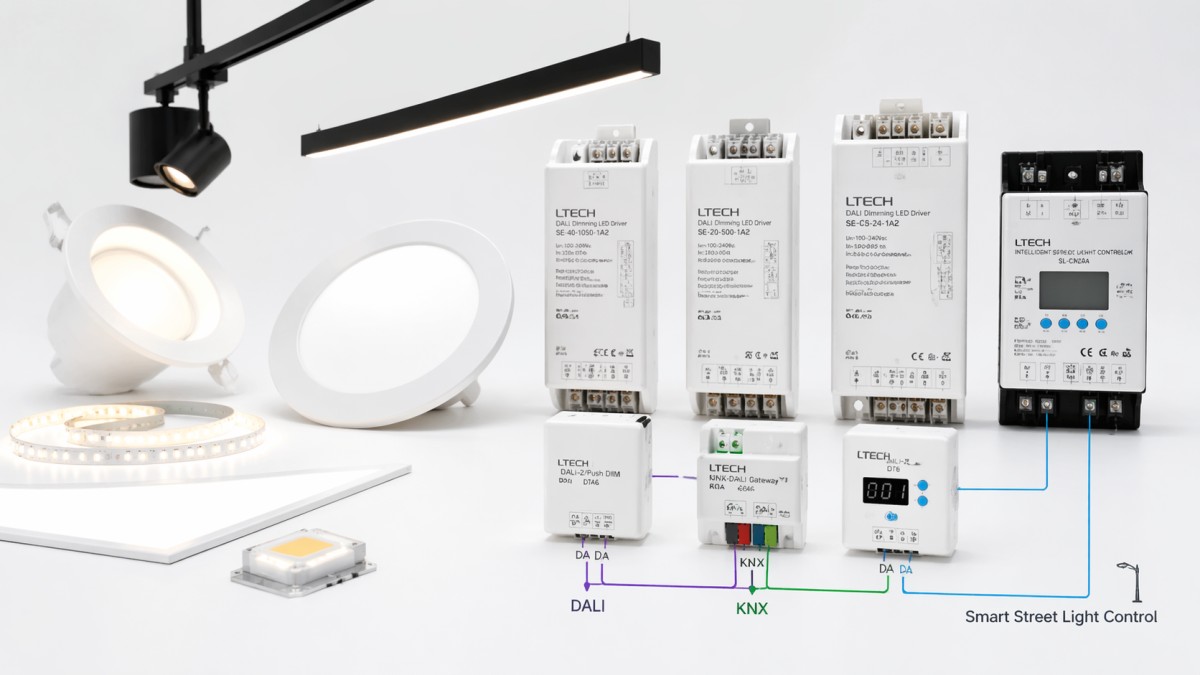
For example, if your project uses a DALI lighting control system, you need to confirm more than “DALI compatible” wording. Ask whether the supplier supports the exact DALI version, addressing behavior, dimming curve consistency, fault reporting, and commissioning stability. If your building integrates with KNX smart lighting wholesale infrastructure, the driver must also cooperate reliably with the gateway or control layer used in that environment.
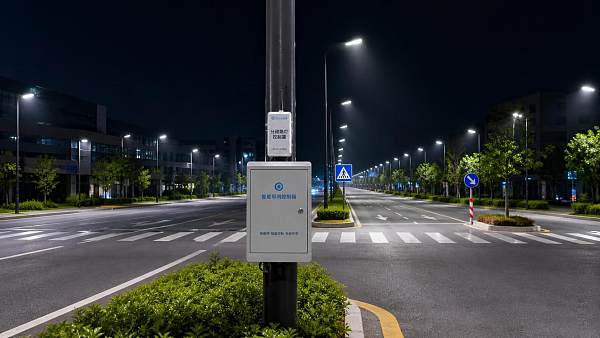
The same logic applies to outdoor and municipal applications. In a smart street light controller setup, the driver should support the communication and dimming logic needed for remote scheduling, energy management, and fault detection. A supplier with no practical experience in these applications may create integration risk even if the sample unit appears functional.
So the first supplier comparison question should be: What control systems has this driver already been validated with?
Which performance data actually helps buyers make a decision?
Serious buyers should not rely on generic brochures. They should compare measurable, application-relevant data. The most useful items include:
- Flicker metrics: Ask for flicker percentage, Pst LM, SVM, and dimming-range behavior.
- Dimming depth: Can the driver dim to 10%, 1%, or below without instability?
- Efficiency curves: Check performance at different loads, not only peak numbers.
- Power factor and THD: Important for commercial and large-scale installations.
- Thermal derating data: Especially critical in enclosed fixtures or high-ambient environments.
- Surge protection: Important for outdoor, retail frontage, signage, and infrastructure applications.
- Lifetime claims: Verify whether the stated hours are backed by temperature and component assumptions.
For lighting quality projects, additional comparisons matter. If your fixture must support premium visual performance, compare how the driver affects final CRI data, color consistency, and dimming smoothness. In architectural, retail, hospitality, and display environments, even strong LED modules can underperform if the driver introduces instability.
Likewise, compare lumen output per watt benchmarks in the complete fixture system. Buyers sometimes evaluate only LED chip efficiency, but driver losses influence the final result. For operating teams and procurement managers, total system efficiency is the number that affects both energy cost and performance benchmarking.
How do CRI, lumen output per watt, and UGR relate to driver selection?
These metrics are often discussed at luminaire level, but they still matter when comparing a dimmable LED driver supplier.
CRI: The driver does not create CRI by itself, but unstable current regulation can affect how consistently the LED source performs across dimming levels. In premium commercial environments, buyers want confidence that visual quality remains acceptable when the lights dim.
Lumen output per watt: Driver efficiency directly affects total fixture efficacy. If one supplier offers a marginally cheaper driver but lower conversion efficiency, the long-term operating cost may erase any purchase savings.
UGR standards: Unified glare rating is mainly a fixture and optical design metric, but dimming behavior still influences perceived comfort. Poor dimming smoothness, stepping, or mismatch across fixtures can reduce visual comfort in offices, retail, and hospitality spaces. If glare control and visual experience matter, driver stability should be part of the comparison.
In short, a qualified dimmable LED driver supplier should support the lighting outcome you need, not just the electrical input-output specification.
What do procurement teams, operators, and evaluators usually overlook?
There are several issues that often appear after purchase rather than before it:
- Sample success does not guarantee batch consistency. Ask about incoming component control, production testing, and traceability.
- Lead time risk is often hidden. Verify whether key components are second-sourced or dependent on unstable supply chains.
- After-sales engineering support may be limited. If dimming issues arise during installation, can the supplier actually troubleshoot them?
- Certifications may not match your target market. Confirm UL, CE, or other required approvals for your destination region and use case.
- Environmental fit may be wrong. Indoor retail drivers, signage drivers, and outdoor smart lighting drivers may require different protection levels and thermal tolerances.
For business evaluation teams, these overlooked issues directly affect project risk. For users and operators, they affect maintenance frequency, commissioning time, and system stability. For procurement, they affect warranty exposure and supplier replacement costs.
How can you compare suppliers in a practical, low-risk way?
A practical evaluation process should be structured and evidence-based. Use this sequence:
- Define the application first. Retail, office, hospitality, signage, and smart street lighting each require different priorities.
- Confirm control protocol needs. DALI, 0-10V, TRIAC, KNX-linked systems, or smart controller integration.
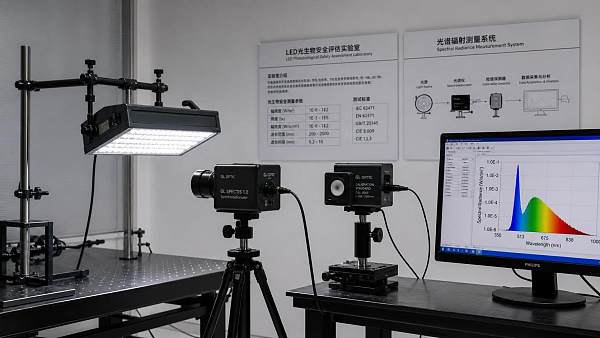
- Request technical documents. Datasheets, IES-related support information, compliance certificates, reliability reports, and dimming test records.
- Compare real samples in your system. Test with your actual controls, luminaires, and installation conditions.
- Review failure handling capability. Warranty terms matter, but so does engineering response speed.
- Evaluate total cost, not unit price. Include installation risk, service burden, energy efficiency, and replacement probability.
This process helps separate a catalog seller from a true dimmable LED driver supplier with system-level competence.
What signals indicate a strong supplier rather than just a low-cost manufacturer?
The strongest suppliers usually show a combination of technical transparency and application understanding. Look for these signals:
- They ask about your control system before quoting.
- They provide dimming compatibility lists and test conditions.
- They explain performance under partial load and thermal stress.
- They understand commercial standards and destination-market compliance.
- They can discuss fixture-level outcomes such as efficacy, visual comfort, and system integration.
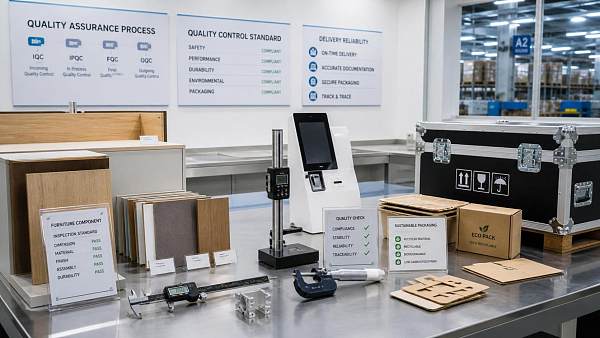
- They offer clear quality assurance, batch testing, and traceability practices.
This is especially important in modern commercial environments where lighting is no longer an isolated hardware choice. It interacts with building controls, retail experience design, sustainability targets, and lifecycle cost management.
Conclusion: compare technical fit first, then commercial terms
If you are choosing a dimmable LED driver supplier, the first comparison should be technical fit for your real application, especially dimming compatibility, output stability, efficiency, and compliance. After that, compare delivery capability, engineering support, consistency, and price.
For information researchers, this approach gives a clearer framework. For users and operators, it reduces commissioning and maintenance problems. For procurement and business evaluators, it lowers lifecycle risk and improves sourcing confidence.
The best supplier is rarely the one with the lowest initial quote. It is the one that can prove reliable performance in your specific lighting ecosystem, whether that means DALI lighting control system integration, KNX smart lighting wholesale compatibility, or smart street light controller deployment. Start there, and your supplier comparison will be far more accurate.
News Recommendations
 How to choose an ultra bright waterproof window display for storefronts
![51a6ab95581761cc26f4318be6520c15]()
Aris Katos
Future of Carbide Coatings
 How to verify suppliers on a trade portal for global sourcing
![51a6ab95581761cc26f4318be6520c15]()
Aris Katos
Future of Carbide Coatings
 How RoHS requirements should be stated in product specifications
![51a6ab95581761cc26f4318be6520c15]()
Aris Katos
Future of Carbide Coatings
 What affects the lead time for custom retail counter displays?
![51a6ab95581761cc26f4318be6520c15]()
Aris Katos
Future of Carbide Coatings
 What consumer packaging USA importers need to verify before ordering
![51a6ab95581761cc26f4318be6520c15]()
Aris Katos
Future of Carbide Coatings
 How commercial spaces interiors shape customer dwell time
![51a6ab95581761cc26f4318be6520c15]()
Aris Katos
Future of Carbide Coatings
 How LED commercial lighting design reduces glare in retail spaces
![51a6ab95581761cc26f4318be6520c15]()
Aris Katos
Future of Carbide Coatings
 How industrial technology information improves RFID inventory accuracy
![51a6ab95581761cc26f4318be6520c15]()
Aris Katos
Future of Carbide Coatings
 When drip garden watering systems make more sense than sprinklers
![51a6ab95581761cc26f4318be6520c15]()
Aris Katos
Future of Carbide Coatings
 When category comparison improves sourcing for industrial applications
![51a6ab95581761cc26f4318be6520c15]()
Aris Katos
Future of Carbide Coatings
 Industrial application guidance for selecting the right LED lighting
![51a6ab95581761cc26f4318be6520c15]()
Aris Katos
Future of Carbide Coatings
 Which commercial architecture standards apply to European retail fit-outs?
![51a6ab95581761cc26f4318be6520c15]()
Aris Katos
Future of Carbide Coatings
 How to verify FDA requirements for maternity care products
![51a6ab95581761cc26f4318be6520c15]()
Aris Katos
Future of Carbide Coatings
 How to verify BPA-free claims for food-contact products
![51a6ab95581761cc26f4318be6520c15]()
Aris Katos
Future of Carbide Coatings
 When does a European wholesale supplier suit modular office projects?
![51a6ab95581761cc26f4318be6520c15]()
Aris Katos
Future of Carbide Coatings
 When consumer ecosystem solutions improve the in-store shopping journey
![51a6ab95581761cc26f4318be6520c15]()
Aris Katos
Future of Carbide Coatings
 How a commercial developers network can reduce site selection risk
![51a6ab95581761cc26f4318be6520c15]()
Aris Katos
Future of Carbide Coatings
 How clear purchasing specifications prevent costly supplier deviations
![51a6ab95581761cc26f4318be6520c15]()
Aris Katos
Future of Carbide Coatings
 What an ISTA drop test lab checks before your packaging ships
![51a6ab95581761cc26f4318be6520c15]()
Aris Katos
Future of Carbide Coatings
 Which commercial furniture standards apply to workplace seating?
![51a6ab95581761cc26f4318be6520c15]()
Aris Katos
Future of Carbide Coatings
 How to evaluate smart lighting module OEM compatibility before sampling
![51a6ab95581761cc26f4318be6520c15]()
Aris Katos
Future of Carbide Coatings
 How to assess whether sustainable technology delivers real impact
![51a6ab95581761cc26f4318be6520c15]()
Aris Katos
Future of Carbide Coatings
 How to assess an OEM supplier’s quality control before ordering
![51a6ab95581761cc26f4318be6520c15]()
Aris Katos
Future of Carbide Coatings
 How consumer ecosystem solutions data can improve retail personalization
![51a6ab95581761cc26f4318be6520c15]()
Aris Katos
Future of Carbide Coatings
 When does consumer packaging design justify a higher product price?
![51a6ab95581761cc26f4318be6520c15]()
Aris Katos
Future of Carbide Coatings
 Supermarket Fixture Installation: Planning Layouts, Wiring, and Handover
![51a6ab95581761cc26f4318be6520c15]()
Aris Katos
Future of Carbide Coatings
 Automated Lighting and Smart Lighting Control in Bergerac: Key Project Considerations
![51a6ab95581761cc26f4318be6520c15]()
Aris Katos
Future of Carbide Coatings
 Segment Streetlight Controllers: Choosing Control Modes for Urban Roads
![51a6ab95581761cc26f4318be6520c15]()
Aris Katos
Future of Carbide Coatings
 IEC 62471-2 Explained: How to Assess Photobiological Risks in LED Lighting
![51a6ab95581761cc26f4318be6520c15]()
Aris Katos
Future of Carbide Coatings
 Food Grade Packaging Requirements by Product Type, Temperature, and Contact Risk
![51a6ab95581761cc26f4318be6520c15]()
Aris Katos
Future of Carbide Coatings
 Food Packaging Compliance Checklist: Tests, Records, and Labeling Before Shipment
![51a6ab95581761cc26f4318be6520c15]()
Aris Katos
Future of Carbide Coatings
 NSF Food Packaging Standards: When Certification Matters for Commercial Food Use
![51a6ab95581761cc26f4318be6520c15]()
Aris Katos
Future of Carbide Coatings
 FDA Food Grade Compliance: Which Materials and Documents Do Buyers Need?
![51a6ab95581761cc26f4318be6520c15]()
Aris Katos
Future of Carbide Coatings
 What Should a Food Grade Declaration Include for Packaging Compliance?
![51a6ab95581761cc26f4318be6520c15]()
Aris Katos
Future of Carbide Coatings
 Housewares Importing: How to Evaluate Suppliers, Costs, and Compliance Risks
![51a6ab95581761cc26f4318be6520c15]()
Aris Katos
Future of Carbide Coatings
 Why Freeze-Dried Fruit Ingredients Lose Crispness—and How to Prevent It
![51a6ab95581761cc26f4318be6520c15]()
Aris Katos
Future of Carbide Coatings
 What industry veterans look for before choosing a new supplier
![51a6ab95581761cc26f4318be6520c15]()
Aris Katos
Future of Carbide Coatings
 How material fatigue can shorten the service life of retail shelving
![51a6ab95581761cc26f4318be6520c15]()
Aris Katos
Future of Carbide Coatings
 What makes a global sourcing platform reliable for supplier verification?
![51a6ab95581761cc26f4318be6520c15]()
Aris Katos
Future of Carbide Coatings