How to vet an IoT lighting node OEM in 2026
Time
Click Count
Choosing the right IoT lighting node OEM in 2026 requires more than price checks. Buyers and technical evaluators now compare unified glare rating (UGR) standards, color rendering index (CRI) data, and lumen output per watt benchmarks alongside system compatibility for a dali lighting control system, smart street light controller, or wireless lighting sensor factory partner. This guide shows how to assess quality, interoperability, and long-term supply reliability with confidence.
For sourcing teams, operators, and commercial decision-makers, the OEM review process now sits at the intersection of lighting performance, embedded electronics, firmware stability, and supply-chain resilience. In retail, office, hospitality, and municipal projects, a weak node supplier can create field failures that are far more expensive than a small unit-price difference. That is why a structured evaluation framework matters in 2026.
From the perspective of G-BCE, the most valuable OEM relationships combine Asian manufacturing efficiency with global compliance discipline, documentation depth, and dependable engineering support. A lighting node is no longer a simple accessory. It is a control endpoint that affects dimming behavior, energy reporting, maintenance planning, and the user experience across an entire commercial environment.
Why IoT Lighting Node OEM Selection Has Become More Complex

An IoT lighting node OEM in 2026 is expected to do more than assemble PCBAs and ship finished modules. Buyers increasingly expect support for DALI-2, 0-10V, BLE Mesh, Zigbee, LoRaWAN, or hybrid wireless architectures, depending on the project type. In a single retail rollout, one node may need to support occupancy sensing, daylight harvesting, remote grouping, and energy diagnostics within a 5- to 10-year service window.
The technical burden is also higher because lighting controls are now judged by both electrical and spatial outcomes. For example, a node that supports smooth dimming from 100% down to 1% without visible flicker may still be rejected if the luminaire system fails UGR targets in office zones or underdelivers on CRI consistency in premium brand environments. OEM qualification therefore has to connect control electronics with photometric results.
Procurement teams also face a wider risk profile. Low-cost suppliers may provide samples quickly in 2 to 3 weeks but struggle with firmware revision control, lot traceability, or component substitution notices. In commercial chain deployments, even a small undocumented chipset change can create interoperability issues across hundreds or thousands of nodes. That is a business continuity problem, not just a technical inconvenience.
For operators, the main concern is lifecycle stability. If a smart street light controller or indoor node platform requires truck rolls, manual resets, or sensor recalibration every 6 to 12 months, labor costs can erase expected savings. A strong OEM should therefore be evaluated on mean time between failures, firmware update discipline, and after-sales response processes, not only bill of materials cost.
Four market shifts shaping OEM vetting in 2026
- More mixed-protocol projects, where the same portfolio may include DALI lighting control system deployments indoors and wireless street or campus controls outdoors.
- Higher expectations for energy reporting accuracy, often within practical tolerance bands such as ±2% to ±5% depending on meter architecture.
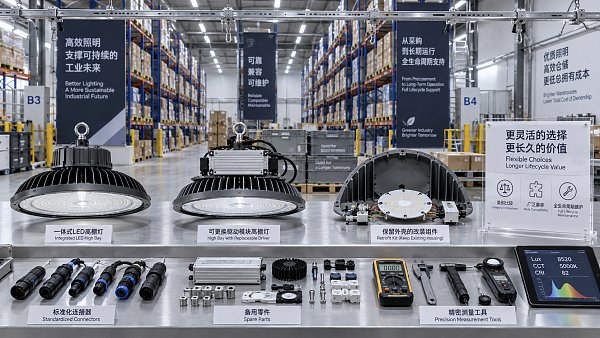
- More sustainability scrutiny, including repairability, modular replacement, and packaging efficiency across global distribution channels.
- Longer documentation requirements, including test reports, revision logs, EMC evidence, and component change notifications.
Build a Vetting Scorecard Around Performance, Compatibility, and Manufacturing Control
The fastest way to compare an IoT lighting node OEM is to use a weighted scorecard. In most commercial sourcing programs, 4 core dimensions matter most: electrical performance, control interoperability, manufacturing quality, and support capability. A practical weighting model might assign 30% to performance, 30% to compatibility, 25% to manufacturing control, and 15% to service and documentation. The exact ratio can change, but the structure keeps decisions evidence-based.
Performance review should not stop at dimming claims. Ask for data on standby power, surge tolerance, operating temperature range, and wireless reliability under dense-device conditions. For many indoor applications, an operating range of -20°C to 45°C is common, while outdoor control nodes may need -40°C to 70°C. Surge resistance expectations also differ, with street-facing applications often needing a stronger protection strategy than interior retail nodes.
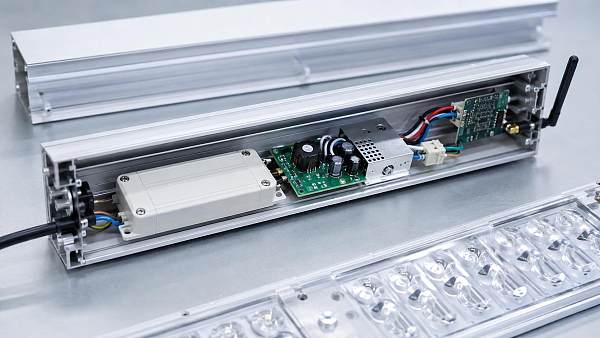
Compatibility review should verify actual integration history rather than generic statements. If the supplier claims DALI support, request device type behavior, commissioning flow, gateway compatibility notes, and known limitations. If the supplier presents itself as a wireless lighting sensor factory partner, ask whether occupancy, lux sensing, and relay or dimming functions share one platform or depend on multiple firmware branches that are harder to maintain at scale.
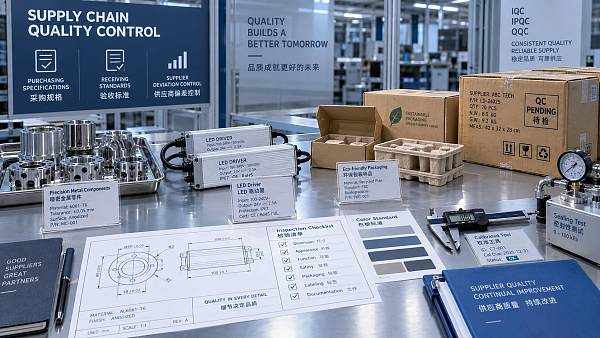
Manufacturing control is where many OEMs separate themselves. A technically acceptable sample is not enough if the factory cannot maintain consistency across 5,000 to 50,000 units. Buyers should review incoming quality control, in-line test coverage, burn-in policy where relevant, and serialized traceability. At minimum, you want to understand how defects are isolated, whether test jigs are version-controlled, and how firmware files are locked to production lots.
A practical OEM comparison matrix
The table below gives a straightforward structure that sourcing teams can use in supplier discovery or RFQ screening. It helps commercial developers and procurement managers compare not only cost, but also operational risk and long-term fit.
The key lesson is that a supplier with a slightly higher unit cost may still deliver a lower total cost of ownership if test coverage is stronger, interoperability is proven, and field support is faster. For chain operators, one avoided compatibility failure can justify a more rigorous OEM choice.
Minimum documents worth requesting before shortlist approval
- Product specification sheet with electrical ratings, dimming curve, operating temperature, and communication protocol details.
- Test summary covering EMC, functional validation, and where relevant, surge or environmental verification.
- Firmware version history showing at least the last 2 to 3 revisions.
- Production quality flow, including test station names and defect handling steps.
- Change notification policy for key ICs, sensors, antennas, power components, or connectors.
Check Technical Fit Beyond the Node: Lighting Quality, Controls, and Site Reality
A common sourcing mistake is to evaluate the node in isolation. In practice, the OEM’s value depends on how well the node performs inside a complete luminaire and controls ecosystem. If you are procuring for offices, retail showrooms, hospitality spaces, or public infrastructure, the node must support the lighting outcomes the project requires. That means reviewing UGR, CRI, lumen efficacy, and dimming smoothness as part of system validation.
For example, many premium indoor applications target CRI 80+ as a baseline, while fashion, cosmetics, and high-end display zones may prefer CRI 90+ for stronger color fidelity. Office environments often watch UGR closely, with practical targets such as UGR<19 in task-heavy spaces. If the node introduces unstable dimming or poor low-end control, the space can miss visual comfort goals even when the luminaire optics are otherwise well designed.
Outdoor and street applications raise different questions. A smart street light controller must work under broader temperature swings, more difficult surge conditions, and patchier communication environments. Sampling should include not just bench tests, but also pilot deployments that run for 30 to 90 days. This period helps expose connection dropouts, false sensor triggers, enclosure issues, and firmware edge cases that short lab tests may miss.
Technical evaluators should also test commissioning behavior. A node that performs well after setup but requires complex pairing steps, repeated address assignment, or unstable app workflows can slow deployment crews dramatically. In a rollout of 1,000 fixtures, even an extra 3 minutes per device adds 50 labor hours. That is why installation friction should be scored as carefully as electrical specifications.
System-level checkpoints for commercial projects
Use the following table to align node selection with real-world lighting and control outcomes across commercial spaces. It is especially useful when multiple departments, such as design, engineering, and procurement, must approve the same OEM.
The strongest OEMs can discuss these trade-offs clearly and provide test logic, not just sales promises. If the supplier cannot explain how the node behaves in different photometric or network conditions, the project team may end up solving problems that should have been filtered out during vetting.
Three validation steps before mass order
- Run bench verification for protocol behavior, dimming range, power draw, and sensor response across at least 3 to 5 representative fixture types.
- Conduct a pilot site test in one live environment for 30 to 90 days, with commissioning logs and fault tracking.
- Approve mass production only after pilot issues are closed, firmware is frozen, and packaging labels match the final revision record.
Audit Supply Reliability, Compliance Readiness, and Lifecycle Support
A reliable IoT lighting node OEM should be able to support your product beyond the first shipment. That means stable component sourcing, realistic lead times, and a documented policy for managing end-of-life parts. In 2026, electronics procurement remains vulnerable to sudden allocation changes for MCUs, radio modules, and power semiconductors. Buyers should ask which components are single-source, which have approved alternates, and how much notice is given before substitutions are introduced.
Lead time transparency is equally important. For standard configurations, a mature OEM may quote 4 to 8 weeks, while customized firmware or enclosure variants may extend this to 8 to 12 weeks. What matters is not only the number, but the predictability. A supplier that repeatedly shifts delivery dates by 2 weeks can disrupt launch schedules, contractor coordination, and regional inventory planning.
Compliance readiness should also be reviewed in practical terms. Depending on the market, buyers may need support materials tied to UL, CE, EMC, safety, or environmental requirements. Even when the node itself is only one component inside a larger system, the OEM should still provide clean technical files, material declarations where needed, and test evidence that helps the importer or brand owner complete approvals efficiently.
Lifecycle support is where commercial value compounds. If a supplier can maintain spare-part consistency, support firmware maintenance for 3 to 5 years, and provide clear RMA handling, the node becomes a manageable asset rather than a hidden liability. For business evaluators, this is often the difference between a transactional vendor and a strategic manufacturing partner.
Questions to ask during factory and supply-chain review
- What percentage of key components have dual-source or approved alternative plans?
- How many days of raw material or critical IC coverage are typically maintained for forecasted orders?
- How are engineering change notices communicated, and what is the minimum notice window?
- What is the standard RMA analysis turnaround time: 7 days, 14 days, or longer?
- Can the OEM support regional labeling, packaging, and documentation for different markets without restarting the entire qualification cycle?
Common supply and support risks buyers underestimate
One frequent issue is hidden dependency on a single firmware engineer or one external design house. If that person leaves, updates slow down and debugging quality drops. Another risk is poor traceability, where field-failure units cannot be linked back to production lots, firmware builds, or incoming material batches. This makes root-cause analysis far slower and more expensive than it should be.
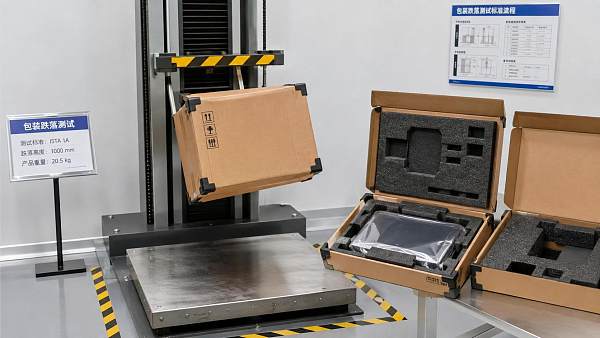
Buyers also underestimate packaging and logistics discipline. Static protection, connector protection, and clear carton labeling matter when thousands of control nodes move through multiple warehouses. Small handling defects can lead to intermittent field issues that are difficult to diagnose. A good OEM should be able to show packaging controls, inspection points, and shipment verification routines.
A Practical Vetting Workflow for Procurement and Technical Teams
The most effective sourcing teams do not rely on one meeting or one sample. They run a staged qualification process with technical, operational, and commercial checkpoints. This reduces the chance that a low-visibility weakness becomes a large-scale deployment problem later. A 5-step workflow usually provides enough structure without slowing down the buying cycle too much.
Step 1 is supplier pre-screening. Review catalog fit, protocol relevance, project references in similar applications, documentation quality, and communication speed. This stage typically removes 30% to 50% of candidates before samples are ordered. Suppliers that cannot provide coherent technical documentation early often become harder to manage later.
Step 2 is sample and engineering validation. Confirm electrical behavior, commissioning time, sensor accuracy, and integration with the target platform. If your program involves a dali lighting control system, test address assignment, scene logic, and gateway interactions. If it involves a smart street light controller, prioritize network reconnection, outdoor temperature behavior, and fault alarm reporting.
Step 3 is pilot deployment. Use one store, one floor, one building zone, or one roadway section. Track failures, commissioning time, user feedback, and maintenance events. Step 4 is factory and quality review, including process controls and change management. Step 5 is commercial negotiation tied to service-level terms, revision control, forecast handling, and replacement commitments.
Recommended 5-step qualification process
This workflow works especially well for cross-functional B2B buyers because it gives procurement, engineering, and operations a common framework. It also reduces the temptation to overvalue a fast quote or polished sample while underweighting long-term execution capability.
FAQ for 2026 sourcing teams
How many OEMs should be benchmarked before final selection?
For most projects, comparing 3 to 5 qualified OEMs is enough. Fewer than 3 limits perspective, while more than 5 often creates evaluation fatigue unless the program is unusually large or technically complex.
What is a reasonable pilot quantity?
A pilot of 20 to 100 nodes is common, depending on application type. Indoor retail pilots may succeed with smaller quantities, while outdoor or networked campus projects often benefit from a larger sample across multiple zones.
What should matter more: lower MOQ or stronger engineering support?
For commercial controls, stronger engineering support usually creates more value. A favorable MOQ helps cash flow, but unresolved firmware or interoperability issues can cost far more in deployment delays and service labor.
How long should firmware support remain available?
A practical target is 3 to 5 years for commercial installations, with clear statements on bug fixes, security updates where relevant, and procedures for hardware changes driven by component end-of-life.
Vetting an IoT lighting node OEM in 2026 means connecting product specs to real operating conditions, compliance needs, and long-term supply reliability. The best supplier is not simply the one with the lowest quote, but the one that can prove protocol compatibility, stable manufacturing control, field-ready documentation, and responsive support across the project lifecycle.
For global sourcing teams, chain operators, and technical evaluators, a disciplined selection process reduces risk in commercial lighting, smart retail technology, and connected infrastructure projects. If you are comparing OEM options for a DALI node, smart street light controller, or wireless lighting sensor platform, G-BCE can help you benchmark suppliers, clarify technical trade-offs, and build a more reliable sourcing strategy. Contact us to discuss your application, request a tailored evaluation framework, or explore broader commercial lighting and signage solutions.
- smart retail
- commercial lighting
- signage
- retail technology
- commercial spaces
- commercial developers
- signage solutions
- smart retail technology
- dali lighting control system
- wireless lighting sensor factory
- smart street light controller
- iot lighting node oem
- lumen output per watt benchmarks
- color rendering index (CRI) data
- unified glare rating (UGR) standards
News Recommendations
 How to choose an ultra bright waterproof window display for storefronts
![51a6ab95581761cc26f4318be6520c15]()
Aris Katos
Future of Carbide Coatings
 How to verify suppliers on a trade portal for global sourcing
![51a6ab95581761cc26f4318be6520c15]()
Aris Katos
Future of Carbide Coatings
 How RoHS requirements should be stated in product specifications
![51a6ab95581761cc26f4318be6520c15]()
Aris Katos
Future of Carbide Coatings
 What affects the lead time for custom retail counter displays?
![51a6ab95581761cc26f4318be6520c15]()
Aris Katos
Future of Carbide Coatings
 What consumer packaging USA importers need to verify before ordering
![51a6ab95581761cc26f4318be6520c15]()
Aris Katos
Future of Carbide Coatings
 How commercial spaces interiors shape customer dwell time
![51a6ab95581761cc26f4318be6520c15]()
Aris Katos
Future of Carbide Coatings
 How LED commercial lighting design reduces glare in retail spaces
![51a6ab95581761cc26f4318be6520c15]()
Aris Katos
Future of Carbide Coatings
 How industrial technology information improves RFID inventory accuracy
![51a6ab95581761cc26f4318be6520c15]()
Aris Katos
Future of Carbide Coatings
 When drip garden watering systems make more sense than sprinklers
![51a6ab95581761cc26f4318be6520c15]()
Aris Katos
Future of Carbide Coatings
 When category comparison improves sourcing for industrial applications
![51a6ab95581761cc26f4318be6520c15]()
Aris Katos
Future of Carbide Coatings
 Industrial application guidance for selecting the right LED lighting
![51a6ab95581761cc26f4318be6520c15]()
Aris Katos
Future of Carbide Coatings
 Which commercial architecture standards apply to European retail fit-outs?
![51a6ab95581761cc26f4318be6520c15]()
Aris Katos
Future of Carbide Coatings
 How to verify FDA requirements for maternity care products
![51a6ab95581761cc26f4318be6520c15]()
Aris Katos
Future of Carbide Coatings
 How to verify BPA-free claims for food-contact products
![51a6ab95581761cc26f4318be6520c15]()
Aris Katos
Future of Carbide Coatings
 When does a European wholesale supplier suit modular office projects?
![51a6ab95581761cc26f4318be6520c15]()
Aris Katos
Future of Carbide Coatings
 When consumer ecosystem solutions improve the in-store shopping journey
![51a6ab95581761cc26f4318be6520c15]()
Aris Katos
Future of Carbide Coatings
 How a commercial developers network can reduce site selection risk
![51a6ab95581761cc26f4318be6520c15]()
Aris Katos
Future of Carbide Coatings
 How clear purchasing specifications prevent costly supplier deviations
![51a6ab95581761cc26f4318be6520c15]()
Aris Katos
Future of Carbide Coatings
 What an ISTA drop test lab checks before your packaging ships
![51a6ab95581761cc26f4318be6520c15]()
Aris Katos
Future of Carbide Coatings
 Which commercial furniture standards apply to workplace seating?
![51a6ab95581761cc26f4318be6520c15]()
Aris Katos
Future of Carbide Coatings
 How to evaluate smart lighting module OEM compatibility before sampling
![51a6ab95581761cc26f4318be6520c15]()
Aris Katos
Future of Carbide Coatings
 How to assess whether sustainable technology delivers real impact
![51a6ab95581761cc26f4318be6520c15]()
Aris Katos
Future of Carbide Coatings
 How to assess an OEM supplier’s quality control before ordering
![51a6ab95581761cc26f4318be6520c15]()
Aris Katos
Future of Carbide Coatings
 How consumer ecosystem solutions data can improve retail personalization
![51a6ab95581761cc26f4318be6520c15]()
Aris Katos
Future of Carbide Coatings
 When does consumer packaging design justify a higher product price?
![51a6ab95581761cc26f4318be6520c15]()
Aris Katos
Future of Carbide Coatings
 Supermarket Fixture Installation: Planning Layouts, Wiring, and Handover
![51a6ab95581761cc26f4318be6520c15]()
Aris Katos
Future of Carbide Coatings
 Automated Lighting and Smart Lighting Control in Bergerac: Key Project Considerations
![51a6ab95581761cc26f4318be6520c15]()
Aris Katos
Future of Carbide Coatings
 Segment Streetlight Controllers: Choosing Control Modes for Urban Roads
![51a6ab95581761cc26f4318be6520c15]()
Aris Katos
Future of Carbide Coatings
 IEC 62471-2 Explained: How to Assess Photobiological Risks in LED Lighting
![51a6ab95581761cc26f4318be6520c15]()
Aris Katos
Future of Carbide Coatings
 Food Grade Packaging Requirements by Product Type, Temperature, and Contact Risk
![51a6ab95581761cc26f4318be6520c15]()
Aris Katos
Future of Carbide Coatings
 Food Packaging Compliance Checklist: Tests, Records, and Labeling Before Shipment
![51a6ab95581761cc26f4318be6520c15]()
Aris Katos
Future of Carbide Coatings
 NSF Food Packaging Standards: When Certification Matters for Commercial Food Use
![51a6ab95581761cc26f4318be6520c15]()
Aris Katos
Future of Carbide Coatings
 FDA Food Grade Compliance: Which Materials and Documents Do Buyers Need?
![51a6ab95581761cc26f4318be6520c15]()
Aris Katos
Future of Carbide Coatings
 What Should a Food Grade Declaration Include for Packaging Compliance?
![51a6ab95581761cc26f4318be6520c15]()
Aris Katos
Future of Carbide Coatings
 Housewares Importing: How to Evaluate Suppliers, Costs, and Compliance Risks
![51a6ab95581761cc26f4318be6520c15]()
Aris Katos
Future of Carbide Coatings
 Why Freeze-Dried Fruit Ingredients Lose Crispness—and How to Prevent It
![51a6ab95581761cc26f4318be6520c15]()
Aris Katos
Future of Carbide Coatings
 What industry veterans look for before choosing a new supplier
![51a6ab95581761cc26f4318be6520c15]()
Aris Katos
Future of Carbide Coatings
 How material fatigue can shorten the service life of retail shelving
![51a6ab95581761cc26f4318be6520c15]()
Aris Katos
Future of Carbide Coatings
 What makes a global sourcing platform reliable for supplier verification?
![51a6ab95581761cc26f4318be6520c15]()
Aris Katos
Future of Carbide Coatings