Sustainable office furniture trends are shifting beyond recycled claims
Time
Click Count
Sustainable office furniture trends are moving far beyond recycled labels, pushing buyers to examine VOC emission levels in furniture, Greenguard certified commercial furniture, and height adjustable desk motor reliability alongside design value. For procurement teams, operators, and researchers, the future of workplace interior now depends on smart office furniture integration, ergonomic workplace wellness, and measurable benchmarks that support flexible, resilient commercial spaces.
This shift matters because office furniture now sits at the intersection of facility performance, employee wellbeing, compliance, and brand presentation. A workstation is no longer evaluated only by finish, price, or recycled content percentage. Global buyers increasingly compare emission thresholds, service life, adjustability cycles, cable management, modularity, and compatibility with hybrid work layouts before approving a sourcing plan.
For sourcing directors, commercial developers, operators, and business evaluators, the challenge is practical: how to distinguish credible sustainable office furniture from marketing-heavy claims. In cross-border procurement, that means aligning environmental expectations with standards such as UL, CE, and BIFMA, while also checking whether a product performs under daily use for 8 to 12 hours, 5 to 6 days per week, across multi-site environments.
Within the G-BCE perspective, sustainable office furniture trends must be read as part of a larger commercial ecosystem. Material transparency, ergonomic workplace wellness, smart office furniture integration, and supply chain resilience are no longer separate topics. They directly affect operating cost, fit-out schedules, maintenance planning, and the ability to create commercial interiors that stay functional through 3 to 7 years of organizational change.
Why sustainability claims are being redefined in office furniture procurement
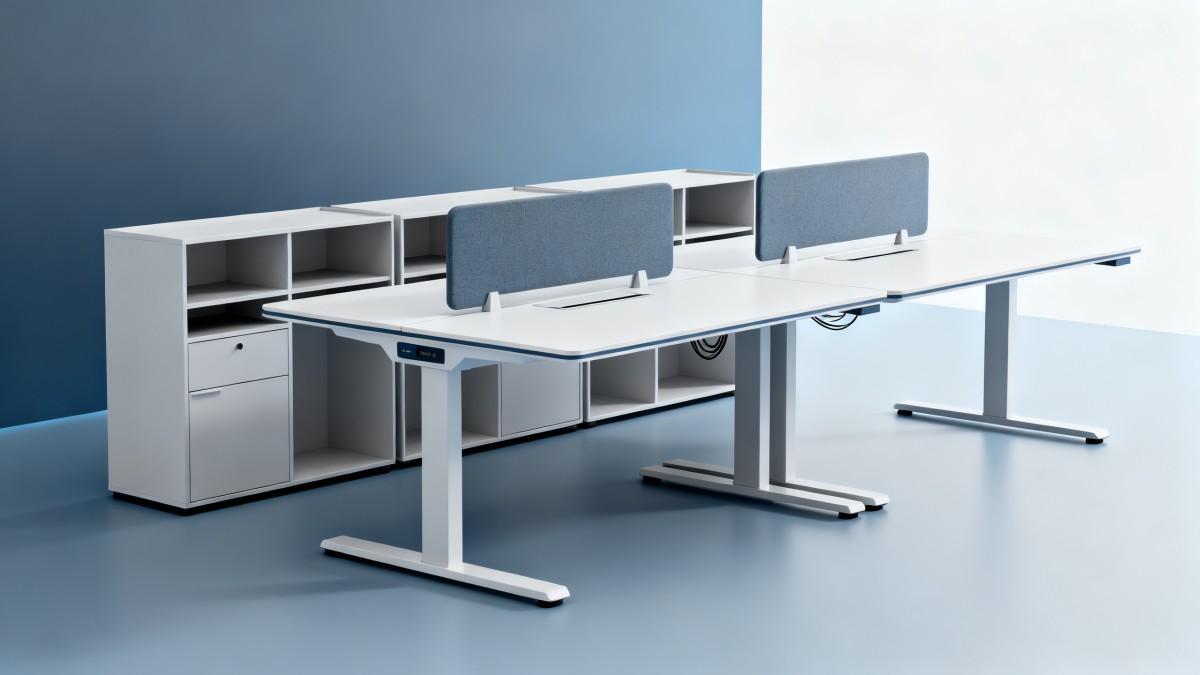
A recycled content label can still be useful, but it is no longer enough to support a serious procurement decision. Commercial buyers are increasingly asking what happens after the raw material stage: Does the furniture release low VOC emissions? Can surfaces withstand 20,000 to 50,000 abrasion cycles in heavy-use settings? Are components replaceable instead of forcing full-unit disposal after one failure?
This change is driven by two realities. First, employees spend long periods close to desks, task chairs, storage systems, and acoustic panels, which makes indoor air quality more important than broad sustainability slogans. Second, hybrid work has made layouts more fluid. Furniture now needs to support reconfiguration every 6 to 18 months, making modularity and repairability central to sustainable value.
In many projects, the hidden cost of poor selection appears after installation. A lower-cost desk system may require earlier replacement, produce more complaints about wobble or motor inconsistency, or create cable clutter that complicates cleaning and device management. Sustainable office furniture trends therefore extend into lifecycle economics, not just environmental messaging on a specification sheet.
From recycled percentage to measurable performance
Buyers now compare sustainability through measurable categories. Typical review areas include VOC emission levels in furniture, durability under repetitive use, packaging efficiency, spare-part availability, and end-of-life disassembly. A workstation that lasts 8 years with replaceable legs, controllers, and tops can outperform a heavily promoted “green” product that fails in 24 months and cannot be repaired.
This is especially important in international commercial environments where chain operators need consistency across 10, 50, or 200 sites. Procurement teams need benchmark language that can be used across suppliers, factories, and project managers. Without that structure, sustainability becomes subjective and difficult to compare during tender review.
Key procurement signals to verify
- Emission performance supported by recognized testing criteria rather than generic “eco” wording.
- Mechanical durability figures such as lift cycle expectations, weight load ranges, and hardware longevity.
- Material disclosure covering laminate, powder coating, foam, adhesive, edge banding, and packaging composition.
- After-sales support windows, spare-part lead times, and expected maintenance intervals over a 3 to 5 year period.
When these signals are documented early, business evaluators can compare total ownership cost more accurately. The shift beyond recycled claims is not cosmetic. It reflects a more disciplined way to assess risk, especially for organizations modernizing commercial spaces across regions with different building codes and user expectations.
The technical benchmarks that now shape credible buying decisions
A stronger procurement process begins with technical benchmarks that can be validated. In office furniture, this often means combining environmental review with mechanical and ergonomic standards. Greenguard certified commercial furniture is widely discussed because it helps buyers address indoor air quality concerns, but it should be reviewed alongside structural, electrical, and user-safety performance rather than in isolation.
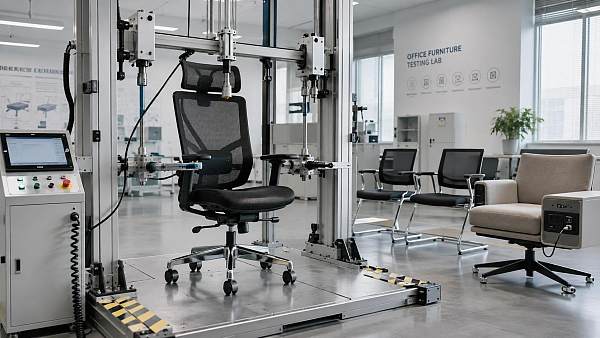
For example, height adjustable desk motor reliability has become a major filter in smart office projects. A desk may look premium, yet inconsistent lifting speed, controller failure, excessive noise above 50 dB, or unstable travel at full extension can undermine the user experience. In multi-user workplaces, these issues often emerge within the first 12 to 24 months if the system was chosen only on appearance or unit cost.
The table below outlines practical benchmark categories that procurement and operations teams can use during supplier comparison. These are not one-size-fits-all rules, but they reflect common commercial decision points across global office fit-out programs.
The key lesson is that no single metric defines a sustainable solution. Credible office furniture selection usually combines at least 4 layers of review: emissions, ergonomics, durability, and compliance. That framework gives researchers and sourcing teams a more consistent basis for vendor comparison than broad environmental claims alone.
Why standards matter in cross-border sourcing
Cross-border projects often fail not because the furniture itself is unusable, but because documentation is incomplete or misaligned with project expectations. A workstation approved for one market may need different electrical verification, fire behavior data, or packaging compliance for another. This can delay rollout by 2 to 6 weeks during final review.
For G-BCE-oriented buyers, technical benchmarking creates a common language between Asian manufacturing partners and global commercial developers. It helps reduce ambiguity in specification sheets, sample approval, and pilot installation. That matters when procurement timelines are compressed and interior packages must coordinate with lighting, signage, POS hardware, and other commercial infrastructure.
How smart integration and ergonomic workplace wellness are changing product selection
Smart office furniture integration is no longer limited to cable ports or USB charging. In many modern workplace interiors, desks, collaborative tables, and storage modules must work with occupancy sensors, power routing, booking systems, AI-supported space management, and device-heavy user behavior. The result is a broader definition of sustainability: furniture must support efficient use of energy, space, and labor over time.
Ergonomic workplace wellness has also moved from HR talking point to procurement requirement. Adjustable monitor positioning, sit-stand flexibility, support for shared users of different heights, and acoustic moderation can directly influence comfort and concentration. In practical terms, teams now compare height ranges such as 650 to 1250 mm, edge profiles, cable access, and accessory compatibility during product review.
This creates a useful distinction between furniture that is merely contemporary and furniture that is operationally future-ready. A visually attractive desk may still perform poorly if it cannot integrate power cleanly, support privacy add-ons, or maintain motor synchronization across 50 or more units installed on one floor.
Selection criteria for flexible and resilient spaces
When evaluating furniture for hybrid offices, co-working zones, or multi-brand commercial environments, buyers should focus on how quickly systems adapt. Reconfiguration time, component interchangeability, and maintenance access are just as important as material sourcing. If a workstation can be reassembled in 20 to 40 minutes with standard tools, it contributes more to long-term resilience than a fixed unit that demands specialized labor.
The following list captures common review points used by operators and commercial planners:
- Check whether desk frames, screens, cable trays, and storage elements share modular dimensions for phased expansion.
- Confirm that power and data routing can be updated without damaging panels or interrupting adjacent users.
- Assess whether smart controls, anti-collision functions, and memory presets remain reliable after repeated daily use.
- Review cleaning access, edge durability, and replacement part availability for high-turnover operational settings.
These details influence user satisfaction, maintenance burden, and asset lifespan. In a business setting, sustainability is strongest when ergonomic performance and technology readiness reduce unnecessary replacement, downtime, and spatial inefficiency.
Typical use scenarios and fit-out priorities
Different environments prioritize different features. Headquarters often demand stronger design coherence and executive finish quality. Regional hubs may focus on faster delivery and easier replacement. Co-working spaces typically prioritize durability, cable order, and user adaptability because occupancy changes by the hour or day. Matching the product to the operating model remains one of the most overlooked steps in office furniture procurement.
A practical procurement framework for researchers, operators, and sourcing teams
A disciplined procurement process helps organizations translate sustainable office furniture trends into workable specifications. Instead of evaluating products only at the quotation stage, leading teams use a 5-step review path: need definition, technical screening, sample validation, pilot deployment, and rollout assessment. This sequence helps surface performance gaps before a full-site commitment is made.
Researchers often start with landscape mapping: identifying which suppliers provide low-emission materials, modular systems, and compliance documentation relevant to the target market. Operators add another layer by testing assembly time, maintenance access, and workstation usability. Procurement then compares cost against service life, lead time, and warranty support rather than relying on the lowest unit price.
The table below provides a practical decision matrix that can be adapted for tenders, pilot evaluations, or regional sourcing reviews.
This matrix helps teams convert broad sustainability goals into contract-ready questions. It also encourages better cross-functional alignment. A product approved by design, facilities, and procurement at the same time is less likely to create conflict during delivery or early use.
Common mistakes that increase sourcing risk
Several errors appear repeatedly in office furniture purchasing. One is treating certifications as interchangeable without checking scope. Another is approving a visually strong prototype without testing cable routing, wobble at full height, or cleaning access. A third is ignoring packaging efficiency and replacement part strategy, which can increase freight cost and service delays across international projects.
A more resilient approach is to run a small pilot of 5 to 20 units before major rollout, especially for electric sit-stand systems and shared workstations. This allows teams to collect user feedback, assembly data, and maintenance observations in real conditions. Even a 2-week pilot can reveal issues that drawings and samples fail to show.
Implementation, maintenance, and the next wave of office furniture trends
After selection, implementation determines whether sustainability goals translate into operational results. The best products can still underperform if the installation sequence is rushed, electrical planning is incomplete, or maintenance teams receive no spare-part guidance. For multi-site commercial programs, a clear rollout package should include installation instructions, adjustment guidance, cleaning recommendations, and part-replacement protocols.
Maintenance planning is increasingly part of sustainable office furniture strategy. Instead of waiting for failures, operators are adopting light preventive checks every 6 to 12 months for adjustable desks, task seating, and modular connection points. This may include testing lift response, tightening hardware, reviewing cable strain, and checking whether moving components remain aligned after repeated reconfiguration.
Looking ahead, office furniture trends will likely emphasize four linked priorities: lower-emission materials, easier disassembly, stronger smart office furniture integration, and more transparent supply chains. Buyers are also paying more attention to packaging reduction, flat-pack efficiency, and the ability to replace high-wear parts rather than discarding full assemblies. Those factors can materially reduce waste across a 3 to 8 year operating cycle.
FAQ for commercial buyers
How should buyers evaluate VOC emission levels in furniture?
Start by asking for third-party documentation covering panel substrates, adhesives, coatings, foam, and textiles. Do not review only one component. In enclosed offices, meeting rooms, and high-density work areas, low-emission performance matters most during the first weeks and months after installation, when off-gassing concerns are often highest.
Is Greenguard certified commercial furniture enough to confirm sustainability?
It is an important signal, but not a complete answer. Buyers should still verify structural durability, ergonomic suitability, electrical safety where applicable, and replacement part strategy. A low-emission product that fails quickly is not a strong sustainability outcome in a commercial setting.
What procurement indicators matter most for height adjustable desks?
Focus on load capacity, lift stability, anti-collision response, motor noise, controller durability, and serviceability. For daily commercial use, buyers often review how the desk performs under 80 to 160 kg loads and whether replacement motors or control boxes can be supplied quickly without replacing the full frame.
How long does a typical commercial furniture rollout take?
For standardized programs, sample approval may take 1 to 3 weeks, production 4 to 8 weeks, and installation another several days to 2 weeks depending on site scale. Custom finishes, integrated power, or multi-country compliance reviews can extend the timeline, so early technical alignment is essential.
Sustainable office furniture trends are no longer defined by recycled claims alone. The strongest solutions combine low-emission materials, reliable mechanical performance, ergonomic workplace wellness, smart integration readiness, and procurement transparency that stands up to real commercial use. For researchers, operators, sourcing managers, and business evaluators, the most durable value comes from benchmark-based selection rather than simplified green messaging.
G-BCE supports this decision process by connecting commercial furniture and fixtures with broader supply chain, compliance, and workplace modernization insights. If you are comparing suppliers, planning a fit-out, or refining a technical sourcing framework, contact us to get a tailored benchmark view, discuss product details, or explore more solutions for resilient commercial spaces.
- commercial furniture
- supply chain
- signage
- commercial spaces
- commercial developers
- commercial environments
- technical benchmarking
- Greenguard certified commercial furniture
- VOC emission levels in furniture
- future of workplace interior
- sustainable office furniture trends
- smart office furniture integration
- ergonomic workplace wellness
- height adjustable desk motor reliability
News Recommendations
 How to compare commercial linear light wholesale quotes accurately
![51a6ab95581761cc26f4318be6520c15]()
Aris Katos
Future of Carbide Coatings
 How to verify international standards compliance for Middle East exports
![51a6ab95581761cc26f4318be6520c15]()
Aris Katos
Future of Carbide Coatings
 How to select laboratory instruments for reproducible test results
![51a6ab95581761cc26f4318be6520c15]()
Aris Katos
Future of Carbide Coatings
 When does a sheet metal prototype reveal design flaws early?
![51a6ab95581761cc26f4318be6520c15]()
Aris Katos
Future of Carbide Coatings
 When PE air column bags reduce damage in e-commerce fulfillment
![51a6ab95581761cc26f4318be6520c15]()
Aris Katos
Future of Carbide Coatings
 How energy-efficient design reduces operating costs in retail lighting
![51a6ab95581761cc26f4318be6520c15]()
Aris Katos
Future of Carbide Coatings
 When commercial aluminum storefronts make sense for a retail renovation
![51a6ab95581761cc26f4318be6520c15]()
Aris Katos
Future of Carbide Coatings
 What makes LED lights durable in high-use commercial spaces?
![51a6ab95581761cc26f4318be6520c15]()
Aris Katos
Future of Carbide Coatings
 Which industry categories offer the strongest export potential in Latin America?
![51a6ab95581761cc26f4318be6520c15]()
Aris Katos
Future of Carbide Coatings
 How to choose an ultra bright waterproof window display for storefronts
![51a6ab95581761cc26f4318be6520c15]()
Aris Katos
Future of Carbide Coatings
 How to verify suppliers on a trade portal for global sourcing
![51a6ab95581761cc26f4318be6520c15]()
Aris Katos
Future of Carbide Coatings
 How RoHS requirements should be stated in product specifications
![51a6ab95581761cc26f4318be6520c15]()
Aris Katos
Future of Carbide Coatings
 What affects the lead time for custom retail counter displays?
![51a6ab95581761cc26f4318be6520c15]()
Aris Katos
Future of Carbide Coatings
 What consumer packaging USA importers need to verify before ordering
![51a6ab95581761cc26f4318be6520c15]()
Aris Katos
Future of Carbide Coatings
 How commercial spaces interiors shape customer dwell time
![51a6ab95581761cc26f4318be6520c15]()
Aris Katos
Future of Carbide Coatings
 How LED commercial lighting design reduces glare in retail spaces
![51a6ab95581761cc26f4318be6520c15]()
Aris Katos
Future of Carbide Coatings
 How industrial technology information improves RFID inventory accuracy
![51a6ab95581761cc26f4318be6520c15]()
Aris Katos
Future of Carbide Coatings
 When drip garden watering systems make more sense than sprinklers
![51a6ab95581761cc26f4318be6520c15]()
Aris Katos
Future of Carbide Coatings
 When category comparison improves sourcing for industrial applications
![51a6ab95581761cc26f4318be6520c15]()
Aris Katos
Future of Carbide Coatings
 Industrial application guidance for selecting the right LED lighting
![51a6ab95581761cc26f4318be6520c15]()
Aris Katos
Future of Carbide Coatings
 Which commercial architecture standards apply to European retail fit-outs?
![51a6ab95581761cc26f4318be6520c15]()
Aris Katos
Future of Carbide Coatings
 How to verify FDA requirements for maternity care products
![51a6ab95581761cc26f4318be6520c15]()
Aris Katos
Future of Carbide Coatings
 How to verify BPA-free claims for food-contact products
![51a6ab95581761cc26f4318be6520c15]()
Aris Katos
Future of Carbide Coatings
 When does a European wholesale supplier suit modular office projects?
![51a6ab95581761cc26f4318be6520c15]()
Aris Katos
Future of Carbide Coatings
 When consumer ecosystem solutions improve the in-store shopping journey
![51a6ab95581761cc26f4318be6520c15]()
Aris Katos
Future of Carbide Coatings
 How a commercial developers network can reduce site selection risk
![51a6ab95581761cc26f4318be6520c15]()
Aris Katos
Future of Carbide Coatings
 How clear purchasing specifications prevent costly supplier deviations
![51a6ab95581761cc26f4318be6520c15]()
Aris Katos
Future of Carbide Coatings
 What an ISTA drop test lab checks before your packaging ships
![51a6ab95581761cc26f4318be6520c15]()
Aris Katos
Future of Carbide Coatings
 Which commercial furniture standards apply to workplace seating?
![51a6ab95581761cc26f4318be6520c15]()
Aris Katos
Future of Carbide Coatings
 How to evaluate smart lighting module OEM compatibility before sampling
![51a6ab95581761cc26f4318be6520c15]()
Aris Katos
Future of Carbide Coatings
 How to assess whether sustainable technology delivers real impact
![51a6ab95581761cc26f4318be6520c15]()
Aris Katos
Future of Carbide Coatings
 How to assess an OEM supplier’s quality control before ordering
![51a6ab95581761cc26f4318be6520c15]()
Aris Katos
Future of Carbide Coatings
 How consumer ecosystem solutions data can improve retail personalization
![51a6ab95581761cc26f4318be6520c15]()
Aris Katos
Future of Carbide Coatings
 When does consumer packaging design justify a higher product price?
![51a6ab95581761cc26f4318be6520c15]()
Aris Katos
Future of Carbide Coatings
 Supermarket Fixture Installation: Planning Layouts, Wiring, and Handover
![51a6ab95581761cc26f4318be6520c15]()
Aris Katos
Future of Carbide Coatings
 Automated Lighting and Smart Lighting Control in Bergerac: Key Project Considerations
![51a6ab95581761cc26f4318be6520c15]()
Aris Katos
Future of Carbide Coatings
 Segment Streetlight Controllers: Choosing Control Modes for Urban Roads
![51a6ab95581761cc26f4318be6520c15]()
Aris Katos
Future of Carbide Coatings
 IEC 62471-2 Explained: How to Assess Photobiological Risks in LED Lighting
![51a6ab95581761cc26f4318be6520c15]()
Aris Katos
Future of Carbide Coatings
 Food Grade Packaging Requirements by Product Type, Temperature, and Contact Risk
![51a6ab95581761cc26f4318be6520c15]()
Aris Katos
Future of Carbide Coatings