Eco Friendly Baby Gear Trends Shaping Product Choices in 2026
Time
Click Count
As sustainability becomes a decisive factor in procurement and product development, eco friendly baby gear is emerging as a key focus for brands, retailers, and sourcing leaders in 2026. From safer materials and traceable supply chains to smarter design standards, these evolving trends are reshaping how businesses evaluate product value, compliance, and long-term market appeal in the global baby care sector.
For decision-makers across sourcing, retail operations, product management, and private-label development, the shift is no longer about adding a green claim to packaging. It is about aligning material safety, supply chain visibility, regulatory readiness, and premium consumer expectations into one commercially viable product strategy.
Within a global business environment shaped by digital retail, cross-border compliance, and responsible manufacturing, eco friendly baby gear now sits at the intersection of consumer trust and operational discipline. Businesses that understand the trend early are better positioned to reduce procurement risk, improve assortment quality, and capture long-term brand value in a category where safety standards are non-negotiable.
Why Eco Friendly Baby Gear Is Becoming a Strategic Procurement Priority
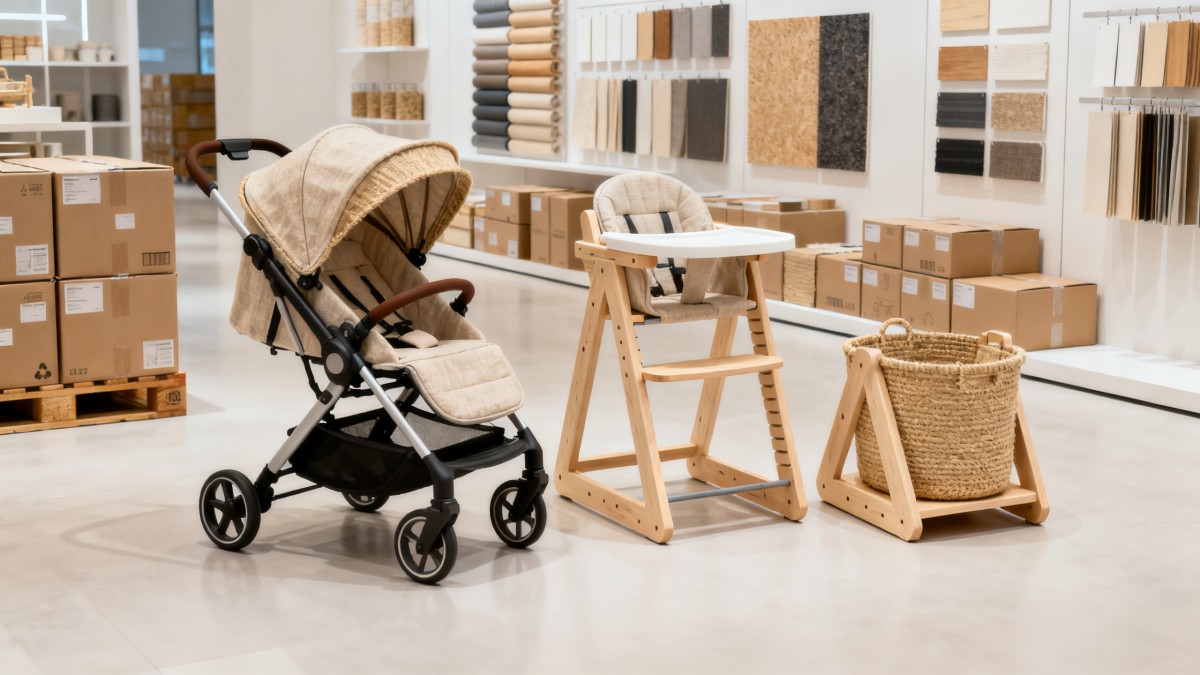
In 2026, eco friendly baby gear is no longer limited to niche premium shelves. It is moving into mainstream category planning for chain retailers, specialty distributors, and global consumer brands. The reason is straightforward: buyers are now evaluating environmental performance alongside durability, safety, packaging efficiency, and logistics stability.
For B2B buyers, this creates a broader scoring model. A stroller, feeding seat, storage item, or nursery accessory may be reviewed across 4 core dimensions: material origin, chemical safety, lifecycle performance, and supply chain transparency. Products that meet only 1 or 2 of these criteria increasingly fall short during vendor review.
The market shift behind purchasing decisions
Several market forces are accelerating demand. First, parents are scrutinizing product labels more closely, especially for plastics, coatings, adhesives, foams, and textiles that remain in direct contact with infants for 6 to 18 months of regular use. Second, retailers are under pressure to simplify product narratives and reduce reputational exposure tied to vague environmental claims.
Third, sourcing teams are managing more complex compliance pathways across regions. Even when product categories differ, the review process often includes checks related to restricted substances, packaging disposal rules, labeling consistency, and test documentation validity within a 12- to 24-month cycle.
What business buyers are really looking for
In commercial terms, the value of eco friendly baby gear depends on whether sustainability improves product readiness rather than complicates it. Decision-makers generally prioritize products that can satisfy at least 5 operational needs: safer input materials, stable production quality, repeatable testing, efficient packaging, and acceptable landed cost.
- Lower chemical-risk exposure in textiles, coatings, and molded parts
- Improved traceability from raw material to final assembly
- Reduced packaging waste and better carton utilization ratios
- Stronger premium positioning without excessive SKU complexity
- Better alignment with global retailer sustainability frameworks
This is where platforms like G-BCE become relevant. Cross-sector benchmarking helps buyers compare product construction, packaging systems, and compliance readiness with the same discipline used in commercial fixtures, consumer goods, and sustainable packaging programs. That approach is especially useful when baby gear must perform as both a regulated product and a visible brand asset.
Typical evaluation criteria in 2026
The table below outlines how many procurement teams are assessing eco friendly baby gear across practical business dimensions rather than broad marketing language.
The key takeaway is that eco friendly baby gear is being judged less by isolated green features and more by system-level readiness. Buyers want evidence that sustainable design supports quality consistency, distribution efficiency, and long-term category credibility.
Product Trends Reshaping Eco Friendly Baby Gear in 2026
The next wave of eco friendly baby gear is defined by measurable design improvements rather than cosmetic repositioning. In product development terms, businesses are focusing on fewer mixed materials, easier disassembly, stronger packaging intelligence, and safer contact surfaces that can be documented across multiple markets.
Trend 1: Safer, simpler material systems
Many manufacturers are reducing unnecessary material complexity in infant seating, feeding accessories, changing products, and nursery storage. A product previously built from 7 to 9 material types may be redesigned down to 4 to 6, making recycling pathways clearer and quality control more stable.
Natural fibers, recycled polyester, FSC-oriented paper components, water-based inks, and lower-emission coatings are gaining traction, but only where they can meet cleaning, abrasion, and moisture requirements. For B2B buyers, the question is not whether a material sounds sustainable, but whether it remains functional after repeated use and maintenance cycles.
Procurement note
If a supplier proposes alternative materials, request a 3-part validation set: input specification sheet, safety test summary, and performance comparison against the incumbent material. This basic review can prevent substitution issues later in the approval process.
Trend 2: Modular and longer-life design
Durability is becoming central to the eco friendly baby gear conversation. Products with removable covers, replaceable straps, detachable trays, or adjustable height systems can extend useful life from roughly 12 months to 24 months or more in certain categories. That matters for resale, rental, gifting, and circular retail models.
For commercial buyers, modularity also improves after-sales economics. Replacing one component is more efficient than processing a full return, especially in cross-border distribution where reverse logistics can erase margin quickly.
Trend 3: Packaging as part of product strategy
Sustainable packaging is now directly linked to eco friendly baby gear selection. Retailers and sourcing teams are reviewing carton size, recycled fiber content, mono-material packaging options, print coverage, and assembly instructions. A 10% to 15% improvement in carton efficiency can materially affect freight utilization on high-volume SKUs.
This is especially relevant for e-commerce-ready baby gear, where packaging must balance brand presentation, damage resistance, and material reduction. Over-packaging is increasingly seen as a design failure, not a protective necessity.
Trend 4: Digital traceability and compliance readiness
Decision-makers are moving toward documentation systems that connect component data, test reports, packaging declarations, and supplier records in one review path. Even a basic digital file structure can cut vendor approval friction by 20% to 30% when compared with fragmented, email-based paperwork handling.
This trend fits well with G-BCE’s broader role in benchmarking commercial ecosystems. The same discipline used to evaluate fixtures, signage, packaging, and smart retail hardware can help sourcing teams standardize baby gear documentation across multiple factories and regions.
How to Evaluate Suppliers and Reduce Risk in Eco Friendly Baby Gear Sourcing
Selecting eco friendly baby gear suppliers requires more than a catalog review. The strongest sourcing programs use a step-based process that tests whether sustainability claims can survive technical, commercial, and operational review. In practice, that means aligning design intent with documentation discipline and factory execution.
A five-step review framework
- Define category requirements by age use, contact surface, and expected lifecycle.
- Screen materials and chemicals with supporting declarations and test scope.
- Review packaging structure, carton utilization, and damage-prevention logic.
- Audit traceability records for critical components and manufacturing batches.
- Run pilot evaluation on lead time, defect handling, and replenishment readiness.
For many buyers, this process takes 3 to 6 weeks for a focused category review and 8 to 12 weeks when a new supplier, new packaging format, or new material platform is involved. Compressing the timeline without clear checkpoints often increases approval risk later.
What to ask suppliers before nomination
The table below highlights common decision points that help distinguish presentation-ready suppliers from execution-ready suppliers in the eco friendly baby gear market.
These questions help buyers move from generic sustainability narratives to operational evidence. In many sourcing programs, one incomplete answer can reveal a larger weakness in quality controls, documentation ownership, or post-sale support.
Common sourcing mistakes to avoid
One common mistake is prioritizing recycled content percentages without checking consistency, odor, surface finish, or mechanical performance. Another is accepting environmental packaging claims while ignoring shipping durability. A third is treating compliance documents as a one-time file rather than an active supplier management tool.
In higher-value product lines, buyers should also watch for hidden complexity. A product marketed as eco friendly baby gear may still rely on multi-material bonding, hard-to-separate trims, or coatings that complicate waste handling. Sustainable positioning is strongest when the product is simpler to understand, inspect, ship, and maintain.
Turning Sustainability Trends Into Commercial Advantage
For brands and retailers, eco friendly baby gear creates value when sustainability translates into better assortment planning, stronger shelf storytelling, and fewer downstream issues. This is particularly important in premium and cross-border channels, where consumers expect visible quality signals and transparent product information.
Where commercial value is created
- Premiumization through safer materials and cleaner design language
- Lower return risk through stronger durability and component replacement options
- Better retail communication through clear packaging and traceable product claims
- More resilient sourcing through documented supplier controls and benchmarking
Across modern retail ecosystems, product decisions are increasingly linked to packaging performance, store presentation, digital listing quality, and long-term supply continuity. That broader lens is why eco friendly baby gear should be assessed as part of a connected commercial system, not a standalone product trend.
Implementation advice for 2026 planning
Start with 2 or 3 priority categories where sustainability can be verified quickly, such as feeding accessories, soft goods, or compact nursery items. Build a standardized review checklist covering materials, documentation, packaging, and service parts. Then compare supplier proposals against both technical requirements and brand-positioning goals.
Businesses that take this disciplined approach are more likely to launch eco friendly baby gear with fewer claim risks, better sourcing confidence, and stronger commercial coherence across physical retail and digital channels. For organizations navigating international supply chains, technical benchmarking and structured vendor evaluation are becoming essential rather than optional.
In 2026, the strongest eco friendly baby gear strategies will come from companies that connect sustainability with measurable procurement standards, documentation quality, packaging efficiency, and product longevity. For decision-makers seeking clearer benchmarks across materials, compliance pathways, and global sourcing execution, this is the right time to refine category strategy and supplier selection criteria.
G-BCE supports that process by bridging manufacturing precision, technical benchmarking, and commercial environment expectations across global consumer ecosystems. To explore tailored sourcing frameworks, category benchmarks, or sustainable product development pathways, contact us today to get a customized solution and learn more about practical strategies for eco friendly baby gear.
News Recommendations
 SHEIN Opens Direct Sourcing for Home and Gifts
![51a6ab95581761cc26f4318be6520c15]()
Aris Katos
Future of Carbide Coatings
 Southeast Asia Grid Push Lifts Export Demand
![51a6ab95581761cc26f4318be6520c15]()
Aris Katos
Future of Carbide Coatings
 USMCA RFID Rule Could Raise Export Compliance
![51a6ab95581761cc26f4318be6520c15]()
Aris Katos
Future of Carbide Coatings
 OECD Cuts 2026 Growth Outlook to 2.9%
![51a6ab95581761cc26f4318be6520c15]()
Aris Katos
Future of Carbide Coatings
 EU Steel Tariff Hike Hits Lighting and Fixtures
![51a6ab95581761cc26f4318be6520c15]()
Aris Katos
Future of Carbide Coatings
 Sheet Metal Welding Defects: Causes, Checks, and Prevention
![51a6ab95581761cc26f4318be6520c15]()
Aris Katos
Future of Carbide Coatings
 Commercial Glamping Tent Wholesale: Avoid Costly Sourcing Mistakes
![51a6ab95581761cc26f4318be6520c15]()
Aris Katos
Future of Carbide Coatings
 ESS Price Trends in 2026: What Drives Project ROI
![51a6ab95581761cc26f4318be6520c15]()
Aris Katos
Future of Carbide Coatings
 Drones in Agriculture: Cost, Yield, and Field Use Cases
![51a6ab95581761cc26f4318be6520c15]()
Aris Katos
Future of Carbide Coatings
 Starter Motors: Key Specs That Affect Replacement Reliability
![51a6ab95581761cc26f4318be6520c15]()
Aris Katos
Future of Carbide Coatings
 Quangong Vietnam Expo Spotlights Smart Brickmaking
![51a6ab95581761cc26f4318be6520c15]()
Aris Katos
Future of Carbide Coatings
 Vietnam Cement Hits 112 Mt, Green Upgrades Rise
![51a6ab95581761cc26f4318be6520c15]()
Aris Katos
Future of Carbide Coatings
 China-Mongolia AEO Deal Takes Effect June 1
![51a6ab95581761cc26f4318be6520c15]()
Aris Katos
Future of Carbide Coatings
 EU Sets Bio-Based Quotas for Food Packaging
![51a6ab95581761cc26f4318be6520c15]()
Aris Katos
Future of Carbide Coatings
 China Digitizes Overseas Food Registration
![51a6ab95581761cc26f4318be6520c15]()
Aris Katos
Future of Carbide Coatings
 Industrial Gases Safety Risks Often Missed in Daily Use
![51a6ab95581761cc26f4318be6520c15]()
Aris Katos
Future of Carbide Coatings
 Web Design Costs in 2026: What Affects the Final Quote
![51a6ab95581761cc26f4318be6520c15]()
Aris Katos
Future of Carbide Coatings
 Commercial Spaces Design Trends That Improve Customer Flow
![51a6ab95581761cc26f4318be6520c15]()
Aris Katos
Future of Carbide Coatings
 Acrylic Sign Board OEM: Key Quality Checks Before Ordering
![51a6ab95581761cc26f4318be6520c15]()
Aris Katos
Future of Carbide Coatings
 How to Evaluate a LED Wall Washer Factory for Outdoor Projects
![51a6ab95581761cc26f4318be6520c15]()
Aris Katos
Future of Carbide Coatings
 Home Control Systems: Key Features Worth Comparing
![51a6ab95581761cc26f4318be6520c15]()
Aris Katos
Future of Carbide Coatings
 Laboratory Instruments: Accuracy Checks Before Purchase
![51a6ab95581761cc26f4318be6520c15]()
Aris Katos
Future of Carbide Coatings
 Import Statistics 2026: What Trade Data Really Shows
![51a6ab95581761cc26f4318be6520c15]()
Aris Katos
Future of Carbide Coatings
 Smart Irrigation ROI: Water Savings vs Setup Cost
![51a6ab95581761cc26f4318be6520c15]()
Aris Katos
Future of Carbide Coatings
 Glassware Factory China: Cost Risks Before Ordering
![51a6ab95581761cc26f4318be6520c15]()
Aris Katos
Future of Carbide Coatings
 ACLE Milan Summit 2026: Green & Digital Compliance in EU-China Trade
![51a6ab95581761cc26f4318be6520c15]()
Aris Katos
Future of Carbide Coatings
 U.S. Naval Blockade Shifts 123 Vessels; Hormuz Strait Rules Revised
![51a6ab95581761cc26f4318be6520c15]()
Aris Katos
Future of Carbide Coatings
 Hongqiang Shares Showcases Concrete Admixtures at Vietnam Cement Expo
![51a6ab95581761cc26f4318be6520c15]()
Aris Katos
Future of Carbide Coatings
 EU Mandates 30% Bio-based Content in Food Packaging from 2027
![51a6ab95581761cc26f4318be6520c15]()
Aris Katos
Future of Carbide Coatings
 China’s Customs AI-Driven Registration for Overseas Food Firms Starts June 1, 2026
![51a6ab95581761cc26f4318be6520c15]()
Aris Katos
Future of Carbide Coatings
 Mechanical Foundations: Common Design Gaps
![51a6ab95581761cc26f4318be6520c15]()
Aris Katos
Future of Carbide Coatings
 Clean Tech Adoption: Cost vs Impact
![51a6ab95581761cc26f4318be6520c15]()
Aris Katos
Future of Carbide Coatings
 Pesticides Residue Checks for Food Safety
![51a6ab95581761cc26f4318be6520c15]()
Aris Katos
Future of Carbide Coatings
 Industrial Style Office Furniture Cost Guide
![51a6ab95581761cc26f4318be6520c15]()
Aris Katos
Future of Carbide Coatings
 Green Electronics Compliance Risks in 2026
![51a6ab95581761cc26f4318be6520c15]()
Aris Katos
Future of Carbide Coatings
 EU Draft Rule: 30% Bio-based Content Mandatory for Food Contact Packaging from 2027
![51a6ab95581761cc26f4318be6520c15]()
Aris Katos
Future of Carbide Coatings
 CloudDeep Tech IPO Accepted on STAR Market, Accelerating RFID & Smart Shelf Adoption
![51a6ab95581761cc26f4318be6520c15]()
Aris Katos
Future of Carbide Coatings
 Japan's ¥11.7 Trillion FX Intervention Boosts Chinese LED Signage Exports
![51a6ab95581761cc26f4318be6520c15]()
Aris Katos
Future of Carbide Coatings
 China Introduces AI Terminal Standard: POS & Digital Signage Exports Require Intelligence-Level Certification
![51a6ab95581761cc26f4318be6520c15]()
Aris Katos
Future of Carbide Coatings