USMCA RFID Rule Could Raise Export Compliance
Time
Click Count
Image Placement Plan
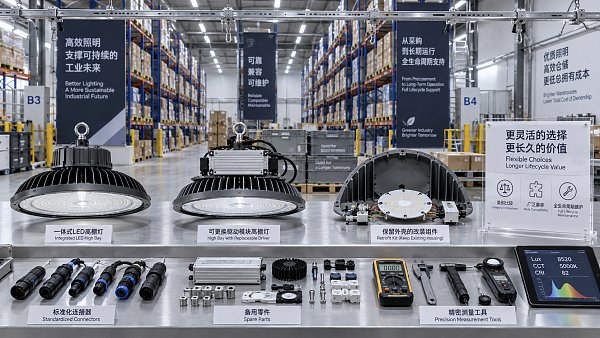
One image is recommended near the opening of the article to illustrate RFID-based inventory tracking, customs data connectivity, and North American trade compliance workflows.

On May 28, 2026, the United States proposed a revision to the United States-Mexico-Canada Agreement, or USMCA, that would add a digital supply chain transparency clause. If adopted, the change could affect RFID readers, tags, and middleware supplied by Chinese manufacturers to North American channel partners because Inventory RFID Systems associated with imported goods would need to support real-time data interfaces used by U.S. Customs and Border Protection, such as API-based EPCIS.
What Has Been Confirmed About the Proposed Change
The confirmed event is a U.S. proposal dated May 28, 2026, to revise the USMCA by adding a digital supply chain transparency clause.
According to the provided event summary, the proposed clause would require Inventory RFID Systems used with imported goods to be compatible with real-time data interfaces of U.S. Customs and Border Protection, including examples such as API-based EPCIS.
The provided information also states that, if the new requirement is implemented, it will affect delivery standards for Chinese RFID reader, tag, and middleware manufacturers serving North American channel partners. These suppliers may need to prepare system-level certification and adaptation work in advance.
Where the RFID Supply Chain May Feel the Pressure
Exporters and cross-border trading companies
Direct trading companies may be affected because customs clearance for goods equipped with Inventory RFID Systems could become more closely linked to digital interface compatibility. The impact would likely appear in export documentation, product configuration confirmation, pre-shipment compliance checks, and communication with North American buyers.
These companies should watch whether purchase orders, customs documentation requirements, or buyer compliance questionnaires begin to reference CBP-compatible real-time data interfaces or API-based EPCIS support.
Component and input procurement teams
Procurement teams may be affected if RFID readers, tags, middleware, or related system components must meet new interface and data transmission requirements. Even when the physical tag or reader remains unchanged, the overall system may need to demonstrate compatibility at the data layer.
Key areas to monitor include supplier declarations, firmware and software version control, middleware capability, and whether procured components can support the system-level requirements expected by North American channel partners.
Manufacturers and system integrators
RFID manufacturers and integration teams may face changes in product design, testing, documentation, and delivery acceptance. The proposed rule is not limited to individual hardware performance; it points toward compatibility between inventory systems and customs-facing digital infrastructure.
Manufacturers may need to pay closer attention to system certification readiness, EPCIS data structure alignment, interface testing, traceability records, and technical documentation that can be reviewed by buyers or compliance partners.
Supply chain service providers
Logistics coordinators, compliance service providers, and after-sales support teams may be affected because the proposed clause relates to supply chain transparency and real-time data connectivity. Their role could expand from shipment handling to data readiness verification and post-delivery traceability support.
They should monitor whether North American channel partners require stronger evidence of system compatibility, clearer service responsibilities, or updated procedures for handling data interface failures after deployment.
Preparation Points for RFID Suppliers
Map certification needs at the system level
Companies should not treat the proposal as a single-device requirement only. The provided information indicates that system-level certification adaptation may be needed. Suppliers should therefore review how RFID readers, tags, middleware, and inventory software operate together when data is transmitted through an interface such as API-based EPCIS.
Align technical specifications with buyer documents
North American distributors and channel partners may update technical specifications if the proposal moves toward implementation. Suppliers should prepare clear responses on EPCIS compatibility, data exchange architecture, interface documentation, and version management so that sales teams can answer compliance questions consistently.
Review delivery schedules and procurement planning
If interface testing or certification adaptation becomes part of the delivery process, lead times may need to be reassessed. Businesses should review whether current procurement plans allow enough time for middleware configuration, compatibility testing, technical file preparation, and buyer review before shipment.
Strengthen traceability and after-sales documentation
Because the proposed clause is centered on digital supply chain transparency, traceability records may become more important in commercial negotiations. Suppliers should prepare product configuration records, software update histories, test reports, and service response procedures that support long-term quality and compliance tracking.
Industry Reading: A Shift From Hardware Delivery to Data Compliance
From an industry perspective, the proposal should be understood as a possible move toward customs-facing digital compatibility rather than only a traditional trade rule adjustment. The key issue is whether inventory-related RFID systems can provide structured, real-time, and verifiable data connections for customs processes.
Analysis shows that this could raise the importance of middleware capability, interface documentation, and system integration know-how in export competitiveness. Hardware price and tag performance may remain important, but buyers may also evaluate whether the supplier can support compliant data workflows.
What deserves closer attention is the preparation cycle. System-level adaptation often involves product teams, software teams, compliance personnel, and overseas channel partners. If the proposed clause advances, companies that wait until final orders are placed may face tighter testing and documentation timelines.
It is more appropriate to understand the current situation as a compliance signal rather than a completed rule. The final impact will depend on the eventual policy text, enforcement approach, certification expectations, and how channel partners translate the requirement into procurement conditions.
A Measured Outlook for RFID Exporters
The proposed USMCA revision highlights the growing connection between trade compliance, customs data systems, and RFID inventory technology. For suppliers serving North American channels, the event may turn data interface readiness into a more visible part of product delivery.
At this stage, companies should avoid overestimating a result that has not yet been finalized, but they should also avoid ignoring the direction of change. A practical response is to review interface compatibility, prepare technical evidence, and maintain close communication with channel partners as policy details develop.
Information Basis and Follow-Up Items
This article is based on the user-provided news title, event date, and event summary concerning the proposed USMCA revision dated May 28, 2026.
Relevant source types for continued verification may include official trade policy releases, customs compliance guidance, standards or certification notices, and procurement updates from industry participants. Specific official source links were not provided in the input and should be verified continuously.
Further observation is needed on the final policy wording, certification enforcement approach, interpretation of API-based EPCIS compatibility, changes in tender or procurement documents, and feedback from RFID manufacturers, middleware vendors, channel partners, and supply chain service providers.
News Recommendations
 What records are needed for an ISO 9001 furniture factory audit?
![51a6ab95581761cc26f4318be6520c15]()
Aris Katos
Future of Carbide Coatings
 How to choose AI marketing tools that work with your existing CRM
![51a6ab95581761cc26f4318be6520c15]()
Aris Katos
Future of Carbide Coatings
 Do freight costs erase savings when buying retail fixtures wholesale?
![51a6ab95581761cc26f4318be6520c15]()
Aris Katos
Future of Carbide Coatings
 Can smart retail IT solutions for CPG work with legacy POS systems?
![51a6ab95581761cc26f4318be6520c15]()
Aris Katos
Future of Carbide Coatings
 What permit approvals belong in a commercial fitout planning checklist?
![51a6ab95581761cc26f4318be6520c15]()
Aris Katos
Future of Carbide Coatings
 How Does Commercial Design Differ from Interior Decoration?
![51a6ab95581761cc26f4318be6520c15]()
Aris Katos
Future of Carbide Coatings
 How Long Does It Take to Verify a Commercial Furniture Supplier?
![51a6ab95581761cc26f4318be6520c15]()
Aris Katos
Future of Carbide Coatings
 How to verify compostability claims from a bubble mailer manufacturer
![51a6ab95581761cc26f4318be6520c15]()
Aris Katos
Future of Carbide Coatings
 Will commercial smart infrastructure solutions work with legacy systems?
![51a6ab95581761cc26f4318be6520c15]()
Aris Katos
Future of Carbide Coatings
 How to verify a preschool furniture manufacturer's safety standards
![51a6ab95581761cc26f4318be6520c15]()
Aris Katos
Future of Carbide Coatings
 A technical comparison of semiconductor processes for power devices
![51a6ab95581761cc26f4318be6520c15]()
Aris Katos
Future of Carbide Coatings
 How to verify that a BIFMA ergonomic chair meets the standard
![51a6ab95581761cc26f4318be6520c15]()
Aris Katos
Future of Carbide Coatings
 How to use a CRI value chart when choosing LED lighting
![51a6ab95581761cc26f4318be6520c15]()
Aris Katos
Future of Carbide Coatings
 How to compare hotel aroma diffuser wholesale options by coverage area
![51a6ab95581761cc26f4318be6520c15]()
Aris Katos
Future of Carbide Coatings
 How to prevent O-rings and seals from failing in food equipment
![51a6ab95581761cc26f4318be6520c15]()
Aris Katos
Future of Carbide Coatings
 How to compare commercial linear light wholesale quotes accurately
![51a6ab95581761cc26f4318be6520c15]()
Aris Katos
Future of Carbide Coatings
 How to verify international standards compliance for Middle East exports
![51a6ab95581761cc26f4318be6520c15]()
Aris Katos
Future of Carbide Coatings
 How to select laboratory instruments for reproducible test results
![51a6ab95581761cc26f4318be6520c15]()
Aris Katos
Future of Carbide Coatings
 When does a sheet metal prototype reveal design flaws early?
![51a6ab95581761cc26f4318be6520c15]()
Aris Katos
Future of Carbide Coatings
 When PE air column bags reduce damage in e-commerce fulfillment
![51a6ab95581761cc26f4318be6520c15]()
Aris Katos
Future of Carbide Coatings
 How energy-efficient design reduces operating costs in retail lighting
![51a6ab95581761cc26f4318be6520c15]()
Aris Katos
Future of Carbide Coatings
 When commercial aluminum storefronts make sense for a retail renovation
![51a6ab95581761cc26f4318be6520c15]()
Aris Katos
Future of Carbide Coatings
 What makes LED lights durable in high-use commercial spaces?
![51a6ab95581761cc26f4318be6520c15]()
Aris Katos
Future of Carbide Coatings
 Which industry categories offer the strongest export potential in Latin America?
![51a6ab95581761cc26f4318be6520c15]()
Aris Katos
Future of Carbide Coatings
 How to choose an ultra bright waterproof window display for storefronts
![51a6ab95581761cc26f4318be6520c15]()
Aris Katos
Future of Carbide Coatings
 How to verify suppliers on a trade portal for global sourcing
![51a6ab95581761cc26f4318be6520c15]()
Aris Katos
Future of Carbide Coatings
 How RoHS requirements should be stated in product specifications
![51a6ab95581761cc26f4318be6520c15]()
Aris Katos
Future of Carbide Coatings
 What affects the lead time for custom retail counter displays?
![51a6ab95581761cc26f4318be6520c15]()
Aris Katos
Future of Carbide Coatings
 What consumer packaging USA importers need to verify before ordering
![51a6ab95581761cc26f4318be6520c15]()
Aris Katos
Future of Carbide Coatings
 How commercial spaces interiors shape customer dwell time
![51a6ab95581761cc26f4318be6520c15]()
Aris Katos
Future of Carbide Coatings
 How LED commercial lighting design reduces glare in retail spaces
![51a6ab95581761cc26f4318be6520c15]()
Aris Katos
Future of Carbide Coatings
 How industrial technology information improves RFID inventory accuracy
![51a6ab95581761cc26f4318be6520c15]()
Aris Katos
Future of Carbide Coatings
 When drip garden watering systems make more sense than sprinklers
![51a6ab95581761cc26f4318be6520c15]()
Aris Katos
Future of Carbide Coatings
 When category comparison improves sourcing for industrial applications
![51a6ab95581761cc26f4318be6520c15]()
Aris Katos
Future of Carbide Coatings
 Industrial application guidance for selecting the right LED lighting
![51a6ab95581761cc26f4318be6520c15]()
Aris Katos
Future of Carbide Coatings
 Which commercial architecture standards apply to European retail fit-outs?
![51a6ab95581761cc26f4318be6520c15]()
Aris Katos
Future of Carbide Coatings
 How to verify FDA requirements for maternity care products
![51a6ab95581761cc26f4318be6520c15]()
Aris Katos
Future of Carbide Coatings
 How to verify BPA-free claims for food-contact products
![51a6ab95581761cc26f4318be6520c15]()
Aris Katos
Future of Carbide Coatings
 When does a European wholesale supplier suit modular office projects?
![51a6ab95581761cc26f4318be6520c15]()
Aris Katos
Future of Carbide Coatings