UKCA Delay Extends LED Lighting Compliance Window
Time
Click Count
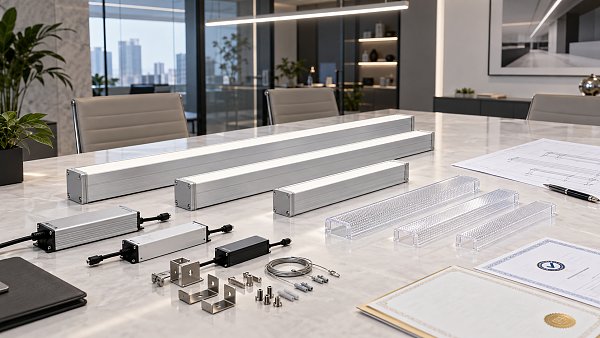
On July 14, 2026, the UK Department for Business and Trade announced another extension to the mandatory UKCA timeline for Architectural LED Lighting, moving the deadline from December 31, 2026 to December 31, 2027. The update also allows CE-marked products to continue being placed on the UK market if they are accompanied by a UK Declaration of Conformity. For exporters, manufacturers, importers, certification teams, and procurement functions linked to this product category, the change is worth close attention because it directly affects compliance scheduling, documentation readiness, and delivery planning for the UK market.

A confirmed shift in the UK market access timetable
The confirmed facts are limited but commercially significant. According to the event summary, the UK Department for Business and Trade made the announcement on July 14, 2026. The mandatory implementation date for the UKCA mark, previously set for December 31, 2026, has been postponed to December 31, 2027. The extension applies across the full Architectural LED Lighting category. The same announcement states that CE-marked products may continue to be legally placed on the UK market, provided they are accompanied by a UK Declaration of Conformity.
The event summary also makes clear that the extension is intended to provide exporters with additional buffer time and to ease pressure related to technical documentation and testing resources during the transition from CE to UKCA.
Where the change is likely to be felt first
Export schedules and market entry planning
From an industry perspective, exporters serving the UK market are among the most directly affected parties because the rule change alters the compliance timetable tied to shipment and placement on the market. The practical effect is not simply more time; it also changes how companies may sequence certification work, product file preparation, and shipment planning for Architectural LED Lighting products intended for the UK.
What deserves closer attention is the continuing condition attached to CE-marked products. Companies relying on CE-based market access still need to ensure that a UK Declaration of Conformity is in place, which means documentation control remains a live compliance issue rather than something that can be deferred entirely.
Manufacturing and document control functions
Manufacturers and in-house compliance teams may see the most immediate impact in technical file management. Analysis shows that the extension eases the timing pressure associated with converting from CE-related compliance arrangements to UKCA-related documentation and testing workflows. Even so, the announcement does not remove the need for document readiness. It shifts the window in which files, declarations, and supporting records may need to be reviewed, updated, or aligned for the UK market.
For businesses handling multiple product lines within Architectural LED Lighting, this may also affect internal prioritization of testing resources and regulatory review cycles. That is an operational implication rather than a confirmed regulatory detail, and it should be treated as an area for planning rather than as a fixed outcome.
Import, procurement, and supply chain coordination
Importers, procurement teams, and supply chain service providers may also need to adjust contract review, order timing, and incoming compliance checks. Observably, the continued acceptance of CE-marked products under a documentation condition can influence how buyers assess supplier readiness and whether product files are complete before shipment or market placement.
For procurement teams, the key issue is likely to be evidence management rather than headline certification status alone. A product carrying CE for continued UK placement under this transition arrangement may still require careful verification of the accompanying UK Declaration of Conformity, especially where delivery commitments or acceptance procedures depend on formal compliance records.
Testing and certification support workflows
Certification-related businesses and testing service providers may not see the same level of immediate deadline pressure that would have existed under the earlier 2026 cutoff. Analysis shows that the extra year could spread demand over a longer period, which may affect how companies queue testing, technical review, and file conversion work. At the same time, the market still has to move toward the revised 2027 date, so delayed execution may simply shift resource pressure rather than remove it.
What companies should review now
Check whether current UK-bound files match the new transition terms
Companies placing Architectural LED Lighting products on the UK market should review whether existing CE-based files are supported by a UK Declaration of Conformity where needed. The event summary confirms that continued legal placement of CE-marked products depends on that document, so document completeness deserves immediate attention.
Reassess certification timing instead of pausing compliance work
It is more appropriate to understand the extension as additional compliance time, not as a signal to suspend preparation. Businesses that had been working toward a 2026 deadline may need to revisit internal milestones, testing bookings, and technical documentation updates so that the new 2027 endpoint is used efficiently rather than treated as an open-ended delay.
Watch for downstream changes in tender and purchasing documents
Analysis shows that one practical area to monitor is how procurement files, customer specifications, and bid documentation describe UK market compliance during the extended transition. Even where the formal deadline has moved, commercial documents may not update immediately. That creates a potential gap between the announced rule change and the wording used in transactions or project delivery requirements.
Keep an eye on execution language and market practice
The announcement provides the core direction, but the event summary does not include detailed enforcement language or sector-specific operating guidance. For that reason, companies should continue monitoring how the revised timeline is reflected in compliance review, market acceptance practice, and supporting documentation expectations tied to UK sales and delivery.
Why this reads as an execution signal, not a final endpoint
Observably, this development is best read as a concrete change in the compliance timetable rather than a complete reset of UK market access requirements. The date has moved, and the continuing use of CE-marked products remains conditional. That combination matters because it gives industry participants more room to manage the transition while preserving the need for documentary compliance.
From an industry perspective, the most important point is that the pressure has changed shape rather than disappeared. The immediate compliance cliff is softer, but the requirement to manage declarations, technical files, and market-facing documentation remains active. This is why the announcement should be treated as an implemented timing adjustment with continuing execution questions still worth tracking.
How this update is best understood at this stage
At this stage, the extension to December 31, 2027 appears most relevant as a practical buffer for Architectural LED Lighting businesses dealing with UK market access, especially where certification timing and technical documentation had become constrained. The confirmed change reduces short-term deadline pressure, but it does not remove the compliance work attached to continued UK sales.
Analysis shows that the most balanced reading is this: the rule change is real and actionable, but its full commercial effect will depend on how companies, buyers, and compliance functions apply the revised timeline in documentation, procurement, shipment, and acceptance processes. It is more appropriate to understand this as a live implementation signal that still requires close follow-through.
Basis of this article and points that still need verification
This article is based on the user-provided news title, event date, and event summary. For developments of this kind, relevant source categories typically include official government announcements, regulator releases, trade administration updates, industry association notices, standard-setting documents, and reporting from authoritative media. A specific official source link was not provided in the input, so the underlying announcement should continue to be verified against original published materials.
Further observation is still needed in areas such as detailed policy wording, certification execution practice, tender document updates, market acceptance criteria, industry feedback, and how companies implement the revised transition timetable in actual UK-bound business operations.
News Recommendations
 What records are needed for an ISO 9001 furniture factory audit?
![51a6ab95581761cc26f4318be6520c15]()
Aris Katos
Future of Carbide Coatings
 How to choose AI marketing tools that work with your existing CRM
![51a6ab95581761cc26f4318be6520c15]()
Aris Katos
Future of Carbide Coatings
 Do freight costs erase savings when buying retail fixtures wholesale?
![51a6ab95581761cc26f4318be6520c15]()
Aris Katos
Future of Carbide Coatings
 Can smart retail IT solutions for CPG work with legacy POS systems?
![51a6ab95581761cc26f4318be6520c15]()
Aris Katos
Future of Carbide Coatings
 What permit approvals belong in a commercial fitout planning checklist?
![51a6ab95581761cc26f4318be6520c15]()
Aris Katos
Future of Carbide Coatings
 How Does Commercial Design Differ from Interior Decoration?
![51a6ab95581761cc26f4318be6520c15]()
Aris Katos
Future of Carbide Coatings
 How Long Does It Take to Verify a Commercial Furniture Supplier?
![51a6ab95581761cc26f4318be6520c15]()
Aris Katos
Future of Carbide Coatings
 How to verify compostability claims from a bubble mailer manufacturer
![51a6ab95581761cc26f4318be6520c15]()
Aris Katos
Future of Carbide Coatings
 Will commercial smart infrastructure solutions work with legacy systems?
![51a6ab95581761cc26f4318be6520c15]()
Aris Katos
Future of Carbide Coatings
 How to verify a preschool furniture manufacturer's safety standards
![51a6ab95581761cc26f4318be6520c15]()
Aris Katos
Future of Carbide Coatings
 A technical comparison of semiconductor processes for power devices
![51a6ab95581761cc26f4318be6520c15]()
Aris Katos
Future of Carbide Coatings
 How to verify that a BIFMA ergonomic chair meets the standard
![51a6ab95581761cc26f4318be6520c15]()
Aris Katos
Future of Carbide Coatings
 How to use a CRI value chart when choosing LED lighting
![51a6ab95581761cc26f4318be6520c15]()
Aris Katos
Future of Carbide Coatings
 How to compare hotel aroma diffuser wholesale options by coverage area
![51a6ab95581761cc26f4318be6520c15]()
Aris Katos
Future of Carbide Coatings
 How to prevent O-rings and seals from failing in food equipment
![51a6ab95581761cc26f4318be6520c15]()
Aris Katos
Future of Carbide Coatings
 How to compare commercial linear light wholesale quotes accurately
![51a6ab95581761cc26f4318be6520c15]()
Aris Katos
Future of Carbide Coatings
 How to verify international standards compliance for Middle East exports
![51a6ab95581761cc26f4318be6520c15]()
Aris Katos
Future of Carbide Coatings
 How to select laboratory instruments for reproducible test results
![51a6ab95581761cc26f4318be6520c15]()
Aris Katos
Future of Carbide Coatings
 When does a sheet metal prototype reveal design flaws early?
![51a6ab95581761cc26f4318be6520c15]()
Aris Katos
Future of Carbide Coatings
 When PE air column bags reduce damage in e-commerce fulfillment
![51a6ab95581761cc26f4318be6520c15]()
Aris Katos
Future of Carbide Coatings
 How energy-efficient design reduces operating costs in retail lighting
![51a6ab95581761cc26f4318be6520c15]()
Aris Katos
Future of Carbide Coatings
 When commercial aluminum storefronts make sense for a retail renovation
![51a6ab95581761cc26f4318be6520c15]()
Aris Katos
Future of Carbide Coatings
 What makes LED lights durable in high-use commercial spaces?
![51a6ab95581761cc26f4318be6520c15]()
Aris Katos
Future of Carbide Coatings
 Which industry categories offer the strongest export potential in Latin America?
![51a6ab95581761cc26f4318be6520c15]()
Aris Katos
Future of Carbide Coatings
 How to choose an ultra bright waterproof window display for storefronts
![51a6ab95581761cc26f4318be6520c15]()
Aris Katos
Future of Carbide Coatings
 How to verify suppliers on a trade portal for global sourcing
![51a6ab95581761cc26f4318be6520c15]()
Aris Katos
Future of Carbide Coatings
 How RoHS requirements should be stated in product specifications
![51a6ab95581761cc26f4318be6520c15]()
Aris Katos
Future of Carbide Coatings
 What affects the lead time for custom retail counter displays?
![51a6ab95581761cc26f4318be6520c15]()
Aris Katos
Future of Carbide Coatings
 What consumer packaging USA importers need to verify before ordering
![51a6ab95581761cc26f4318be6520c15]()
Aris Katos
Future of Carbide Coatings
 How commercial spaces interiors shape customer dwell time
![51a6ab95581761cc26f4318be6520c15]()
Aris Katos
Future of Carbide Coatings
 How LED commercial lighting design reduces glare in retail spaces
![51a6ab95581761cc26f4318be6520c15]()
Aris Katos
Future of Carbide Coatings
 How industrial technology information improves RFID inventory accuracy
![51a6ab95581761cc26f4318be6520c15]()
Aris Katos
Future of Carbide Coatings
 When drip garden watering systems make more sense than sprinklers
![51a6ab95581761cc26f4318be6520c15]()
Aris Katos
Future of Carbide Coatings
 When category comparison improves sourcing for industrial applications
![51a6ab95581761cc26f4318be6520c15]()
Aris Katos
Future of Carbide Coatings
 Industrial application guidance for selecting the right LED lighting
![51a6ab95581761cc26f4318be6520c15]()
Aris Katos
Future of Carbide Coatings
 Which commercial architecture standards apply to European retail fit-outs?
![51a6ab95581761cc26f4318be6520c15]()
Aris Katos
Future of Carbide Coatings
 How to verify FDA requirements for maternity care products
![51a6ab95581761cc26f4318be6520c15]()
Aris Katos
Future of Carbide Coatings
 How to verify BPA-free claims for food-contact products
![51a6ab95581761cc26f4318be6520c15]()
Aris Katos
Future of Carbide Coatings
 When does a European wholesale supplier suit modular office projects?
![51a6ab95581761cc26f4318be6520c15]()
Aris Katos
Future of Carbide Coatings