Sustainable Agriculture Practices That Lower Compliance Risk
Time
Click Count
Why Sustainable Agriculture Practices Matter in Compliance-Driven Supply Chains
Sustainable agriculture practices now sit close to the center of supply chain compliance, not at the edge of ESG reporting.
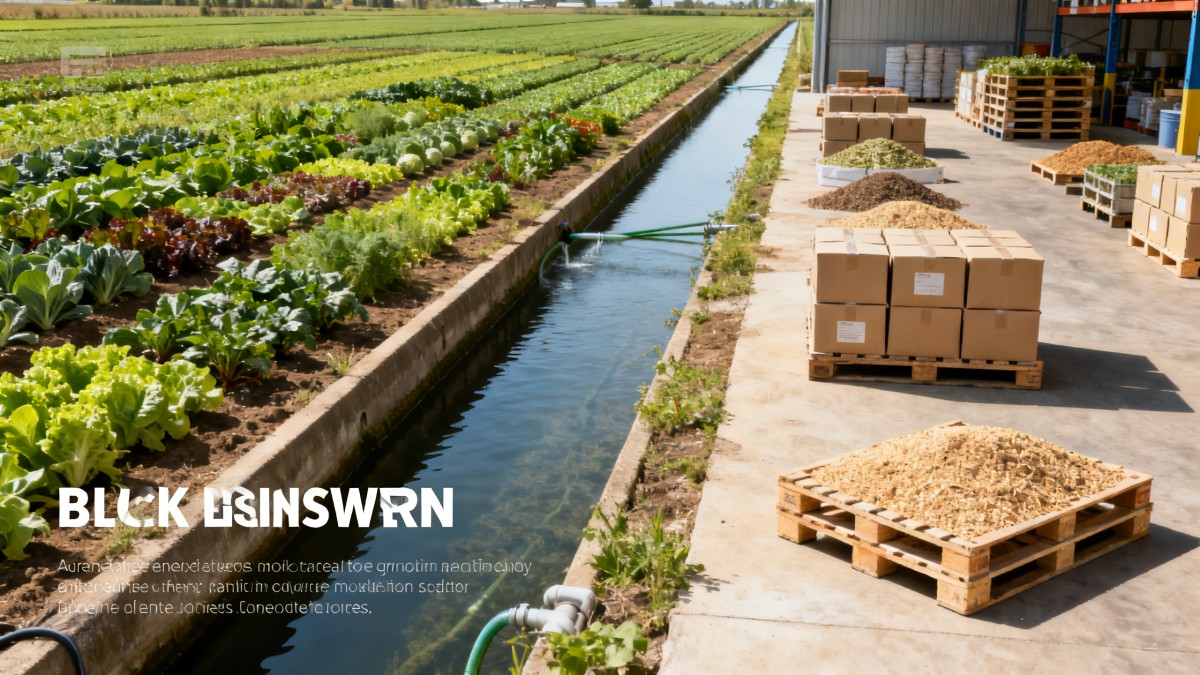
They shape how raw materials are grown, handled, verified, and moved into finished consumer goods.
That matters because compliance risk rarely begins at the last factory inspection.
It often starts much earlier, in land use records, chemical inputs, irrigation controls, labor documentation, and supplier declarations.
For businesses operating across retail, packaging, fixtures, food-contact materials, and consumer product sourcing, upstream agricultural choices can affect product safety and legal exposure downstream.
This is why sustainable agriculture practices are increasingly treated as operational controls.
They support cleaner documentation, stronger traceability, more reliable supplier performance, and better readiness for audits.
In a market shaped by digital intelligence and sustainable materials, the issue extends beyond farms.
It reaches packaging selection, sourcing standards, retail brand claims, and cross-border compliance review.
What the Term Really Covers
Sustainable agriculture practices are not limited to organic farming or reduced pesticide use.
In practical compliance terms, they include a set of managed production behaviors that lower environmental, safety, and sourcing risk.
These behaviors usually involve soil protection, water stewardship, controlled agrochemical application, biodiversity safeguards, responsible labor conditions, and transparent recordkeeping.
They also include chain-of-custody discipline.
Without traceable batch movement, even a well-run farm can create compliance gaps later in processing or packaging.
For non-food sectors, the relevance is still strong.
Cotton, pulp, starch-based materials, natural fibers, bio-based polymers, plant extracts, and paper packaging all depend on agricultural systems.
If those systems are poorly managed, risk can surface in contamination events, unsupported sustainability claims, import issues, or failed supplier audits.
Why the Topic Is Receiving More Attention
The pressure is coming from several directions at once.
Regulators are paying closer attention to environmental claims, due diligence, deforestation exposure, and product traceability.
Retailers want cleaner supplier data before listing products or approving packaging changes.
Brands also face greater scrutiny when “sustainable” messaging cannot be linked to verified agricultural practices.
At the same time, climate volatility has made source stability less predictable.
Water stress, soil degradation, and disease pressure can all trigger substitutions, quality shifts, or emergency sourcing decisions.
Those decisions often increase compliance risk because controls become rushed or incomplete.
This is where platforms such as G-BCE become useful.
Cross-sector benchmarking helps connect upstream material decisions with downstream commercial requirements.
That broader view matters when agricultural inputs ultimately affect consumer packaging, retail environments, and product presentation governed by multiple standards.
Where Compliance Risk Usually Appears
Not every risk is obvious during routine supplier onboarding.
Many issues remain hidden until an audit, test failure, customs review, or customer complaint reveals them.
Common weak points
- Incomplete farm-level records for pesticide use, harvest dates, or field segregation.
- Poor traceability between raw agricultural batches and processed material lots.
- Unverified sustainability claims attached to paper, fiber, or bio-based packaging.
- Supplier substitutions caused by climate stress, seasonal shortage, or cost pressure.
- Misalignment between local farming practices and export market documentation requirements.
- Weak control of contaminants, including heavy metals, pesticide residues, or microbiological hazards.
Sustainable agriculture practices help reduce these weak points because they force clearer operating discipline upstream.
They also improve the reliability of the evidence needed for certification, claim review, and incident response.
How Sustainable Agriculture Practices Translate Into Business Control
The value is not only environmental.
Well-implemented sustainable agriculture practices create better conditions for measurable compliance control.
In other words, sustainable agriculture practices work best when treated as verifiable controls, not aspirational statements.
That distinction is critical during audits and customer reviews.
Relevant Scenarios Across the Broader Commercial Ecosystem
The topic is not confined to agricultural commodities sold in raw form.
It touches multiple categories across the wider business and consumer ecosystem.
Packaging and material conversion
Paperboard, molded fiber, starch films, and plant-derived additives all depend on agricultural or forestry-linked inputs.
Claims about recyclability or sustainability are more credible when upstream practices are documented and consistent.
Consumer goods sourcing
Textiles, personal care ingredients, home products, and food-contact components may all rely on farm-linked supply chains.
Weak controls at source can later affect labeling, safety review, or import declarations.
Retail and commercial environments
Modern retail spaces increasingly present sustainability as part of the brand experience.
If fixtures, packaging, and displayed products reference responsible sourcing, the supporting evidence must hold up.
That is why data transparency across product, packaging, and presentation matters so much.
What to Look for When Assessing Suppliers
A supplier may present a sustainability statement, but that alone says little about compliance strength.
The more useful question is whether sustainable agriculture practices are visible in records, controls, and decision routines.
- Check whether farm or aggregator data can be linked to specific shipment lots.
- Review how chemical input approvals, storage, and application logs are maintained.
- Verify whether corrective actions exist for water quality, residue exceedance, or land-use concerns.
- Look for consistency between certification claims and operating records.
- Assess how substitutions are controlled when crop yield or regional supply changes suddenly.
- Confirm that sustainability data can travel into customer-facing documentation without manual gaps.
Usually, the strongest suppliers are not the ones with the most polished narrative.
They are the ones whose records remain coherent across field, processor, exporter, and brand documentation.
Building a Practical Next Step
The next move is rarely a full program redesign.
A better starting point is to map where agricultural inputs enter the supply chain and where compliance evidence becomes weak.
From there, prioritize the categories with the highest exposure to claims risk, contamination risk, or traceability gaps.
That may include packaging substrates, natural fibers, plant-based ingredients, or any material tied to land and water use.
Benchmarking can then help determine whether current supplier controls match international expectations and customer requirements.
Seen this way, sustainable agriculture practices are not a narrow sourcing topic.
They are a practical way to reduce uncertainty, strengthen audit readiness, and support more resilient commercial ecosystems.
The most useful decisions usually begin with clearer evidence, sharper supplier comparisons, and a more disciplined view of upstream risk.
News Recommendations
 What records are needed for an ISO 9001 furniture factory audit?
![51a6ab95581761cc26f4318be6520c15]()
Aris Katos
Future of Carbide Coatings
 How to choose AI marketing tools that work with your existing CRM
![51a6ab95581761cc26f4318be6520c15]()
Aris Katos
Future of Carbide Coatings
 Do freight costs erase savings when buying retail fixtures wholesale?
![51a6ab95581761cc26f4318be6520c15]()
Aris Katos
Future of Carbide Coatings
 Can smart retail IT solutions for CPG work with legacy POS systems?
![51a6ab95581761cc26f4318be6520c15]()
Aris Katos
Future of Carbide Coatings
 What permit approvals belong in a commercial fitout planning checklist?
![51a6ab95581761cc26f4318be6520c15]()
Aris Katos
Future of Carbide Coatings
 How Does Commercial Design Differ from Interior Decoration?
![51a6ab95581761cc26f4318be6520c15]()
Aris Katos
Future of Carbide Coatings
 How Long Does It Take to Verify a Commercial Furniture Supplier?
![51a6ab95581761cc26f4318be6520c15]()
Aris Katos
Future of Carbide Coatings
 How to verify compostability claims from a bubble mailer manufacturer
![51a6ab95581761cc26f4318be6520c15]()
Aris Katos
Future of Carbide Coatings
 Will commercial smart infrastructure solutions work with legacy systems?
![51a6ab95581761cc26f4318be6520c15]()
Aris Katos
Future of Carbide Coatings
 How to verify a preschool furniture manufacturer's safety standards
![51a6ab95581761cc26f4318be6520c15]()
Aris Katos
Future of Carbide Coatings
 A technical comparison of semiconductor processes for power devices
![51a6ab95581761cc26f4318be6520c15]()
Aris Katos
Future of Carbide Coatings
 How to verify that a BIFMA ergonomic chair meets the standard
![51a6ab95581761cc26f4318be6520c15]()
Aris Katos
Future of Carbide Coatings
 How to use a CRI value chart when choosing LED lighting
![51a6ab95581761cc26f4318be6520c15]()
Aris Katos
Future of Carbide Coatings
 How to compare hotel aroma diffuser wholesale options by coverage area
![51a6ab95581761cc26f4318be6520c15]()
Aris Katos
Future of Carbide Coatings
 How to prevent O-rings and seals from failing in food equipment
![51a6ab95581761cc26f4318be6520c15]()
Aris Katos
Future of Carbide Coatings
 How to compare commercial linear light wholesale quotes accurately
![51a6ab95581761cc26f4318be6520c15]()
Aris Katos
Future of Carbide Coatings
 How to verify international standards compliance for Middle East exports
![51a6ab95581761cc26f4318be6520c15]()
Aris Katos
Future of Carbide Coatings
 How to select laboratory instruments for reproducible test results
![51a6ab95581761cc26f4318be6520c15]()
Aris Katos
Future of Carbide Coatings
 When does a sheet metal prototype reveal design flaws early?
![51a6ab95581761cc26f4318be6520c15]()
Aris Katos
Future of Carbide Coatings
 When PE air column bags reduce damage in e-commerce fulfillment
![51a6ab95581761cc26f4318be6520c15]()
Aris Katos
Future of Carbide Coatings
 How energy-efficient design reduces operating costs in retail lighting
![51a6ab95581761cc26f4318be6520c15]()
Aris Katos
Future of Carbide Coatings
 When commercial aluminum storefronts make sense for a retail renovation
![51a6ab95581761cc26f4318be6520c15]()
Aris Katos
Future of Carbide Coatings
 What makes LED lights durable in high-use commercial spaces?
![51a6ab95581761cc26f4318be6520c15]()
Aris Katos
Future of Carbide Coatings
 Which industry categories offer the strongest export potential in Latin America?
![51a6ab95581761cc26f4318be6520c15]()
Aris Katos
Future of Carbide Coatings
 How to choose an ultra bright waterproof window display for storefronts
![51a6ab95581761cc26f4318be6520c15]()
Aris Katos
Future of Carbide Coatings
 How to verify suppliers on a trade portal for global sourcing
![51a6ab95581761cc26f4318be6520c15]()
Aris Katos
Future of Carbide Coatings
 How RoHS requirements should be stated in product specifications
![51a6ab95581761cc26f4318be6520c15]()
Aris Katos
Future of Carbide Coatings
 What affects the lead time for custom retail counter displays?
![51a6ab95581761cc26f4318be6520c15]()
Aris Katos
Future of Carbide Coatings
 What consumer packaging USA importers need to verify before ordering
![51a6ab95581761cc26f4318be6520c15]()
Aris Katos
Future of Carbide Coatings
 How commercial spaces interiors shape customer dwell time
![51a6ab95581761cc26f4318be6520c15]()
Aris Katos
Future of Carbide Coatings
 How LED commercial lighting design reduces glare in retail spaces
![51a6ab95581761cc26f4318be6520c15]()
Aris Katos
Future of Carbide Coatings
 How industrial technology information improves RFID inventory accuracy
![51a6ab95581761cc26f4318be6520c15]()
Aris Katos
Future of Carbide Coatings
 When drip garden watering systems make more sense than sprinklers
![51a6ab95581761cc26f4318be6520c15]()
Aris Katos
Future of Carbide Coatings
 When category comparison improves sourcing for industrial applications
![51a6ab95581761cc26f4318be6520c15]()
Aris Katos
Future of Carbide Coatings
 Industrial application guidance for selecting the right LED lighting
![51a6ab95581761cc26f4318be6520c15]()
Aris Katos
Future of Carbide Coatings
 Which commercial architecture standards apply to European retail fit-outs?
![51a6ab95581761cc26f4318be6520c15]()
Aris Katos
Future of Carbide Coatings
 How to verify FDA requirements for maternity care products
![51a6ab95581761cc26f4318be6520c15]()
Aris Katos
Future of Carbide Coatings
 How to verify BPA-free claims for food-contact products
![51a6ab95581761cc26f4318be6520c15]()
Aris Katos
Future of Carbide Coatings
 When does a European wholesale supplier suit modular office projects?
![51a6ab95581761cc26f4318be6520c15]()
Aris Katos
Future of Carbide Coatings