Hydraulic Press Specifications That Matter for Production Planning
Time
Click Count
Hydraulic Press Specifications That Matter for Production Planning
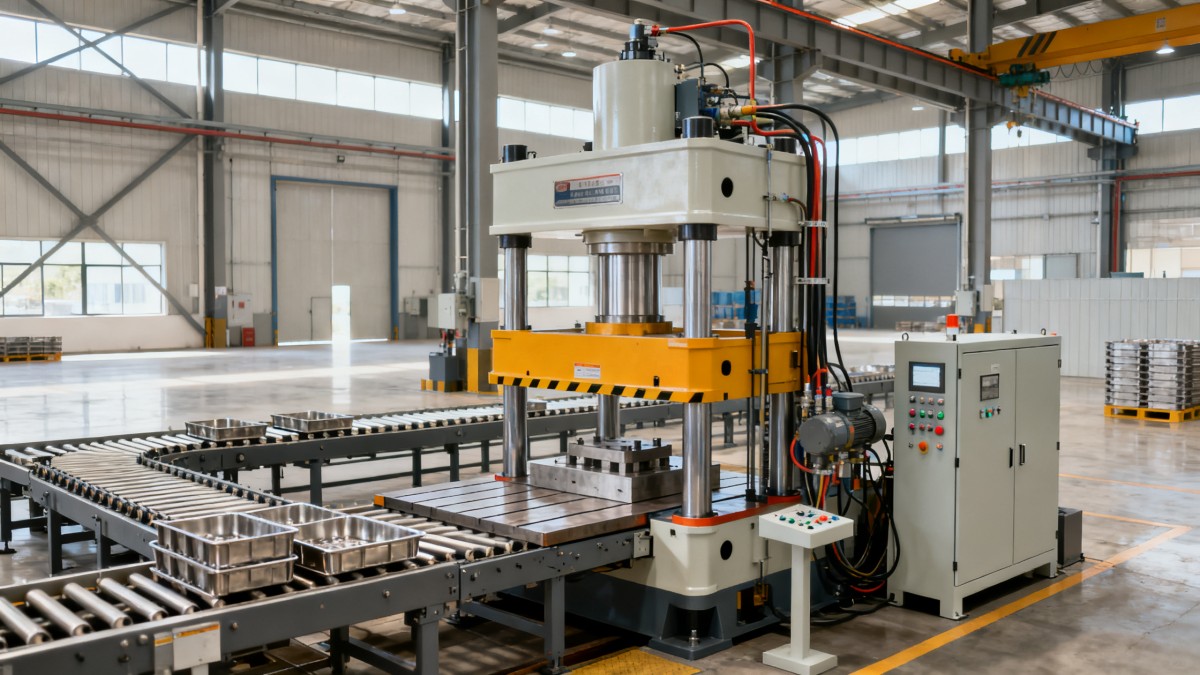
For production planning, hydraulic press specifications are not just engineering details. They directly shape capacity, tooling fit, labor flow, and capital efficiency.
A press that looks adequate on paper can still slow output. In most cases, the gap comes from misunderstood specifications.
That is why hydraulic press specifications should be reviewed as planning inputs, not as isolated machine data.
From recent sourcing trends, buyers are asking sharper questions. They want clearer links between machine capability and production risk.
This also reflects a broader shift. Manufacturing teams now compare equipment by throughput stability, energy use, traceability, and upgrade potential.
Within that context, hydraulic press specifications become a practical decision framework. They help define what a line can realistically deliver every shift.
Why Tonnage Is Only the Starting Point
Tonnage is usually the first number reviewed. It matters, but it rarely tells the full production story.
A 200-ton press and another 200-ton press may behave very differently. Pressure curve, daylight, bed size, and stroke control can change usable output.
In actual operations, the key question is simple. Can the machine apply required force at the right point in the cycle?
This matters for deep drawing, trimming, forming, punching, laminating, and assembly. Different jobs need different force behavior.
When reviewing hydraulic press specifications, verify:
- rated tonnage and working tonnage range
- full-force point within the stroke
- pressure consistency under continuous loading
- overload protection behavior
Oversizing can waste energy and floor space. Undersizing creates scrap, tool wear, and unstable cycle times.
The better approach is to connect tonnage to the actual material, tool geometry, and daily production mix.
Stroke Length, Daylight, and Shut Height Define Tooling Fit
Many scheduling problems begin with a basic fit issue. The press can generate force, but the tooling envelope does not match.
Stroke length affects forming depth, loading access, and cycle duration. Longer stroke is useful, but it can slow repeat operations.
Daylight determines the open distance between slide and bed. It influences die changes, part removal, and fixture access.
Shut height matters just as much. It defines the closed working position and directly affects tooling compatibility.
If hydraulic press specifications overlook these dimensions, changeovers become slower than expected. That cost usually appears later in planning.
A practical review should compare machine dimensions against:
- largest and smallest die sets
- future tooling under development
- manual or automated loading methods
- maintenance clearance requirements
This is where specification review becomes strategic. A small mismatch can lock a line into avoidable downtime.
Cycle Speed and Return Speed Drive Real Throughput
Production plans often fail because quoted speed is treated as line speed. Those two numbers are rarely the same.
Hydraulic press specifications usually list approach speed, pressing speed, and return speed. Each affects output differently.
Fast approach reduces idle travel. Controlled pressing speed protects material quality. Return speed supports short cycle recovery.
More importantly, speed must stay stable under load. A machine that slows during continuous runs can break planning assumptions.
When comparing hydraulic press specifications, ask for data under production conditions, not only empty-run figures.
That distinction becomes more important in mixed-product environments. Variation in part handling can magnify every weak speed assumption.
Bed Size, Table Design, and Floor Space Constraints
A press may meet force requirements yet still disrupt plant layout. Bed dimensions and machine footprint often decide whether installation is efficient.
Bed size affects fixture stability, part positioning, and future die flexibility. It should fit current tools without eliminating growth options.
Table design also matters. T-slots, bolster thickness, moving tables, and die cushions influence setup time and job range.
On the facility side, hydraulic press specifications should be reviewed against floor loading, service access, power supply, and oil management space.
In many expansion projects, layout friction appears late. The machine itself fits, but material flow becomes awkward and labor cost rises.
A stronger decision process includes a short layout review before purchase approval. That step usually prevents expensive relocation later.
Control Systems, Precision, and Data Visibility
Modern production planning depends on predictable control. That makes control architecture one of the most important hydraulic press specifications.
Basic presses may be enough for simple forming. However, precision work benefits from programmable pressure, position, dwell time, and speed profiles.
Servo-hydraulic systems can add better repeatability and energy efficiency. They also support tighter process monitoring.
For planning and sourcing teams, the bigger value is visibility. Better data helps explain scrap shifts, downtime patterns, and maintenance timing.
Look closely at these control-related hydraulic press specifications:
- position accuracy and repeatability
- pressure feedback resolution
- recipe storage for multiple products
- alarm history and fault diagnostics
- integration with MES, SCADA, or ERP systems
This is increasingly relevant across global supply chains. Benchmarking now includes not only output, but also traceable process control.
Energy Use, Maintenance, and Lifecycle Cost
Initial machine price is visible. Operating cost is usually where the real decision quality shows.
Hydraulic press specifications should include motor rating, pump design, oil capacity, cooling method, and expected duty cycle.
These numbers affect utility demand, heat generation, service intervals, and uptime risk. They also influence sustainability reporting in larger organizations.
From a planning angle, maintenance accessibility is not a minor issue. It determines how quickly a line returns to production.
Check whether filters, seals, valves, sensors, and hoses are easy to inspect and replace. Spare parts strategy should be part of the specification review.
A lower-cost machine with weak service support can become the expensive option within a year of operation.
How to Use Hydraulic Press Specifications for Better Decisions
The most effective equipment decisions connect hydraulic press specifications to the production plan line by line.
Start with the parts, not the machine brochure. Material behavior, tolerance range, shift pattern, and changeover frequency should guide comparison.
Then build a short evaluation matrix. That keeps technical review aligned with sourcing, layout, and operating cost assumptions.
- Define required force, tooling envelope, and target cycle time.
- Map hydraulic press specifications against current and future products.
- Validate speed and repeatability with sample parts or trial data.
- Review controls, maintenance access, and digital integration.
- Compare total cost over expected service life.
In practice, this method reduces surprises after installation. It also improves supplier discussions because requirements become measurable.
For organizations benchmarking global manufacturing options, that discipline is especially valuable. It supports consistent decisions across plants, vendors, and project phases.
When hydraulic press specifications are read through the lens of throughput, fit, control, and lifecycle cost, production planning becomes far more reliable. That is the basis for smarter sourcing and stronger operational performance.
News Recommendations
 Which consumer goods need CE marking in Europe?
![51a6ab95581761cc26f4318be6520c15]()
Aris Katos
Future of Carbide Coatings
 Uniguest and Extreme Networks Partner to Simplify Digital Signage Deployment
![51a6ab95581761cc26f4318be6520c15]()
Aris Katos
Future of Carbide Coatings
 How to assess electronics compliance whitepapers for regulatory accuracy
![51a6ab95581761cc26f4318be6520c15]()
Aris Katos
Future of Carbide Coatings
 Packaging Data Hub Launches With Plastic Recycling Findings for 50 Countries
![51a6ab95581761cc26f4318be6520c15]()
Aris Katos
Future of Carbide Coatings
 How to verify an ergonomic office chair supplier's warranty terms
![51a6ab95581761cc26f4318be6520c15]()
Aris Katos
Future of Carbide Coatings
 Curion Survey: 64% Value Sustainable Beauty Packaging, but Quality Comes First
![51a6ab95581761cc26f4318be6520c15]()
Aris Katos
Future of Carbide Coatings
 Can minimalist fit out solutions make a small office feel larger?
![51a6ab95581761cc26f4318be6520c15]()
Aris Katos
Future of Carbide Coatings
 Kiosk Industry Releases IAAPA 2026 Self-Service Guide
![51a6ab95581761cc26f4318be6520c15]()
Aris Katos
Future of Carbide Coatings
 How to improve global supply chain visibility beyond tier-one suppliers
![51a6ab95581761cc26f4318be6520c15]()
Aris Katos
Future of Carbide Coatings
 Austria’s MM Group to Sell 70% of Packaging Business to KPS for $2.7 Billion
![51a6ab95581761cc26f4318be6520c15]()
Aris Katos
Future of Carbide Coatings
 How to assess delivery reliability of airport terminal seating suppliers in Europe
![51a6ab95581761cc26f4318be6520c15]()
Aris Katos
Future of Carbide Coatings
 USTR Extends China-Linked Vessel Fee Pause and 178 Product Exemptions to January 2027
![51a6ab95581761cc26f4318be6520c15]()
Aris Katos
Future of Carbide Coatings
 How to choose smart sensors for automated lighting
![51a6ab95581761cc26f4318be6520c15]()
Aris Katos
Future of Carbide Coatings
 Shanghai Retail Buyers Sign Deals at Ninth China International Import Expo
![51a6ab95581761cc26f4318be6520c15]()
Aris Katos
Future of Carbide Coatings
 Which toys are subject to EN 71 toy safety requirements?
![51a6ab95581761cc26f4318be6520c15]()
Aris Katos
Future of Carbide Coatings
 Report: Global Kraft Paper Market Forecast to Reach $20.5 Billion by 2033
![51a6ab95581761cc26f4318be6520c15]()
Aris Katos
Future of Carbide Coatings
 How to verify Zigbee compatibility when sourcing lighting sensors
![51a6ab95581761cc26f4318be6520c15]()
Aris Katos
Future of Carbide Coatings
 How do packaging customization options affect minimum order quantities in Europe?
![51a6ab95581761cc26f4318be6520c15]()
Aris Katos
Future of Carbide Coatings
 Transom to Acquire Cree LED in Commercial Lighting Ownership Change
![51a6ab95581761cc26f4318be6520c15]()
Aris Katos
Future of Carbide Coatings
 How to plan customer flow in commercial design planning
![51a6ab95581761cc26f4318be6520c15]()
Aris Katos
Future of Carbide Coatings
 USTR Urged to Permanently Suspend Fees on China-Linked Ships
![51a6ab95581761cc26f4318be6520c15]()
Aris Katos
Future of Carbide Coatings
 How to choose comparable stores for retail benchmarking
![51a6ab95581761cc26f4318be6520c15]()
Aris Katos
Future of Carbide Coatings
 How does anchoring affect modular building wind load resistance?
![51a6ab95581761cc26f4318be6520c15]()
Aris Katos
Future of Carbide Coatings
 Amazon Raises European FBA Surcharge to 2% in Ten Markets From November 2
![51a6ab95581761cc26f4318be6520c15]()
Aris Katos
Future of Carbide Coatings
 How to verify a BPA-free test report for baby products
![51a6ab95581761cc26f4318be6520c15]()
Aris Katos
Future of Carbide Coatings
 China's Mandatory Classroom Lighting Standard GB 7793-2025 Takes Effect November 1
![51a6ab95581761cc26f4318be6520c15]()
Aris Katos
Future of Carbide Coatings
 How order volume affects the price of wholesale poly mailers
![51a6ab95581761cc26f4318be6520c15]()
Aris Katos
Future of Carbide Coatings
 US Imposes 50% Tariff on Certain Canadian PET Resin Imports
![51a6ab95581761cc26f4318be6520c15]()
Aris Katos
Future of Carbide Coatings
 How to read the maximum ratings in a semiconductor datasheet
![51a6ab95581761cc26f4318be6520c15]()
Aris Katos
Future of Carbide Coatings
 University of Maryland Develops Bio-Based Packaging to Extend Avocado and Cucumber Shelf Life
![51a6ab95581761cc26f4318be6520c15]()
Aris Katos
Future of Carbide Coatings
 How to verify a cookware manufacturer's induction compatibility claims
![51a6ab95581761cc26f4318be6520c15]()
Aris Katos
Future of Carbide Coatings
 Omdia Forecasts 11.6% Annual Growth in LED Display Revenue Through 2030
![51a6ab95581761cc26f4318be6520c15]()
Aris Katos
Future of Carbide Coatings
 How to verify a pulp molding packaging factory's production capacity
![51a6ab95581761cc26f4318be6520c15]()
Aris Katos
Future of Carbide Coatings
 Curion Survey: Half of Consumers Frustrated by Sustainable Packaging
![51a6ab95581761cc26f4318be6520c15]()
Aris Katos
Future of Carbide Coatings
 How to assess the credibility of market insight content
![51a6ab95581761cc26f4318be6520c15]()
Aris Katos
Future of Carbide Coatings
 US Removes 50% Additional Tariff on Selected Canadian Packaging Products
![51a6ab95581761cc26f4318be6520c15]()
Aris Katos
Future of Carbide Coatings
 Will a waterproof dimmable LED driver work with your existing dimmer?
![51a6ab95581761cc26f4318be6520c15]()
Aris Katos
Future of Carbide Coatings
 Charter Next Generation Raises Film PCR Use 30%, Advances Food-Grade Applications
![51a6ab95581761cc26f4318be6520c15]()
Aris Katos
Future of Carbide Coatings
 How to choose a dog harness and leash for a dog that pulls hard
![51a6ab95581761cc26f4318be6520c15]()
Aris Katos
Future of Carbide Coatings