Home Automation Setup Mistakes That Raise Energy Costs
Time
Click Count
Home Automation Setup Mistakes That Raise Energy Costs
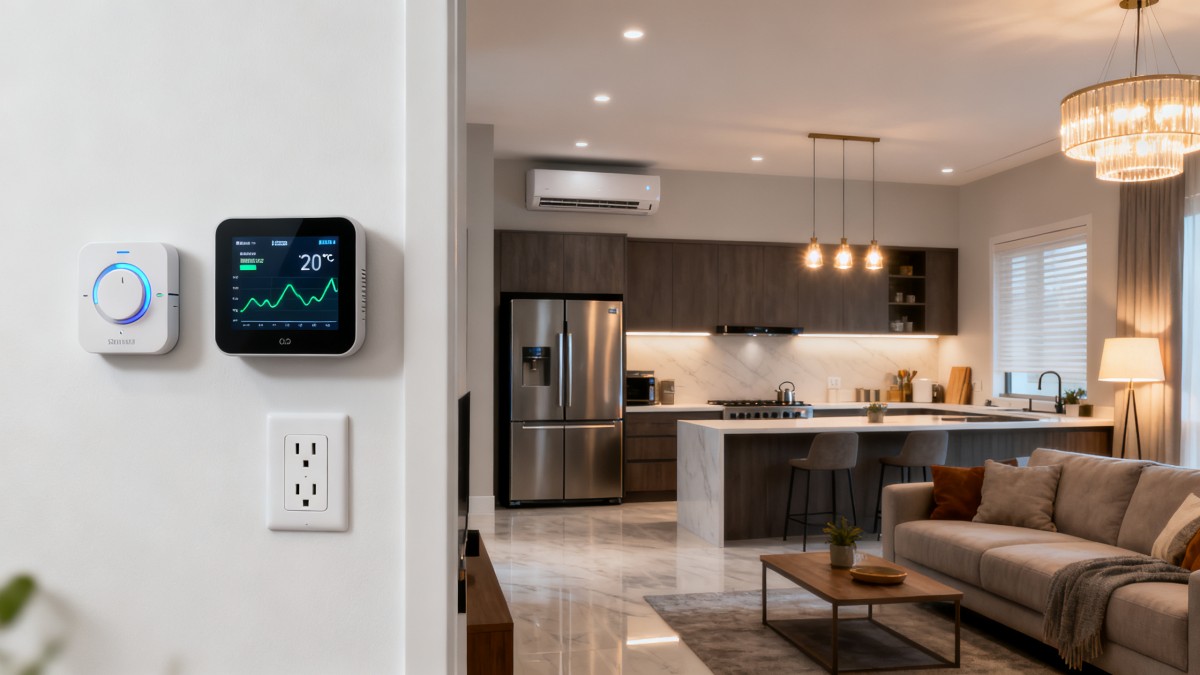
A smart home should lower utility bills, not quietly increase them.
Yet many home automation systems do the opposite.
The problem is rarely the technology itself.
More often, the issue comes from poor setup, weak routines, and devices solving the wrong problem.
That matters because home automation works best when it matches real behavior inside the house.
If it adds constant background activity, energy use can climb without anyone noticing.
Understanding these common mistakes helps cut waste, improve comfort, and make home automation genuinely useful.
Why Home Automation Sometimes Increases Energy Use
Home automation promises convenience, control, and better efficiency.
But convenience can hide inefficient habits.
For example, smart lights may stay on longer because turning them off no longer feels urgent.
A connected thermostat can also waste energy if schedules never match the household routine.
In many homes, the biggest cost increase comes from automation without measurement.
People install devices, create scenes, and add sensors, but never check whether power use actually drops.
That turns home automation into a comfort upgrade instead of an efficiency tool.
Mistake 1: Automating Everything Instead of the Biggest Loads
One of the most common home automation mistakes is focusing on the wrong devices.
People often start with bulbs, speakers, and decorative gadgets.
Those devices matter, but they rarely drive the biggest bills.
Heating, cooling, water heating, major appliances, and standby electronics usually have a much larger impact.
If a home automation setup ignores these loads, savings stay small.
In some cases, added smart devices raise total consumption through constant network activity and idle power draw.
A better approach is simple:
- Start with HVAC scheduling and temperature zoning.
- Add smart plugs to high-standby equipment.
- Monitor water heaters, laundry cycles, and kitchen appliances.
- Then automate lighting where occupancy patterns are predictable.
This order gives home automation a stronger financial return.
Mistake 2: Using Bad Thermostat Schedules
A smart thermostat can lower energy use, but only when its schedule reflects real life.
This is where many home automation setups fail.
Some homes keep aggressive comfort settings all day.
Others create overlapping automations that keep heating and cooling active longer than needed.
Another issue is relying too heavily on geofencing.
If one person leaves while others stay home, the system may switch modes at the wrong time.
That creates discomfort first, then manual overrides, then more energy waste.
To fix this, review thermostat rules every season.
- Set realistic occupied and unoccupied temperatures.
- Use occupancy data only where it is reliable.
- Avoid duplicate routines from apps, hubs, and voice assistants.
- Check monthly reports to confirm that runtime is falling.
In practical terms, thermostat logic is often the center of efficient home automation.
Mistake 3: Poor Sensor Placement
Sensors are small, but they influence major decisions.
A motion sensor facing a sunny window may trigger lights at the wrong time.
A temperature sensor near vents, ovens, or exterior doors can misread room conditions.
When that happens, home automation makes bad decisions very quickly.
Lighting can stay on too long.
Cooling can run for a room that only feels warm because of direct sunlight.
Presence-based routines can also fail if sensors cannot detect quiet activity like reading or watching television.
The fix is not more devices.
It is better placement, better testing, and simpler logic.
- Test sensors for one week before building permanent routines.
- Place temperature sensors away from heat sources and drafts.
- Use timeout settings that match actual room behavior.
- Combine motion data with time-of-day rules when needed.
Mistake 4: Ignoring Standby Power and Device Sprawl
Another hidden issue is device sprawl.
Many home automation systems grow one purchase at a time.
Soon there are hubs, bridges, cameras, displays, plugs, switches, and repeaters running all day.
Each device may use only a little electricity.
Together, they can erase part of the expected savings.
This is especially true when smart plugs control low-energy devices but consume almost as much power themselves.
A cleaner home automation strategy uses fewer, more capable devices.
Before adding new hardware, ask whether the device reduces a meaningful load.
Also check whether an existing platform can already handle the task.
Mistake 5: Creating Convenience Scenes That Run Too Long
Scenes are one of the most attractive parts of home automation.
They can turn on lights, music, heating, blinds, and displays with one command.
But convenience scenes often become energy traps.
A “movie night” routine may keep accent lighting active for hours.
A “morning comfort” scene may preheat or precool rooms earlier than necessary.
Over time, these small choices add up.
The smarter move is to build scenes with shutoff conditions.
Every useful scene should answer three questions:
- What starts it?
- What stops it?
- What happens if nobody manually turns it off?
That simple review makes home automation more disciplined and less expensive.
Mistake 6: Never Reviewing Energy Data
The biggest mistake may be skipping measurement entirely.
Without data, home automation becomes a guess.
Many platforms provide energy dashboards, device histories, and automation logs.
Yet these tools are often ignored after installation.
From a practical standpoint, this is where real savings are either proven or lost.
Check utility bills, smart meter trends, and device-level reports every month.
Look for rising overnight loads, unusual HVAC runtime, and devices that stay active during empty hours.
If home automation is working well, energy patterns should become more predictable.
If patterns keep drifting upward, the setup needs adjustment.
A Simple Home Automation Checklist That Protects Savings
A strong setup does not need to be complicated.
It needs clear priorities and regular review.
- Automate the highest energy loads first.
- Use thermostat schedules based on actual occupancy.
- Test sensors before trusting them.
- Reduce duplicate devices and idle hardware.
- Add shutoff logic to every major scene.
- Track energy data and adjust monthly.
This checklist keeps home automation aligned with the original goal: lower bills with better comfort.
Final Takeaway
Home automation should make a house more responsive, not more wasteful.
When energy costs rise, the cause is often hidden in schedules, sensors, scenes, and unnecessary devices.
The good news is that most of these mistakes are fixable.
Review the setup, simplify what does not help, and focus on the systems that use the most power.
That is how home automation becomes a practical tool for comfort, control, and real energy savings.
News Recommendations
 How to compare hotel aroma diffuser wholesale options by coverage area
![51a6ab95581761cc26f4318be6520c15]()
Aris Katos
Future of Carbide Coatings
 How to prevent O-rings and seals from failing in food equipment
![51a6ab95581761cc26f4318be6520c15]()
Aris Katos
Future of Carbide Coatings
 How to compare commercial linear light wholesale quotes accurately
![51a6ab95581761cc26f4318be6520c15]()
Aris Katos
Future of Carbide Coatings
 How to verify international standards compliance for Middle East exports
![51a6ab95581761cc26f4318be6520c15]()
Aris Katos
Future of Carbide Coatings
 How to select laboratory instruments for reproducible test results
![51a6ab95581761cc26f4318be6520c15]()
Aris Katos
Future of Carbide Coatings
 When does a sheet metal prototype reveal design flaws early?
![51a6ab95581761cc26f4318be6520c15]()
Aris Katos
Future of Carbide Coatings
 When PE air column bags reduce damage in e-commerce fulfillment
![51a6ab95581761cc26f4318be6520c15]()
Aris Katos
Future of Carbide Coatings
 How energy-efficient design reduces operating costs in retail lighting
![51a6ab95581761cc26f4318be6520c15]()
Aris Katos
Future of Carbide Coatings
 When commercial aluminum storefronts make sense for a retail renovation
![51a6ab95581761cc26f4318be6520c15]()
Aris Katos
Future of Carbide Coatings
 What makes LED lights durable in high-use commercial spaces?
![51a6ab95581761cc26f4318be6520c15]()
Aris Katos
Future of Carbide Coatings
 Which industry categories offer the strongest export potential in Latin America?
![51a6ab95581761cc26f4318be6520c15]()
Aris Katos
Future of Carbide Coatings
 How to choose an ultra bright waterproof window display for storefronts
![51a6ab95581761cc26f4318be6520c15]()
Aris Katos
Future of Carbide Coatings
 How to verify suppliers on a trade portal for global sourcing
![51a6ab95581761cc26f4318be6520c15]()
Aris Katos
Future of Carbide Coatings
 How RoHS requirements should be stated in product specifications
![51a6ab95581761cc26f4318be6520c15]()
Aris Katos
Future of Carbide Coatings
 What affects the lead time for custom retail counter displays?
![51a6ab95581761cc26f4318be6520c15]()
Aris Katos
Future of Carbide Coatings
 What consumer packaging USA importers need to verify before ordering
![51a6ab95581761cc26f4318be6520c15]()
Aris Katos
Future of Carbide Coatings
 How commercial spaces interiors shape customer dwell time
![51a6ab95581761cc26f4318be6520c15]()
Aris Katos
Future of Carbide Coatings
 How LED commercial lighting design reduces glare in retail spaces
![51a6ab95581761cc26f4318be6520c15]()
Aris Katos
Future of Carbide Coatings
 How industrial technology information improves RFID inventory accuracy
![51a6ab95581761cc26f4318be6520c15]()
Aris Katos
Future of Carbide Coatings
 When drip garden watering systems make more sense than sprinklers
![51a6ab95581761cc26f4318be6520c15]()
Aris Katos
Future of Carbide Coatings
 When category comparison improves sourcing for industrial applications
![51a6ab95581761cc26f4318be6520c15]()
Aris Katos
Future of Carbide Coatings
 Industrial application guidance for selecting the right LED lighting
![51a6ab95581761cc26f4318be6520c15]()
Aris Katos
Future of Carbide Coatings
 Which commercial architecture standards apply to European retail fit-outs?
![51a6ab95581761cc26f4318be6520c15]()
Aris Katos
Future of Carbide Coatings
 How to verify FDA requirements for maternity care products
![51a6ab95581761cc26f4318be6520c15]()
Aris Katos
Future of Carbide Coatings
 How to verify BPA-free claims for food-contact products
![51a6ab95581761cc26f4318be6520c15]()
Aris Katos
Future of Carbide Coatings
 When does a European wholesale supplier suit modular office projects?
![51a6ab95581761cc26f4318be6520c15]()
Aris Katos
Future of Carbide Coatings
 When consumer ecosystem solutions improve the in-store shopping journey
![51a6ab95581761cc26f4318be6520c15]()
Aris Katos
Future of Carbide Coatings
 How a commercial developers network can reduce site selection risk
![51a6ab95581761cc26f4318be6520c15]()
Aris Katos
Future of Carbide Coatings
 How clear purchasing specifications prevent costly supplier deviations
![51a6ab95581761cc26f4318be6520c15]()
Aris Katos
Future of Carbide Coatings
 What an ISTA drop test lab checks before your packaging ships
![51a6ab95581761cc26f4318be6520c15]()
Aris Katos
Future of Carbide Coatings
 Which commercial furniture standards apply to workplace seating?
![51a6ab95581761cc26f4318be6520c15]()
Aris Katos
Future of Carbide Coatings
 How to evaluate smart lighting module OEM compatibility before sampling
![51a6ab95581761cc26f4318be6520c15]()
Aris Katos
Future of Carbide Coatings
 How to assess whether sustainable technology delivers real impact
![51a6ab95581761cc26f4318be6520c15]()
Aris Katos
Future of Carbide Coatings
 How to assess an OEM supplier’s quality control before ordering
![51a6ab95581761cc26f4318be6520c15]()
Aris Katos
Future of Carbide Coatings
 How consumer ecosystem solutions data can improve retail personalization
![51a6ab95581761cc26f4318be6520c15]()
Aris Katos
Future of Carbide Coatings
 When does consumer packaging design justify a higher product price?
![51a6ab95581761cc26f4318be6520c15]()
Aris Katos
Future of Carbide Coatings
 Supermarket Fixture Installation: Planning Layouts, Wiring, and Handover
![51a6ab95581761cc26f4318be6520c15]()
Aris Katos
Future of Carbide Coatings
 Automated Lighting and Smart Lighting Control in Bergerac: Key Project Considerations
![51a6ab95581761cc26f4318be6520c15]()
Aris Katos
Future of Carbide Coatings
 Segment Streetlight Controllers: Choosing Control Modes for Urban Roads
![51a6ab95581761cc26f4318be6520c15]()
Aris Katos
Future of Carbide Coatings