Mining Equipment Selection: Key Specs That Affect Uptime
Time
Click Count
Mining Equipment Selection: Key Specs That Affect Uptime
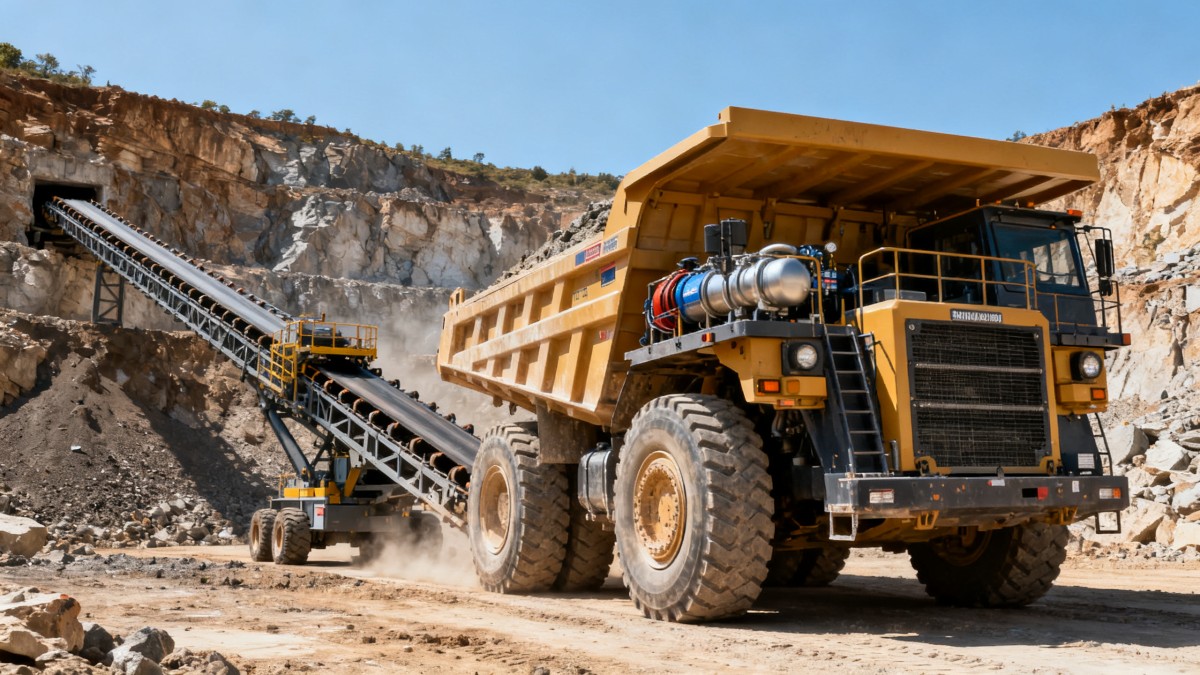
Selecting the right Industrial & Manufacturing equipment for mining industry operations is rarely about one headline specification.
In practice, uptime depends on how the machine performs across load, dust, heat, vibration, and maintenance pressure.
That is why equipment selection should focus on the specs that shape reliability hour after hour, not just peak output on paper.
For Industrial & Manufacturing equipment for mining industry use, small specification gaps often turn into major downtime costs.
A machine with strong capacity but poor service access can lose more production than a slightly smaller unit with faster maintenance cycles.
This guide breaks down the technical factors that matter most when comparing loaders, haul trucks, crushers, conveyors, pumps, and support systems.
The goal is simple: make equipment decisions that protect production continuity, operator efficiency, and site safety.
Start with duty cycle, not brochure capacity
One common mistake in mining equipment selection is choosing based on rated capacity alone.
What matters more is sustained performance across the actual duty cycle.
That includes shift length, haul distance, material density, incline, idle time, and restart frequency.
For Industrial & Manufacturing equipment for mining industry applications, duty cycle mismatch is a direct uptime risk.
An oversized machine may burn fuel inefficiently and wear components faster under partial load.
An undersized unit usually works at its limit, which increases heat, stress, and unplanned stoppages.
Key questions to ask
- What is the real hourly throughput target?
- How often does the machine run near maximum load?
- Does the site require frequent starts, stops, or reversals?
- How much buffer exists if one unit goes offline?
These answers give more useful guidance than a single payload number.
Powertrain and torque curve shape real-world productivity
Engine power matters, but torque delivery often matters more in rough mining conditions.
A strong torque curve supports climbing, digging, pushing, and recovery from heavy resistance.
For Industrial & Manufacturing equipment for mining industry fleets, smooth low-end torque helps maintain stable cycle times.
That becomes more important on wet haul roads, loose rock, and uneven grades.
Transmission design also affects uptime. Look at shift logic, thermal behavior, and rebuild intervals.
If a machine loses efficiency under repeated load changes, production drift usually appears before failure data does.
Useful specs to compare
- Net power at operating altitude
- Peak torque and torque rise
- Cooling reserve at full load
- Transmission temperature limits
- Expected component life in heavy-duty cycles
Structural durability and wear resistance decide maintenance frequency
From recent market changes, a clearer signal is the rising cost of downtime linked to wear parts.
Abrasion, impact, and corrosion can reduce uptime faster than a power shortfall.
That is especially true for chutes, buckets, liners, crusher chambers, chains, rollers, and slurry handling systems.
When reviewing Industrial & Manufacturing equipment for mining industry projects, material specification deserves close attention.
Base steel grade, hardfacing quality, liner thickness, and coating system all shape service life.
A machine may look competitive upfront, yet consume its savings through frequent replacement cycles.
What to verify before buying
- Wear surface material and hardness ratings.
- Frame reinforcement at high-stress points.
- Field data for liner, tooth, and seal life.
- Corrosion protection in wet or chemical exposure zones.
Ask for operating examples in ore conditions that actually resemble your site.
Cooling, filtration, and sealing are uptime specs in disguise
Mining environments punish machines through dust, mud, heat, and water intrusion.
Because of that, secondary systems often determine whether core components survive their expected service interval.
For Industrial & Manufacturing equipment for mining industry performance, filtration efficiency is not a minor checkbox.
Air intake design, hydraulic oil cleanliness, and bearing seals all affect how often failures appear.
The same logic applies to cooling packages. If heat rejection is marginal, uptime will always remain fragile.
Look closely at these details
- Radiator sizing for peak ambient temperature
- Auto-reversing fan availability
- Ingress protection for electrical systems
- Multi-stage filtration and service intervals
- Seal design in washdown or slurry zones
These are the specs that quietly protect uptime across long shifts.
Maintenance access can outperform extra capacity
In day-to-day operations, easy service access often has a larger impact than a small performance gain.
That may sound basic, but it directly influences inspection quality and repair speed.
Industrial & Manufacturing equipment for mining industry use should be evaluated for maintainability as early as technical fit.
Can technicians reach filters, pumps, belts, lubrication points, and electrical panels without disassembly delays?
Can routine inspections be done safely at shift change without extended lockout time?
This also affects operator discipline. If checks are difficult, they tend to be skipped under production pressure.
Good maintenance design usually includes
- Ground-level service points
- Clear panel labeling
- Fast-access wear components
- Centralized lubrication systems
- Safe isolation for electrical and hydraulic work
Monitoring, diagnostics, and parts support reduce decision risk
Modern mining equipment selection increasingly includes digital support, not just mechanical specification.
A machine that reports temperature, vibration, pressure, and fault trends gives earlier warning of developing issues.
For Industrial & Manufacturing equipment for mining industry procurement, this visibility helps turn reactive repairs into planned maintenance.
Diagnostics also matter when remote sites have limited technical staff.
Still, telemetry alone is not enough. Spare parts availability and supplier response time remain decisive.
A well-instrumented machine can still sit idle if critical parts take weeks to arrive.
How to compare options without getting lost in spec sheets
A practical evaluation method keeps decisions grounded in operating reality.
That matters because Industrial & Manufacturing equipment for mining industry purchases usually carry long operating consequences.
Instead of comparing every data point equally, weight the specs that most directly influence uptime.
A simple selection framework
- Define the actual duty cycle and environmental conditions.
- Shortlist machines that meet throughput without constant overload.
- Score durability, cooling, filtration, and service access.
- Check supplier data against real field references.
- Review parts support, diagnostics, and training quality.
- Estimate downtime cost, not only purchase price.
This approach usually leads to better equipment decisions than chasing the highest published rating.
Final selection decisions should protect uptime first
The best mining equipment selection choices are rarely the most aggressive on paper.
They are the ones that stay productive under real site stress.
When evaluating Industrial & Manufacturing equipment for mining industry use, focus on sustained load performance, wear life, thermal control, maintainability, and support readiness.
Those specifications shape uptime more than headline power alone.
In real operations, the smarter choice is the machine that keeps working predictably, can be serviced quickly, and fits the site without compromise.
Use that lens during selection, and equipment investment becomes a production safeguard rather than a maintenance gamble.
News Recommendations
 How to prevent O-rings and seals from failing in food equipment
![51a6ab95581761cc26f4318be6520c15]()
Aris Katos
Future of Carbide Coatings
 How to compare commercial linear light wholesale quotes accurately
![51a6ab95581761cc26f4318be6520c15]()
Aris Katos
Future of Carbide Coatings
 How to verify international standards compliance for Middle East exports
![51a6ab95581761cc26f4318be6520c15]()
Aris Katos
Future of Carbide Coatings
 How to select laboratory instruments for reproducible test results
![51a6ab95581761cc26f4318be6520c15]()
Aris Katos
Future of Carbide Coatings
 When does a sheet metal prototype reveal design flaws early?
![51a6ab95581761cc26f4318be6520c15]()
Aris Katos
Future of Carbide Coatings
 When PE air column bags reduce damage in e-commerce fulfillment
![51a6ab95581761cc26f4318be6520c15]()
Aris Katos
Future of Carbide Coatings
 How energy-efficient design reduces operating costs in retail lighting
![51a6ab95581761cc26f4318be6520c15]()
Aris Katos
Future of Carbide Coatings
 When commercial aluminum storefronts make sense for a retail renovation
![51a6ab95581761cc26f4318be6520c15]()
Aris Katos
Future of Carbide Coatings
 What makes LED lights durable in high-use commercial spaces?
![51a6ab95581761cc26f4318be6520c15]()
Aris Katos
Future of Carbide Coatings
 Which industry categories offer the strongest export potential in Latin America?
![51a6ab95581761cc26f4318be6520c15]()
Aris Katos
Future of Carbide Coatings
 How to choose an ultra bright waterproof window display for storefronts
![51a6ab95581761cc26f4318be6520c15]()
Aris Katos
Future of Carbide Coatings
 How to verify suppliers on a trade portal for global sourcing
![51a6ab95581761cc26f4318be6520c15]()
Aris Katos
Future of Carbide Coatings
 How RoHS requirements should be stated in product specifications
![51a6ab95581761cc26f4318be6520c15]()
Aris Katos
Future of Carbide Coatings
 What affects the lead time for custom retail counter displays?
![51a6ab95581761cc26f4318be6520c15]()
Aris Katos
Future of Carbide Coatings
 What consumer packaging USA importers need to verify before ordering
![51a6ab95581761cc26f4318be6520c15]()
Aris Katos
Future of Carbide Coatings
 How commercial spaces interiors shape customer dwell time
![51a6ab95581761cc26f4318be6520c15]()
Aris Katos
Future of Carbide Coatings
 How LED commercial lighting design reduces glare in retail spaces
![51a6ab95581761cc26f4318be6520c15]()
Aris Katos
Future of Carbide Coatings
 How industrial technology information improves RFID inventory accuracy
![51a6ab95581761cc26f4318be6520c15]()
Aris Katos
Future of Carbide Coatings
 When drip garden watering systems make more sense than sprinklers
![51a6ab95581761cc26f4318be6520c15]()
Aris Katos
Future of Carbide Coatings
 When category comparison improves sourcing for industrial applications
![51a6ab95581761cc26f4318be6520c15]()
Aris Katos
Future of Carbide Coatings
 Industrial application guidance for selecting the right LED lighting
![51a6ab95581761cc26f4318be6520c15]()
Aris Katos
Future of Carbide Coatings
 Which commercial architecture standards apply to European retail fit-outs?
![51a6ab95581761cc26f4318be6520c15]()
Aris Katos
Future of Carbide Coatings
 How to verify FDA requirements for maternity care products
![51a6ab95581761cc26f4318be6520c15]()
Aris Katos
Future of Carbide Coatings
 How to verify BPA-free claims for food-contact products
![51a6ab95581761cc26f4318be6520c15]()
Aris Katos
Future of Carbide Coatings
 When does a European wholesale supplier suit modular office projects?
![51a6ab95581761cc26f4318be6520c15]()
Aris Katos
Future of Carbide Coatings
 When consumer ecosystem solutions improve the in-store shopping journey
![51a6ab95581761cc26f4318be6520c15]()
Aris Katos
Future of Carbide Coatings
 How a commercial developers network can reduce site selection risk
![51a6ab95581761cc26f4318be6520c15]()
Aris Katos
Future of Carbide Coatings
 How clear purchasing specifications prevent costly supplier deviations
![51a6ab95581761cc26f4318be6520c15]()
Aris Katos
Future of Carbide Coatings
 What an ISTA drop test lab checks before your packaging ships
![51a6ab95581761cc26f4318be6520c15]()
Aris Katos
Future of Carbide Coatings
 Which commercial furniture standards apply to workplace seating?
![51a6ab95581761cc26f4318be6520c15]()
Aris Katos
Future of Carbide Coatings
 How to evaluate smart lighting module OEM compatibility before sampling
![51a6ab95581761cc26f4318be6520c15]()
Aris Katos
Future of Carbide Coatings
 How to assess whether sustainable technology delivers real impact
![51a6ab95581761cc26f4318be6520c15]()
Aris Katos
Future of Carbide Coatings
 How to assess an OEM supplier’s quality control before ordering
![51a6ab95581761cc26f4318be6520c15]()
Aris Katos
Future of Carbide Coatings
 How consumer ecosystem solutions data can improve retail personalization
![51a6ab95581761cc26f4318be6520c15]()
Aris Katos
Future of Carbide Coatings
 When does consumer packaging design justify a higher product price?
![51a6ab95581761cc26f4318be6520c15]()
Aris Katos
Future of Carbide Coatings
 Supermarket Fixture Installation: Planning Layouts, Wiring, and Handover
![51a6ab95581761cc26f4318be6520c15]()
Aris Katos
Future of Carbide Coatings
 Automated Lighting and Smart Lighting Control in Bergerac: Key Project Considerations
![51a6ab95581761cc26f4318be6520c15]()
Aris Katos
Future of Carbide Coatings
 Segment Streetlight Controllers: Choosing Control Modes for Urban Roads
![51a6ab95581761cc26f4318be6520c15]()
Aris Katos
Future of Carbide Coatings
 IEC 62471-2 Explained: How to Assess Photobiological Risks in LED Lighting
![51a6ab95581761cc26f4318be6520c15]()
Aris Katos
Future of Carbide Coatings