Welded Steel Support Frame Load Limits and Design Checks
Time
Click Count
Load limits in a welded steel support frame are not just calculation targets. They shape safety, service life, compliance, and the credibility of every fixture, workstation, rack, or equipment base used in commercial environments.
That matters even more where retail hardware, smart devices, and modular interiors must perform consistently across regions, suppliers, and changing operating conditions.
In that context, welded frame evaluation sits at the intersection of structural engineering, sourcing control, and benchmarking discipline.
For platforms such as G-BCE, which compare commercial hardware against global standards and practical usage demands, the welded steel support frame becomes a useful reference point for judging whether a product is truly deployment-ready.
Why load limits deserve closer attention
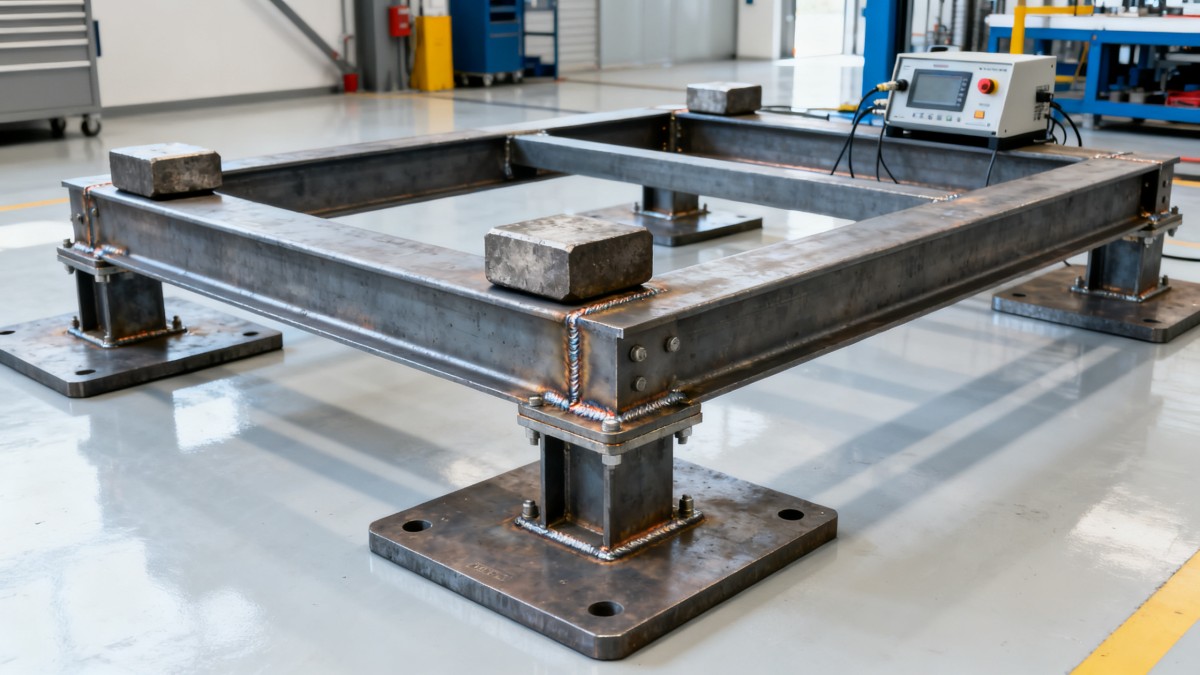
A frame may look robust and still fail a basic design check. Visual mass does not guarantee adequate capacity, stiffness, or fatigue resistance.
In stores, fulfillment points, display systems, office furniture, kiosks, and back-of-house equipment, support frames often carry more than static weight.
They also absorb vibration, impact, uneven loading, repeated repositioning, and occasional misuse. Those factors can reduce the useful margin between rated load and real service demand.
This is why a welded steel support frame should be evaluated as a structural system, not as a collection of tubes and weld beads.
What a welded steel support frame really includes
At a basic level, the frame consists of steel members, welded joints, connection points, support feet or anchors, and interfaces with the supported item.
Its load limit depends on the weakest governing condition, not the strongest visible element.
That governing condition may be member buckling, weld throat failure, local deformation at a bracket, anchor pull-out, excessive deflection, or instability from eccentric loading.
In practical reviews, capacity should therefore be separated into several questions.
- What is the intended load type: static, dynamic, impact, or cyclic?
- How is the load introduced into the frame?
- Where does the frame transfer force to the floor, wall, or adjacent assembly?
- Which limit state controls the allowable rating?
That structure of thinking is often more valuable than a single headline load number.
The design checks that usually matter most
A sound review starts with material grade and section geometry. Steel strength, wall thickness, and section shape influence both direct capacity and stiffness.
Material substitution is a common source of hidden risk. Nominally similar steel may differ in yield strength, toughness, coating compatibility, and manufacturing consistency.
Member strength and stability
Compression members should be checked for buckling, especially in tall or slender frames. Long unsupported spans can reduce capacity well before steel yield is reached.
Bending checks are equally important where shelves, cantilever arms, equipment trays, or overhanging monitors create moment demands.
Weld adequacy
A welded steel support frame is often judged by weld appearance, but appearance alone is incomplete. Size, continuity, penetration, fit-up quality, and heat input control all affect performance.
Poorly executed welds can create stress concentrations, distortion, and reduced fatigue life, even when the base steel is suitable.
Deflection and serviceability
Frames do not need to collapse to fail in service. Excessive deflection can misalign doors, screens, sensors, drawers, lighting modules, or packaging stations.
In commercial applications, serviceability often drives user complaints before ultimate strength becomes an issue.
Base conditions and anchorage
Load ratings are only meaningful when support conditions match the test or design assumption. A rigidly anchored base behaves differently from a frame standing on adjustable feet.
Floor flatness, substrate strength, and anchor spacing can shift the real load path significantly.
Where industry expectations are rising
Across commercial furniture, smart retail hardware, signage systems, and logistics fixtures, buyers increasingly expect traceable performance data rather than generic load claims.
That shift reflects broader changes in procurement. Products now move through international programs where aesthetic standards, durability targets, and compliance benchmarks must align.
G-BCE’s cross-sector approach is useful here because structural reliability rarely stands alone. It affects maintenance planning, installation quality, warranty exposure, and user experience.
A welded steel support frame used beneath a POS terminal, display fixture, office system, or packaging line has to support hardware performance as much as physical weight.
How to interpret a stated load rating
A published number should never be accepted without context. The first question is whether the rating refers to ultimate failure, allowable working load, or tested operational load.
The second question is whether the load was centered, distributed, or applied at the most unfavorable practical point.
A welded steel support frame rated for 500 kilograms under evenly distributed loading may behave very differently under a concentrated off-center machine load.
Documentation should ideally show assumptions, safety factors, test setup, and any exclusions such as seismic restraint, transport shock, or caster movement.
Signals that a rating needs deeper review
- No distinction between static and dynamic load
- No drawing reference tied to the rating
- No mention of weld inspection or quality control
- No serviceability limit, only failure limit
- No explanation of base support assumptions
Useful checks during specification and benchmarking
In real sourcing and validation work, the best results come from combining drawings, test evidence, manufacturing detail, and intended use conditions.
That avoids the common mistake of comparing two frames only by steel thickness or quoted maximum load.
A concise review framework can help.
- Confirm steel grade, wall thickness, and corrosion protection.
- Review section geometry and unsupported lengths.
- Check weld symbols against actual fabrication practice.
- Verify load path through brackets, plates, and anchors.
- Ask for deflection criteria under working load.
- Compare testing with the real installation condition.
- Look for alignment with relevant standards such as UL, CE, or BIFMA where applicable.
This kind of benchmarking is especially relevant when the welded steel support frame is part of a broader commercial system, not an isolated metal component.
From structural check to business decision
The value of design checks is not limited to engineering assurance. Better frame validation improves installation predictability, lifecycle cost control, and cross-market product consistency.
It also supports cleaner communication between design teams, fabricators, testing bodies, and commercial specifiers.
When reviewed properly, a welded steel support frame reveals how well a product has been developed, not just how heavily it can be loaded in theory.
The next step is usually practical: map the actual use case, define realistic load conditions, request evidence tied to those conditions, and compare options using the same structural criteria.
That approach creates a clearer basis for approval, redesign, or supplier benchmarking, especially in commercial environments where performance has to be both measurable and repeatable.
News Recommendations
 How to select laboratory instruments for reproducible test results
![51a6ab95581761cc26f4318be6520c15]()
Aris Katos
Future of Carbide Coatings
 When does a sheet metal prototype reveal design flaws early?
![51a6ab95581761cc26f4318be6520c15]()
Aris Katos
Future of Carbide Coatings
 When PE air column bags reduce damage in e-commerce fulfillment
![51a6ab95581761cc26f4318be6520c15]()
Aris Katos
Future of Carbide Coatings
 How energy-efficient design reduces operating costs in retail lighting
![51a6ab95581761cc26f4318be6520c15]()
Aris Katos
Future of Carbide Coatings
 When commercial aluminum storefronts make sense for a retail renovation
![51a6ab95581761cc26f4318be6520c15]()
Aris Katos
Future of Carbide Coatings
 What makes LED lights durable in high-use commercial spaces?
![51a6ab95581761cc26f4318be6520c15]()
Aris Katos
Future of Carbide Coatings
 Which industry categories offer the strongest export potential in Latin America?
![51a6ab95581761cc26f4318be6520c15]()
Aris Katos
Future of Carbide Coatings
 How to choose an ultra bright waterproof window display for storefronts
![51a6ab95581761cc26f4318be6520c15]()
Aris Katos
Future of Carbide Coatings
 How to verify suppliers on a trade portal for global sourcing
![51a6ab95581761cc26f4318be6520c15]()
Aris Katos
Future of Carbide Coatings
 How RoHS requirements should be stated in product specifications
![51a6ab95581761cc26f4318be6520c15]()
Aris Katos
Future of Carbide Coatings
 What affects the lead time for custom retail counter displays?
![51a6ab95581761cc26f4318be6520c15]()
Aris Katos
Future of Carbide Coatings
 What consumer packaging USA importers need to verify before ordering
![51a6ab95581761cc26f4318be6520c15]()
Aris Katos
Future of Carbide Coatings
 How commercial spaces interiors shape customer dwell time
![51a6ab95581761cc26f4318be6520c15]()
Aris Katos
Future of Carbide Coatings
 How LED commercial lighting design reduces glare in retail spaces
![51a6ab95581761cc26f4318be6520c15]()
Aris Katos
Future of Carbide Coatings
 How industrial technology information improves RFID inventory accuracy
![51a6ab95581761cc26f4318be6520c15]()
Aris Katos
Future of Carbide Coatings
 When drip garden watering systems make more sense than sprinklers
![51a6ab95581761cc26f4318be6520c15]()
Aris Katos
Future of Carbide Coatings
 When category comparison improves sourcing for industrial applications
![51a6ab95581761cc26f4318be6520c15]()
Aris Katos
Future of Carbide Coatings
 Industrial application guidance for selecting the right LED lighting
![51a6ab95581761cc26f4318be6520c15]()
Aris Katos
Future of Carbide Coatings
 Which commercial architecture standards apply to European retail fit-outs?
![51a6ab95581761cc26f4318be6520c15]()
Aris Katos
Future of Carbide Coatings
 How to verify FDA requirements for maternity care products
![51a6ab95581761cc26f4318be6520c15]()
Aris Katos
Future of Carbide Coatings
 How to verify BPA-free claims for food-contact products
![51a6ab95581761cc26f4318be6520c15]()
Aris Katos
Future of Carbide Coatings
 When does a European wholesale supplier suit modular office projects?
![51a6ab95581761cc26f4318be6520c15]()
Aris Katos
Future of Carbide Coatings
 When consumer ecosystem solutions improve the in-store shopping journey
![51a6ab95581761cc26f4318be6520c15]()
Aris Katos
Future of Carbide Coatings
 How a commercial developers network can reduce site selection risk
![51a6ab95581761cc26f4318be6520c15]()
Aris Katos
Future of Carbide Coatings
 How clear purchasing specifications prevent costly supplier deviations
![51a6ab95581761cc26f4318be6520c15]()
Aris Katos
Future of Carbide Coatings
 What an ISTA drop test lab checks before your packaging ships
![51a6ab95581761cc26f4318be6520c15]()
Aris Katos
Future of Carbide Coatings
 Which commercial furniture standards apply to workplace seating?
![51a6ab95581761cc26f4318be6520c15]()
Aris Katos
Future of Carbide Coatings
 How to evaluate smart lighting module OEM compatibility before sampling
![51a6ab95581761cc26f4318be6520c15]()
Aris Katos
Future of Carbide Coatings
 How to assess whether sustainable technology delivers real impact
![51a6ab95581761cc26f4318be6520c15]()
Aris Katos
Future of Carbide Coatings
 How to assess an OEM supplier’s quality control before ordering
![51a6ab95581761cc26f4318be6520c15]()
Aris Katos
Future of Carbide Coatings
 How consumer ecosystem solutions data can improve retail personalization
![51a6ab95581761cc26f4318be6520c15]()
Aris Katos
Future of Carbide Coatings
 When does consumer packaging design justify a higher product price?
![51a6ab95581761cc26f4318be6520c15]()
Aris Katos
Future of Carbide Coatings
 Supermarket Fixture Installation: Planning Layouts, Wiring, and Handover
![51a6ab95581761cc26f4318be6520c15]()
Aris Katos
Future of Carbide Coatings
 Automated Lighting and Smart Lighting Control in Bergerac: Key Project Considerations
![51a6ab95581761cc26f4318be6520c15]()
Aris Katos
Future of Carbide Coatings
 Segment Streetlight Controllers: Choosing Control Modes for Urban Roads
![51a6ab95581761cc26f4318be6520c15]()
Aris Katos
Future of Carbide Coatings
 IEC 62471-2 Explained: How to Assess Photobiological Risks in LED Lighting
![51a6ab95581761cc26f4318be6520c15]()
Aris Katos
Future of Carbide Coatings
 Food Grade Packaging Requirements by Product Type, Temperature, and Contact Risk
![51a6ab95581761cc26f4318be6520c15]()
Aris Katos
Future of Carbide Coatings
 Food Packaging Compliance Checklist: Tests, Records, and Labeling Before Shipment
![51a6ab95581761cc26f4318be6520c15]()
Aris Katos
Future of Carbide Coatings
 NSF Food Packaging Standards: When Certification Matters for Commercial Food Use
![51a6ab95581761cc26f4318be6520c15]()
Aris Katos
Future of Carbide Coatings