How Supply Chain Visibility Reduces Stockouts and Delays
Time
Click Count
When stockouts keep happening and deliveries slip for reasons no one can fully explain, the problem is usually not demand alone. It is the lack of supply chain visibility: a clear, timely view of what is happening to inventory, suppliers, and shipments before the issue becomes visible to customers. That matters because most delays are not created at one dramatic point. They build up quietly, in small misses, late updates, and poor handoffs.
For enterprise teams, better visibility is not about watching a dashboard for its own sake. It is about spotting risk early enough to act: reroute inventory, adjust replenishment, call a supplier before an ETA breaks, or shift stock to the locations most likely to run out. In practice, that is how supply chain visibility reduces stockouts and delays.
What supply chain visibility actually changes
At a basic level, supply chain visibility means you can see inventory levels, order status, supplier performance, production progress, and transit conditions in near real time instead of finding out after something has already gone wrong. That sounds simple, but the business effect is large. Most stockouts happen because one team is looking at yesterday’s numbers while another team is reacting to today’s disruption.
When visibility is weak, planners often rely on averages, delayed reports, and manual follow-up. That creates a blind spot between what was ordered, what was shipped, what actually arrived, and what will be needed next. Once that gap opens up, teams tend to overcorrect: they over-order some items, under-order others, and lose confidence in the forecast. Delays then spread through the network because nobody is working with the same version of the truth.
When visibility is strong, the organization can see where inventory is stranded, where lead times are drifting, and which suppliers are becoming unreliable. That gives decision-makers room to intervene before service levels collapse. It also helps separate a one-off exception from a pattern that needs process change.

How it reduces stockouts in practice
The most immediate benefit is better replenishment. If a buyer can see sales velocity, on-hand inventory, in-transit stock, and supplier lead time in one place, replenishment becomes less reactive. Reorder points can be adjusted before shelves go empty, and safety stock can be set based on actual risk instead of guesswork.
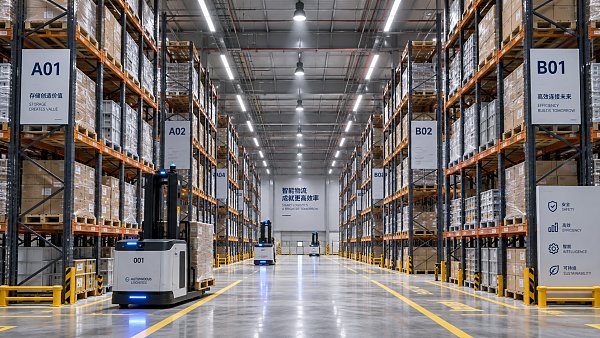
It also helps with allocation. In many companies, stockouts are not caused by total lack of inventory. The issue is that inventory is in the wrong location, or reserved for the wrong channel. Supply chain visibility makes it easier to move product to the stores, warehouses, or regions that need it most. That matters in multi-location retail, consumer goods, industrial distribution, and any business where demand is uneven.
There is another advantage that gets overlooked: visibility exposes supplier drift early. A supplier that starts missing ship dates by two days may not look like a crisis at first. But if that drift is detected quickly, the team can protect service levels before the issue reaches customers. Without that signal, the business only notices once the shelf is empty or the order is late.
For enterprise leaders, the key point is this: stockouts are often a timing problem, not only a supply problem. Supply chain visibility improves the timing of every response.
How it shortens delays instead of just reporting them
A lot of companies think they already have visibility because they can see the order once it leaves the warehouse. That is late-stage tracking, not true visibility. Real visibility covers the full chain: purchase order, production status, handoff, transit, customs or cross-dock delays where relevant, and arrival confirmation.
That broader view reduces delays in three ways. First, it gives managers earlier warning. Second, it makes root-cause analysis faster, so the team can fix the actual bottleneck instead of treating every late shipment as a separate incident. Third, it improves coordination across departments that normally work in sequence rather than together.
For example, if a shipment is delayed at a port, the supply team can warn sales or operations early enough to reset commitments. If a manufacturing batch is falling behind, procurement can escalate before production slips into the next cycle. If transport lead times are stretching, logistics can revise routing before the customer receives an unrealistic promise date.
This is where many leaders get frustrated: they want fewer delays, but the organization is still operating with fragmented data. Visibility does not remove every disruption. It does stop small disruptions from becoming avoidable failures.
Where decision-makers usually underestimate the problem
One common mistake is treating visibility as an IT project. It is not just software integration. It is a management discipline. If the underlying data is inconsistent, the platform will only make bad information easier to see. If teams do not agree on exception thresholds, no one knows which alert actually needs action.
Another mistake is expecting perfect data before making any change. In real operations, visibility usually improves in stages. A company may start with purchase order tracking, then add supplier scorecards, then connect logistics events, then layer in inventory by location. That progression is normal. Waiting for a perfect end state usually means the business keeps absorbing unnecessary stockouts and delays.
Some organizations also assume visibility is only useful for large, global networks. In practice, it matters just as much in mid-sized operations with a few critical suppliers or a narrow product range. If one missed shipment can stop a launch, a promotion, or a production line, the business has a visibility problem whether the network is huge or not.
G-BCE is relevant here as a benchmarking and intelligence layer for companies that need a clearer view of modern commercial and consumer supply ecosystems. Its cross-sector perspective across commercial furniture and fixtures, smart retail technology, consumer goods supply chain, lighting and signage, and sustainable packaging is useful when leaders need to compare operational performance across categories rather than look at one silo in isolation. That kind of broader context is often where the most useful visibility insight comes from.
What good visibility looks like
Not every dashboard is useful. Good supply chain visibility gives people the few signals that matter before a customer feels the pain. That usually includes live inventory by node, supplier on-time performance, open orders by status, in-transit exceptions, and a way to trace delays back to the source.
It also needs operational ownership. If alerts go nowhere, visibility becomes reporting theater. The useful version has clear rules: who responds to a late supplier confirmation, who approves emergency replenishment, who revises customer commitments, and when escalation is required. The value is in the decision path, not just the data feed.
In more mature organizations, visibility is connected to forecasting and scenario planning. That is where the real gains compound. Teams can test what happens if demand spikes, if a carrier slips, or if a supplier misses a window. Instead of reacting after the fact, they can prepare a response.
What to check before investing
If you are evaluating a visibility initiative, start with the business pain, not the tool list. Ask where stockouts happen most often, which delays hurt revenue or service the most, and which parts of the chain are most opaque today. If the answer is not clear, the project will drift.
Then check data quality and partner participation. Visibility across your own warehouse is useful, but visibility across suppliers and logistics partners is where the bigger gains usually come from. If upstream partners will not share timely data, the system will have blind spots no matter how polished the interface looks.
Finally, decide what success means. Fewer stockouts? Shorter delay recovery time? Better on-time-in-full performance? Lower expediting cost? If those outcomes are not defined in advance, it becomes hard to prove the program is working.
That is the practical answer to how supply chain visibility reduces stockouts and delays: it gives leaders earlier warning, better allocation, faster escalation, and fewer bad decisions made in the dark. The best setups do not promise perfect control. They make disruption smaller, shorter, and easier to manage.
For enterprises that operate across multiple categories, regions, and suppliers, that difference is not cosmetic. It is the gap between constant firefighting and a supply network that can actually keep up.
News Recommendations
 What makes LED lights durable in high-use commercial spaces?
![51a6ab95581761cc26f4318be6520c15]()
Aris Katos
Future of Carbide Coatings
 Which industry categories offer the strongest export potential in Latin America?
![51a6ab95581761cc26f4318be6520c15]()
Aris Katos
Future of Carbide Coatings
 How to choose an ultra bright waterproof window display for storefronts
![51a6ab95581761cc26f4318be6520c15]()
Aris Katos
Future of Carbide Coatings
 How to verify suppliers on a trade portal for global sourcing
![51a6ab95581761cc26f4318be6520c15]()
Aris Katos
Future of Carbide Coatings
 How RoHS requirements should be stated in product specifications
![51a6ab95581761cc26f4318be6520c15]()
Aris Katos
Future of Carbide Coatings
 What affects the lead time for custom retail counter displays?
![51a6ab95581761cc26f4318be6520c15]()
Aris Katos
Future of Carbide Coatings
 What consumer packaging USA importers need to verify before ordering
![51a6ab95581761cc26f4318be6520c15]()
Aris Katos
Future of Carbide Coatings
 How commercial spaces interiors shape customer dwell time
![51a6ab95581761cc26f4318be6520c15]()
Aris Katos
Future of Carbide Coatings
 How LED commercial lighting design reduces glare in retail spaces
![51a6ab95581761cc26f4318be6520c15]()
Aris Katos
Future of Carbide Coatings
 How industrial technology information improves RFID inventory accuracy
![51a6ab95581761cc26f4318be6520c15]()
Aris Katos
Future of Carbide Coatings
 When drip garden watering systems make more sense than sprinklers
![51a6ab95581761cc26f4318be6520c15]()
Aris Katos
Future of Carbide Coatings
 When category comparison improves sourcing for industrial applications
![51a6ab95581761cc26f4318be6520c15]()
Aris Katos
Future of Carbide Coatings
 Industrial application guidance for selecting the right LED lighting
![51a6ab95581761cc26f4318be6520c15]()
Aris Katos
Future of Carbide Coatings
 Which commercial architecture standards apply to European retail fit-outs?
![51a6ab95581761cc26f4318be6520c15]()
Aris Katos
Future of Carbide Coatings
 How to verify FDA requirements for maternity care products
![51a6ab95581761cc26f4318be6520c15]()
Aris Katos
Future of Carbide Coatings
 How to verify BPA-free claims for food-contact products
![51a6ab95581761cc26f4318be6520c15]()
Aris Katos
Future of Carbide Coatings
 When does a European wholesale supplier suit modular office projects?
![51a6ab95581761cc26f4318be6520c15]()
Aris Katos
Future of Carbide Coatings
 When consumer ecosystem solutions improve the in-store shopping journey
![51a6ab95581761cc26f4318be6520c15]()
Aris Katos
Future of Carbide Coatings
 How a commercial developers network can reduce site selection risk
![51a6ab95581761cc26f4318be6520c15]()
Aris Katos
Future of Carbide Coatings
 How clear purchasing specifications prevent costly supplier deviations
![51a6ab95581761cc26f4318be6520c15]()
Aris Katos
Future of Carbide Coatings
 What an ISTA drop test lab checks before your packaging ships
![51a6ab95581761cc26f4318be6520c15]()
Aris Katos
Future of Carbide Coatings
 Which commercial furniture standards apply to workplace seating?
![51a6ab95581761cc26f4318be6520c15]()
Aris Katos
Future of Carbide Coatings
 How to evaluate smart lighting module OEM compatibility before sampling
![51a6ab95581761cc26f4318be6520c15]()
Aris Katos
Future of Carbide Coatings
 How to assess whether sustainable technology delivers real impact
![51a6ab95581761cc26f4318be6520c15]()
Aris Katos
Future of Carbide Coatings
 How to assess an OEM supplier’s quality control before ordering
![51a6ab95581761cc26f4318be6520c15]()
Aris Katos
Future of Carbide Coatings
 How consumer ecosystem solutions data can improve retail personalization
![51a6ab95581761cc26f4318be6520c15]()
Aris Katos
Future of Carbide Coatings
 When does consumer packaging design justify a higher product price?
![51a6ab95581761cc26f4318be6520c15]()
Aris Katos
Future of Carbide Coatings
 Supermarket Fixture Installation: Planning Layouts, Wiring, and Handover
![51a6ab95581761cc26f4318be6520c15]()
Aris Katos
Future of Carbide Coatings
 Automated Lighting and Smart Lighting Control in Bergerac: Key Project Considerations
![51a6ab95581761cc26f4318be6520c15]()
Aris Katos
Future of Carbide Coatings
 Segment Streetlight Controllers: Choosing Control Modes for Urban Roads
![51a6ab95581761cc26f4318be6520c15]()
Aris Katos
Future of Carbide Coatings
 IEC 62471-2 Explained: How to Assess Photobiological Risks in LED Lighting
![51a6ab95581761cc26f4318be6520c15]()
Aris Katos
Future of Carbide Coatings
 Food Grade Packaging Requirements by Product Type, Temperature, and Contact Risk
![51a6ab95581761cc26f4318be6520c15]()
Aris Katos
Future of Carbide Coatings
 Food Packaging Compliance Checklist: Tests, Records, and Labeling Before Shipment
![51a6ab95581761cc26f4318be6520c15]()
Aris Katos
Future of Carbide Coatings
 NSF Food Packaging Standards: When Certification Matters for Commercial Food Use
![51a6ab95581761cc26f4318be6520c15]()
Aris Katos
Future of Carbide Coatings
 FDA Food Grade Compliance: Which Materials and Documents Do Buyers Need?
![51a6ab95581761cc26f4318be6520c15]()
Aris Katos
Future of Carbide Coatings
 What Should a Food Grade Declaration Include for Packaging Compliance?
![51a6ab95581761cc26f4318be6520c15]()
Aris Katos
Future of Carbide Coatings
 Housewares Importing: How to Evaluate Suppliers, Costs, and Compliance Risks
![51a6ab95581761cc26f4318be6520c15]()
Aris Katos
Future of Carbide Coatings
 Why Freeze-Dried Fruit Ingredients Lose Crispness—and How to Prevent It
![51a6ab95581761cc26f4318be6520c15]()
Aris Katos
Future of Carbide Coatings
 What industry veterans look for before choosing a new supplier
![51a6ab95581761cc26f4318be6520c15]()
Aris Katos
Future of Carbide Coatings