How consumer ecosystem solutions data can improve retail personalization
Time
Click Count
A merchandising director notices a familiar contradiction: loyalty data says a customer prefers sustainable products, yet the customer leaves a store without buying because the relevant range is hard to find, the shelf label is unclear, and a promised item is out of stock. The customer profile was not wrong. It was incomplete.
Retail personalization is often discussed as a digital marketing capability—recommendations, segmented offers, triggered messages, and loyalty incentives. Those tools matter, but they only represent one layer of the customer experience. A shopper’s sense that a brand “understands” them is also shaped by store layout, product availability, fixture accessibility, queue time, lighting, signage, packaging, delivery options, and the consistency between online and physical channels.
This is where consumer ecosystem solutions data becomes strategically useful. Rather than treating customer behavior, store operations, product sourcing, and physical environments as separate reporting domains, it connects them into a decision framework. For business leaders, the objective is not to collect more data for its own sake. It is to understand which combinations of environmental, operational, and consumer signals create a more relevant experience—and which ones quietly erode trust.
Personalization begins where the customer actually encounters the brand
A retail team may know what customers searched for online, which campaigns they opened, and what they purchased last season. Yet these signals cannot fully explain why a shopper did not complete a purchase in a particular location. Was the product unavailable? Did the customer fail to notice it? Was the self-service station confusing? Did the packaging make comparison difficult? Or did a long queue turn a browsing visit into a quick exit?
Traditional personalization platforms tend to focus on identity and transaction history. Consumer ecosystem solutions data adds context around the transaction. It brings together information from the physical store, retail technology, supply-chain performance, consumer goods attributes, commercial lighting and signage, and sustainable packaging choices. That context gives decision-makers a more complete view of the journey from discovery to purchase, use, return, and repeat engagement.
For a global retailer, this is especially important because the same customer expectation can be expressed differently by market. A premium product display that improves exploration in one city may create friction in another if local store formats, service habits, or product assortments differ. The goal is not to standardize every touchpoint. It is to identify the standards that should remain consistent while allowing regional teams to adapt the experience intelligently.
What consumer ecosystem solutions data should connect
The most valuable data environment is not necessarily the one with the greatest number of dashboards. It is the one that makes relationships visible. A retailer should be able to examine how a change in store design, technology deployment, supplier lead time, or material choice affects consumer behavior and operating performance.
In practice, this usually requires five connected data areas:
- Customer and demand signals: purchase patterns, search activity, returns, service inquiries, loyalty preferences, basket composition, and local demand shifts.
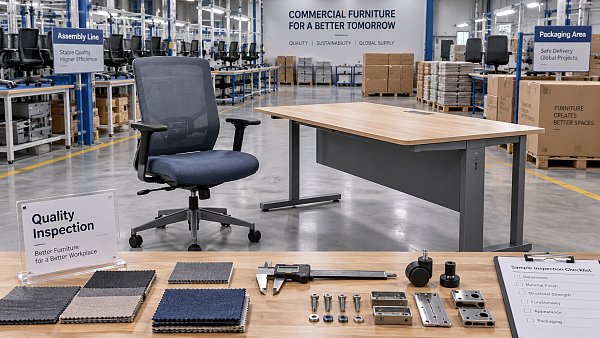
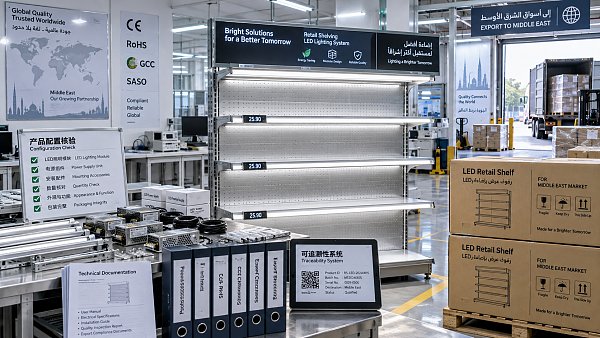
- Store environment data: traffic flow, dwell zones, display performance, fixture usability, accessibility considerations, lighting conditions, signage clarity, and service counter capacity.
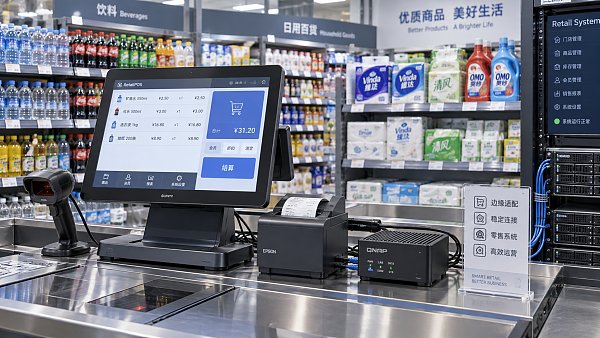
- Smart retail technology data: POS exceptions, inventory accuracy, kiosk interactions, digital shelf activity, payment friction, device uptime, and fulfillment handoff performance.
- Supply-chain and product data: availability, replenishment cycles, substitutions, supplier consistency, packaging specifications, product attributes, and handling requirements.
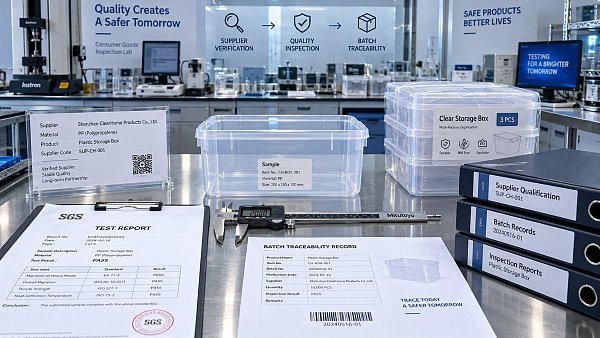
- Sustainability and compliance indicators: packaging materials, durability, reuse or recycling suitability, and benchmark requirements relevant to commercial hardware and consumer-facing environments.
None of these categories should be interpreted in isolation. A drop in sales for a high-margin product, for example, may look like a demand problem. When connected data is reviewed, the cause might instead be an inventory discrepancy, a poorly positioned display, glare on a digital sign, or packaging that makes product comparison slower than competing options. Better personalization emerges when teams stop assuming that the customer’s decision is driven only by preference.

From broad segments to situational relevance
Segmentation remains useful, but it is not enough for modern retail planning. “Value-conscious families,” “premium urban professionals,” or “frequent online buyers” can guide assortment and communications. They cannot, by themselves, tell a store manager whether to add a consultation point, reduce signage density, change an endcap fixture, or prioritize a particular replenishment route.
Consumer ecosystem solutions data enables a more situational approach. It asks questions such as:
- Which customer missions are occurring in this store at different times of day?
- Where do customers hesitate, request help, or abandon a purchase?
- Which product categories benefit from assisted selling, and which perform better through quick self-service?
- Do online campaign promises match what shoppers can actually locate and purchase in-store?
- How do packaging, shelf information, and fulfillment choices influence confidence in sustainable products?
Consider a retailer introducing a new eco-conscious product line. A campaign can target customers who have shown interest in sustainable products, but the in-store experience must support that promise. Clear material information, appropriate shelf placement, durable display components, and reliable inventory all influence whether the customer sees the offer as credible. If a refillable package is displayed beside conventional alternatives without understandable comparison cues, the shopper may choose the familiar item despite positive intent.
This does not mean every store needs an elaborate technology installation. Sometimes the most effective intervention is operational: simplifying a sign hierarchy, improving product adjacency, or ensuring that a frequently recommended item is replenished before peak hours. The data should guide the scale of the response.
Designing a personalization system that includes the physical environment
For executives, the challenge is organizational as much as technical. Marketing, store operations, sourcing, digital commerce, facilities, and sustainability teams often hold different pieces of the customer experience. Their metrics may even point in different directions. Marketing may seek campaign engagement, operations may seek labor efficiency, and sourcing may prioritize standardization. A connected retail model does not eliminate those trade-offs, but it makes them easier to discuss using shared evidence.
A practical starting point is to define several high-value decisions rather than launching a broad data program. For example, a retailer might focus on improving the experience of customers who research online but purchase in-store; reducing friction in a category with high returns; or making sustainable choices easier to understand at the shelf.
For each decision, leadership can map four elements: the consumer outcome, the physical or digital touchpoints involved, the operational dependencies, and the evidence needed to measure change. This creates a useful discipline. Instead of asking, “What data do we have?” teams ask, “What must we know to make this experience more relevant without creating new friction?”
A useful decision map
Take click-and-collect as an example. The customer outcome is confidence and convenience. The touchpoints include online stock visibility, order confirmation, collection signage, counter layout, staff workflow, packaging, and post-pickup communication. Operational dependencies include inventory accuracy, order routing, staffing, and space allocation. Relevant data may include collection wait times, failed substitutions, repeat collection behavior, counter congestion, and feedback associated with packaging or handoff clarity.
Viewed together, those signals can reveal whether personalization should take the form of a preferred collection window, a tailored substitution option, a different pickup location, or a more appropriate product bundle. It may also reveal that the customer does not need a more personalized message at all; they need the basic promise to be fulfilled consistently.
Why benchmarking matters when retail decisions cross borders
Retail modernization is frequently slowed by a gap between strategic intent and implementation detail. A brand may define a new customer experience concept, yet local teams must still select fixtures, evaluate AI-enabled POS equipment, assess display durability, source packaging, and ensure that commercial environments meet applicable expectations for safety, usability, and performance.
G-BCE addresses this need by organizing cross-sector intelligence across commercial furniture and fixtures, smart retail technology, consumer goods supply chains, commercial lighting and signage, and sustainable packaging. For sourcing directors, commercial architects, and retail leaders, this creates a bridge between consumer-facing ambitions and the physical components required to deliver them.
Benchmarking should not be treated as a procurement exercise alone. When commercial hardware and materials are evaluated against relevant international frameworks such as UL, CE, and BIFMA, the discussion can extend beyond initial cost. Teams can consider durability, compatibility, maintenance needs, user comfort, safety expectations, and the ability to support a consistent brand experience across formats. These factors influence personalization indirectly but meaningfully: a service station that is difficult to use, a display that deteriorates quickly, or a poorly integrated payment device can undermine even the most sophisticated customer strategy.
Three applications with immediate strategic value
1. Localized assortment and space planning. Connected data helps retailers distinguish between low demand and low discoverability. Store traffic, category conversion, shelf conditions, replenishment performance, and digital search behavior can be reviewed together before reducing an assortment or expanding a range. This is particularly valuable for chains balancing global category strategies with local market realities.
2. More credible sustainable retail experiences. Sustainability claims become more persuasive when the customer can see and understand the practical choice in front of them. Data from packaging, product information, returns, and shopper questions can show where confusion occurs. The response may involve clearer labeling, a different material specification, better comparison signage, or a revised fulfillment method—not merely another campaign.
3. Smarter investment in store technology. AI-driven POS terminals, digital signage, sensors, and self-service tools should be assessed according to the consumer and operational problems they solve. Technology data can identify recurring friction, while store and customer signals show whether a new tool improves the journey or simply adds another interface. This prevents innovation programs from becoming disconnected pilots with no measurable role in the ecosystem.
Guardrails: personalization without unnecessary exposure
Executives are right to be cautious. More connected insight can create governance challenges if teams lack clear rules around data quality, access, consent, and purpose. The best consumer ecosystem solutions data strategy is not built on indiscriminate collection. It is built on proportionality.
Use customer-level information only where it is appropriate and properly governed. In many situations, aggregated patterns are enough to improve store design, replenishment, signage, or service workflows. Establish common definitions for essential measures such as availability, conversion, wait time, and return reason. Without these definitions, cross-functional reporting can produce confident but misleading conclusions.
It is also important to resist false precision. A dashboard may imply that one environmental factor caused a sales change when the real explanation is seasonal demand, a promotion, or a local staffing constraint. Test interventions in controlled phases where possible, document assumptions, and combine quantitative signals with feedback from store teams. Associates often recognize friction before it becomes visible in a report.
Building momentum without waiting for a perfect data foundation
Retail leaders do not need to solve every integration challenge before acting. Begin with one journey where relevance, operational reliability, and physical experience clearly overlap. Define a small set of measurable outcomes, bring the necessary functions into the same working group, and identify the benchmark criteria needed for the physical and technical components involved.
Then create a feedback loop. Review what customers did, what store teams observed, what the supply chain delivered, and how the environment performed. Over time, this process turns disconnected information into institutional learning.
Retail personalization becomes more durable when it is not confined to a marketing engine. It should be visible in the products available, the spaces customers move through, the technologies they encounter, and the choices a brand makes about materials and service. With a connected view of these elements, business leaders can move beyond generic targeting and build consumer ecosystems that feel more coherent, responsive, and trustworthy in every market they serve.
- commercial furniture
- smart retail
- POS terminals
- supply chain
- consumer goods
- commercial lighting
- signage
- sustainable packaging
- commercial hardware
- retail technology
- commercial architects
- commercial environments
- consumer ecosystems
- smart retail technology
- consumer ecosystem
- sustainable retail
- commercial furniture and fixtures
- commercial lighting and signage
- product comparison
- AI-driven POS terminals
- consumer ecosystem solutions
- consumer ecosystem solutions data
News Recommendations
 How to assess a workplace interior supplier's installation scope
![51a6ab95581761cc26f4318be6520c15]()
Aris Katos
Future of Carbide Coatings
 What records are needed for an ISO 9001 furniture factory audit?
![51a6ab95581761cc26f4318be6520c15]()
Aris Katos
Future of Carbide Coatings
 How to choose AI marketing tools that work with your existing CRM
![51a6ab95581761cc26f4318be6520c15]()
Aris Katos
Future of Carbide Coatings
 Do freight costs erase savings when buying retail fixtures wholesale?
![51a6ab95581761cc26f4318be6520c15]()
Aris Katos
Future of Carbide Coatings
 What brightness should an OEM shelf LCD screen have for retail use?
![51a6ab95581761cc26f4318be6520c15]()
Aris Katos
Future of Carbide Coatings
 Can smart retail IT solutions for CPG work with legacy POS systems?
![51a6ab95581761cc26f4318be6520c15]()
Aris Katos
Future of Carbide Coatings
 What permit approvals belong in a commercial fitout planning checklist?
![51a6ab95581761cc26f4318be6520c15]()
Aris Katos
Future of Carbide Coatings
 Does Data Transparency Matter When Selecting Consumer Goods Suppliers?
![51a6ab95581761cc26f4318be6520c15]()
Aris Katos
Future of Carbide Coatings
 How Does Commercial Design Differ from Interior Decoration?
![51a6ab95581761cc26f4318be6520c15]()
Aris Katos
Future of Carbide Coatings
 How Long Does It Take to Verify a Commercial Furniture Supplier?
![51a6ab95581761cc26f4318be6520c15]()
Aris Katos
Future of Carbide Coatings
 How to verify compostability claims from a bubble mailer manufacturer
![51a6ab95581761cc26f4318be6520c15]()
Aris Katos
Future of Carbide Coatings
 Will commercial smart infrastructure solutions work with legacy systems?
![51a6ab95581761cc26f4318be6520c15]()
Aris Katos
Future of Carbide Coatings
 How to verify a preschool furniture manufacturer's safety standards
![51a6ab95581761cc26f4318be6520c15]()
Aris Katos
Future of Carbide Coatings
 A technical comparison of semiconductor processes for power devices
![51a6ab95581761cc26f4318be6520c15]()
Aris Katos
Future of Carbide Coatings
 How to verify that a BIFMA ergonomic chair meets the standard
![51a6ab95581761cc26f4318be6520c15]()
Aris Katos
Future of Carbide Coatings
 How to use a CRI value chart when choosing LED lighting
![51a6ab95581761cc26f4318be6520c15]()
Aris Katos
Future of Carbide Coatings
 How to compare hotel aroma diffuser wholesale options by coverage area
![51a6ab95581761cc26f4318be6520c15]()
Aris Katos
Future of Carbide Coatings
 How to prevent O-rings and seals from failing in food equipment
![51a6ab95581761cc26f4318be6520c15]()
Aris Katos
Future of Carbide Coatings
 How to compare commercial linear light wholesale quotes accurately
![51a6ab95581761cc26f4318be6520c15]()
Aris Katos
Future of Carbide Coatings
 How to verify international standards compliance for Middle East exports
![51a6ab95581761cc26f4318be6520c15]()
Aris Katos
Future of Carbide Coatings
 How to select laboratory instruments for reproducible test results
![51a6ab95581761cc26f4318be6520c15]()
Aris Katos
Future of Carbide Coatings
 When does a sheet metal prototype reveal design flaws early?
![51a6ab95581761cc26f4318be6520c15]()
Aris Katos
Future of Carbide Coatings
 When PE air column bags reduce damage in e-commerce fulfillment
![51a6ab95581761cc26f4318be6520c15]()
Aris Katos
Future of Carbide Coatings
 How energy-efficient design reduces operating costs in retail lighting
![51a6ab95581761cc26f4318be6520c15]()
Aris Katos
Future of Carbide Coatings
 When commercial aluminum storefronts make sense for a retail renovation
![51a6ab95581761cc26f4318be6520c15]()
Aris Katos
Future of Carbide Coatings
 What makes LED lights durable in high-use commercial spaces?
![51a6ab95581761cc26f4318be6520c15]()
Aris Katos
Future of Carbide Coatings
 Which industry categories offer the strongest export potential in Latin America?
![51a6ab95581761cc26f4318be6520c15]()
Aris Katos
Future of Carbide Coatings
 How to choose an ultra bright waterproof window display for storefronts
![51a6ab95581761cc26f4318be6520c15]()
Aris Katos
Future of Carbide Coatings
 How to verify suppliers on a trade portal for global sourcing
![51a6ab95581761cc26f4318be6520c15]()
Aris Katos
Future of Carbide Coatings
 How RoHS requirements should be stated in product specifications
![51a6ab95581761cc26f4318be6520c15]()
Aris Katos
Future of Carbide Coatings
 What affects the lead time for custom retail counter displays?
![51a6ab95581761cc26f4318be6520c15]()
Aris Katos
Future of Carbide Coatings
 What consumer packaging USA importers need to verify before ordering
![51a6ab95581761cc26f4318be6520c15]()
Aris Katos
Future of Carbide Coatings
 How commercial spaces interiors shape customer dwell time
![51a6ab95581761cc26f4318be6520c15]()
Aris Katos
Future of Carbide Coatings
 How LED commercial lighting design reduces glare in retail spaces
![51a6ab95581761cc26f4318be6520c15]()
Aris Katos
Future of Carbide Coatings
 How industrial technology information improves RFID inventory accuracy
![51a6ab95581761cc26f4318be6520c15]()
Aris Katos
Future of Carbide Coatings
 When drip garden watering systems make more sense than sprinklers
![51a6ab95581761cc26f4318be6520c15]()
Aris Katos
Future of Carbide Coatings
 When category comparison improves sourcing for industrial applications
![51a6ab95581761cc26f4318be6520c15]()
Aris Katos
Future of Carbide Coatings
 Industrial application guidance for selecting the right LED lighting
![51a6ab95581761cc26f4318be6520c15]()
Aris Katos
Future of Carbide Coatings
 Which commercial architecture standards apply to European retail fit-outs?
![51a6ab95581761cc26f4318be6520c15]()
Aris Katos
Future of Carbide Coatings