How to compare commercial linear light wholesale quotes accurately
Time
Click Count
How to Compare Commercial Linear Light Wholesale Quotes Accurately
Comparing commercial linear light wholesale quotes requires more than checking unit prices. Procurement teams must evaluate specifications, documentation, delivery capability, and lifecycle risk before selecting a supplier.
A lower headline price can conceal reduced aluminum content, lower driver quality, incomplete certifications, inconsistent color output, or exclusions that increase project costs later.
The most reliable comparison method is to normalize every quote into the same technical, commercial, and logistical format before calculating total landed cost.
Start With the Buyer’s Real Decision Criteria
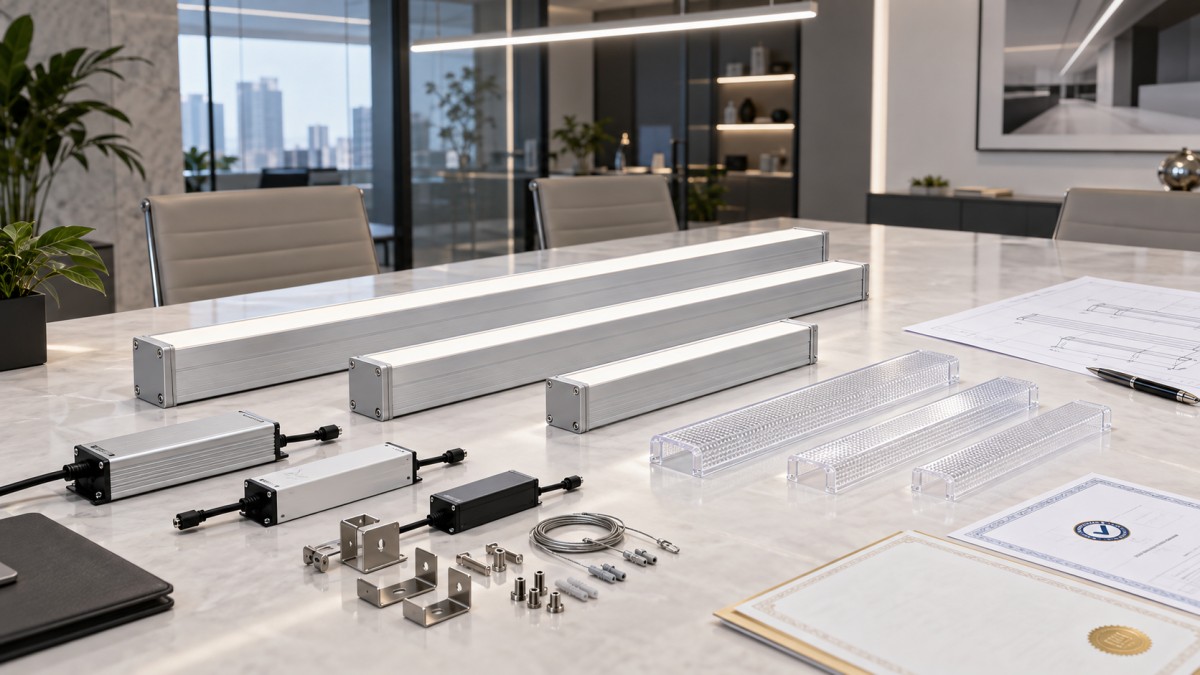
Procurement teams searching for commercial linear light wholesale options usually need a dependable way to compare suppliers for a specific commercial project, rollout, or distribution program.
They are not simply asking which factory offers the cheapest fixture. They need to know which quote delivers comparable performance, predictable compliance, and manageable commercial risk.
For offices, retail chains, hospitality spaces, education facilities, and mixed-use developments, lighting inconsistency can affect installation schedules, visual quality, energy targets, and maintenance budgets.
Before requesting final pricing, define whether the purchase is for a one-time project, a phased rollout, a private-label program, or recurring regional supply.
Each use case changes the value of customization, stocking commitments, replacement-parts availability, packaging requirements, and the supplier’s ability to maintain product consistency over time.
A project buyer may prioritize approved samples and delivery dates. A chain operator may place greater value on standardization, replenishment capability, and consistent appearance across locations.
Create a comparison sheet before suppliers respond. This prevents persuasive formatting, selective specifications, and optional accessories from making different offers appear equivalent when they are not.
The sheet should separate product cost from commercial terms. It should also identify which details are confirmed by test reports, drawings, samples, or supplier declarations.
Ask suppliers to quote against the same bill of materials, dimensions, color temperature, optical configuration, mounting method, driver requirement, quantity tier, and shipping term.
When suppliers receive vague requirements, they often quote their most economical standard configuration. That may not be suitable for the target ceiling, controls system, or operating environment.
Normalize the Product Specification Before Comparing Prices
The first rule for comparing a commercial linear light wholesale quote is simple: never compare unit prices until the actual fixture configurations are technically aligned.
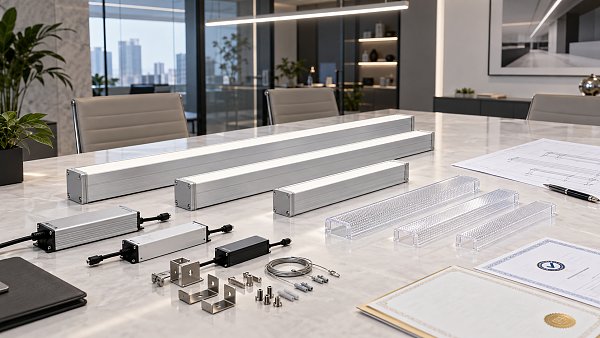
Linear lighting products can look similar in catalog images while using very different LED boards, heat sinks, diffusers, drivers, mounting hardware, and internal wiring.
Start with fixture dimensions, including profile width, height, length, suspension height, joining details, and whether quoted lengths include end caps or connection accessories.
Confirm the housing material and thickness. Extruded aluminum quality, wall thickness, surface treatment, and thermal design directly influence rigidity, heat dissipation, and long-term optical performance.
Ask whether the quoted finish is powder coating, anodizing, painted aluminum, or another treatment. Match the color reference, gloss level, and scratch-resistance requirement where relevant.
Check the diffuser material and transmission value. Polycarbonate, PMMA, and lower-grade plastics can differ substantially in yellowing resistance, glare control, impact resistance, and light diffusion.
The quote should state whether the diffuser is opal, frosted, microprismatic, clear, or UGR-controlled. These options affect both visual comfort and delivered lumen output.
Do not accept “high brightness” as a specification. Request delivered lumens per fixture, lumens per meter, system wattage, efficacy, and the measurement conditions used.
System efficacy should include the driver, not only the LED chip. A fixture claimed at high LED efficacy may deliver noticeably lower real-world performance after optical and electrical losses.
Color temperature must be stated in Kelvin, such as 3000K, 3500K, 4000K, or 5000K. Confirm the permitted chromaticity tolerance for multi-location commercial projects.
For premium interiors, ask for MacAdam ellipse or SDCM information. Tighter color consistency reduces the risk that installed luminaires show visibly different white tones.
Color rendering index also requires closer review. A generic “CRI 80+” statement may be sufficient for utility areas but may not meet retail, hospitality, food, or brand-display requirements.
Review Optical, Electrical, and Control-System Performance
Optical and electrical details are where superficially similar wholesale offers often diverge. These factors determine whether the installed system performs as designed after commissioning.
Request photometric files, preferably IES or LDT files, for the exact quoted configuration. Do not assume a photometric report for one length applies to every fixture variation.
Review beam distribution, spacing guidance, glare rating, and delivered illuminance calculations where available. Architects and lighting designers need data that can be used in project modeling.
For office and educational environments, evaluate UGR requirements carefully. A low-glare optic can cost more, but it may be necessary to satisfy comfort expectations and design specifications.
Confirm input voltage, frequency range, power factor, total harmonic distortion, surge protection, and operating temperature range. These details matter especially across multiple international markets.
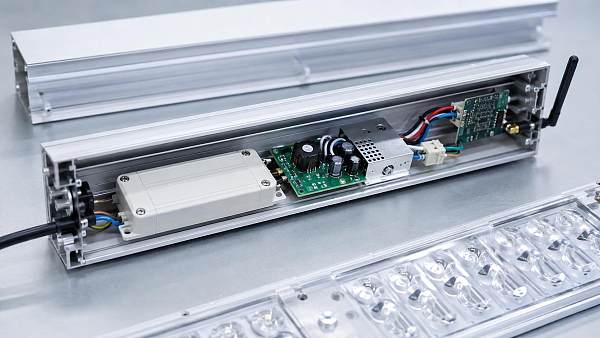
Driver selection deserves its own line item. Ask for the driver brand, model number, rated life, dimming protocol, warranty period, and replacement procedure.
A quote that lists only “dimmable driver” is incomplete. DALI, 0-10V, phase-cut, Casambi, Bluetooth mesh, KNX, and proprietary systems have different costs and compatibility risks.
Verify whether the stated price includes the driver inside every luminaire or whether remote drivers, control gear, sensors, gateways, and wiring accessories are charged separately.
Emergency-function requirements should also be separated. Emergency drivers, battery packs, central battery compatibility, and testing functions can materially change both price and installation complexity.
If tunable white or RGBW lighting is required, ask for control diagrams and commissioning support. Advanced control features add value only when the complete system works reliably onsite.
For continuous-run installations, check electrical feed limits and maximum linked lengths. A low-priced system can create hidden labor costs if more power feeds are required.
Verify Certifications, Test Evidence, and Market Compliance
Commercial buyers should treat certification as evidence to verify, not a label to accept at face value. Requirements depend on the installation country and project specification.
For many markets, buyers may need CE, UKCA, UL, ETL, DLC, RoHS, REACH, FCC, CB, SAA, or local energy-efficiency documentation, depending on product type.
Ask suppliers to provide certificates, test reports, certificate numbers, issuing laboratories, product model references, and expiration dates before awarding a major purchase order.
Check that the model number on the report matches the configured product. A test report for a short standard fixture may not cover a customized profile or control version.
For CE-marked products, review the Declaration of Conformity and supporting standards. A CE logo alone does not demonstrate that the supplier has appropriate technical documentation.
For North American projects, verify whether the entire assembled luminaire is listed, rather than assuming listed components make the final product compliant.
Ingress protection ratings should be quoted precisely. IP20 may suit dry interiors, while canopy, kitchen, warehouse, exterior, or humid applications can require higher protection levels.
Ask how the IP rating is maintained at joints, cable entries, end caps, and suspension points. Continuous linear systems can lose protection where sections connect.
Fire, flammability, and material declarations may also matter for public projects. Confirm diffuser material classifications when project specifications, building codes, or insurers require them.
Documentation quality is a useful supplier signal. Clear reports, controlled drawings, and traceable test data usually indicate stronger engineering processes than unsupported marketing claims.
Calculate Total Landed Cost Instead of Unit Price
The best commercial linear light wholesale quote is not necessarily the quote with the lowest ex-works price. Procurement decisions should be based on total landed and installed cost.
Begin with the quoted unit price, then identify tooling charges, sample fees, customization costs, spare parts, testing fees, packaging upgrades, and applicable minimum order quantities.
Clarify the Incoterm for every offer. EXW, FOB, CIF, DDP, and DAP pricing allocate transport, customs, insurance, and tax responsibilities differently.
A low EXW price may appear attractive until domestic trucking, export handling, freight coordination, customs clearance, duty, insurance, and destination delivery are added.
Request carton dimensions, gross weight, units per carton, pallet information, and container loading data. Freight costs for long linear fixtures can be substantial because of volume.
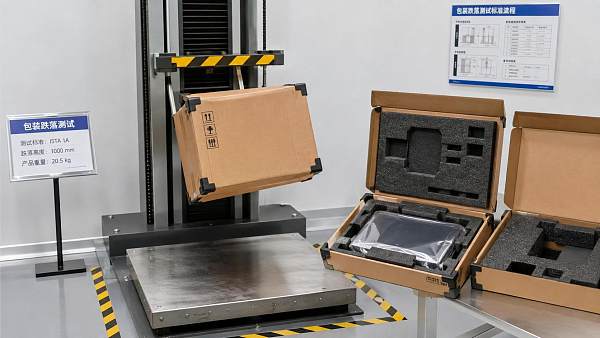
Packaging deserves practical attention. Inadequate corner protection, weak cartons, or poorly secured diffusers can cause breakage that eliminates apparent savings before installation begins.
Compare payment terms as part of procurement cost. Deposits, balance timing, letter-of-credit requirements, currency exposure, and credit support affect working capital and financial risk.
Also calculate installation implications. Products needing complex alignment, frequent joins, additional power feeds, or difficult driver access can increase labor costs more than fixture savings.
Include a reasonable allowance for quality risk. Replacement shipments, site revisits, delayed openings, and contractor claims can be more expensive than a moderate product-price difference.
For repeat programs, model expected lifecycle cost over several years. Consider energy consumption, driver failure rates, replacement availability, and consistency of future production batches.
A weighted scorecard is often more defensible than a simple price ranking. Assign appropriate weight to technical fit, compliance, landed cost, quality assurance, lead time, and service.
Assess Manufacturing Capacity and Quality-Control Processes
Commercial lighting projects require repeatability. A supplier that produces an excellent sample but cannot reproduce the same quality across hundreds or thousands of fixtures creates project exposure.
Ask where key components are made and assembled. Some suppliers manufacture profiles and assemble luminaires internally, while others rely heavily on changing external component sources.
Neither model is automatically unsuitable, but procurement teams need transparency. Component sourcing affects traceability, lead time, engineering control, and the ability to maintain specifications.
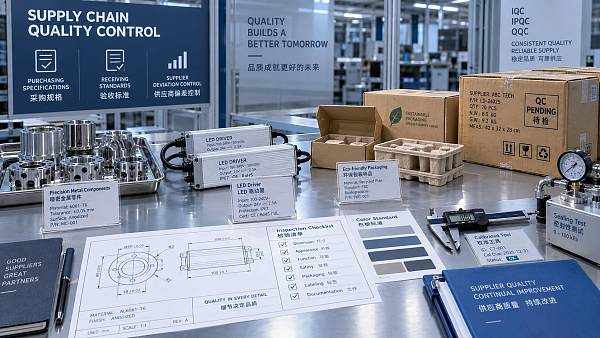
Request information about incoming inspection, LED binning, driver verification, aging tests, burn-in procedures, electrical safety testing, and final visual inspection.
For larger orders, establish an agreed quality plan. It should define cosmetic acceptance criteria, color tolerance, functional testing, packaging standards, sampling method, and defect thresholds.
Clarify whether the supplier performs 100 percent functional testing or statistical sampling. Confirm how failed products are recorded, repaired, isolated, and prevented from shipping.
Pre-production samples should match the approved production configuration. Document approved finish, diffuser, mounting accessories, driver model, output, color temperature, and labeling requirements.
For high-value projects, consider third-party pre-shipment inspection. Inspection criteria should reflect the approved sample and purchase order rather than broad catalog descriptions.
Ask how the supplier manages engineering changes. Unannounced substitutions of LEDs, drivers, or diffusers can affect performance and invalidate documentation for sensitive commercial applications.
Reliable suppliers can provide batch records, serial labels, production photographs, inspection reports, and clear responses when deviations occur. These controls matter when resolving later claims.
Compare Lead Time, Customization, and Supply Continuity
Lead time should be separated into sample lead time, production lead time, testing lead time, packing time, and transit time. A single promise can conceal important dependencies.
Ask when production timing begins: after deposit receipt, drawing approval, sample approval, material availability, or final artwork confirmation. This detail prevents schedule misunderstandings.
Custom lengths, curved profiles, special finishes, tailored optics, branded labels, and unique packaging can require tooling or longer material preparation before mass production starts.
Evaluate customization based on project value, not novelty. A custom solution should improve installation, aesthetics, compliance, or operating performance enough to justify its added complexity.
For chain programs, ask whether the supplier can reserve materials, maintain approved component lists, or hold critical replacement parts after the initial production run.
Supply continuity is especially important when stores, offices, or hospitality sites open in phases. The buyer needs confidence that later batches will match earlier installations.
Request a clear policy on minimum reorder quantities. A supplier may support a large initial order but decline small replacement requests after the project is completed.
Also confirm how the supplier handles discontinued components. A structured alternative-approval process is preferable to receiving a replacement product with different light color or appearance.
When evaluating several suppliers, give more credit to realistic schedules supported by material plans than to unusually short promises without supporting detail.
Read Warranty Terms as an Operating Commitment
Warranty length is useful, but the wording matters more. A five-year warranty may exclude labor, freight, cosmetic issues, control components, or failures caused by ordinary operating conditions.
Ask whether the warranty covers the complete luminaire, including LEDs, driver, diffuser, housing, connectors, suspension hardware, and control-related components supplied by the vendor.
Clarify the failure threshold for LED depreciation. Terms such as L70 or L80 should identify the rated operating hours, test conditions, and whether fixture temperature is considered.
Determine the claims process before ordering. Buyers need to know what evidence is required, how quickly technical support responds, and whether replacements are shipped without delay.
For international purchases, specify who pays return freight, replacement freight, duties, and local handling costs. These expenses can make a nominal warranty difficult to use.
Ask whether replacement drivers and spare diffusers can be purchased separately. Serviceable systems often reduce downtime and avoid replacing an entire linear run for a minor failure.
Review exclusions carefully, especially for voltage instability, improper controls compatibility, outdoor exposure, chemical environments, and installation that differs from supplier instructions.
A supplier willing to provide installation guidance, wiring diagrams, troubleshooting support, and replacement-part access usually offers more practical protection than one offering only a long warranty number.
Use a Practical Quote Comparison Workflow
First, issue a structured request for quotation with a fixed product schedule. Include drawings, quantities by length, required output, finish, controls, certifications, delivery location, and target dates.
Second, require suppliers to complete every line item. Avoid accepting lump-sum offers that combine fixtures, drivers, accessories, packaging, and freight into untraceable totals.
Third, classify each quoted item as confirmed, conditional, optional, excluded, or unclear. This makes missing information visible before commercial negotiations begin.
Fourth, score technical compliance before price. A noncompliant product should not rank highly simply because its quoted price is lower than the required configuration.
Fifth, calculate total landed cost using consistent freight assumptions, duty assumptions, currency dates, inspection expenses, and expected accessory quantities across all suppliers.
Sixth, request samples from shortlisted vendors and compare them under realistic conditions. Review finish quality, fit, light uniformity, noise, dimming behavior, mounting, and packaging.
Seventh, negotiate final terms based on the identified risks. Seek written confirmation for approved components, lead time, quality standards, warranty obligations, and change-control procedures.
Finally, preserve the comparison file with technical documents and approved samples. It becomes a valuable reference for repeat orders, claims management, and future supplier reviews.
Make the Final Selection on Evidence, Not Presentation
An accurate commercial linear light wholesale comparison turns a supplier quote into a measurable sourcing decision. The goal is to buy the required performance with controlled risk.
Procurement teams should prioritize technical equivalence, documented compliance, credible quality controls, realistic lead times, and total landed cost over attractive but incomplete unit pricing.
The strongest supplier is usually the one that answers detailed questions clearly, supports claims with evidence, maintains configuration discipline, and can serve the project after delivery.
By using a normalized quote sheet and a weighted decision process, buyers can reduce surprises, defend purchasing decisions internally, and deliver more consistent commercial lighting outcomes.
News Recommendations
 How to compare commercial linear light wholesale quotes accurately
![51a6ab95581761cc26f4318be6520c15]()
Aris Katos
Future of Carbide Coatings
 How to verify international standards compliance for Middle East exports
![51a6ab95581761cc26f4318be6520c15]()
Aris Katos
Future of Carbide Coatings
 How to select laboratory instruments for reproducible test results
![51a6ab95581761cc26f4318be6520c15]()
Aris Katos
Future of Carbide Coatings
 When does a sheet metal prototype reveal design flaws early?
![51a6ab95581761cc26f4318be6520c15]()
Aris Katos
Future of Carbide Coatings
 When PE air column bags reduce damage in e-commerce fulfillment
![51a6ab95581761cc26f4318be6520c15]()
Aris Katos
Future of Carbide Coatings
 How energy-efficient design reduces operating costs in retail lighting
![51a6ab95581761cc26f4318be6520c15]()
Aris Katos
Future of Carbide Coatings
 When commercial aluminum storefronts make sense for a retail renovation
![51a6ab95581761cc26f4318be6520c15]()
Aris Katos
Future of Carbide Coatings
 What makes LED lights durable in high-use commercial spaces?
![51a6ab95581761cc26f4318be6520c15]()
Aris Katos
Future of Carbide Coatings
 Which industry categories offer the strongest export potential in Latin America?
![51a6ab95581761cc26f4318be6520c15]()
Aris Katos
Future of Carbide Coatings
 How to choose an ultra bright waterproof window display for storefronts
![51a6ab95581761cc26f4318be6520c15]()
Aris Katos
Future of Carbide Coatings
 How to verify suppliers on a trade portal for global sourcing
![51a6ab95581761cc26f4318be6520c15]()
Aris Katos
Future of Carbide Coatings
 How RoHS requirements should be stated in product specifications
![51a6ab95581761cc26f4318be6520c15]()
Aris Katos
Future of Carbide Coatings
 What affects the lead time for custom retail counter displays?
![51a6ab95581761cc26f4318be6520c15]()
Aris Katos
Future of Carbide Coatings
 What consumer packaging USA importers need to verify before ordering
![51a6ab95581761cc26f4318be6520c15]()
Aris Katos
Future of Carbide Coatings
 How commercial spaces interiors shape customer dwell time
![51a6ab95581761cc26f4318be6520c15]()
Aris Katos
Future of Carbide Coatings
 How LED commercial lighting design reduces glare in retail spaces
![51a6ab95581761cc26f4318be6520c15]()
Aris Katos
Future of Carbide Coatings
 How industrial technology information improves RFID inventory accuracy
![51a6ab95581761cc26f4318be6520c15]()
Aris Katos
Future of Carbide Coatings
 When drip garden watering systems make more sense than sprinklers
![51a6ab95581761cc26f4318be6520c15]()
Aris Katos
Future of Carbide Coatings
 When category comparison improves sourcing for industrial applications
![51a6ab95581761cc26f4318be6520c15]()
Aris Katos
Future of Carbide Coatings
 Industrial application guidance for selecting the right LED lighting
![51a6ab95581761cc26f4318be6520c15]()
Aris Katos
Future of Carbide Coatings
 Which commercial architecture standards apply to European retail fit-outs?
![51a6ab95581761cc26f4318be6520c15]()
Aris Katos
Future of Carbide Coatings
 How to verify FDA requirements for maternity care products
![51a6ab95581761cc26f4318be6520c15]()
Aris Katos
Future of Carbide Coatings
 How to verify BPA-free claims for food-contact products
![51a6ab95581761cc26f4318be6520c15]()
Aris Katos
Future of Carbide Coatings
 When does a European wholesale supplier suit modular office projects?
![51a6ab95581761cc26f4318be6520c15]()
Aris Katos
Future of Carbide Coatings
 When consumer ecosystem solutions improve the in-store shopping journey
![51a6ab95581761cc26f4318be6520c15]()
Aris Katos
Future of Carbide Coatings
 How a commercial developers network can reduce site selection risk
![51a6ab95581761cc26f4318be6520c15]()
Aris Katos
Future of Carbide Coatings
 How clear purchasing specifications prevent costly supplier deviations
![51a6ab95581761cc26f4318be6520c15]()
Aris Katos
Future of Carbide Coatings
 What an ISTA drop test lab checks before your packaging ships
![51a6ab95581761cc26f4318be6520c15]()
Aris Katos
Future of Carbide Coatings
 Which commercial furniture standards apply to workplace seating?
![51a6ab95581761cc26f4318be6520c15]()
Aris Katos
Future of Carbide Coatings
 How to evaluate smart lighting module OEM compatibility before sampling
![51a6ab95581761cc26f4318be6520c15]()
Aris Katos
Future of Carbide Coatings
 How to assess whether sustainable technology delivers real impact
![51a6ab95581761cc26f4318be6520c15]()
Aris Katos
Future of Carbide Coatings
 How to assess an OEM supplier’s quality control before ordering
![51a6ab95581761cc26f4318be6520c15]()
Aris Katos
Future of Carbide Coatings
 How consumer ecosystem solutions data can improve retail personalization
![51a6ab95581761cc26f4318be6520c15]()
Aris Katos
Future of Carbide Coatings
 When does consumer packaging design justify a higher product price?
![51a6ab95581761cc26f4318be6520c15]()
Aris Katos
Future of Carbide Coatings
 Supermarket Fixture Installation: Planning Layouts, Wiring, and Handover
![51a6ab95581761cc26f4318be6520c15]()
Aris Katos
Future of Carbide Coatings
 Automated Lighting and Smart Lighting Control in Bergerac: Key Project Considerations
![51a6ab95581761cc26f4318be6520c15]()
Aris Katos
Future of Carbide Coatings
 Segment Streetlight Controllers: Choosing Control Modes for Urban Roads
![51a6ab95581761cc26f4318be6520c15]()
Aris Katos
Future of Carbide Coatings
 IEC 62471-2 Explained: How to Assess Photobiological Risks in LED Lighting
![51a6ab95581761cc26f4318be6520c15]()
Aris Katos
Future of Carbide Coatings
 Food Grade Packaging Requirements by Product Type, Temperature, and Contact Risk
![51a6ab95581761cc26f4318be6520c15]()
Aris Katos
Future of Carbide Coatings