
How to select laboratory instruments for reproducible test results
Time
Click Count
How to Select Laboratory Instruments for Reproducible Test Results
Selecting laboratory instruments is not simply a matter of comparing catalogue specifications. A device can meet the stated range, resolution, or throughput requirement and still produce results that vary between operators, shifts, batches, or testing locations. For technical evaluators, the more useful question is not “Which instrument has the highest specification?” but “Which measurement system will continue to produce defensible results under our actual operating conditions?”
That distinction matters across commercial product development, packaging validation, material screening, retail hardware evaluation, and supply-chain quality control. A tensile tester used to compare sustainable packaging films, a spectrophotometer used for colour consistency, or a climate chamber used to assess product durability may all be technically capable instruments. Yet reproducibility depends on the relationship between the instrument, the sample, the test method, the laboratory environment, the operator, and the data trail.
The most reliable purchasing decisions therefore begin with the test result that must be repeated, audited, or compared—not with a brand list. This approach helps teams avoid a common and costly problem: buying a laboratory instrument that performs well during acceptance testing but becomes difficult to standardise once it enters routine use.
Start with the measurement decision, not the instrument category
A request for “a laboratory balance,” “a light meter,” or “a material testing machine” is too broad for a sound selection process. The same category can contain instruments intended for screening, process control, research, certification work, or dispute resolution. Their practical requirements differ sharply.
Define the intended decision first. Is the result being used to release incoming materials? To compare suppliers? To verify that a commercial fixture, consumer product, or packaging component meets an internal specification? To support a claim made to a customer or regulator? The higher the consequence of an incorrect result, the more important traceability, method control, uncertainty assessment, controlled access, and service responsiveness become.
It is also necessary to distinguish repeatability from reproducibility. Repeatability concerns closely repeated measurements under similar conditions, often by the same operator and instrument. Reproducibility is broader: it asks whether comparable results can be achieved when conditions change in realistic ways, such as different operators, days, sites, sample lots, or equipment units. An instrument may show excellent short-term repeatability while still being poorly suited to a multi-site quality programme.
Before requesting quotations, write a short measurement requirement that identifies the measurand, expected sample variation, acceptable decision tolerance, required throughput, reporting format, and reference method where one exists. If an established ISO, ASTM, IEC, EN, pharmacopoeial, or customer method applies, confirm the exact edition and any equipment-specific clauses. A general claim that an instrument is “suitable for standard testing” is not a substitute for checking the method line by line.
Resolution is not accuracy, and accuracy is not enough
Specification sheets often encourage quick comparisons: a lower displayed increment, a wider range, a faster scan rate, or a smaller advertised error. These values are relevant, but none should be interpreted in isolation. The displayed resolution of a measurement does not prove that the reading is accurate. Likewise, an accuracy statement may be based on narrow conditions that do not represent the intended sample type, loading range, temperature, or operating cycle.
Technical evaluators should ask how performance is stated. Is the figure a maximum permissible error, a typical value, a linearity value, a repeatability value, or a combined claim? Does it apply across the full range or only at designated points? What reference artefact, material, or calibration procedure was used? For instruments that calculate an indirect result—such as moisture, gloss, colour difference, viscosity, or hardness—the quality of the method setup can be as influential as the sensor itself.
The meaningful target is usually measurement uncertainty relative to the tolerance being controlled. A laboratory does not need the most sensitive instrument available; it needs one whose uncertainty, stability, and method capability leave enough room to make sound accept/reject decisions. This may require input from metrology, quality, engineering, and the eventual laboratory users rather than procurement alone.
Treat the laboratory environment as part of the instrument
Many selection failures are environmental rather than mechanical. Sensitive balances can be affected by airflow, vibration, static charge, and temperature gradients. Optical instruments can be influenced by ambient light, sample presentation, surface texture, and contamination of optical components. Dimensional systems may be affected by thermal expansion. Instruments used around warehouses, factory floors, or retail prototype areas can face dust, unstable power, variable humidity, and frequent relocation.
Evaluate the planned installation location honestly. A laboratory-grade instrument placed next to a loading door or a high-traffic production aisle may need additional controls, shielding, a dedicated bench, or a different technology. Conversely, buying an unusually high-end system for a simple and well-controlled routine check can increase maintenance burden without materially improving the decision.
Sample handling deserves equal attention. A highly repeatable analyser cannot compensate for inconsistent specimen cutting, variable conditioning time, uncontrolled orientation, or unclear sampling rules. When comparing laboratory instruments, assess the fixtures, holders, probes, sample preparation tools, and conditioning equipment that form the complete workflow. These accessories are sometimes treated as optional extras, although they may be decisive for method consistency.
Calibration traceability must be workable, not merely promised
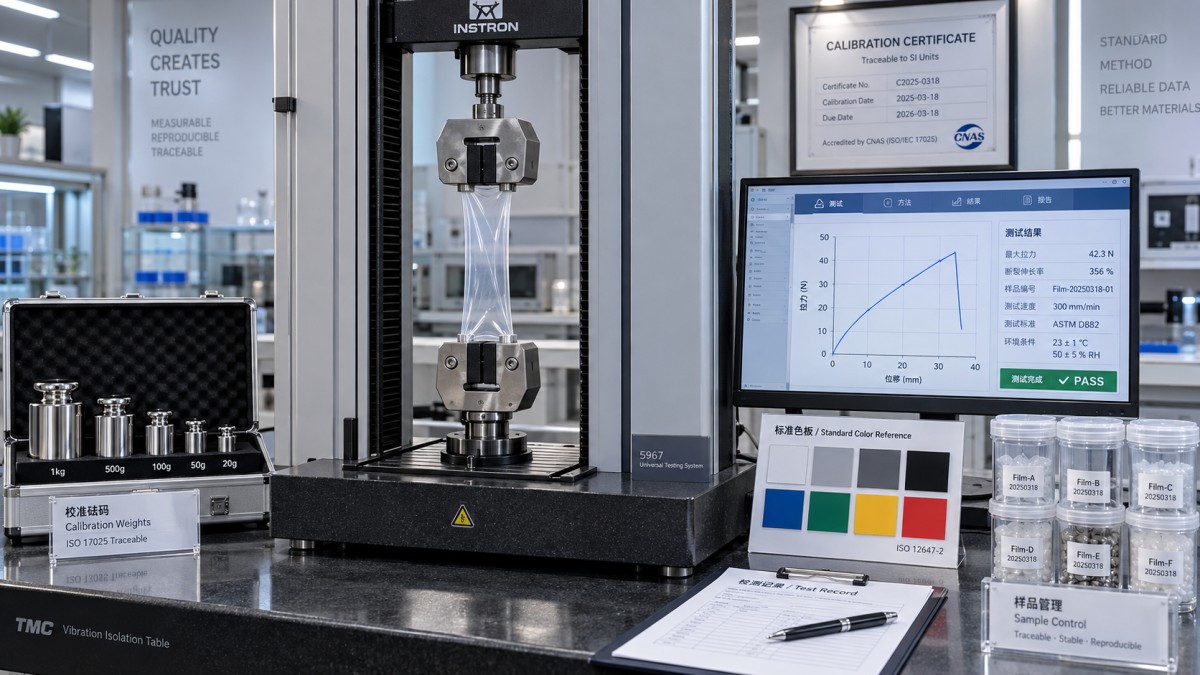
Calibration traceability is often reduced to a checkbox during procurement. In practice, it is a continuing operating model. The team should know what requires calibration, which checks can be performed internally, when external calibration is needed, what reference standards are consumed or replaced, and how out-of-tolerance findings will be handled.
Ask whether the supplier can provide calibration documentation appropriate to the laboratory’s quality system and intended market. Where traceability to national or international measurement standards is required, confirm the chain of traceability and the scope of the calibration service rather than relying on broad wording. The necessary level of documentation depends on the application, contractual requirements, and applicable regulations; it should not be assumed from the instrument’s price point.
Equally important is routine verification between formal calibrations. Good instruments make it practical to run control checks, record outcomes, apply acceptance limits, and prevent use when a critical check fails. If verifying performance takes too long, requires unavailable artefacts, or depends on a specialist being present, routine discipline often weakens over time.
Data integrity is now a core equipment criterion
For a modern test workflow, reproducibility includes the ability to reconstruct how a result was obtained. A printed number without the associated method, operator identity, sample identification, instrument status, and calibration state may be difficult to defend later. This is especially relevant when technical teams compare suppliers, manage distributed laboratories, or need to link test outcomes to product batches and sourcing records.
Review software capability early, not after hardware selection. Useful questions include whether users can create or alter methods, whether changes are recorded, whether raw data can be retained and exported in a usable format, and whether the system integrates with laboratory information management, enterprise quality, or production systems. Cybersecurity, local network restrictions, data ownership, backup responsibilities, and software update policies should be discussed with IT and quality teams before an instrument reaches site.
A simple standalone device may be appropriate for local screening. But where results support supplier qualification, cross-border product sourcing, or formal quality release, disconnected spreadsheets and manually copied readings introduce avoidable transcription and version-control risks. The appropriate digital architecture depends on the workflow, but it must be defined deliberately.
Compare suppliers through method evidence and lifecycle support
A live demonstration is useful only when it reflects the intended work. Request a trial using representative samples, expected operators, and a documented method. If possible, include materials that are near a specification boundary, because these reveal whether the system is stable enough for real release decisions. Record setup time, warm-up requirements, operator interventions, sample preparation steps, error messages, cleaning needs, and the time needed to complete a result.
Do not overlook service geography and spare-parts availability. An instrument can be technically strong yet unsuitable if qualified service is distant, critical consumables have long lead times, or software support depends on a single local contact. Ask what installation qualification, training, preventive maintenance, remote diagnostics, repair turnaround, and firmware support are available in each operating region. For multi-site organisations, consistency of support can matter as much as the initial purchase price.
At G-BCE, cross-sector benchmarking is useful because laboratory testing rarely sits apart from the wider commercial ecosystem. Product and material evaluations may influence commercial furniture durability, smart retail hardware reliability, lighting performance, consumer goods quality, or sustainable packaging selection. In these settings, evaluators need to connect laboratory capability with international expectations, supply-chain realities, installation constraints, and the functional demands of the final commercial environment. A technically impressive instrument that cannot support comparable supplier data across regions leaves a significant gap in that chain.
Build a selection file that survives scrutiny
The final decision should be documented as a measurement-system decision rather than a purchase preference. A concise selection file can include the intended use, applicable methods, sample range, environmental assumptions, performance requirements, calibration plan, data requirements, installation needs, training scope, and service model. It should also record any gaps that will be controlled through procedures, additional fixtures, reference materials, or environmental improvements.
This documentation is valuable when a result is challenged, when a new site adopts the method, or when the instrument must be replaced years later. It prevents the familiar situation in which a team knows that “this is how we have always tested” but cannot explain why the original setup was appropriate.
The best laboratory instruments are not necessarily those with the longest list of features. They are the systems whose capability, controls, calibration path, workflow, and support model fit the decision being made. If reproducible results are the objective, test the whole chain before committing: sample preparation, operator use, environmental stability, data capture, verification, and service continuity. That is where reliable measurement is either secured or lost.
News Recommendations
 How do packaging customization options affect minimum order quantities in Europe?
![51a6ab95581761cc26f4318be6520c15]()
Aris Katos
Future of Carbide Coatings
 Transom to Acquire Cree LED in Commercial Lighting Ownership Change
![51a6ab95581761cc26f4318be6520c15]()
Aris Katos
Future of Carbide Coatings
 How to plan customer flow in commercial design planning
![51a6ab95581761cc26f4318be6520c15]()
Aris Katos
Future of Carbide Coatings
 USTR Urged to Permanently Suspend Fees on China-Linked Ships
![51a6ab95581761cc26f4318be6520c15]()
Aris Katos
Future of Carbide Coatings
 How to choose comparable stores for retail benchmarking
![51a6ab95581761cc26f4318be6520c15]()
Aris Katos
Future of Carbide Coatings
 How does anchoring affect modular building wind load resistance?
![51a6ab95581761cc26f4318be6520c15]()
Aris Katos
Future of Carbide Coatings
 Amazon Raises European FBA Surcharge to 2% in Ten Markets From November 2
![51a6ab95581761cc26f4318be6520c15]()
Aris Katos
Future of Carbide Coatings
 How to verify a BPA-free test report for baby products
![51a6ab95581761cc26f4318be6520c15]()
Aris Katos
Future of Carbide Coatings
 China's Mandatory Classroom Lighting Standard GB 7793-2025 Takes Effect November 1
![51a6ab95581761cc26f4318be6520c15]()
Aris Katos
Future of Carbide Coatings
 How order volume affects the price of wholesale poly mailers
![51a6ab95581761cc26f4318be6520c15]()
Aris Katos
Future of Carbide Coatings
 US Imposes 50% Tariff on Certain Canadian PET Resin Imports
![51a6ab95581761cc26f4318be6520c15]()
Aris Katos
Future of Carbide Coatings
 How to read the maximum ratings in a semiconductor datasheet
![51a6ab95581761cc26f4318be6520c15]()
Aris Katos
Future of Carbide Coatings
 University of Maryland Develops Bio-Based Packaging to Extend Avocado and Cucumber Shelf Life
![51a6ab95581761cc26f4318be6520c15]()
Aris Katos
Future of Carbide Coatings
 How to verify a cookware manufacturer's induction compatibility claims
![51a6ab95581761cc26f4318be6520c15]()
Aris Katos
Future of Carbide Coatings
 Omdia Forecasts 11.6% Annual Growth in LED Display Revenue Through 2030
![51a6ab95581761cc26f4318be6520c15]()
Aris Katos
Future of Carbide Coatings
 How to verify a pulp molding packaging factory's production capacity
![51a6ab95581761cc26f4318be6520c15]()
Aris Katos
Future of Carbide Coatings
 Curion Survey: Half of Consumers Frustrated by Sustainable Packaging
![51a6ab95581761cc26f4318be6520c15]()
Aris Katos
Future of Carbide Coatings
 How to assess the credibility of market insight content
![51a6ab95581761cc26f4318be6520c15]()
Aris Katos
Future of Carbide Coatings
 US Removes 50% Additional Tariff on Selected Canadian Packaging Products
![51a6ab95581761cc26f4318be6520c15]()
Aris Katos
Future of Carbide Coatings
 Will a waterproof dimmable LED driver work with your existing dimmer?
![51a6ab95581761cc26f4318be6520c15]()
Aris Katos
Future of Carbide Coatings
 Charter Next Generation Raises Film PCR Use 30%, Advances Food-Grade Applications
![51a6ab95581761cc26f4318be6520c15]()
Aris Katos
Future of Carbide Coatings
 How to choose a dog harness and leash for a dog that pulls hard
![51a6ab95581761cc26f4318be6520c15]()
Aris Katos
Future of Carbide Coatings
 How to respect local customs when negotiating with overseas suppliers
![51a6ab95581761cc26f4318be6520c15]()
Aris Katos
Future of Carbide Coatings
 RFID Recycling Challenges Bring Paper-Based and Chipless Tags Into Focus
![51a6ab95581761cc26f4318be6520c15]()
Aris Katos
Future of Carbide Coatings
 How to choose commercial lighting for offices that reduces glare
![51a6ab95581761cc26f4318be6520c15]()
Aris Katos
Future of Carbide Coatings
 Queue Launches Fully Automated Robotic Pharmacy Kiosk for 30-Second Dispensing
![51a6ab95581761cc26f4318be6520c15]()
Aris Katos
Future of Carbide Coatings
 Can your supermarket store fixtures supplier meet your opening date?
![51a6ab95581761cc26f4318be6520c15]()
Aris Katos
Future of Carbide Coatings
 Shopify POS UI Extensions 2026-10 Adds Virtual Lists and Custom Row Templates
![51a6ab95581761cc26f4318be6520c15]()
Aris Katos
Future of Carbide Coatings
 How to assess smart office furniture suppliers’ North American support
![51a6ab95581761cc26f4318be6520c15]()
Aris Katos
Future of Carbide Coatings
 Aqara Launches Smart Lighting Range to Advance AI Spatial Intelligence
![51a6ab95581761cc26f4318be6520c15]()
Aris Katos
Future of Carbide Coatings
 How to assess demand forecasts in a lighting intelligence report
![51a6ab95581761cc26f4318be6520c15]()
Aris Katos
Future of Carbide Coatings
 Billerud推出PharmaKraft纤维基医药包装材料
![51a6ab95581761cc26f4318be6520c15]()
Aris Katos
Future of Carbide Coatings
 How to assess supplier reliability in global supply chain sourcing
![51a6ab95581761cc26f4318be6520c15]()
Aris Katos
Future of Carbide Coatings
 Omdia Forecasts 11.6% CAGR for Global LED Video Display Market in 2026–2030
![51a6ab95581761cc26f4318be6520c15]()
Aris Katos
Future of Carbide Coatings
 How to verify an LFGB testing laboratory's accreditation scope
![51a6ab95581761cc26f4318be6520c15]()
Aris Katos
Future of Carbide Coatings
 How to assess a workplace interior supplier's installation scope
![51a6ab95581761cc26f4318be6520c15]()
Aris Katos
Future of Carbide Coatings
 What records are needed for an ISO 9001 furniture factory audit?
![51a6ab95581761cc26f4318be6520c15]()
Aris Katos
Future of Carbide Coatings
 How to choose AI marketing tools that work with your existing CRM
![51a6ab95581761cc26f4318be6520c15]()
Aris Katos
Future of Carbide Coatings
 Do freight costs erase savings when buying retail fixtures wholesale?
![51a6ab95581761cc26f4318be6520c15]()
Aris Katos
Future of Carbide Coatings







































