Will commercial smart infrastructure solutions work with legacy systems?
Time
Click Count
Yes—commercial smart infrastructure can work with legacy systems when the existing equipment exposes usable interfaces, remains reliable, and can meet the operational requirements of the upgrade. Older HVAC controllers, lighting circuits, meters, and retail platforms may remain in service while gateways or software connectors add visibility and coordination. Compatibility becomes harder when equipment uses undocumented interfaces, cannot support the required controls, or depends on software that no longer receives security updates.
For technical evaluators comparing commercial project solutions for smart infrastructure, the useful question is how much integration each proposed function requires. Reading energy consumption is a different task from changing HVAC setpoints across a portfolio. Displaying occupancy information carries different consequences from using it to control ventilation. A viable retrofit starts by defining these functions, then checking whether the existing systems can support them safely and economically.
Define what “working together” must mean
A compatibility claim can describe several levels of integration. A platform might collect readings from an older controller without understanding its alarms. It might display a lighting circuit’s status but have no authority to change it. It might send commands successfully while failing to recognize that a local operator has overridden them. Each arrangement can be useful, but each supports a different business outcome.
Separate the proposed scope into monitoring, supervisory control, and operational coordination. Monitoring retrieves information for dashboards, alerts, or analysis. Supervisory control changes settings or schedules while local equipment manages its own operation. Coordination links separate systems—for example, using store opening hours to adjust lighting and HVAC schedules.
These distinctions determine the evidence required before selection. Monitoring needs dependable readings, meaningful timestamps, and recognizable equipment identities. Control also needs defined command authority, acknowledgment, limits, and fallback behavior. Coordination adds dependencies between systems: a scheduling error can affect several services at once.
Consider an occupancy-based lighting upgrade. Existing circuits may support scheduled switching through a relay interface, yet offer no dimming capability or feedback from individual fixtures. Connecting those circuits to a smart platform can enable centralized schedules. It cannot create fixture-level control or verify that every lamp is operating. If the intended benefit depends on those capabilities, some hardware must change.
Write the acceptance requirement around observable behavior. “Connect the existing lighting system” leaves too much room for interpretation. “Change approved zone schedules, preserve local overrides, and report communication failures” gives both the evaluator and supplier a concrete scope.
Check the interface, then check the meaning of the data
Start with an inventory of the installed equipment, including controller models, firmware, network connections, interface licenses, and available documentation. Record which systems are maintained by outside contractors and which require their involvement for configuration changes. A protocol listed in a brochure provides little assurance if the relevant port is disabled, inaccessible, or available only through a separately licensed option.
Building systems may expose interfaces such as BACnet or Modbus; lighting systems may use DALI; retail applications may provide APIs or file exports. These names identify possible connection routes. They do not establish that the desired information and commands are available on a particular installation.
For each required function, inspect the actual data points or application endpoints. Check whether values are readable, writable, or restricted; whether units and scaling are documented; and whether updates arrive frequently enough for the intended use. A cumulative meter reading may support daily reporting while being unsuitable for a control action that needs rapid feedback.
Data interpretation deserves as much attention as connectivity. Two controllers can expose temperature values with different units or represent operating modes differently. A retail application may identify a location by store number while a building platform uses a site code. Unless those identities are mapped consistently, information can reach the platform and still produce incorrect reports or commands.
Check timestamps, stale-data detection, missing values, and equipment replacement procedures. If a sensor stops communicating, the platform should distinguish its last recorded value from a fresh measurement. If a controller is replaced, the integration should preserve the intended relationship between its data points and the physical equipment.
For retail software, establish the permitted integration route with the application owner. An authenticated API or documented export can offer a maintainable connection. Direct database access may be technically possible but can introduce support, security, and upgrade problems. A connector should retrieve only the information needed for the building function; occupancy or operating schedules rarely justify access to payment data.
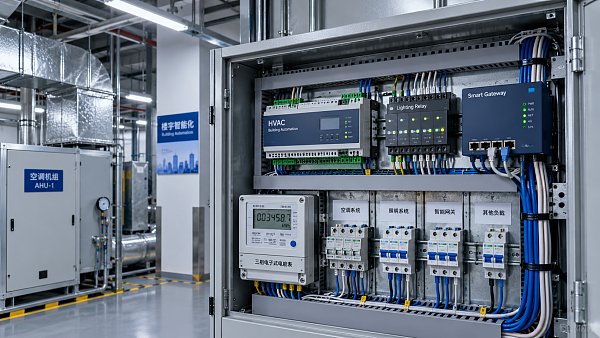
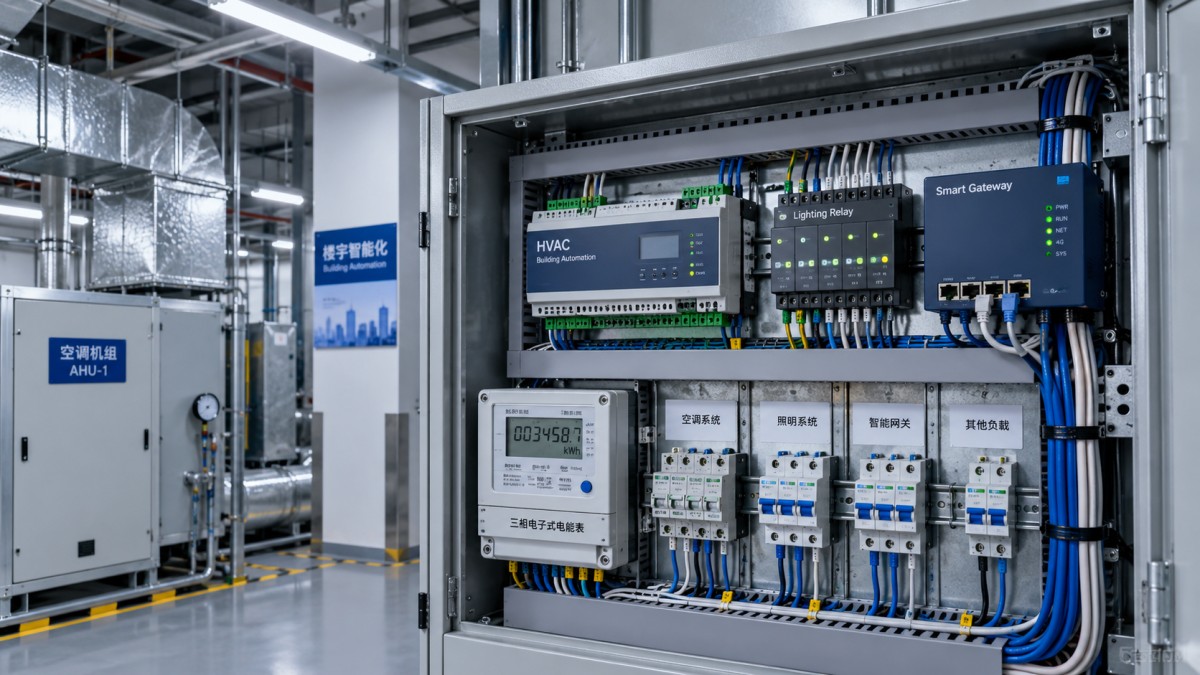
A useful architecture view shows the complete path from field device to controller, gateway, network, and application. It should identify where values are translated, where commands originate, and which connections depend on external services.
What gateways and middleware can solve
A gateway can bridge supported protocols or bring a serial connection onto an IP network. Middleware can normalize units, map equipment identities, combine data sources, and expose a common interface to applications. These components are valuable when functional legacy equipment has a limited but usable interface.
They also have limits. A gateway cannot obtain a measurement that the equipment never produces. Middleware cannot safely infer an undocumented control sequence merely because it can write to a register. A retrofit that relies heavily on reverse-engineered behavior may become difficult to maintain when a controller, firmware version, or application changes.
Evaluate the integration components as equipment with their own support requirements. Ask how configurations are backed up, who maintains mappings, whether logs are available to the operator, and how failed hardware is replaced. Establish whether connection credentials and configuration files remain accessible if the integration supplier changes.
For multiple sites, check whether one template can be applied consistently. Buildings that appear similar may have different controller generations, naming conventions, or local modifications. A successful connection at one site does not establish the effort required across the portfolio.
Keep the building operational when connections fail
Compatibility includes behavior during outages. A platform that works while every connection is healthy can still be unsuitable if a network interruption disables local operation or leaves equipment in an undesirable state.
Define what happens when the cloud service, gateway, site network, or individual controller becomes unavailable. Where continued operation is required, local controllers need appropriate schedules, limits, and manual controls. Depending on the application, the right fallback might be a locally stored schedule, a defined operating mode, or suspension of remote optimization.
Command ownership needs explicit treatment. An existing building management system, a new optimization platform, and a local operator may all be able to change the same setting. Without an agreed priority and release mechanism, they can overwrite one another. The result may be unstable operation, confusing alarms, or settings that drift back after an operator corrects them.
For each controlled function, specify who can issue commands, what limits apply, how local overrides take precedence, and when remote control resumes. Confirm that the new platform respects existing equipment protections. Life-safety functions require separate treatment under applicable requirements and the authority responsible for those systems; they should not be folded casually into a general optimization scope.
Cybersecurity can also limit an otherwise workable integration. A legacy controller may communicate successfully while lacking capabilities needed for direct access from a broader network. The proposed design should address segmentation, restricted communication paths, account permissions, remote maintenance, and logging. Protective measures must be assessed against the equipment and intended use; adding a gateway alone does not establish security.
Product compliance and interoperability answer different questions. Applicable electrical safety requirements and installation rules remain relevant to new components. A product’s certification or conformity marking does not demonstrate that it exchanges the required data correctly with a specific legacy system. Evaluate both, with separate evidence.
Make the pilot exercise the difficult conditions
A useful pilot includes representative legacy equipment and a defined set of operating scenarios. Selecting only the easiest controller to connect can conceal the costs and limitations of the wider rollout. Include meaningful differences such as a proprietary interface, a slow serial connection, or a site with unreliable network service where those conditions exist in the estate.
The pilot should demonstrate more than a dashboard receiving live values. Its acceptance checks should cover:
- Whether readings match the source system, including units, timestamps, and status information.
- Whether authorized commands reach the intended equipment and their outcomes can be verified.
- Whether local overrides and existing control priorities behave as specified.
- Whether communication failures produce clear alerts and the agreed fallback behavior.
- Whether reconnection restores operation without issuing obsolete commands.
- Whether staff can diagnose faults and restore configurations using the supplied documentation.
Use performance thresholds appropriate to the function. A reporting application may tolerate delayed uploads that would be unacceptable for an operational control task. Specify latency, data loss, and recovery requirements before testing so that “it connected” cannot become the sole acceptance criterion.
Choose what to retain, isolate, or replace
Keeping legacy equipment is attractive when it remains serviceable, has a supported interface, and delivers the required functions with manageable integration effort. A monitoring project can often retain more equipment than a project requiring granular control, because it introduces fewer dependencies into daily operation.
Isolation can be appropriate when an older system performs its local role reliably but should have limited interaction with the new platform. A restricted connection may provide selected readings while leaving control within the existing system. The feasibility of that arrangement depends on the available interface and whether the reduced scope still achieves the business objective.
Replacement becomes more compelling when essential functions are unavailable, interface work is extensive, or the equipment has little remaining service life. Installing a custom gateway around an unsupported controller can defer replacement while creating another component to support. Compare that option with replacing the relevant controller or subsystem, including installation disruption and commissioning effort.
Evaluate costs across the expected operating period. Include interface licenses, engineering, network changes, point mapping, commissioning, software subscriptions, support, and changes triggered by future upgrades. Identify who is responsible when a connector stops working after another supplier updates its software.
A phased rollout can reduce disruption if each phase has a usable end state. One sequence might establish monitoring first, verify data quality, then introduce supervisory control in selected areas. Keep rollback procedures and configuration backups current. Where control is added, define the operational responsibility of site staff before deployment.
The strongest selection evidence is a documented fit between the required functions and the installed estate: accessible interfaces, understood data, tested operating behavior, and a support path the owner can sustain. Approve retention where that evidence is sound, limit integration where the benefits remain useful, and budget replacement where legacy constraints prevent the required outcome. That produces a modernization plan grounded in what the commercial space can actually support.
News Recommendations
 Will commercial smart infrastructure solutions work with legacy systems?
![51a6ab95581761cc26f4318be6520c15]()
Aris Katos
Future of Carbide Coatings
 How to verify a preschool furniture manufacturer's safety standards
![51a6ab95581761cc26f4318be6520c15]()
Aris Katos
Future of Carbide Coatings
 A technical comparison of semiconductor processes for power devices
![51a6ab95581761cc26f4318be6520c15]()
Aris Katos
Future of Carbide Coatings
 How to verify that a BIFMA ergonomic chair meets the standard
![51a6ab95581761cc26f4318be6520c15]()
Aris Katos
Future of Carbide Coatings
 How to use a CRI value chart when choosing LED lighting
![51a6ab95581761cc26f4318be6520c15]()
Aris Katos
Future of Carbide Coatings
 How to compare hotel aroma diffuser wholesale options by coverage area
![51a6ab95581761cc26f4318be6520c15]()
Aris Katos
Future of Carbide Coatings
 How to prevent O-rings and seals from failing in food equipment
![51a6ab95581761cc26f4318be6520c15]()
Aris Katos
Future of Carbide Coatings
 How to compare commercial linear light wholesale quotes accurately
![51a6ab95581761cc26f4318be6520c15]()
Aris Katos
Future of Carbide Coatings
 How to verify international standards compliance for Middle East exports
![51a6ab95581761cc26f4318be6520c15]()
Aris Katos
Future of Carbide Coatings
 How to select laboratory instruments for reproducible test results
![51a6ab95581761cc26f4318be6520c15]()
Aris Katos
Future of Carbide Coatings
 When does a sheet metal prototype reveal design flaws early?
![51a6ab95581761cc26f4318be6520c15]()
Aris Katos
Future of Carbide Coatings
 When PE air column bags reduce damage in e-commerce fulfillment
![51a6ab95581761cc26f4318be6520c15]()
Aris Katos
Future of Carbide Coatings
 How energy-efficient design reduces operating costs in retail lighting
![51a6ab95581761cc26f4318be6520c15]()
Aris Katos
Future of Carbide Coatings
 When commercial aluminum storefronts make sense for a retail renovation
![51a6ab95581761cc26f4318be6520c15]()
Aris Katos
Future of Carbide Coatings
 What makes LED lights durable in high-use commercial spaces?
![51a6ab95581761cc26f4318be6520c15]()
Aris Katos
Future of Carbide Coatings
 Which industry categories offer the strongest export potential in Latin America?
![51a6ab95581761cc26f4318be6520c15]()
Aris Katos
Future of Carbide Coatings
 How to choose an ultra bright waterproof window display for storefronts
![51a6ab95581761cc26f4318be6520c15]()
Aris Katos
Future of Carbide Coatings
 How to verify suppliers on a trade portal for global sourcing
![51a6ab95581761cc26f4318be6520c15]()
Aris Katos
Future of Carbide Coatings
 How RoHS requirements should be stated in product specifications
![51a6ab95581761cc26f4318be6520c15]()
Aris Katos
Future of Carbide Coatings
 What affects the lead time for custom retail counter displays?
![51a6ab95581761cc26f4318be6520c15]()
Aris Katos
Future of Carbide Coatings
 What consumer packaging USA importers need to verify before ordering
![51a6ab95581761cc26f4318be6520c15]()
Aris Katos
Future of Carbide Coatings
 How commercial spaces interiors shape customer dwell time
![51a6ab95581761cc26f4318be6520c15]()
Aris Katos
Future of Carbide Coatings
 How LED commercial lighting design reduces glare in retail spaces
![51a6ab95581761cc26f4318be6520c15]()
Aris Katos
Future of Carbide Coatings
 How industrial technology information improves RFID inventory accuracy
![51a6ab95581761cc26f4318be6520c15]()
Aris Katos
Future of Carbide Coatings
 When drip garden watering systems make more sense than sprinklers
![51a6ab95581761cc26f4318be6520c15]()
Aris Katos
Future of Carbide Coatings
 When category comparison improves sourcing for industrial applications
![51a6ab95581761cc26f4318be6520c15]()
Aris Katos
Future of Carbide Coatings
 Industrial application guidance for selecting the right LED lighting
![51a6ab95581761cc26f4318be6520c15]()
Aris Katos
Future of Carbide Coatings
 Which commercial architecture standards apply to European retail fit-outs?
![51a6ab95581761cc26f4318be6520c15]()
Aris Katos
Future of Carbide Coatings
 How to verify FDA requirements for maternity care products
![51a6ab95581761cc26f4318be6520c15]()
Aris Katos
Future of Carbide Coatings
 How to verify BPA-free claims for food-contact products
![51a6ab95581761cc26f4318be6520c15]()
Aris Katos
Future of Carbide Coatings
 When does a European wholesale supplier suit modular office projects?
![51a6ab95581761cc26f4318be6520c15]()
Aris Katos
Future of Carbide Coatings
 When consumer ecosystem solutions improve the in-store shopping journey
![51a6ab95581761cc26f4318be6520c15]()
Aris Katos
Future of Carbide Coatings
 How a commercial developers network can reduce site selection risk
![51a6ab95581761cc26f4318be6520c15]()
Aris Katos
Future of Carbide Coatings
 How clear purchasing specifications prevent costly supplier deviations
![51a6ab95581761cc26f4318be6520c15]()
Aris Katos
Future of Carbide Coatings
 What an ISTA drop test lab checks before your packaging ships
![51a6ab95581761cc26f4318be6520c15]()
Aris Katos
Future of Carbide Coatings
 Which commercial furniture standards apply to workplace seating?
![51a6ab95581761cc26f4318be6520c15]()
Aris Katos
Future of Carbide Coatings
 How to evaluate smart lighting module OEM compatibility before sampling
![51a6ab95581761cc26f4318be6520c15]()
Aris Katos
Future of Carbide Coatings
 How to assess whether sustainable technology delivers real impact
![51a6ab95581761cc26f4318be6520c15]()
Aris Katos
Future of Carbide Coatings
 How to assess an OEM supplier’s quality control before ordering
![51a6ab95581761cc26f4318be6520c15]()
Aris Katos
Future of Carbide Coatings