How to assess whether sustainable technology delivers real impact
Time
Click Count
A sustainability claim can look convincing on a product sheet: lower emissions, recycled content, energy savings, circular design. Yet technical evaluators know that a claim is not the same as an outcome. A smart POS terminal that consumes less power but fails early, a “recyclable” package unsupported by local recovery systems, or a low-carbon fixture that cannot meet fire, load, or indoor-air requirements may create new operational problems while solving little in practice.
That is why sustainable technology should be assessed as a performance decision, not a branding category. The central question is not “Is this solution green?” It is: Can this technology demonstrate a material environmental improvement across its lifecycle while preserving safety, functionality, compliance, and commercial value?
For evaluators working across retail environments, commercial interiors, lighting, packaging, and consumer supply chains, the answer requires more than a single certificate or headline carbon figure. It requires a disciplined comparison between the proposed solution and a realistic baseline.
Start with the decision the technology is supposed to improve
Before reviewing sustainability data, define the operational problem. A solution cannot be judged meaningfully until the intended use case is clear. Is the goal to reduce energy use in a chain-store lighting rollout? Extend the service life of commercial furniture? Lower packaging material intensity without increasing product damage? Improve inventory accuracy so fewer goods are overproduced, transported, or discarded?
Different applications create different impact pathways. For example, an AI-enabled retail analytics platform may have a relatively modest physical footprint, but its real sustainability value depends on whether it reduces waste, improves replenishment decisions, or avoids unnecessary store visits. A modular display system may require more material at purchase, yet outperform a lighter alternative if it can be repaired, reconfigured, and used across multiple store formats.
A useful assessment brief should identify:
- The existing product, process, or system being replaced;
- The functional unit for comparison, such as one store-year, one thousand shipped units, or one operational workstation;
- Required technical performance, including load, reliability, hygiene, safety, light quality, connectivity, or user experience;
- Expected service life and maintenance conditions;
- The environmental priorities that matter most to the project.
This framing prevents a common error: comparing products by weight, recycled content, or purchase price when their actual function and lifespan are not equivalent. Sustainable technology is not automatically the option with the smallest material footprint at the point of delivery. It may be the option that delivers the required function with fewer replacements, lower energy demand, less waste, and more recoverable value over time.
Assess impact across the lifecycle, not at the factory gate
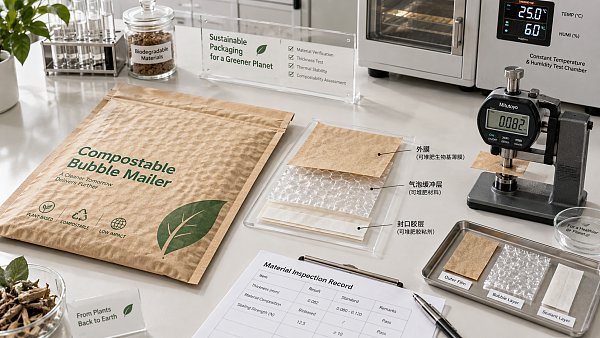
Lifecycle thinking is essential because environmental burdens often move rather than disappear. A supplier may reduce virgin plastic in a package, for instance, but introduce a multi-material structure that is harder to separate and recycle. A commercial lighting upgrade may reduce electricity consumption substantially, while replacement drivers or proprietary control systems create long-term service dependencies. Neither example is automatically unacceptable; both require a fuller view.
Technical teams should examine impact across five connected stages:
- Materials and sourcing. What inputs are used? Are recycled, renewable, certified, or lower-impact materials verified through traceable documentation? Are material choices appropriate for the required durability and safety profile?
- Manufacturing. What evidence exists regarding energy, water, waste, chemical management, and production yield? Broad corporate targets are useful context, but product-level data is more decision-ready.
- Transport and installation. Consider shipment density, packaging volume, installation complexity, damage rates, and whether the system requires specialist labor or frequent site visits.
- Use phase. For powered systems, energy consumption, standby load, software efficiency, and maintenance frequency may dominate total impact. For furniture and fixtures, lifespan, cleanability, repairability, and adaptability often matter more.
- End of use. Can components be reused, refurbished, remanufactured, recycled, or safely disposed of? Is there a practical pathway, not merely a theoretical one?
The objective is not to demand a perfect life cycle assessment for every procurement event. That would be slow and disproportionate for many categories. Instead, request evidence at the level appropriate to the decision’s scale and risk, then focus scrutiny on the lifecycle stages most likely to drive impact.
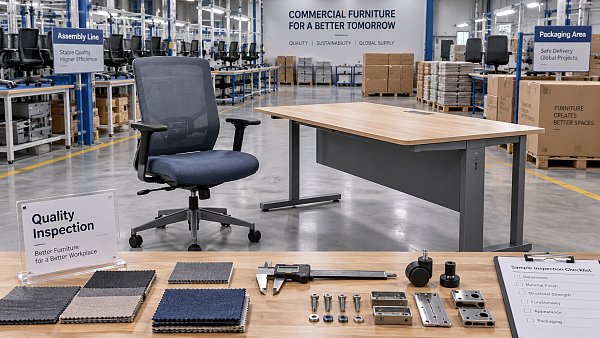
For an energy-intensive smart retail device, use-phase electricity may be decisive. For a high-volume consumer package, material composition and end-of-life compatibility may carry more weight. For a commercial seating system, durability, replacement parts, and conformity with performance standards may be the decisive factors.
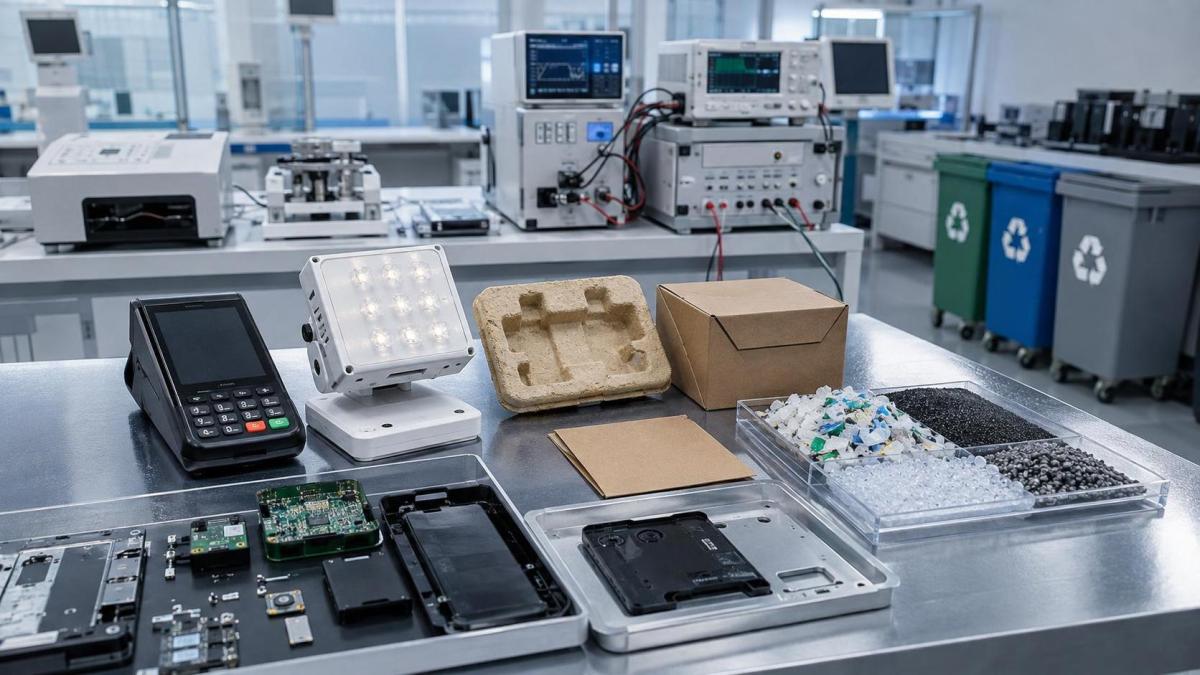
Separate measured evidence from attractive claims
Not all sustainability information has equal value. A supplier statement, a product label, a third-party certification, a material declaration, and a verified environmental product declaration each answer different questions. Evaluators should avoid treating them as interchangeable.
Ask what is being measured, who verified it, what assumptions were used, and whether the information applies to the exact product configuration under consideration. A generic declaration about a manufacturer’s use of renewable energy does not prove the footprint of a specific fixture produced in another facility. Likewise, a recyclability claim means little without clarity on material format, collection infrastructure, contamination risks, and regional recovery conditions.
Evidence becomes more credible when it is specific, current, and comparable. Look for:
- Product-level bills of materials or material declarations;
- Recognized third-party test reports and certifications relevant to the category;
- Lifecycle data that states boundaries, assumptions, and declared units;
- Clear documentation of recycled content, including whether it is post-consumer or post-industrial;
- Energy performance data measured under defined operating conditions;
- Repair, warranty, spare-parts, and take-back information;
- Restricted-substance, safety, and market-access records.
International benchmarks matter here. In commercial environments, environmental claims must coexist with requirements such as UL, CE, BIFMA, electrical safety, structural performance, electromagnetic compatibility, and chemical restrictions. A material substitution that undermines compliance is not a responsible sustainability improvement. The strongest solutions meet environmental objectives without asking the buyer to accept hidden performance compromises.
Use a baseline that reflects real operations
A sustainability comparison becomes distorted when the baseline is unrealistic. If a proposed smart display is compared with a manually updated sign but requires cloud infrastructure, power, connectivity, replacement modules, and trained support, those inputs belong in the assessment. If a reusable transit package is compared only with the purchase cost of a single-use carton, the comparison ignores reverse logistics, cleaning, loss rates, storage, and the number of successful cycles achieved.
Technical evaluators should model the use conditions they actually expect: store operating hours, climate, user behavior, maintenance capabilities, regional electricity mix, shipping distances, return rates, and local waste systems. Sensitivity analysis is particularly useful where assumptions are uncertain. Rather than presenting one precise-looking result, test how the conclusion changes if product life is shorter, return logistics are weaker, or energy prices shift.
This approach often reveals the decision’s real leverage point. A low-energy device may only deliver its promised benefit if software settings are managed correctly. A reusable fixture may depend on standardized dimensions across store formats. Sustainable packaging may need procurement, design, fulfillment, and retail teams to align on damage tolerance and shelf presentation. Technology alone rarely produces impact; the surrounding operating model determines whether the benefit is realized.
Durability and repairability are environmental metrics
In commercial procurement, early failure is frequently the hidden cost of a poorly assessed solution. A product that uses fewer resources at manufacture can still create greater lifecycle impact if it needs replacement after a short period. This is especially relevant for seating, shelving, POS hardware, lighting controls, digital signage, and high-touch retail equipment.
Review durability in practical terms. Can high-wear surfaces be replaced? Are power supplies, batteries, LEDs, sensors, or control modules accessible? Is firmware support available for a reasonable period? Are fasteners standardized? Can a local technician repair the system without sending the entire unit back to a central facility?
Repairability should also be evaluated against commercial reality. A technically repairable product is not truly repairable if spare parts are unavailable, lead times are excessive, instructions are restricted, or labor costs make replacement the default choice. Ask suppliers to describe their service model, not just their design intent.
Watch for burden shifting in digital and “smart” solutions
Digitalization can support lower-impact operations, but it should not receive an automatic sustainability pass. Smart retail technology may reduce printed materials, prevent stockouts, optimize routes, and improve energy control. It can also introduce embedded electronics, data transmission, cloud processing, short upgrade cycles, and electronic waste.
When assessing connected systems, consider device longevity, update policy, interoperability, cybersecurity maintenance, data architecture, and end-of-life handling. Open or well-documented interfaces can reduce lock-in and support longer useful lives. Modular hardware can allow individual components to be upgraded instead of replacing an entire terminal or display. Energy-saving features should be validated under normal—not idealized—operating conditions.
The same caution applies to supply-chain software. A platform’s potential impact lies in the decisions it changes: fewer expedited shipments, improved load utilization, reduced excess inventory, better demand forecasting, or lower return volumes. If those outcomes cannot be measured after implementation, the sustainability case remains an assumption.
Build a weighted scorecard, but do not let it hide deal-breakers
A scorecard gives cross-functional teams a common language. It can balance environmental value with technical, commercial, and compliance requirements. Typical criteria include carbon intensity, circularity potential, energy use, durability, hazardous substances, supplier transparency, total cost of ownership, installation complexity, and regulatory fit.
However, a weighted average should not allow a serious failure to disappear behind strong scores elsewhere. Define non-negotiable gates before scoring. A product may be disqualified if it lacks required safety certification, fails minimum durability testing, uses restricted substances, cannot meet project timelines, or provides no credible evidence for a central environmental claim.
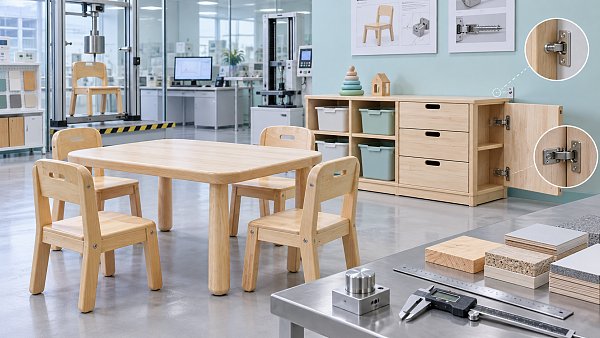
For the remaining options, assign weights based on the category and project purpose. In a commercial lighting project, verified energy performance and maintenance access may carry more weight than recycled content. In food-adjacent packaging, material safety, barrier performance, and actual recovery pathways may outrank a broad carbon claim. For furniture in a high-traffic workspace, structural performance, emissions, refurbishment potential, and spare-parts availability deserve close attention.
Translate the selection into post-purchase verification
A sustainable technology decision should not end at contract award. The most valuable claims are the ones that can be observed after deployment. Establish a short list of operational indicators before implementation: energy per device or store, replacement frequency, packaging damage rate, material recovery rate, maintenance hours, product return volume, or avoided waste.
These measures create accountability on both sides. They also help distinguish between a solution that looked sustainable in procurement and one that genuinely improves the operating system. Where performance falls short, the issue may be product design, installation, training, configuration, or an assumption that did not hold in the field.
Platforms such as Global Business & Consumer Ecosystem (G-BCE) can support this work by bringing cross-sector benchmarks into one evaluation process. For sourcing directors, architects, and technical teams comparing commercial hardware, retail systems, consumer supply-chain solutions, lighting, signage, and packaging, transparent references to international standards and functional performance make it easier to see beyond isolated marketing claims.
The strongest choice is defensible, not merely desirable
There is rarely a universally “greenest” option. A credible sustainable technology choice is one that fits a defined application, improves on a relevant baseline, meets required standards, and produces evidence that can withstand scrutiny from engineering, procurement, operations, and sustainability stakeholders alike.
When data is incomplete, do not fill the gaps with optimism. Identify the uncertainty, request clarification, run a pilot where feasible, and make assumptions visible in the decision record. That discipline protects the project from greenwashing, but it also protects genuinely better solutions from being dismissed because they are assessed with the wrong criteria.
In the end, real impact is practical. It appears in longer product life, lower energy demand, fewer damaged goods, more efficient materials, safer environments, and systems that remain useful instead of becoming waste. Those are the outcomes technical evaluators should be selecting for.
News Recommendations
 How to assess supplier reliability in global supply chain sourcing
![51a6ab95581761cc26f4318be6520c15]()
Aris Katos
Future of Carbide Coatings
 Omdia Forecasts 11.6% CAGR for Global LED Video Display Market in 2026–2030
![51a6ab95581761cc26f4318be6520c15]()
Aris Katos
Future of Carbide Coatings
 How to verify an LFGB testing laboratory's accreditation scope
![51a6ab95581761cc26f4318be6520c15]()
Aris Katos
Future of Carbide Coatings
 How to assess a workplace interior supplier's installation scope
![51a6ab95581761cc26f4318be6520c15]()
Aris Katos
Future of Carbide Coatings
 What records are needed for an ISO 9001 furniture factory audit?
![51a6ab95581761cc26f4318be6520c15]()
Aris Katos
Future of Carbide Coatings
 How to choose AI marketing tools that work with your existing CRM
![51a6ab95581761cc26f4318be6520c15]()
Aris Katos
Future of Carbide Coatings
 Do freight costs erase savings when buying retail fixtures wholesale?
![51a6ab95581761cc26f4318be6520c15]()
Aris Katos
Future of Carbide Coatings
 How heat buildup affects OEM retail shelf LCD screen reliability
![51a6ab95581761cc26f4318be6520c15]()
Aris Katos
Future of Carbide Coatings
 How to check whether an OEM retail shelf screen fits existing shelving
![51a6ab95581761cc26f4318be6520c15]()
Aris Katos
Future of Carbide Coatings
 What brightness should an OEM shelf LCD screen have for retail use?
![51a6ab95581761cc26f4318be6520c15]()
Aris Katos
Future of Carbide Coatings
 Can smart retail IT solutions for CPG work with legacy POS systems?
![51a6ab95581761cc26f4318be6520c15]()
Aris Katos
Future of Carbide Coatings
 What permit approvals belong in a commercial fitout planning checklist?
![51a6ab95581761cc26f4318be6520c15]()
Aris Katos
Future of Carbide Coatings
 How Do You Apply Sustainability Standards to a Retail Renovation?
![51a6ab95581761cc26f4318be6520c15]()
Aris Katos
Future of Carbide Coatings
 Which Technical Factors Matter When Comparing Smart Retail Hardware?
![51a6ab95581761cc26f4318be6520c15]()
Aris Katos
Future of Carbide Coatings
 Does Data Transparency Matter When Selecting Consumer Goods Suppliers?
![51a6ab95581761cc26f4318be6520c15]()
Aris Katos
Future of Carbide Coatings
 How Does Commercial Design Differ from Interior Decoration?
![51a6ab95581761cc26f4318be6520c15]()
Aris Katos
Future of Carbide Coatings
 How Long Does It Take to Verify a Commercial Furniture Supplier?
![51a6ab95581761cc26f4318be6520c15]()
Aris Katos
Future of Carbide Coatings
 How to verify compostability claims from a bubble mailer manufacturer
![51a6ab95581761cc26f4318be6520c15]()
Aris Katos
Future of Carbide Coatings
 Will commercial smart infrastructure solutions work with legacy systems?
![51a6ab95581761cc26f4318be6520c15]()
Aris Katos
Future of Carbide Coatings
 How to verify a preschool furniture manufacturer's safety standards
![51a6ab95581761cc26f4318be6520c15]()
Aris Katos
Future of Carbide Coatings
 A technical comparison of semiconductor processes for power devices
![51a6ab95581761cc26f4318be6520c15]()
Aris Katos
Future of Carbide Coatings
 How to verify that a BIFMA ergonomic chair meets the standard
![51a6ab95581761cc26f4318be6520c15]()
Aris Katos
Future of Carbide Coatings
 How to use a CRI value chart when choosing LED lighting
![51a6ab95581761cc26f4318be6520c15]()
Aris Katos
Future of Carbide Coatings
 How to compare hotel aroma diffuser wholesale options by coverage area
![51a6ab95581761cc26f4318be6520c15]()
Aris Katos
Future of Carbide Coatings
 How to prevent O-rings and seals from failing in food equipment
![51a6ab95581761cc26f4318be6520c15]()
Aris Katos
Future of Carbide Coatings
 How to compare commercial linear light wholesale quotes accurately
![51a6ab95581761cc26f4318be6520c15]()
Aris Katos
Future of Carbide Coatings
 How to verify international standards compliance for Middle East exports
![51a6ab95581761cc26f4318be6520c15]()
Aris Katos
Future of Carbide Coatings
 How to select laboratory instruments for reproducible test results
![51a6ab95581761cc26f4318be6520c15]()
Aris Katos
Future of Carbide Coatings
 When does a sheet metal prototype reveal design flaws early?
![51a6ab95581761cc26f4318be6520c15]()
Aris Katos
Future of Carbide Coatings
 When PE air column bags reduce damage in e-commerce fulfillment
![51a6ab95581761cc26f4318be6520c15]()
Aris Katos
Future of Carbide Coatings
 How energy-efficient design reduces operating costs in retail lighting
![51a6ab95581761cc26f4318be6520c15]()
Aris Katos
Future of Carbide Coatings
 When commercial aluminum storefronts make sense for a retail renovation
![51a6ab95581761cc26f4318be6520c15]()
Aris Katos
Future of Carbide Coatings
 What makes LED lights durable in high-use commercial spaces?
![51a6ab95581761cc26f4318be6520c15]()
Aris Katos
Future of Carbide Coatings
 Which industry categories offer the strongest export potential in Latin America?
![51a6ab95581761cc26f4318be6520c15]()
Aris Katos
Future of Carbide Coatings
 How to choose an ultra bright waterproof window display for storefronts
![51a6ab95581761cc26f4318be6520c15]()
Aris Katos
Future of Carbide Coatings
 How to verify suppliers on a trade portal for global sourcing
![51a6ab95581761cc26f4318be6520c15]()
Aris Katos
Future of Carbide Coatings
 How RoHS requirements should be stated in product specifications
![51a6ab95581761cc26f4318be6520c15]()
Aris Katos
Future of Carbide Coatings
 What affects the lead time for custom retail counter displays?
![51a6ab95581761cc26f4318be6520c15]()
Aris Katos
Future of Carbide Coatings
 What consumer packaging USA importers need to verify before ordering
![51a6ab95581761cc26f4318be6520c15]()
Aris Katos
Future of Carbide Coatings