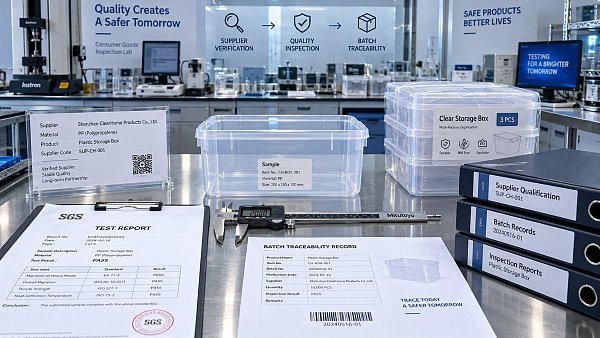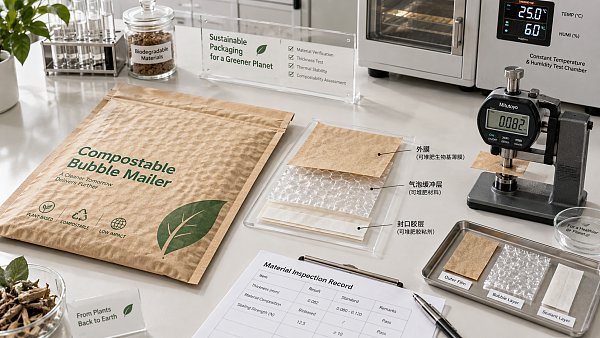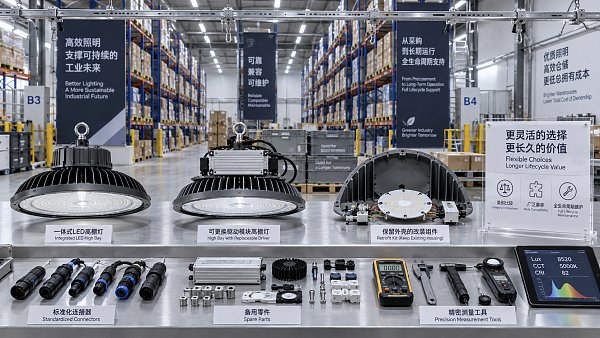
Does Data Transparency Matter When Selecting Consumer Goods Suppliers?
Time
Click Count
Yes. Data transparency matters when selecting a consumer goods supplier because it makes product quality, delivery commitments, and compliance claims easier to verify before an order becomes difficult to reverse. A competitive quotation has limited value when the material specification is incomplete, the tested sample differs from the production item, or the factory responsible for the order is unclear.
However, disclosure alone does not establish reliability. A folder full of certificates can still leave important questions unanswered. Useful transparency connects each claim to a specific product, production location, batch, and supporting record. The practical test is whether the information supports a sourcing decision and provides a way to investigate problems after delivery.
Start with the decisions that missing data could change
The amount of information required should follow the product’s consequences of failure. A decorative storage basket and a rechargeable household appliance do not need identical evidence. Electrical components introduce different questions from woven materials, while products intended for food contact require closer attention to composition and intended use.
Before requesting documents, define the conditions under which the product will be sold and used. Include the destination market, expected handling, packaging format, and any advertised performance or environmental claims. These details determine which supplier disclosures are relevant. A test conducted under dry indoor conditions, for example, offers limited evidence for a product advertised for humid environments.
Separate gaps that prevent approval from details that can be resolved later. An unidentified material in a safety-sensitive component can block qualification. Missing photographs of a shipping carton might be resolved during packaging approval. Treating every unanswered question as equally serious makes the assessment slower and obscures the issues that deserve attention.
Ask for information that identifies the actual product
A product name or catalog code rarely defines everything that affects performance. Specifications should identify the material grade, relevant dimensions and tolerances, surface treatment, critical components, and packaging configuration. Where several versions share a model name, the records must distinguish the version being quoted.
Consider a plastic storage container. “Durable plastic” gives little basis for comparison. Resin type, wall thickness, lid fit, and intended temperature range explain much more. Recycled content introduces further questions about feedstock consistency and how the stated proportion is supported. These details affect whether two visually similar offers represent equivalent products.
The following records answer different questions and should be assessed together:
Document dates also need context. An older report is not automatically irrelevant, and a recent report is not automatically sufficient. The important question is whether the product, materials, production process, and applicable requirements have changed since the evidence was generated.
Follow one claim back to its source
A manageable way to assess credibility is to select an important claim and follow its evidence through the supplier’s records. For a load-bearing household item, that might be the stated load capacity. For packaging, it might be recycled content. For an electrical product, it might be a specific safety or performance characteristic.
Begin with the quoted specification. Find the supporting report or declaration, identify the sample or material it covers, and establish how that evidence relates to current production. This exposes gaps that remain hidden when documents are reviewed separately.
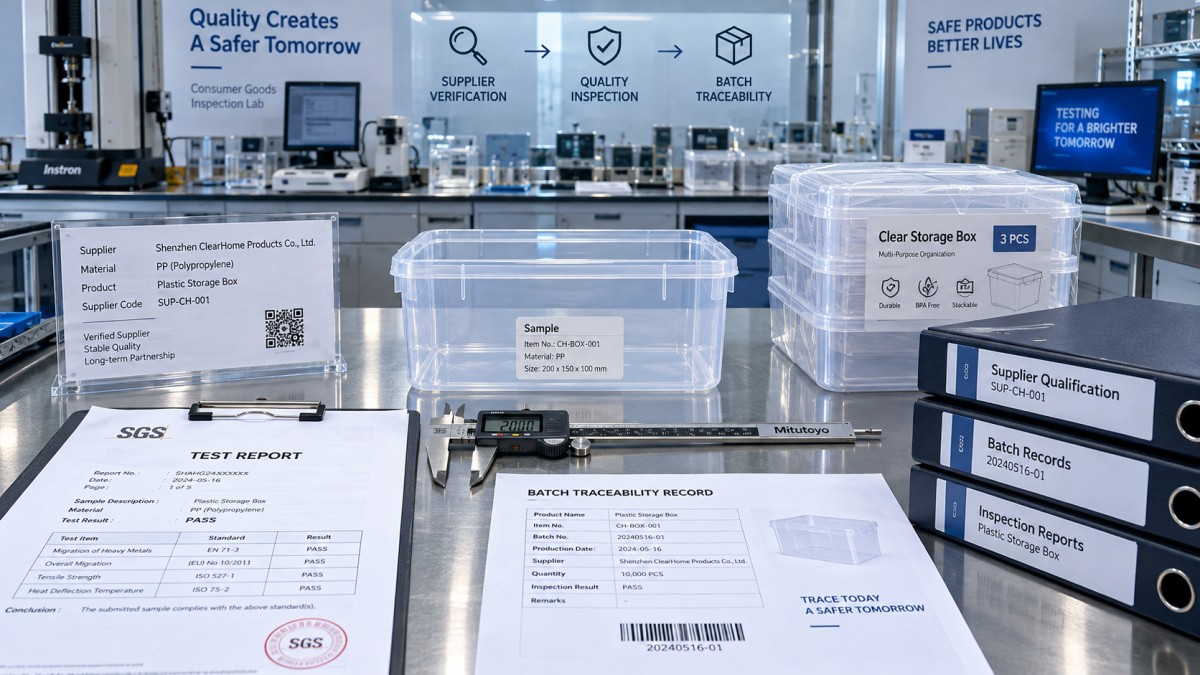
A test report deserves a close reading beyond its cover page. Examine the model designation, sample description, photographs where available, test conditions, result details, and any exclusions. A report covering one component does not automatically establish the performance of the assembled product. Likewise, a product family description needs enough detail to show whether the ordered variant falls within its scope.
Where authenticity matters, use an independent verification route. That could involve confirming a report reference with the issuing organization through independently obtained contact details or using an official verification facility where one exists. Contact information printed on a questionable document should not be the only route used to validate it.
Resolve discrepancies directly. A different factory address might reflect an administrative update, an additional production site, or undisclosed subcontracting. Each explanation has different implications. Request the relationship between the entities and the records supporting that explanation before accepting the mismatch.
Determine whether the sample represents routine production
An approved sample establishes a reference, but it does not demonstrate that future batches will match it. Samples can be assembled with selected components, receive extra finishing, or come from a production route different from the one planned for the order. Transparency should reveal how the reference sample connects to the normal manufacturing process.
Record the sample’s specification revision and the characteristics that matter for acceptance. For a painted metal household accessory, these could include coating appearance, adhesion, edge finish, and dimensions affecting assembly. A photograph alone cannot define all of these attributes. Where appearance is important, retain an agreed physical reference alongside written acceptance criteria.
Ask how substitutions are controlled. Changes to resin grade, adhesive, coating chemistry, component source, or packaging material can alter performance even when the finished item looks unchanged. The approval process should identify which changes require notification, what evidence must accompany them, and when production can proceed.
Subcontracting deserves the same attention. Outsourced molding, plating, printing, or final assembly is not automatically a problem. The concern is whether those operations are identified and controlled. An assessment of one facility provides limited assurance if a critical process moves elsewhere without review.
A trial order can test whether the documentation survives contact with production. Compare delivered goods with the approved specification, examine inspection records, and trace selected lot codes. This provides evidence about repeatability that a polished sample presentation cannot supply.
Read quality and capacity data in context
Quality figures are difficult to interpret without definitions. A reported defect rate could refer to incoming materials, items rejected during production, finished goods inspected before shipment, or complaints received after sale. Those measures describe different stages and should not be compared as if they were interchangeable.
Request the inspection scope, defect categories, sampling basis, and treatment of reworked units. An apparent improvement in outgoing quality could result from better process control or from more intensive sorting. Both can reduce defective shipments, but they have different implications for lead time, cost, and production stability.
Evidence of corrective action is especially useful when it links a defect to its cause. If lids repeatedly fit poorly, replacing rejected lids addresses the immediate shipment. Investigating mold wear, cooling conditions, or dimensional variation addresses recurrence. Relevant records should show what changed and how the result was evaluated.
Capacity claims require similar scrutiny. A stated monthly output does not establish how much capacity is available for a particular order. Product mix, shared tooling, finishing bottlenecks, existing commitments, and material availability all influence the delivery schedule.
Request a production plan tied to the proposed quantity and configuration. It should distinguish material procurement, manufacturing, inspection, and dispatch. If a quoted lead time assumes materials are already available, that assumption belongs in the quotation. Otherwise, an apparently firm commitment rests on an unresolved dependency.
Set reasonable boundaries around confidential information
Transparency does not require unrestricted access to every commercial detail. A supplier can protect proprietary formulations, customer identities, and unrelated pricing while still providing evidence needed to evaluate the product. The required disclosure should match the uncertainty being resolved.
A full formulation, for instance, might be unnecessary if suitable declarations and testing establish the relevant characteristics. Upstream identities can sometimes be protected through controlled access or independent verification. Redacted records remain useful when they preserve the product reference, relevant material details, dates, and traceability links.
The distinction is whether confidentiality leaves the important claim verifiable. Refusing to reveal unrelated customer names has little bearing on product suitability. Refusing to identify the production facility or provide evidence for a critical material claim prevents meaningful assessment.
Willingness to investigate also matters. A supplier that acknowledges a missing record, explains the gap, and provides a credible route to resolve it demonstrates a different level of control from one that repeatedly replaces requested evidence with general assurances. Evaluate the quality of the response alongside the completeness of the initial submission.
Use the findings to make the selection decision
Organize the final assessment around unresolved questions and their consequences. A numerical score alone can hide a serious gap: strong delivery communication cannot compensate for an unsupported safety-related claim. Establish essential approval conditions first, then compare the remaining differences in documentation, consistency, and responsiveness.
Three outcomes are practical:
- Approve: Evidence covers the specified product and production arrangement, important discrepancies are resolved, and the trial results support the agreed requirements.
- Approve with conditions. A limited gap remains, with a defined action, responsible contact, and deadline before the affected production or shipment stage. The condition must not leave a safety-critical requirement unresolved.
- Pause qualification: Essential claims remain unverifiable, records conflict without a supported explanation, or the supplier cannot connect the approved product to the proposed production route.
Make ongoing disclosure part of the purchase requirements. Specify the records required with each shipment, how lot identifiers must appear, and which changes need prior approval. Request prompt notification when a deviation affects the agreed specification or delivery plan. These expectations turn an initial transparency assessment into a usable working arrangement.
When comparing prices, account for unresolved evidence gaps that create additional work. Extra testing, repeated inspection, delayed approval, and difficulty tracing defects can change the practical value of an offer. These costs need not be assigned invented figures; they should be identified and priced where a credible basis exists.
The clearest sign of useful transparency appears when something changes. If a component becomes unavailable or a batch fails inspection, the records should make it possible to identify what changed, which goods are affected, and what evidence is needed before production or shipment resumes.
News Recommendations
 What records are needed for an ISO 9001 furniture factory audit?
![51a6ab95581761cc26f4318be6520c15]()
Aris Katos
Future of Carbide Coatings
 How to choose AI marketing tools that work with your existing CRM
![51a6ab95581761cc26f4318be6520c15]()
Aris Katos
Future of Carbide Coatings
 Do freight costs erase savings when buying retail fixtures wholesale?
![51a6ab95581761cc26f4318be6520c15]()
Aris Katos
Future of Carbide Coatings
 What brightness should an OEM shelf LCD screen have for retail use?
![51a6ab95581761cc26f4318be6520c15]()
Aris Katos
Future of Carbide Coatings
 Can smart retail IT solutions for CPG work with legacy POS systems?
![51a6ab95581761cc26f4318be6520c15]()
Aris Katos
Future of Carbide Coatings
 What permit approvals belong in a commercial fitout planning checklist?
![51a6ab95581761cc26f4318be6520c15]()
Aris Katos
Future of Carbide Coatings
 Does Data Transparency Matter When Selecting Consumer Goods Suppliers?
![51a6ab95581761cc26f4318be6520c15]()
Aris Katos
Future of Carbide Coatings
 How Does Commercial Design Differ from Interior Decoration?
![51a6ab95581761cc26f4318be6520c15]()
Aris Katos
Future of Carbide Coatings
 How Long Does It Take to Verify a Commercial Furniture Supplier?
![51a6ab95581761cc26f4318be6520c15]()
Aris Katos
Future of Carbide Coatings
 How to verify compostability claims from a bubble mailer manufacturer
![51a6ab95581761cc26f4318be6520c15]()
Aris Katos
Future of Carbide Coatings
 Will commercial smart infrastructure solutions work with legacy systems?
![51a6ab95581761cc26f4318be6520c15]()
Aris Katos
Future of Carbide Coatings
 How to verify a preschool furniture manufacturer's safety standards
![51a6ab95581761cc26f4318be6520c15]()
Aris Katos
Future of Carbide Coatings
 A technical comparison of semiconductor processes for power devices
![51a6ab95581761cc26f4318be6520c15]()
Aris Katos
Future of Carbide Coatings
 How to verify that a BIFMA ergonomic chair meets the standard
![51a6ab95581761cc26f4318be6520c15]()
Aris Katos
Future of Carbide Coatings
 How to use a CRI value chart when choosing LED lighting
![51a6ab95581761cc26f4318be6520c15]()
Aris Katos
Future of Carbide Coatings
 How to compare hotel aroma diffuser wholesale options by coverage area
![51a6ab95581761cc26f4318be6520c15]()
Aris Katos
Future of Carbide Coatings
 How to prevent O-rings and seals from failing in food equipment
![51a6ab95581761cc26f4318be6520c15]()
Aris Katos
Future of Carbide Coatings
 How to compare commercial linear light wholesale quotes accurately
![51a6ab95581761cc26f4318be6520c15]()
Aris Katos
Future of Carbide Coatings
 How to verify international standards compliance for Middle East exports
![51a6ab95581761cc26f4318be6520c15]()
Aris Katos
Future of Carbide Coatings
 How to select laboratory instruments for reproducible test results
![51a6ab95581761cc26f4318be6520c15]()
Aris Katos
Future of Carbide Coatings
 When does a sheet metal prototype reveal design flaws early?
![51a6ab95581761cc26f4318be6520c15]()
Aris Katos
Future of Carbide Coatings
 When PE air column bags reduce damage in e-commerce fulfillment
![51a6ab95581761cc26f4318be6520c15]()
Aris Katos
Future of Carbide Coatings
 How energy-efficient design reduces operating costs in retail lighting
![51a6ab95581761cc26f4318be6520c15]()
Aris Katos
Future of Carbide Coatings
 When commercial aluminum storefronts make sense for a retail renovation
![51a6ab95581761cc26f4318be6520c15]()
Aris Katos
Future of Carbide Coatings
 What makes LED lights durable in high-use commercial spaces?
![51a6ab95581761cc26f4318be6520c15]()
Aris Katos
Future of Carbide Coatings
 Which industry categories offer the strongest export potential in Latin America?
![51a6ab95581761cc26f4318be6520c15]()
Aris Katos
Future of Carbide Coatings
 How to choose an ultra bright waterproof window display for storefronts
![51a6ab95581761cc26f4318be6520c15]()
Aris Katos
Future of Carbide Coatings
 How to verify suppliers on a trade portal for global sourcing
![51a6ab95581761cc26f4318be6520c15]()
Aris Katos
Future of Carbide Coatings
 How RoHS requirements should be stated in product specifications
![51a6ab95581761cc26f4318be6520c15]()
Aris Katos
Future of Carbide Coatings
 What affects the lead time for custom retail counter displays?
![51a6ab95581761cc26f4318be6520c15]()
Aris Katos
Future of Carbide Coatings
 What consumer packaging USA importers need to verify before ordering
![51a6ab95581761cc26f4318be6520c15]()
Aris Katos
Future of Carbide Coatings
 How commercial spaces interiors shape customer dwell time
![51a6ab95581761cc26f4318be6520c15]()
Aris Katos
Future of Carbide Coatings
 How LED commercial lighting design reduces glare in retail spaces
![51a6ab95581761cc26f4318be6520c15]()
Aris Katos
Future of Carbide Coatings
 How industrial technology information improves RFID inventory accuracy
![51a6ab95581761cc26f4318be6520c15]()
Aris Katos
Future of Carbide Coatings
 When drip garden watering systems make more sense than sprinklers
![51a6ab95581761cc26f4318be6520c15]()
Aris Katos
Future of Carbide Coatings
 When category comparison improves sourcing for industrial applications
![51a6ab95581761cc26f4318be6520c15]()
Aris Katos
Future of Carbide Coatings
 Industrial application guidance for selecting the right LED lighting
![51a6ab95581761cc26f4318be6520c15]()
Aris Katos
Future of Carbide Coatings
 Which commercial architecture standards apply to European retail fit-outs?
![51a6ab95581761cc26f4318be6520c15]()
Aris Katos
Future of Carbide Coatings
 How to verify FDA requirements for maternity care products
![51a6ab95581761cc26f4318be6520c15]()
Aris Katos
Future of Carbide Coatings