Manufacturing Insights: 2026 Cost, Risk, and Supply Trends
Time
Click Count
Manufacturing Insights Are Becoming a Boardroom Signal in 2026
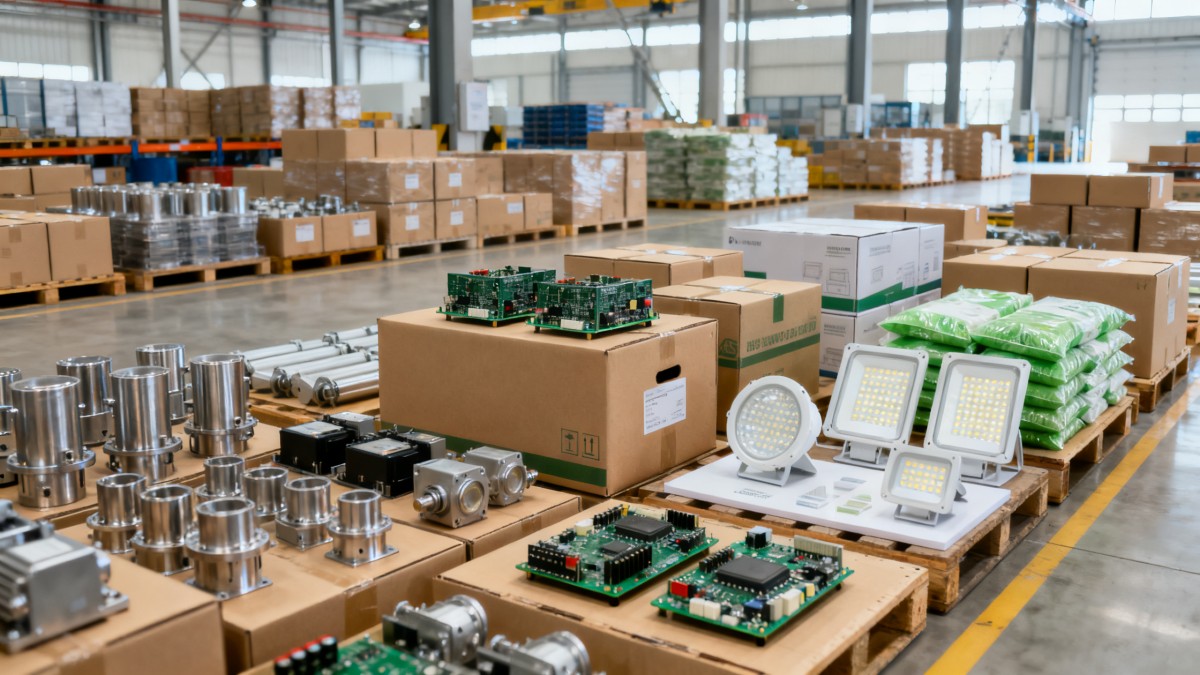
In 2026, manufacturing insights are no longer a back-office reference. They increasingly shape pricing discipline, market timing, compliance planning, and long-term supply resilience.
The shift is visible across commercial interiors, smart retail hardware, consumer goods, lighting systems, and sustainable packaging. Costs still matter, but risk visibility now matters just as much.
That is partly because supply chains are not simply recovering. They are being redesigned around regional exposure, standards alignment, material traceability, and faster decision cycles.
For organizations operating across physical retail and product ecosystems, manufacturing insights now support a broader question: where can growth continue without creating hidden fragility?
This is where cross-sector intelligence has become more valuable. Platforms such as G-BCE reflect a wider market need for benchmarked data that connects sourcing precision with commercial design, durability, and compliance.
The Cost Story Is Changing from Unit Price to Total Exposure
A notable change in recent manufacturing insights is that cost pressure no longer sits in one place. It is spread across materials, freight, energy, labor, financing, and regulatory adaptation.
More importantly, those pressures do not move together. Resin prices may soften while certification costs rise. Metal inputs may stabilize while tooling lead times extend.
That uneven pattern is forcing a more mature view of cost. The cheapest quote can become the most expensive option once redesigns, delays, retesting, or packaging changes are included.
Commercial environments show this clearly. Store fixtures, ergonomic systems, digital displays, and signage often require a mix of structural hardware, electronics, coatings, and installation readiness.
When one part of that package slips, the full site schedule can slip. In practical terms, manufacturing insights now need to connect cost with dependency mapping.
Where the pressure is showing up most clearly
Risk Is Moving Closer to Design, Not Just Procurement
One of the more important manufacturing insights for 2026 is that risk now enters earlier. It often begins at specification stage, before a purchase order is even issued.
This is especially true in sectors where visual consistency, installation speed, electronic integration, and safety standards must work together. Commercial projects rarely tolerate isolated component thinking.
A lighting system may satisfy design intent, yet fail cost expectations after certification. A retail display may ship on time, yet create onsite delays because wiring standards differ by market.
That is why technical benchmarking is gaining weight. Standards such as UL, CE, and BIFMA are not only legal checkpoints. They increasingly influence supplier selection, lifecycle cost, and rollout confidence.
From recent demand signals, companies want manufacturing insights that show more than production capability. They want proof of repeatability across batches, regions, and regulatory conditions.
The risk questions becoming harder to ignore
- Can a supplier meet the same quality threshold after material substitution?
- Will a product architecture still pass required standards after localization?
- How exposed is the project to a single toolmaker, component source, or shipping corridor?
- Does sustainable packaging reduce waste without increasing damage rates or fulfillment cost?
- Can digital hardware be serviced across markets with different power, software, and data rules?
Supply Trends Are Favoring Visibility Over Simple Scale
Another clear pattern in manufacturing insights is that scale alone no longer guarantees confidence. Large capacity helps, but visibility across tiers is becoming the stronger advantage.
This is one reason Asian manufacturing remains central while buyer expectations evolve. Precision, speed, and mature industrial clusters still offer strong value, especially for complex mixed-material products.
At the same time, global commercial projects are asking for more traceable sourcing and clearer milestone reporting. The conversation has shifted from “Can this be made?” to “Can this be managed predictably?”
G-BCE’s business context sits directly inside this transition. The market increasingly needs manufacturing insights that connect factory capability with commercial space performance and consumer-facing expectations.
That connection matters because the same ecosystem now includes furniture, POS infrastructure, signage, packaging, and brand presentation. Weakness in one node can distort the whole rollout.
What better visibility looks like in practice
It usually starts with fewer blind spots, not more dashboards. The strongest manufacturing insights combine technical data, delivery history, compliance status, and material change alerts.
More advanced organizations also compare suppliers by resilience profile. They look at engineering responsiveness, alternate material pathways, documentation quality, and installation readiness.
Demand Is Shifting Toward Smarter, Lower-Friction Commercial Ecosystems
It is not only supply that is changing. Demand has become more integrated. Physical retail, hospitality, workspace, and consumer distribution now expect systems that are functional, digital, and sustainable at once.
That raises the bar for manufacturing insights. Product value is being judged through installation speed, maintenance burden, customer experience, and environmental reporting, not through appearance alone.
Smart retail technology is a good example. AI-enabled terminals, sensor-driven fixtures, and connected signage depend on electronics, enclosures, thermal control, power design, and software compatibility.
Sustainable packaging follows a similar logic. Brands are under pressure to reduce material waste, but they also need shelf impact, transport protection, and compatibility with automated fulfillment.
These overlapping demands explain why generic sourcing data is less useful than applied manufacturing insights. Decision quality improves when technical benchmarks are tied to real deployment scenarios.
The Next Judgments Should Focus on Readiness, Not Prediction Alone
No single forecast will remove uncertainty in 2026. The more realistic goal is better readiness. That means using manufacturing insights to shorten reaction time when costs move or supply assumptions change.
A useful response starts with a narrower set of critical questions. Which specifications carry the highest cost risk? Which standards could delay entry? Which suppliers support faster redesign if conditions shift?
It also helps to separate strategic sourcing from tactical noise. Not every fluctuation deserves a portfolio change. Some signals point to structural shifts, while others are temporary operational friction.
The strongest manufacturing insights tend to support staged decisions. They help teams compare immediate exposure, medium-term alternatives, and long-term ecosystem fit without freezing action.
Practical priorities for the next planning cycle
- Review cost models using total landed and compliance-adjusted assumptions.
- Map products by standards dependency, especially where UL, CE, or BIFMA affect redesign risk.
- Identify where mixed-material assemblies create hidden lead-time exposure.
- Compare sustainable packaging options by damage rate, cube efficiency, and disposal requirements.
- Track which commercial hardware categories need stronger benchmark data before expansion decisions.
Why 2026 Manufacturing Insights Will Matter Beyond the Factory Gate
The broader lesson is straightforward. Manufacturing insights now influence brand execution, capital efficiency, launch timing, and customer experience across the full commercial ecosystem.
That makes the quality of insight more important than the volume of data. Clear benchmarks, cross-sector context, and early warning signals are becoming more useful than isolated cost comparisons.
In the months ahead, the most durable advantage will likely come from better interpretation. Organizations that connect cost, risk, compliance, and deployment realities will be better positioned to act without overreacting.
A sensible next step is to review where current assumptions rely on outdated supplier logic or incomplete technical visibility. That is often where the next round of manufacturing insights delivers the most practical value.
News Recommendations
 What records are needed for an ISO 9001 furniture factory audit?
![51a6ab95581761cc26f4318be6520c15]()
Aris Katos
Future of Carbide Coatings
 How to choose AI marketing tools that work with your existing CRM
![51a6ab95581761cc26f4318be6520c15]()
Aris Katos
Future of Carbide Coatings
 Do freight costs erase savings when buying retail fixtures wholesale?
![51a6ab95581761cc26f4318be6520c15]()
Aris Katos
Future of Carbide Coatings
 Can smart retail IT solutions for CPG work with legacy POS systems?
![51a6ab95581761cc26f4318be6520c15]()
Aris Katos
Future of Carbide Coatings
 What permit approvals belong in a commercial fitout planning checklist?
![51a6ab95581761cc26f4318be6520c15]()
Aris Katos
Future of Carbide Coatings
 How Does Commercial Design Differ from Interior Decoration?
![51a6ab95581761cc26f4318be6520c15]()
Aris Katos
Future of Carbide Coatings
 How Long Does It Take to Verify a Commercial Furniture Supplier?
![51a6ab95581761cc26f4318be6520c15]()
Aris Katos
Future of Carbide Coatings
 How to verify compostability claims from a bubble mailer manufacturer
![51a6ab95581761cc26f4318be6520c15]()
Aris Katos
Future of Carbide Coatings
 Will commercial smart infrastructure solutions work with legacy systems?
![51a6ab95581761cc26f4318be6520c15]()
Aris Katos
Future of Carbide Coatings
 How to verify a preschool furniture manufacturer's safety standards
![51a6ab95581761cc26f4318be6520c15]()
Aris Katos
Future of Carbide Coatings
 A technical comparison of semiconductor processes for power devices
![51a6ab95581761cc26f4318be6520c15]()
Aris Katos
Future of Carbide Coatings
 How to verify that a BIFMA ergonomic chair meets the standard
![51a6ab95581761cc26f4318be6520c15]()
Aris Katos
Future of Carbide Coatings
 How to use a CRI value chart when choosing LED lighting
![51a6ab95581761cc26f4318be6520c15]()
Aris Katos
Future of Carbide Coatings
 How to compare hotel aroma diffuser wholesale options by coverage area
![51a6ab95581761cc26f4318be6520c15]()
Aris Katos
Future of Carbide Coatings
 How to prevent O-rings and seals from failing in food equipment
![51a6ab95581761cc26f4318be6520c15]()
Aris Katos
Future of Carbide Coatings
 How to compare commercial linear light wholesale quotes accurately
![51a6ab95581761cc26f4318be6520c15]()
Aris Katos
Future of Carbide Coatings
 How to verify international standards compliance for Middle East exports
![51a6ab95581761cc26f4318be6520c15]()
Aris Katos
Future of Carbide Coatings
 How to select laboratory instruments for reproducible test results
![51a6ab95581761cc26f4318be6520c15]()
Aris Katos
Future of Carbide Coatings
 When does a sheet metal prototype reveal design flaws early?
![51a6ab95581761cc26f4318be6520c15]()
Aris Katos
Future of Carbide Coatings
 When PE air column bags reduce damage in e-commerce fulfillment
![51a6ab95581761cc26f4318be6520c15]()
Aris Katos
Future of Carbide Coatings
 How energy-efficient design reduces operating costs in retail lighting
![51a6ab95581761cc26f4318be6520c15]()
Aris Katos
Future of Carbide Coatings
 When commercial aluminum storefronts make sense for a retail renovation
![51a6ab95581761cc26f4318be6520c15]()
Aris Katos
Future of Carbide Coatings
 What makes LED lights durable in high-use commercial spaces?
![51a6ab95581761cc26f4318be6520c15]()
Aris Katos
Future of Carbide Coatings
 Which industry categories offer the strongest export potential in Latin America?
![51a6ab95581761cc26f4318be6520c15]()
Aris Katos
Future of Carbide Coatings
 How to choose an ultra bright waterproof window display for storefronts
![51a6ab95581761cc26f4318be6520c15]()
Aris Katos
Future of Carbide Coatings
 How to verify suppliers on a trade portal for global sourcing
![51a6ab95581761cc26f4318be6520c15]()
Aris Katos
Future of Carbide Coatings
 How RoHS requirements should be stated in product specifications
![51a6ab95581761cc26f4318be6520c15]()
Aris Katos
Future of Carbide Coatings
 What affects the lead time for custom retail counter displays?
![51a6ab95581761cc26f4318be6520c15]()
Aris Katos
Future of Carbide Coatings
 What consumer packaging USA importers need to verify before ordering
![51a6ab95581761cc26f4318be6520c15]()
Aris Katos
Future of Carbide Coatings
 How commercial spaces interiors shape customer dwell time
![51a6ab95581761cc26f4318be6520c15]()
Aris Katos
Future of Carbide Coatings
 How LED commercial lighting design reduces glare in retail spaces
![51a6ab95581761cc26f4318be6520c15]()
Aris Katos
Future of Carbide Coatings
 How industrial technology information improves RFID inventory accuracy
![51a6ab95581761cc26f4318be6520c15]()
Aris Katos
Future of Carbide Coatings
 When drip garden watering systems make more sense than sprinklers
![51a6ab95581761cc26f4318be6520c15]()
Aris Katos
Future of Carbide Coatings
 When category comparison improves sourcing for industrial applications
![51a6ab95581761cc26f4318be6520c15]()
Aris Katos
Future of Carbide Coatings
 Industrial application guidance for selecting the right LED lighting
![51a6ab95581761cc26f4318be6520c15]()
Aris Katos
Future of Carbide Coatings
 Which commercial architecture standards apply to European retail fit-outs?
![51a6ab95581761cc26f4318be6520c15]()
Aris Katos
Future of Carbide Coatings
 How to verify FDA requirements for maternity care products
![51a6ab95581761cc26f4318be6520c15]()
Aris Katos
Future of Carbide Coatings
 How to verify BPA-free claims for food-contact products
![51a6ab95581761cc26f4318be6520c15]()
Aris Katos
Future of Carbide Coatings
 When does a European wholesale supplier suit modular office projects?
![51a6ab95581761cc26f4318be6520c15]()
Aris Katos
Future of Carbide Coatings