EMV Compliance Testing Checklist for New Payment Terminals
Time
Click Count
A new payment terminal can look production-ready long before it is truly market-ready. Without a disciplined emv compliance testing plan, small gaps in kernel behavior, card communication, or transaction handling often surface late, when certification delays and redesign costs are hardest to absorb.
That matters across modern retail, hospitality, transport, and mixed-use commercial environments, where terminals now sit inside broader digital ecosystems. In platforms such as G-BCE, smart retail hardware is evaluated alongside supply chain quality, international standards, and operational fit, making emv compliance testing a practical benchmark for both performance and deployment confidence.
Why EMV compliance testing deserves early attention
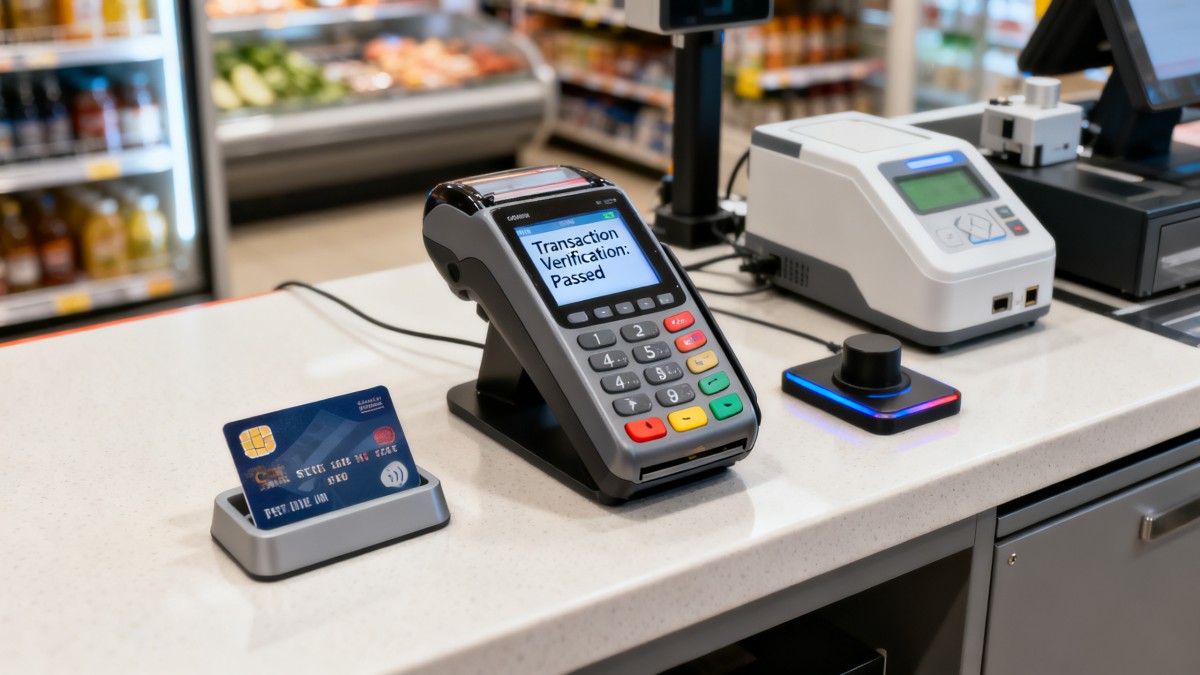
EMV is not just a card acceptance protocol. It is a framework for secure, interoperable chip-based payments across cards, terminals, kernels, hosts, and acquirer environments.
For a new terminal, emv compliance testing checks whether the device behaves correctly during contact and contactless transactions, handles cardholder verification properly, and produces predictable transaction outcomes under real conditions.
The commercial impact is broader than certification. Failed tests can affect checkout speed, decline rates, chargeback exposure, software maintenance cycles, and rollout schedules across regions.
In cross-border sourcing programs, this is especially important. A terminal may be mechanically solid and visually polished, yet still struggle with regional card profiles, brand-specific requirements, or host integration details.
What the checklist is really validating
A useful checklist does more than confirm that test cases were executed. It validates whether the terminal can move from lab success to stable field operation.
At a basic level, emv compliance testing looks at four questions. Does the hardware read cards reliably? Does the EMV kernel follow required logic? Does the application integrate cleanly with host systems? Can the terminal maintain security and usability at scale?
This broader view is useful when terminals are sourced through complex supply chains. Hardware quality, software maturity, and certification readiness rarely move in perfect alignment.
Core test domains for a new payment terminal
Most terminal programs benefit from organizing emv compliance testing into a few practical domains. That makes issues easier to isolate and shortens retest cycles.
Level 1 electrical and physical communication
This layer focuses on the reader interface. For contact cards, timing, voltage, reset behavior, and signal stability matter. For contactless, RF performance, field strength, and transaction initiation distance become central.
Problems here often appear as inconsistent reads, slow taps, or unexplained failures with certain cards. These issues can look like software defects, even when the root cause is physical communication.
Level 2 kernel and transaction logic
This is where most emv compliance testing attention goes. The terminal must interpret card data, apply terminal action analysis, manage cardholder verification, and complete offline or online decisions correctly.
Application selection deserves close review. In multi-brand environments, the terminal should handle AID matching, fallback logic, and priority rules consistently across supported card schemes.
Host integration and acquirer behavior
A terminal may pass core EMV scenarios and still fail during host messaging. Authorization requests, reversal timing, online response handling, and settlement alignment all affect real deployment quality.
In practical terms, this is where transaction integrity becomes visible. The device, middleware, and host need to interpret the same payment event the same way.
Security and software lifecycle controls
Payment terminals now operate in connected environments, often with remote updates and estate management tools. Testing should confirm that firmware changes do not break certified behavior or weaken cryptographic controls.
This intersects with the broader benchmarking logic seen in G-BCE. A terminal is not judged only by transaction success, but by how well it supports durable, standards-driven commercial operations.
Where failures usually appear in real projects
Certification failures are rarely caused by one dramatic flaw. More often, they come from small mismatches between terminal configuration, kernel version, card brand rules, and host-side assumptions.
- Incorrect terminal parameters, including TAC values, CVM limits, or floor limits
- Incomplete support for brand-specific contactless behavior
- Fallback paths that work in theory but fail in edge cases
- Kernel updates introduced without full regression coverage
- Poor alignment between lab scripts and live acquiring environments
- Weak logging, making root cause analysis slower than it should be
These patterns matter across industries. A countertop device in specialty retail, a self-service kiosk in transport, and a mobile terminal in hospitality all face different operating conditions, but similar certification risks.
How to use the checklist in commercial evaluation
A checklist becomes more valuable when it is tied to deployment context. Not every terminal needs the same certification pathway, feature mix, or country profile.
For example, an unattended terminal should be examined for contactless speed, reader durability, and exception handling. An enterprise handheld terminal may require closer attention to mobility, network switching, and remote software maintenance.
This is where cross-sector benchmarking helps. In environments tracked by G-BCE, payment devices are part of a wider commercial system that includes store design, digital infrastructure, and sourcing consistency.
The result is a more realistic evaluation model. Instead of asking only whether emv compliance testing was completed, the better question is whether the evidence supports reliable operation in the intended estate.
Useful checkpoints before approval
- Map target markets and card brands before freezing terminal configuration
- Confirm lab coverage for both nominal and edge-case transaction paths
- Review logs for failure transparency, not just pass rates
- Check whether firmware updates require partial or full recertification
- Compare certification status with production readiness and supply continuity
A practical way to move forward
Strong emv compliance testing is less about passing a document set and more about reducing uncertainty before rollout. The right checklist should connect hardware validation, kernel behavior, host integration, and lifecycle governance in one view.
For new payment terminals, that usually means starting with target market requirements, then aligning certification scope, test evidence, and operational constraints before volume deployment begins.
Where multiple suppliers, regions, or retail formats are involved, it helps to benchmark terminals against broader commercial standards rather than payment criteria alone. That approach gives decision-makers a clearer basis for comparing readiness, supportability, and long-term fit.
The next step is straightforward: review the terminal against a structured emv compliance testing checklist, validate configuration against real deployment scenarios, and close any mismatch before certification becomes a bottleneck.
News Recommendations
 How to prevent O-rings and seals from failing in food equipment
![51a6ab95581761cc26f4318be6520c15]()
Aris Katos
Future of Carbide Coatings
 How to compare commercial linear light wholesale quotes accurately
![51a6ab95581761cc26f4318be6520c15]()
Aris Katos
Future of Carbide Coatings
 How to verify international standards compliance for Middle East exports
![51a6ab95581761cc26f4318be6520c15]()
Aris Katos
Future of Carbide Coatings
 How to select laboratory instruments for reproducible test results
![51a6ab95581761cc26f4318be6520c15]()
Aris Katos
Future of Carbide Coatings
 When does a sheet metal prototype reveal design flaws early?
![51a6ab95581761cc26f4318be6520c15]()
Aris Katos
Future of Carbide Coatings
 When PE air column bags reduce damage in e-commerce fulfillment
![51a6ab95581761cc26f4318be6520c15]()
Aris Katos
Future of Carbide Coatings
 How energy-efficient design reduces operating costs in retail lighting
![51a6ab95581761cc26f4318be6520c15]()
Aris Katos
Future of Carbide Coatings
 When commercial aluminum storefronts make sense for a retail renovation
![51a6ab95581761cc26f4318be6520c15]()
Aris Katos
Future of Carbide Coatings
 What makes LED lights durable in high-use commercial spaces?
![51a6ab95581761cc26f4318be6520c15]()
Aris Katos
Future of Carbide Coatings
 Which industry categories offer the strongest export potential in Latin America?
![51a6ab95581761cc26f4318be6520c15]()
Aris Katos
Future of Carbide Coatings
 How to choose an ultra bright waterproof window display for storefronts
![51a6ab95581761cc26f4318be6520c15]()
Aris Katos
Future of Carbide Coatings
 How to verify suppliers on a trade portal for global sourcing
![51a6ab95581761cc26f4318be6520c15]()
Aris Katos
Future of Carbide Coatings
 How RoHS requirements should be stated in product specifications
![51a6ab95581761cc26f4318be6520c15]()
Aris Katos
Future of Carbide Coatings
 What affects the lead time for custom retail counter displays?
![51a6ab95581761cc26f4318be6520c15]()
Aris Katos
Future of Carbide Coatings
 What consumer packaging USA importers need to verify before ordering
![51a6ab95581761cc26f4318be6520c15]()
Aris Katos
Future of Carbide Coatings
 How commercial spaces interiors shape customer dwell time
![51a6ab95581761cc26f4318be6520c15]()
Aris Katos
Future of Carbide Coatings
 How LED commercial lighting design reduces glare in retail spaces
![51a6ab95581761cc26f4318be6520c15]()
Aris Katos
Future of Carbide Coatings
 How industrial technology information improves RFID inventory accuracy
![51a6ab95581761cc26f4318be6520c15]()
Aris Katos
Future of Carbide Coatings
 When drip garden watering systems make more sense than sprinklers
![51a6ab95581761cc26f4318be6520c15]()
Aris Katos
Future of Carbide Coatings
 When category comparison improves sourcing for industrial applications
![51a6ab95581761cc26f4318be6520c15]()
Aris Katos
Future of Carbide Coatings
 Industrial application guidance for selecting the right LED lighting
![51a6ab95581761cc26f4318be6520c15]()
Aris Katos
Future of Carbide Coatings
 Which commercial architecture standards apply to European retail fit-outs?
![51a6ab95581761cc26f4318be6520c15]()
Aris Katos
Future of Carbide Coatings
 How to verify FDA requirements for maternity care products
![51a6ab95581761cc26f4318be6520c15]()
Aris Katos
Future of Carbide Coatings
 How to verify BPA-free claims for food-contact products
![51a6ab95581761cc26f4318be6520c15]()
Aris Katos
Future of Carbide Coatings
 When does a European wholesale supplier suit modular office projects?
![51a6ab95581761cc26f4318be6520c15]()
Aris Katos
Future of Carbide Coatings
 When consumer ecosystem solutions improve the in-store shopping journey
![51a6ab95581761cc26f4318be6520c15]()
Aris Katos
Future of Carbide Coatings
 How a commercial developers network can reduce site selection risk
![51a6ab95581761cc26f4318be6520c15]()
Aris Katos
Future of Carbide Coatings
 How clear purchasing specifications prevent costly supplier deviations
![51a6ab95581761cc26f4318be6520c15]()
Aris Katos
Future of Carbide Coatings
 What an ISTA drop test lab checks before your packaging ships
![51a6ab95581761cc26f4318be6520c15]()
Aris Katos
Future of Carbide Coatings
 Which commercial furniture standards apply to workplace seating?
![51a6ab95581761cc26f4318be6520c15]()
Aris Katos
Future of Carbide Coatings
 How to evaluate smart lighting module OEM compatibility before sampling
![51a6ab95581761cc26f4318be6520c15]()
Aris Katos
Future of Carbide Coatings
 How to assess whether sustainable technology delivers real impact
![51a6ab95581761cc26f4318be6520c15]()
Aris Katos
Future of Carbide Coatings
 How to assess an OEM supplier’s quality control before ordering
![51a6ab95581761cc26f4318be6520c15]()
Aris Katos
Future of Carbide Coatings
 How consumer ecosystem solutions data can improve retail personalization
![51a6ab95581761cc26f4318be6520c15]()
Aris Katos
Future of Carbide Coatings
 When does consumer packaging design justify a higher product price?
![51a6ab95581761cc26f4318be6520c15]()
Aris Katos
Future of Carbide Coatings
 Supermarket Fixture Installation: Planning Layouts, Wiring, and Handover
![51a6ab95581761cc26f4318be6520c15]()
Aris Katos
Future of Carbide Coatings
 Automated Lighting and Smart Lighting Control in Bergerac: Key Project Considerations
![51a6ab95581761cc26f4318be6520c15]()
Aris Katos
Future of Carbide Coatings
 Segment Streetlight Controllers: Choosing Control Modes for Urban Roads
![51a6ab95581761cc26f4318be6520c15]()
Aris Katos
Future of Carbide Coatings
 IEC 62471-2 Explained: How to Assess Photobiological Risks in LED Lighting
![51a6ab95581761cc26f4318be6520c15]()
Aris Katos
Future of Carbide Coatings