Commercial Environment Solutions Trends Shaping Sustainable Facilities
Time
Click Count
Commercial environment solutions are moving from facility support to strategic infrastructure
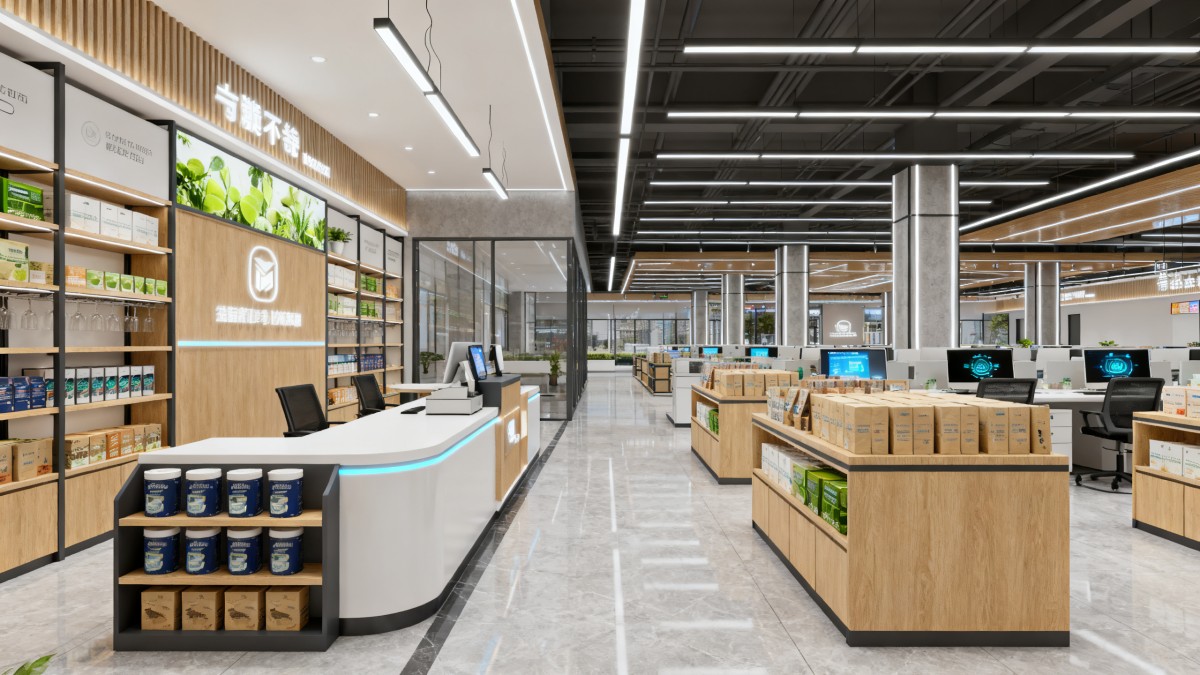
Commercial environment solutions are no longer treated as background spending.
They now shape how brands operate, how spaces perform, and how supply chains absorb pressure.
That shift is visible across retail, offices, mixed-use projects, hospitality, and service environments.
Leaders are asking different questions than they did a few years ago.
Instead of focusing only on fit-out cost, they are examining lifecycle value, compliance readiness, material traceability, and data integration.
This is why commercial environment solutions are becoming central to long-term facility planning.
The new priority is not a single technology or material.
It is the ability to align physical infrastructure with digital intelligence and sustainability targets.
In practical terms, that means furniture, lighting, signage, POS hardware, packaging, and sourcing data are increasingly evaluated together.
The organizations gaining ground tend to view commercial environment solutions as a connected operating system for the built marketplace.
Why this change is becoming more visible now
Several signals are converging at the same time.
Sustainability expectations are rising, but so are performance expectations.
Facilities must now look refined, operate efficiently, and prove their compliance profile.
Digital transformation has also changed what a physical environment is expected to deliver.
A store fixture is no longer just a fixture if it must support smart inventory, flexible merchandising, and omnichannel workflows.
The same applies to lighting systems, payment terminals, workplace furniture, and sustainable packaging.
More importantly, disruption in sourcing has made resilience measurable.
When lead times stretch or standards differ across markets, commercial environment solutions must be specified with fewer assumptions.
This is where cross-border benchmarking has become more valuable.
Platforms such as G-BCE reflect this shift by connecting Asian manufacturing precision with global expectations for aesthetics, durability, and certification.
The main forces behind the market direction
These drivers explain why the market is moving beyond isolated upgrades.
Commercial environment solutions are being evaluated as systems that carry operational, reputational, and regulatory consequences.
Demand is shifting toward measurable, interconnected environments
From recent project signals, the strongest demand is not for novelty alone.
It is for commercial environment solutions that can prove performance under real operating conditions.
That includes ergonomic durability, maintenance efficiency, smarter energy use, and easier integration with digital workflows.
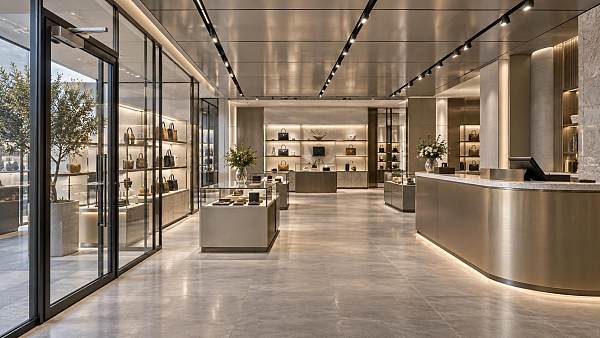
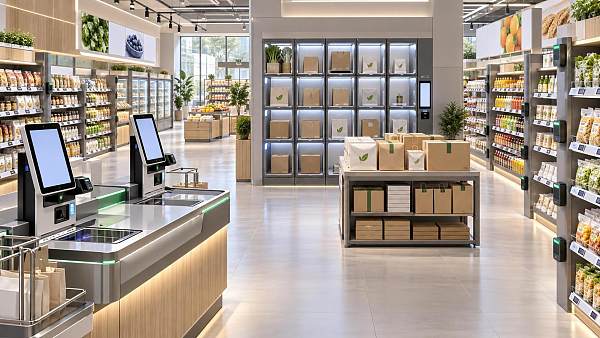
Retail environments offer a clear example.
AI-enabled POS, dynamic signage, modular fixtures, and responsible packaging now influence the customer experience together.
If one layer is outdated, the entire environment feels less responsive.
Office and commercial workplace projects show a similar pattern.
Furniture choices are being tied more closely to wellness, reconfiguration, occupancy data, and long-run asset use.
Lighting and signage are also changing function.
They are no longer treated only as visual finishes.
They are part of navigation, brand consistency, energy performance, and adaptive space management.
This broadening role is pushing commercial environment solutions toward more integrated specification models.
Where the upgrade pressure is strongest
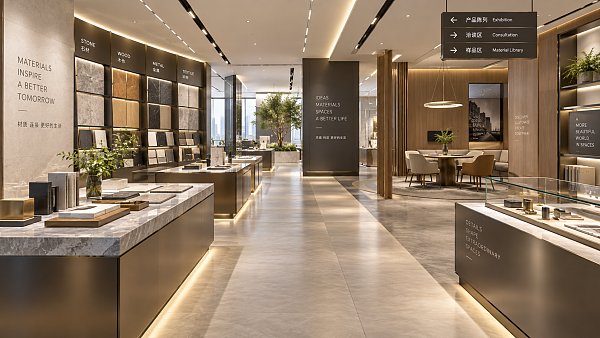
- Commercial furniture and fixtures that must balance aesthetics, flexibility, and certification
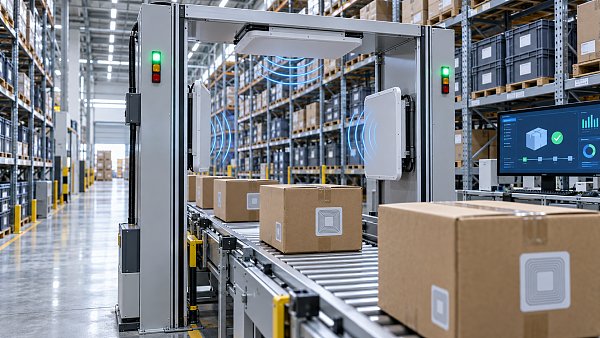
- Smart retail technology that links checkout, data capture, and customer flow
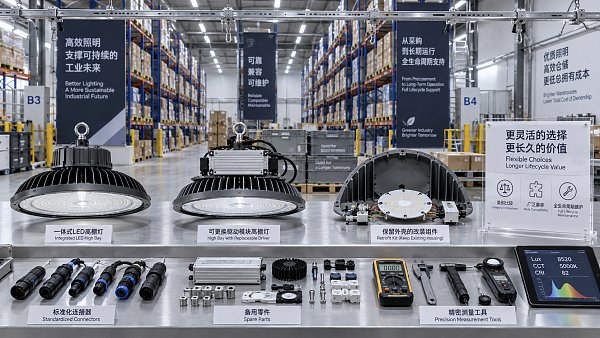
- Commercial lighting and signage that support energy targets and real-time communication
- Sustainable packaging tied to brand consistency and supply chain accountability
- Cross-border sourcing models that require clearer hardware benchmarking
G-BCE’s five-pillar view is especially relevant here.
It mirrors how commercial environment solutions are actually converging across categories that were once managed separately.
The impact is spreading across more than one business layer
A common mistake is to treat commercial environment solutions as a facilities issue only.
The effects now reach brand perception, asset productivity, compliance exposure, and supply chain responsiveness.
This is why investment decisions are becoming more cross-functional.
On the customer side, better commercial environment solutions create smoother movement, clearer product interaction, and stronger trust in physical settings.
On the operating side, they can reduce downtime, lower replacement frequency, and improve planning accuracy.
On the sourcing side, they reduce ambiguity when comparing vendors, standards, and regional production capabilities.
The bigger implication is strategic.
Commercial environment solutions increasingly influence how quickly a business can adapt space formats, enter new markets, or respond to sustainability reporting demands.
That makes weak specifications more expensive over time.
It also makes data transparency more valuable than broad design claims.
What deserves closer attention now
The next phase of competition will likely reward clarity over scale alone.
That means asking whether commercial environment solutions can be measured in ways that matter across markets.
Three areas deserve closer review.
- Specification quality: not just appearance, but lifecycle resilience, safety standards, and interoperability
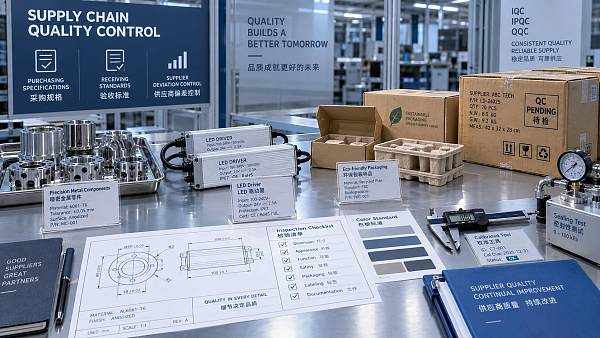
- Supplier visibility: including certification consistency, production discipline, and substitution risk
- Portfolio alignment: whether each environment asset still matches the current business model
These questions often reveal hidden inefficiencies faster than a cost review alone.
The next decisions should be phased, benchmarked, and tied to real use cases
The market direction is clear, but response should not be rushed.
Commercial environment solutions work best when upgrades are phased around actual operating pressure points.
In many cases, the first step is not replacement.
It is a better map of where facilities, hardware, packaging, and digital systems are already misaligned.
A practical response usually starts with a benchmark review.
Compare high-use assets against current standards, maintenance burden, and sustainability expectations.
Then assess which commercial environment solutions create downstream effects across customer experience and supply continuity.
This is where repositories like G-BCE can add value without turning the process into a sales exercise.
Benchmarking across furniture, retail technology, lighting, signage, and packaging helps separate durable solutions from short-lived upgrades.
A sensible next move is to build a staged decision framework:
- Identify spaces or assets with the highest operational friction
- Check whether compliance and sustainability assumptions are still current
- Compare alternatives using certification, durability, and integration criteria
- Pilot upgrades where user flow or maintenance costs are easiest to measure
- Review sourcing concentration before scaling any redesign program
Commercial environment solutions will keep evolving as physical environments become more data-aware and resource-conscious.
The stronger position now is to monitor the signals carefully, benchmark rigorously, and adapt in stages that match real business conditions.
News Recommendations
 How to prevent O-rings and seals from failing in food equipment
![51a6ab95581761cc26f4318be6520c15]()
Aris Katos
Future of Carbide Coatings
 How to compare commercial linear light wholesale quotes accurately
![51a6ab95581761cc26f4318be6520c15]()
Aris Katos
Future of Carbide Coatings
 How to verify international standards compliance for Middle East exports
![51a6ab95581761cc26f4318be6520c15]()
Aris Katos
Future of Carbide Coatings
 How to select laboratory instruments for reproducible test results
![51a6ab95581761cc26f4318be6520c15]()
Aris Katos
Future of Carbide Coatings
 When does a sheet metal prototype reveal design flaws early?
![51a6ab95581761cc26f4318be6520c15]()
Aris Katos
Future of Carbide Coatings
 When PE air column bags reduce damage in e-commerce fulfillment
![51a6ab95581761cc26f4318be6520c15]()
Aris Katos
Future of Carbide Coatings
 How energy-efficient design reduces operating costs in retail lighting
![51a6ab95581761cc26f4318be6520c15]()
Aris Katos
Future of Carbide Coatings
 When commercial aluminum storefronts make sense for a retail renovation
![51a6ab95581761cc26f4318be6520c15]()
Aris Katos
Future of Carbide Coatings
 What makes LED lights durable in high-use commercial spaces?
![51a6ab95581761cc26f4318be6520c15]()
Aris Katos
Future of Carbide Coatings
 Which industry categories offer the strongest export potential in Latin America?
![51a6ab95581761cc26f4318be6520c15]()
Aris Katos
Future of Carbide Coatings
 How to choose an ultra bright waterproof window display for storefronts
![51a6ab95581761cc26f4318be6520c15]()
Aris Katos
Future of Carbide Coatings
 How to verify suppliers on a trade portal for global sourcing
![51a6ab95581761cc26f4318be6520c15]()
Aris Katos
Future of Carbide Coatings
 How RoHS requirements should be stated in product specifications
![51a6ab95581761cc26f4318be6520c15]()
Aris Katos
Future of Carbide Coatings
 What affects the lead time for custom retail counter displays?
![51a6ab95581761cc26f4318be6520c15]()
Aris Katos
Future of Carbide Coatings
 What consumer packaging USA importers need to verify before ordering
![51a6ab95581761cc26f4318be6520c15]()
Aris Katos
Future of Carbide Coatings
 How commercial spaces interiors shape customer dwell time
![51a6ab95581761cc26f4318be6520c15]()
Aris Katos
Future of Carbide Coatings
 How LED commercial lighting design reduces glare in retail spaces
![51a6ab95581761cc26f4318be6520c15]()
Aris Katos
Future of Carbide Coatings
 How industrial technology information improves RFID inventory accuracy
![51a6ab95581761cc26f4318be6520c15]()
Aris Katos
Future of Carbide Coatings
 When drip garden watering systems make more sense than sprinklers
![51a6ab95581761cc26f4318be6520c15]()
Aris Katos
Future of Carbide Coatings
 When category comparison improves sourcing for industrial applications
![51a6ab95581761cc26f4318be6520c15]()
Aris Katos
Future of Carbide Coatings
 Industrial application guidance for selecting the right LED lighting
![51a6ab95581761cc26f4318be6520c15]()
Aris Katos
Future of Carbide Coatings
 Which commercial architecture standards apply to European retail fit-outs?
![51a6ab95581761cc26f4318be6520c15]()
Aris Katos
Future of Carbide Coatings
 How to verify FDA requirements for maternity care products
![51a6ab95581761cc26f4318be6520c15]()
Aris Katos
Future of Carbide Coatings
 How to verify BPA-free claims for food-contact products
![51a6ab95581761cc26f4318be6520c15]()
Aris Katos
Future of Carbide Coatings
 When does a European wholesale supplier suit modular office projects?
![51a6ab95581761cc26f4318be6520c15]()
Aris Katos
Future of Carbide Coatings
 When consumer ecosystem solutions improve the in-store shopping journey
![51a6ab95581761cc26f4318be6520c15]()
Aris Katos
Future of Carbide Coatings
 How a commercial developers network can reduce site selection risk
![51a6ab95581761cc26f4318be6520c15]()
Aris Katos
Future of Carbide Coatings
 How clear purchasing specifications prevent costly supplier deviations
![51a6ab95581761cc26f4318be6520c15]()
Aris Katos
Future of Carbide Coatings
 What an ISTA drop test lab checks before your packaging ships
![51a6ab95581761cc26f4318be6520c15]()
Aris Katos
Future of Carbide Coatings
 Which commercial furniture standards apply to workplace seating?
![51a6ab95581761cc26f4318be6520c15]()
Aris Katos
Future of Carbide Coatings
 How to evaluate smart lighting module OEM compatibility before sampling
![51a6ab95581761cc26f4318be6520c15]()
Aris Katos
Future of Carbide Coatings
 How to assess whether sustainable technology delivers real impact
![51a6ab95581761cc26f4318be6520c15]()
Aris Katos
Future of Carbide Coatings
 How to assess an OEM supplier’s quality control before ordering
![51a6ab95581761cc26f4318be6520c15]()
Aris Katos
Future of Carbide Coatings
 How consumer ecosystem solutions data can improve retail personalization
![51a6ab95581761cc26f4318be6520c15]()
Aris Katos
Future of Carbide Coatings
 When does consumer packaging design justify a higher product price?
![51a6ab95581761cc26f4318be6520c15]()
Aris Katos
Future of Carbide Coatings
 Supermarket Fixture Installation: Planning Layouts, Wiring, and Handover
![51a6ab95581761cc26f4318be6520c15]()
Aris Katos
Future of Carbide Coatings
 Automated Lighting and Smart Lighting Control in Bergerac: Key Project Considerations
![51a6ab95581761cc26f4318be6520c15]()
Aris Katos
Future of Carbide Coatings
 Segment Streetlight Controllers: Choosing Control Modes for Urban Roads
![51a6ab95581761cc26f4318be6520c15]()
Aris Katos
Future of Carbide Coatings
 IEC 62471-2 Explained: How to Assess Photobiological Risks in LED Lighting
![51a6ab95581761cc26f4318be6520c15]()
Aris Katos
Future of Carbide Coatings