How to Compare RFID Retail Inventory Systems by Accuracy and Setup Cost
Time
Click Count
Choosing an rfid retail inventory system is no longer a narrow IT decision. It affects stock accuracy, store labor, replenishment timing, shrink visibility, and the pace of omnichannel fulfillment. For organizations comparing options across markets, the real question is not which platform sounds advanced, but which one delivers dependable reads at a setup cost the business can absorb.
That balance matters more now because physical retail is being rebuilt around connected operations. G-BCE tracks this shift across smart retail technology, commercial fixtures, supply chain infrastructure, and compliance benchmarks. In that wider context, an RFID deployment should be judged as part of the commercial ecosystem, not as an isolated hardware purchase.
What an RFID retail inventory system is really being asked to solve
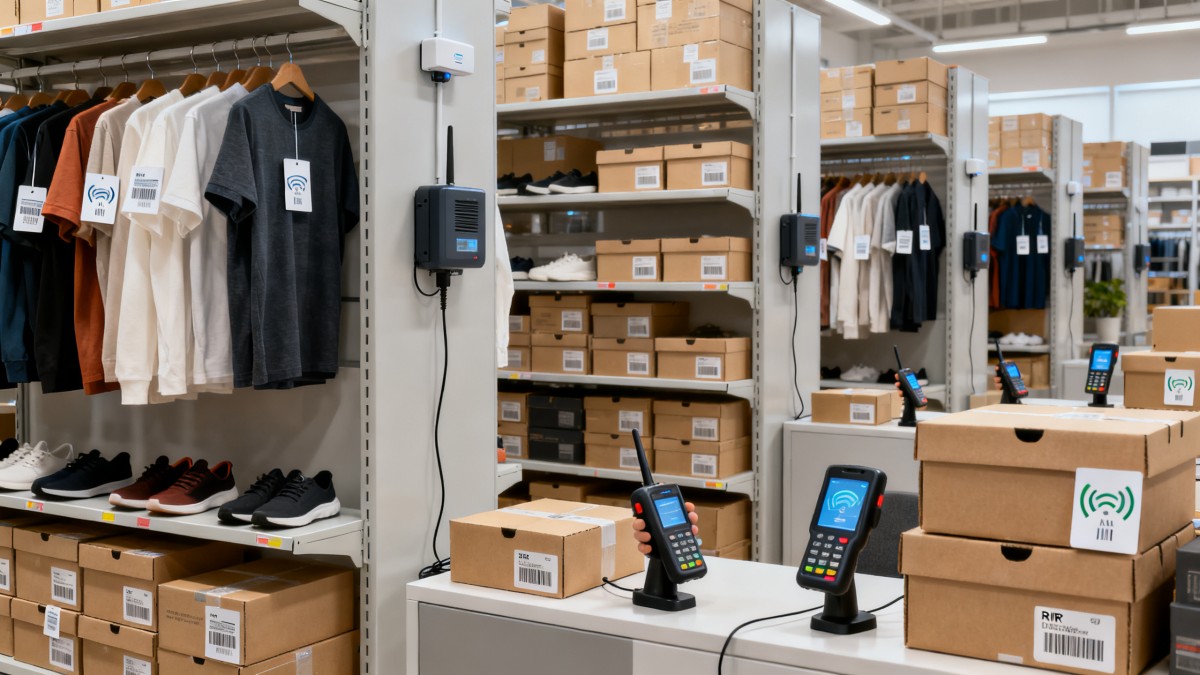
At a basic level, an rfid retail inventory system combines item tags, readers, antennas, software, and integrations that identify products without line-of-sight scanning. In practice, the goal is broader. Retailers want faster counts, cleaner stock files, better shelf availability, and fewer blind spots between the back room and the sales floor.
Barcode systems already support inventory control, but they are labor intensive at item level. RFID changes the economics of counting. A store can scan many items at once, repeat counts more often, and detect discrepancies before they turn into lost sales.
That is why accuracy and setup cost belong in the same comparison. High read performance means little if the rollout becomes too expensive to scale. Low setup cost also fails if poor reads create mistrust in the data.
Why accuracy has become the first filter
Inventory accuracy is the main value driver behind any rfid retail inventory system. It influences replenishment decisions, click-and-collect promises, cycle counting labor, transfer planning, and markdown timing. When item-level data is unreliable, the system becomes a reporting tool instead of an operating tool.
Accuracy should be examined beyond a vendor headline number. A claimed 99 percent result may reflect a controlled pilot, limited SKU mix, or ideal store layout. Read rates can change sharply when the assortment includes metal accessories, liquid products, dense folded apparel, or mixed packaging materials.
The most useful accuracy benchmarks
A stronger comparison uses measurable conditions rather than generic claims. The following benchmarks tend to reveal real performance.
A reliable comparison should also separate item read accuracy from inventory record accuracy. The first shows whether tags are detected. The second shows whether the business can trust stock availability across channels.
Setup cost is more than the hardware quote
Many teams underestimate the true setup cost of an rfid retail inventory system. Readers and antennas are visible line items, but the deployment budget usually expands through tagging strategy, software integration, store surveys, middleware tuning, and training.
A low initial quote can become expensive when the system requires custom integration with POS, ERP, WMS, or order management tools. The reverse can also happen. A higher upfront platform cost may reduce labor, deployment complexity, and support issues over time.
Common setup cost components
- RFID tags and encoding, including source tagging or in-store tagging models.
- Handheld readers, fixed readers, antennas, charging stations, and replacement units.
- Site surveys for store layouts, fixtures, interference zones, and receiving areas.
- Software licenses, middleware, dashboards, and API integration work.
- Staff onboarding, process redesign, and pilot support during store launch.
- Ongoing maintenance, firmware updates, and support escalation.
This is where cross-sector benchmarking becomes useful. G-BCE’s view across supply chain, commercial hardware, and compliance frameworks helps place setup cost inside a broader sourcing picture. Certification requirements, fixture materials, and store design standards can all affect installation effort.
How to compare systems without relying on vendor narratives
The strongest evaluation method is scenario-based. Instead of asking which rfid retail inventory system has the most features, compare how each option performs in actual operating conditions.
Build the comparison around live conditions
Start with store formats and product categories. A luxury fashion boutique, a department store, and a health and beauty chain will not produce the same read environment. Fixtures, packaging density, and SKU turnover change the performance profile.
Then define the workflows that matter most. Receiving, cycle counts, replenishment, omnichannel picking, returns, and loss investigation should each be tested. Some systems count well but struggle when workflows cross between store operations and enterprise platforms.
Use a weighted scorecard
A weighted matrix keeps the decision disciplined. Typical categories include:
- Item read accuracy in real assortment conditions.
- Deployment cost per store and per SKU.
- Integration effort with existing retail systems.
- Scalability across regions, languages, and supplier bases.
- Support model, firmware stability, and replacement logistics.
- Compliance alignment and long-term data governance.
This method prevents overvaluing a polished demo. It also helps compare regional suppliers, global enterprise vendors, and specialist RFID providers on the same operational terms.
Where system design changes both cost and accuracy
Not every rfid retail inventory system is structured in the same way. Design choices directly shape read quality and installation burden.
Handheld-led versus fixed infrastructure
Handheld-led deployments usually enter at a lower setup cost. They fit stores that mainly need fast cycle counts and periodic stock validation. Accuracy depends more on process discipline and count frequency.
Fixed-reader environments cost more to deploy, but they support automated event capture at receiving, exits, or fitting zones. They can improve visibility, yet require better site planning and tuning.
Source tagging versus store tagging
Source tagging often lowers in-store labor and improves consistency. It also depends on supplier readiness, tag specification control, and quality assurance at origin. Store tagging gives more local control, but can erode labor savings if volumes rise.
Software architecture and data flow
Some platforms offer strong reader performance but limited analytics or weak integration. Others are built around enterprise visibility, making them easier to scale across stores and distribution nodes. Accuracy gains are only useful when the data moves cleanly into replenishment and selling systems.
Practical warning signs during evaluation
Several issues tend to appear late unless they are tested early.
- Read performance drops around metal fixtures, dense shelving, or reflective surfaces.
- Tag placement rules are unclear across different package shapes or soft goods.
- The system produces data, but store teams cannot act on exceptions quickly.
- Pilot results look strong because the SKU range is too narrow.
- Support depends heavily on a single implementation partner.
These warning signs matter because retail technology does not live alone. Fixture geometry, signage placement, receiving layouts, and packaging materials can change RFID behavior. A platform that fits one commercial environment may require major tuning in another.
A grounded way to move toward a decision
The best next step is usually a controlled pilot with a defined scorecard. Compare each rfid retail inventory system against the same store types, SKU families, count routines, and integration requirements. Measure record accuracy improvement, count time reduction, exception rates, and total setup cost per site.
From there, build a rollout model that reflects actual operating conditions rather than average assumptions. Include fixture constraints, supplier tagging readiness, compliance expectations, and data integration effort. That approach produces a more durable decision, especially in global retail environments where commercial design, sourcing, and technology standards must work together.
An rfid retail inventory system should earn its place by improving trust in stock data while staying realistic on deployment cost. When accuracy benchmarks and setup economics are examined side by side, the comparison becomes clearer, and the sourcing process becomes far more defensible.
News Recommendations
 Which consumer goods need CE marking in Europe?
![51a6ab95581761cc26f4318be6520c15]()
Aris Katos
Future of Carbide Coatings
 Uniguest and Extreme Networks Partner to Simplify Digital Signage Deployment
![51a6ab95581761cc26f4318be6520c15]()
Aris Katos
Future of Carbide Coatings
 How to assess electronics compliance whitepapers for regulatory accuracy
![51a6ab95581761cc26f4318be6520c15]()
Aris Katos
Future of Carbide Coatings
 Packaging Data Hub Launches With Plastic Recycling Findings for 50 Countries
![51a6ab95581761cc26f4318be6520c15]()
Aris Katos
Future of Carbide Coatings
 How to verify an ergonomic office chair supplier's warranty terms
![51a6ab95581761cc26f4318be6520c15]()
Aris Katos
Future of Carbide Coatings
 Curion Survey: 64% Value Sustainable Beauty Packaging, but Quality Comes First
![51a6ab95581761cc26f4318be6520c15]()
Aris Katos
Future of Carbide Coatings
 Can minimalist fit out solutions make a small office feel larger?
![51a6ab95581761cc26f4318be6520c15]()
Aris Katos
Future of Carbide Coatings
 Kiosk Industry Releases IAAPA 2026 Self-Service Guide
![51a6ab95581761cc26f4318be6520c15]()
Aris Katos
Future of Carbide Coatings
 How to improve global supply chain visibility beyond tier-one suppliers
![51a6ab95581761cc26f4318be6520c15]()
Aris Katos
Future of Carbide Coatings
 Austria’s MM Group to Sell 70% of Packaging Business to KPS for $2.7 Billion
![51a6ab95581761cc26f4318be6520c15]()
Aris Katos
Future of Carbide Coatings
 How to assess delivery reliability of airport terminal seating suppliers in Europe
![51a6ab95581761cc26f4318be6520c15]()
Aris Katos
Future of Carbide Coatings
 USTR Extends China-Linked Vessel Fee Pause and 178 Product Exemptions to January 2027
![51a6ab95581761cc26f4318be6520c15]()
Aris Katos
Future of Carbide Coatings
 How to choose smart sensors for automated lighting
![51a6ab95581761cc26f4318be6520c15]()
Aris Katos
Future of Carbide Coatings
 Shanghai Retail Buyers Sign Deals at Ninth China International Import Expo
![51a6ab95581761cc26f4318be6520c15]()
Aris Katos
Future of Carbide Coatings
 Which toys are subject to EN 71 toy safety requirements?
![51a6ab95581761cc26f4318be6520c15]()
Aris Katos
Future of Carbide Coatings
 Report: Global Kraft Paper Market Forecast to Reach $20.5 Billion by 2033
![51a6ab95581761cc26f4318be6520c15]()
Aris Katos
Future of Carbide Coatings
 How to verify Zigbee compatibility when sourcing lighting sensors
![51a6ab95581761cc26f4318be6520c15]()
Aris Katos
Future of Carbide Coatings
 How do packaging customization options affect minimum order quantities in Europe?
![51a6ab95581761cc26f4318be6520c15]()
Aris Katos
Future of Carbide Coatings
 Transom to Acquire Cree LED in Commercial Lighting Ownership Change
![51a6ab95581761cc26f4318be6520c15]()
Aris Katos
Future of Carbide Coatings
 How to plan customer flow in commercial design planning
![51a6ab95581761cc26f4318be6520c15]()
Aris Katos
Future of Carbide Coatings
 USTR Urged to Permanently Suspend Fees on China-Linked Ships
![51a6ab95581761cc26f4318be6520c15]()
Aris Katos
Future of Carbide Coatings
 How to choose comparable stores for retail benchmarking
![51a6ab95581761cc26f4318be6520c15]()
Aris Katos
Future of Carbide Coatings
 How does anchoring affect modular building wind load resistance?
![51a6ab95581761cc26f4318be6520c15]()
Aris Katos
Future of Carbide Coatings
 Amazon Raises European FBA Surcharge to 2% in Ten Markets From November 2
![51a6ab95581761cc26f4318be6520c15]()
Aris Katos
Future of Carbide Coatings
 How to verify a BPA-free test report for baby products
![51a6ab95581761cc26f4318be6520c15]()
Aris Katos
Future of Carbide Coatings
 China's Mandatory Classroom Lighting Standard GB 7793-2025 Takes Effect November 1
![51a6ab95581761cc26f4318be6520c15]()
Aris Katos
Future of Carbide Coatings
 How order volume affects the price of wholesale poly mailers
![51a6ab95581761cc26f4318be6520c15]()
Aris Katos
Future of Carbide Coatings
 US Imposes 50% Tariff on Certain Canadian PET Resin Imports
![51a6ab95581761cc26f4318be6520c15]()
Aris Katos
Future of Carbide Coatings
 How to read the maximum ratings in a semiconductor datasheet
![51a6ab95581761cc26f4318be6520c15]()
Aris Katos
Future of Carbide Coatings
 University of Maryland Develops Bio-Based Packaging to Extend Avocado and Cucumber Shelf Life
![51a6ab95581761cc26f4318be6520c15]()
Aris Katos
Future of Carbide Coatings
 How to verify a cookware manufacturer's induction compatibility claims
![51a6ab95581761cc26f4318be6520c15]()
Aris Katos
Future of Carbide Coatings
 Omdia Forecasts 11.6% Annual Growth in LED Display Revenue Through 2030
![51a6ab95581761cc26f4318be6520c15]()
Aris Katos
Future of Carbide Coatings
 How to verify a pulp molding packaging factory's production capacity
![51a6ab95581761cc26f4318be6520c15]()
Aris Katos
Future of Carbide Coatings
 Curion Survey: Half of Consumers Frustrated by Sustainable Packaging
![51a6ab95581761cc26f4318be6520c15]()
Aris Katos
Future of Carbide Coatings
 How to assess the credibility of market insight content
![51a6ab95581761cc26f4318be6520c15]()
Aris Katos
Future of Carbide Coatings
 US Removes 50% Additional Tariff on Selected Canadian Packaging Products
![51a6ab95581761cc26f4318be6520c15]()
Aris Katos
Future of Carbide Coatings
 Will a waterproof dimmable LED driver work with your existing dimmer?
![51a6ab95581761cc26f4318be6520c15]()
Aris Katos
Future of Carbide Coatings
 Charter Next Generation Raises Film PCR Use 30%, Advances Food-Grade Applications
![51a6ab95581761cc26f4318be6520c15]()
Aris Katos
Future of Carbide Coatings
 How to choose a dog harness and leash for a dog that pulls hard
![51a6ab95581761cc26f4318be6520c15]()
Aris Katos
Future of Carbide Coatings