Japan Expands Recycling Code Rules for Home Goods
Time
Click Count
On July 10, 2026, Japan’s Ministry of Economy, Trade and Industry (METI) released revised implementation rules under the Home Appliance Recycling Law, extending mandatory recycling identification to eight Kitchenware & Home Goods product categories, including stainless steel cookware, electric kettles, and smart kitchen appliances. From an industry perspective, this is worth close attention not only for exporters targeting Japan, but also for OEM manufacturers, packaging managers, channel operators, and compliance teams, because market access will now depend on whether products carry the required four-digit recycling code on the product itself or its packaging.
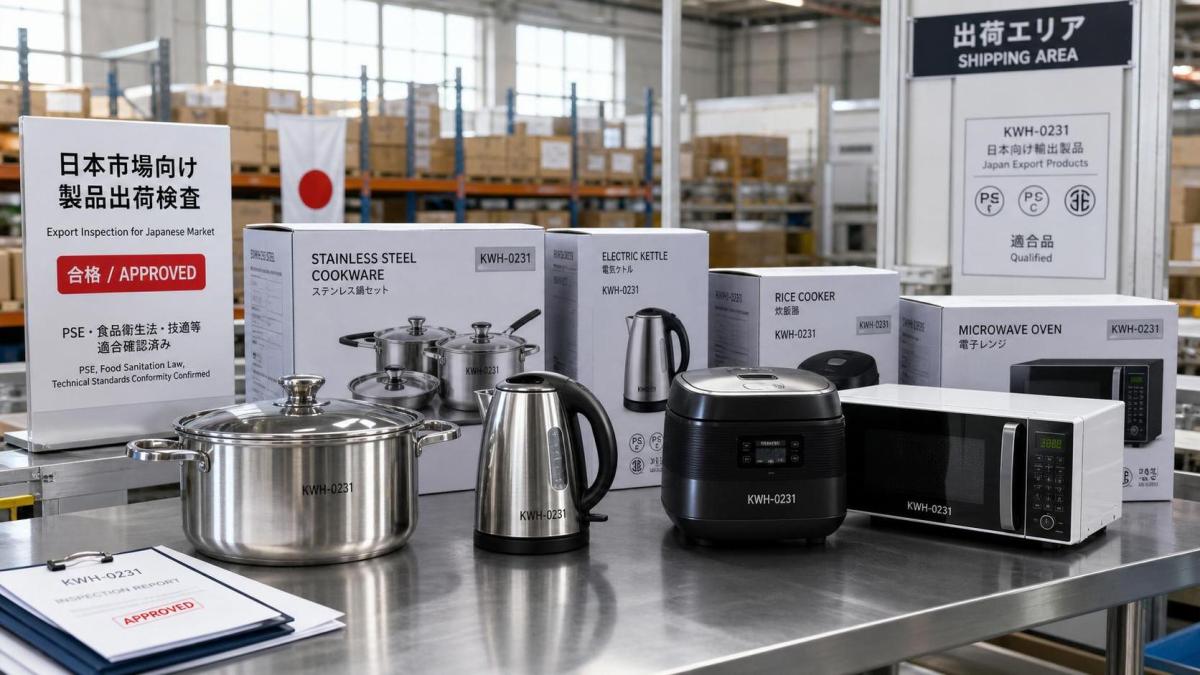
What the revised rule now requires
According to the provided event information, METI announced the revised detailed implementation rules on July 10, 2026. The revision brings eight categories within Kitchenware & Home Goods into the scope of mandatory recycling labeling. The requirement takes effect on October 1, 2026, and calls for a four-digit “re-commercialization code” to be added to either the product body or the packaging, with the example format given as KWH-0231.
The same information states that products failing to meet the requirement will not be able to enter major Japanese mass retail stores or mainstream e-commerce platforms including Rakuten and Yahoo! Shopping. It also indicates that the change is pushing Chinese OEM manufacturers to upgrade laser marking and packaging management systems.
Where the pressure will be felt first
Export-facing manufacturing and OEM operations
Analysis shows manufacturers serving the Japan market are likely to face the most immediate operational pressure. The impact is concentrated in marking, packaging, production control, and shipment readiness, because the new requirement links a specific code to the physical product or package rather than treating compliance as a paperwork-only issue. What deserves closer attention is whether existing marking capacity and packaging workflows can support the requirement before the October 1, 2026 deadline.
Brand owners and trading companies shipping into Japan
From an industry perspective, companies managing product listings, import arrangements, and retail channel relationships may be affected through market access risk. The practical issue is not only whether the code exists, but whether every affected SKU entering Japanese retail and major online platforms is aligned with the new labeling rule. For these businesses, the key business points are product scope confirmation, labeling consistency, and communication with Japanese channel partners.
Retail and platform-side gatekeeping
Observably, the rule also matters for retail chains and large e-commerce platforms because non-compliant products are stated to be unable to enter those sales channels. That means channel screening, onboarding checks, and seller compliance reviews may become more important in the affected categories. Even where platform enforcement details are not provided in the input, sellers should treat channel eligibility as a central commercial issue rather than a secondary packaging matter.
Service providers tied to marking and packaging execution
Analysis shows suppliers involved in laser marking, packaging control, and related production support may see direct demand from exporters and OEM factories adjusting their systems. The confirmed fact is that the change is forcing upgrades to laser marking and packaging management among Chinese OEM manufacturers; the broader implication is that execution capacity, traceability, and changeover speed may become practical differentiators in the near term.
What companies should track before the deadline
Confirm exactly which products fall within the eight categories
What deserves closer attention is product classification. The provided information confirms stainless steel cookware, electric kettles, and smart kitchen appliances among the included categories, but companies should focus internally on identifying which Japan-bound products are covered and whether any borderline items need further verification against official wording.
Align code application with physical production and packaging
Analysis shows the operational challenge is likely to sit at the interface between compliance decisions and factory execution. If the code can be placed on either the product body or packaging, businesses will need a clear internal rule on which route is used for each product line, and how that choice is controlled across production, packaging, and shipment stages.
Prepare for channel communication and listing continuity
For sellers supplying major retailers, Rakuten, or Yahoo! Shopping, the immediate concern is listing continuity and channel acceptance. Observably, companies should be ready to communicate labeling status to buyers, distributors, and platform-facing teams, because the commercial consequence described in the provided information is exclusion from mainstream sales channels for non-compliant goods.
Watch for further official clarification
From an industry perspective, there is a difference between the rule change itself and the finer points of day-to-day enforcement. Companies should continue monitoring official language, especially around category interpretation, code application practice, and any additional compliance guidance that may affect packaging revisions, lead times, or supplier coordination.
Why this looks bigger than a packaging update
Analysis shows this development is better understood as a compliance-to-market-access shift rather than a minor labeling adjustment. The confirmed facts already connect the recycling code requirement to entry into major Japanese retail and e-commerce channels. That makes the issue relevant not only to regulatory teams, but also to sales planning, SKU governance, production scheduling, and customer communication.
At the same time, it is still more appropriate to understand this as an active regulatory development that requires continued observation, rather than as a fully settled enforcement landscape. The deadline and channel consequences are clear in the provided information, while the full operational interpretation may still depend on further official clarification and downstream implementation by retailers and platforms.
How to read this development now
For the industry, the immediate significance lies in the fact that Japan has attached a concrete recycling identification requirement to specific Kitchenware & Home Goods categories and linked non-compliance to real sales channel restrictions. A measured reading is that this is both a short-term operational change and a longer-term signal: short term because affected products need labeling readiness before October 1, 2026, and longer term because it points to tighter compliance expectations for consumer goods entering Japan. Current evidence supports treating it as a rule change with direct execution consequences, while keeping later enforcement details under review.
Basis of this article
This article is based on the user-provided news title, event date, and event summary concerning METI’s July 10, 2026 revision to implementation rules under the Home Appliance Recycling Law. For developments of this kind, relevant source types typically include official government notices, corporate disclosures, industry association updates, authoritative media coverage, and standard-related documents. No specific official source link was provided in the input, so the precise official reference should still be verified on an ongoing basis. Continued attention should focus on any later official clarification, category interpretation, and channel-level implementation practices.
News Recommendations
 What records are needed for an ISO 9001 furniture factory audit?
![51a6ab95581761cc26f4318be6520c15]()
Aris Katos
Future of Carbide Coatings
 How to choose AI marketing tools that work with your existing CRM
![51a6ab95581761cc26f4318be6520c15]()
Aris Katos
Future of Carbide Coatings
 Do freight costs erase savings when buying retail fixtures wholesale?
![51a6ab95581761cc26f4318be6520c15]()
Aris Katos
Future of Carbide Coatings
 Can smart retail IT solutions for CPG work with legacy POS systems?
![51a6ab95581761cc26f4318be6520c15]()
Aris Katos
Future of Carbide Coatings
 What permit approvals belong in a commercial fitout planning checklist?
![51a6ab95581761cc26f4318be6520c15]()
Aris Katos
Future of Carbide Coatings
 How Does Commercial Design Differ from Interior Decoration?
![51a6ab95581761cc26f4318be6520c15]()
Aris Katos
Future of Carbide Coatings
 How Long Does It Take to Verify a Commercial Furniture Supplier?
![51a6ab95581761cc26f4318be6520c15]()
Aris Katos
Future of Carbide Coatings
 How to verify compostability claims from a bubble mailer manufacturer
![51a6ab95581761cc26f4318be6520c15]()
Aris Katos
Future of Carbide Coatings
 Will commercial smart infrastructure solutions work with legacy systems?
![51a6ab95581761cc26f4318be6520c15]()
Aris Katos
Future of Carbide Coatings
 How to verify a preschool furniture manufacturer's safety standards
![51a6ab95581761cc26f4318be6520c15]()
Aris Katos
Future of Carbide Coatings
 A technical comparison of semiconductor processes for power devices
![51a6ab95581761cc26f4318be6520c15]()
Aris Katos
Future of Carbide Coatings
 How to verify that a BIFMA ergonomic chair meets the standard
![51a6ab95581761cc26f4318be6520c15]()
Aris Katos
Future of Carbide Coatings
 How to use a CRI value chart when choosing LED lighting
![51a6ab95581761cc26f4318be6520c15]()
Aris Katos
Future of Carbide Coatings
 How to compare hotel aroma diffuser wholesale options by coverage area
![51a6ab95581761cc26f4318be6520c15]()
Aris Katos
Future of Carbide Coatings
 How to prevent O-rings and seals from failing in food equipment
![51a6ab95581761cc26f4318be6520c15]()
Aris Katos
Future of Carbide Coatings
 How to compare commercial linear light wholesale quotes accurately
![51a6ab95581761cc26f4318be6520c15]()
Aris Katos
Future of Carbide Coatings
 How to verify international standards compliance for Middle East exports
![51a6ab95581761cc26f4318be6520c15]()
Aris Katos
Future of Carbide Coatings
 How to select laboratory instruments for reproducible test results
![51a6ab95581761cc26f4318be6520c15]()
Aris Katos
Future of Carbide Coatings
 When does a sheet metal prototype reveal design flaws early?
![51a6ab95581761cc26f4318be6520c15]()
Aris Katos
Future of Carbide Coatings
 When PE air column bags reduce damage in e-commerce fulfillment
![51a6ab95581761cc26f4318be6520c15]()
Aris Katos
Future of Carbide Coatings
 How energy-efficient design reduces operating costs in retail lighting
![51a6ab95581761cc26f4318be6520c15]()
Aris Katos
Future of Carbide Coatings
 When commercial aluminum storefronts make sense for a retail renovation
![51a6ab95581761cc26f4318be6520c15]()
Aris Katos
Future of Carbide Coatings
 What makes LED lights durable in high-use commercial spaces?
![51a6ab95581761cc26f4318be6520c15]()
Aris Katos
Future of Carbide Coatings
 Which industry categories offer the strongest export potential in Latin America?
![51a6ab95581761cc26f4318be6520c15]()
Aris Katos
Future of Carbide Coatings
 How to choose an ultra bright waterproof window display for storefronts
![51a6ab95581761cc26f4318be6520c15]()
Aris Katos
Future of Carbide Coatings
 How to verify suppliers on a trade portal for global sourcing
![51a6ab95581761cc26f4318be6520c15]()
Aris Katos
Future of Carbide Coatings
 How RoHS requirements should be stated in product specifications
![51a6ab95581761cc26f4318be6520c15]()
Aris Katos
Future of Carbide Coatings
 What affects the lead time for custom retail counter displays?
![51a6ab95581761cc26f4318be6520c15]()
Aris Katos
Future of Carbide Coatings
 What consumer packaging USA importers need to verify before ordering
![51a6ab95581761cc26f4318be6520c15]()
Aris Katos
Future of Carbide Coatings
 How commercial spaces interiors shape customer dwell time
![51a6ab95581761cc26f4318be6520c15]()
Aris Katos
Future of Carbide Coatings
 How LED commercial lighting design reduces glare in retail spaces
![51a6ab95581761cc26f4318be6520c15]()
Aris Katos
Future of Carbide Coatings
 How industrial technology information improves RFID inventory accuracy
![51a6ab95581761cc26f4318be6520c15]()
Aris Katos
Future of Carbide Coatings
 When drip garden watering systems make more sense than sprinklers
![51a6ab95581761cc26f4318be6520c15]()
Aris Katos
Future of Carbide Coatings
 When category comparison improves sourcing for industrial applications
![51a6ab95581761cc26f4318be6520c15]()
Aris Katos
Future of Carbide Coatings
 Industrial application guidance for selecting the right LED lighting
![51a6ab95581761cc26f4318be6520c15]()
Aris Katos
Future of Carbide Coatings
 Which commercial architecture standards apply to European retail fit-outs?
![51a6ab95581761cc26f4318be6520c15]()
Aris Katos
Future of Carbide Coatings
 How to verify FDA requirements for maternity care products
![51a6ab95581761cc26f4318be6520c15]()
Aris Katos
Future of Carbide Coatings
 How to verify BPA-free claims for food-contact products
![51a6ab95581761cc26f4318be6520c15]()
Aris Katos
Future of Carbide Coatings
 When does a European wholesale supplier suit modular office projects?
![51a6ab95581761cc26f4318be6520c15]()
Aris Katos
Future of Carbide Coatings