Vietnam Mandates Local Payment SDKs in POS Kiosks
Time
Click Count
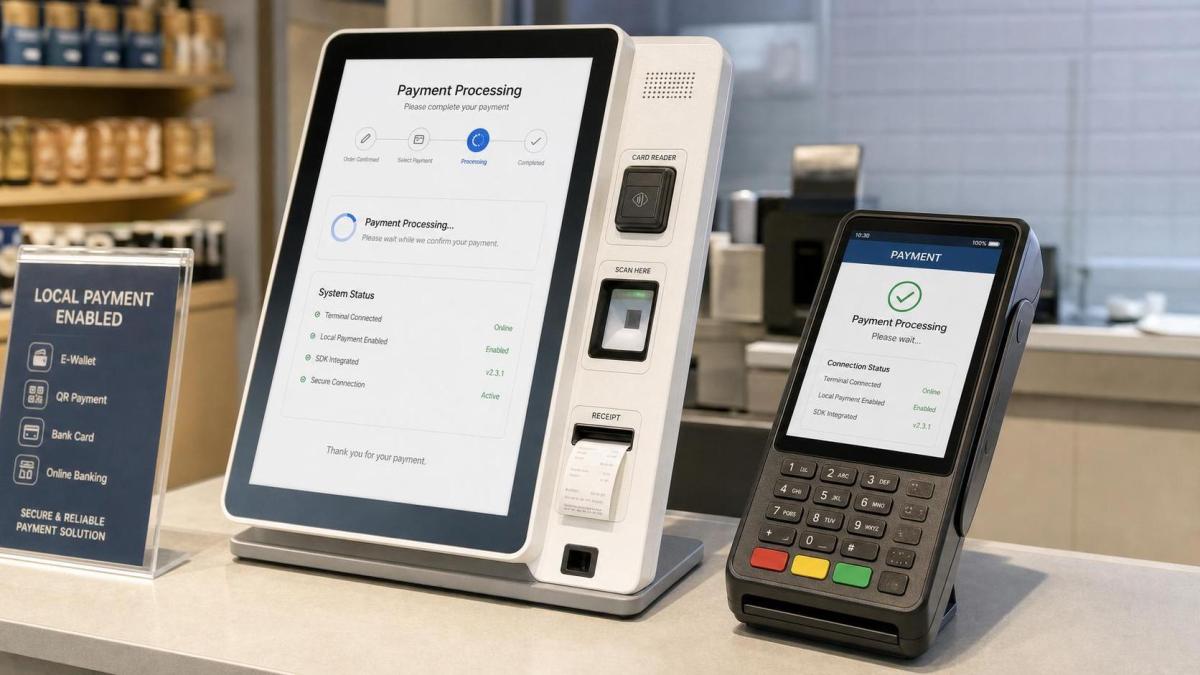
On July 8, 2026, the State Bank of Vietnam (SBV) issued Circular No. 12/2026/TT-NHNN, introducing a new compliance requirement for POS terminals and self-service kiosks sold or deployed in Vietnam. The rule deserves close attention from terminal manufacturers, importers, system integrators, payment-related service providers, and commercial operators using these devices, because it links product readiness not only to hardware deployment but also to pre-integrated local payment gateway SDKs and formal compatibility verification.
What the new circular requires
According to the information provided, the new SBV circular applies to all POS terminals and self-service terminals sold or deployed in Vietnam. It requires these devices to come with pre-integrated SDKs from local Vietnamese payment gateways, with examples including VNPay and MoMo. The same information also states that compatibility must be verified by an institution designated by SBV.
The measure was issued on July 8, 2026, and will become mandatory on October 1, 2026. Early filing is encouraged before the enforcement date.
Where the impact is likely to be felt first
Terminal vendors face a product configuration issue
From an industry perspective, vendors of POS equipment and self-service kiosks may be affected first because the requirement is tied to what is pre-installed before sale or deployment. The practical impact is likely to center on device software configuration, model readiness, and the timing of product release or shipment into the Vietnam market.
Deployers and integrators need to watch delivery timelines
Businesses responsible for installation and rollout may also be affected because compatibility verification is part of the requirement. Analysis shows that project timing, acceptance planning, and deployment sequencing could become more sensitive if devices are not prepared for the required local gateway SDK integration and verification process in advance.
Operators using kiosks and POS fleets should focus on compliance continuity
For merchants and other end users operating POS terminals or self-service kiosks in Vietnam, the issue is less about policy drafting and more about whether devices entering service after the rule takes effect meet the stated requirements. What deserves closer attention is whether procurement, replacement, or expansion plans rely on device configurations that may need adjustment before October 1, 2026.
Payment-related service partners may see tighter coordination needs
Service providers working around payment acceptance, software enablement, or terminal delivery may need closer coordination with hardware and deployment partners. Observably, the rule places local payment gateway SDK integration and verification into the device preparation stage, which can affect handoff points between software, hardware, and deployment responsibilities.
What companies should review now
Check whether current device plans match the pre-installation requirement
Companies selling or deploying relevant devices in Vietnam should review whether their current POS and kiosk configurations already include the required local payment gateway SDKs. The key point is that the requirement concerns pre-integration, not a later optional add-on in normal commercial practice.
Track verification arrangements, not just the policy text
Analysis shows that the verification step may be as important operationally as the integration requirement itself. Businesses should therefore pay attention to how compatibility verification by an SBV-designated institution is handled in practice, especially for products approaching sale or deployment schedules.
Use the period before October 1 carefully
The enforcement date creates a limited preparation window. Early filing is encouraged, so firms with active Vietnam pipelines may need to decide whether to move earlier on documentation, technical review, and supplier coordination rather than waiting for the mandatory date.
Prepare supplier and customer communication around compliance status
What deserves closer attention is the communication chain between manufacturers, distributors, integrators, and end customers. Where devices are already in procurement or deployment planning, businesses may need clear confirmation on SDK integration status, verification readiness, and whether any scheduled delivery could be affected by the new rule.
Why this reads as more than a short-term procedural update
This section is an editorial observation. It is more appropriate to understand this development as a regulatory signal about how payment-related device readiness is being defined in the Vietnam market. The confirmed facts are still limited to the circular, the requirement for local gateway SDK pre-integration, the verification step, and the enforcement date. Even so, the structure of the rule suggests that software compatibility is being treated as part of market entry and deployment readiness for relevant terminals, rather than as a secondary technical choice.
At the same time, this should not yet be overstated as a fully mapped industry outcome. Observably, the practical effect will depend on how businesses interpret the compliance process and how quickly affected market participants align device configurations and verification workflows.
How the market should read the announcement now
At this stage, the announcement is best read as a concrete compliance change with broader operational implications. It is already a confirmed rule with a stated enforcement date, so it is not merely a speculative policy signal. However, from an industry perspective, the fuller business impact still needs to be observed through implementation, verification practice, and how suppliers and deployers adapt their timelines. A measured reading is that this is both an immediate preparation issue and a longer-term indicator of stricter alignment between terminal deployment and local payment infrastructure requirements in Vietnam.
Basis of this article and follow-up verification
This article is based on the user-provided news title, event date, and event summary regarding SBV Circular No. 12/2026/TT-NHNN issued on July 8, 2026. For this type of industry update, relevant source categories typically include official regulatory notices, company statements, industry association releases, authoritative media reporting, and standards-related documents.
A specific official source link was not provided in the input, so the exact publication page still needs to be verified on an ongoing basis. Further follow-up should focus on any additional official wording related to compatibility verification, filing arrangements before October 1, 2026, and practical implementation details affecting sales and deployment in Vietnam.
News Recommendations
 How to use a CRI value chart when choosing LED lighting
![51a6ab95581761cc26f4318be6520c15]()
Aris Katos
Future of Carbide Coatings
 How to compare hotel aroma diffuser wholesale options by coverage area
![51a6ab95581761cc26f4318be6520c15]()
Aris Katos
Future of Carbide Coatings
 How to prevent O-rings and seals from failing in food equipment
![51a6ab95581761cc26f4318be6520c15]()
Aris Katos
Future of Carbide Coatings
 How to compare commercial linear light wholesale quotes accurately
![51a6ab95581761cc26f4318be6520c15]()
Aris Katos
Future of Carbide Coatings
 How to verify international standards compliance for Middle East exports
![51a6ab95581761cc26f4318be6520c15]()
Aris Katos
Future of Carbide Coatings
 How to select laboratory instruments for reproducible test results
![51a6ab95581761cc26f4318be6520c15]()
Aris Katos
Future of Carbide Coatings
 When does a sheet metal prototype reveal design flaws early?
![51a6ab95581761cc26f4318be6520c15]()
Aris Katos
Future of Carbide Coatings
 When PE air column bags reduce damage in e-commerce fulfillment
![51a6ab95581761cc26f4318be6520c15]()
Aris Katos
Future of Carbide Coatings
 How energy-efficient design reduces operating costs in retail lighting
![51a6ab95581761cc26f4318be6520c15]()
Aris Katos
Future of Carbide Coatings
 When commercial aluminum storefronts make sense for a retail renovation
![51a6ab95581761cc26f4318be6520c15]()
Aris Katos
Future of Carbide Coatings
 What makes LED lights durable in high-use commercial spaces?
![51a6ab95581761cc26f4318be6520c15]()
Aris Katos
Future of Carbide Coatings
 Which industry categories offer the strongest export potential in Latin America?
![51a6ab95581761cc26f4318be6520c15]()
Aris Katos
Future of Carbide Coatings
 How to choose an ultra bright waterproof window display for storefronts
![51a6ab95581761cc26f4318be6520c15]()
Aris Katos
Future of Carbide Coatings
 How to verify suppliers on a trade portal for global sourcing
![51a6ab95581761cc26f4318be6520c15]()
Aris Katos
Future of Carbide Coatings
 How RoHS requirements should be stated in product specifications
![51a6ab95581761cc26f4318be6520c15]()
Aris Katos
Future of Carbide Coatings
 What affects the lead time for custom retail counter displays?
![51a6ab95581761cc26f4318be6520c15]()
Aris Katos
Future of Carbide Coatings
 What consumer packaging USA importers need to verify before ordering
![51a6ab95581761cc26f4318be6520c15]()
Aris Katos
Future of Carbide Coatings
 How commercial spaces interiors shape customer dwell time
![51a6ab95581761cc26f4318be6520c15]()
Aris Katos
Future of Carbide Coatings
 How LED commercial lighting design reduces glare in retail spaces
![51a6ab95581761cc26f4318be6520c15]()
Aris Katos
Future of Carbide Coatings
 How industrial technology information improves RFID inventory accuracy
![51a6ab95581761cc26f4318be6520c15]()
Aris Katos
Future of Carbide Coatings
 When drip garden watering systems make more sense than sprinklers
![51a6ab95581761cc26f4318be6520c15]()
Aris Katos
Future of Carbide Coatings
 When category comparison improves sourcing for industrial applications
![51a6ab95581761cc26f4318be6520c15]()
Aris Katos
Future of Carbide Coatings
 Industrial application guidance for selecting the right LED lighting
![51a6ab95581761cc26f4318be6520c15]()
Aris Katos
Future of Carbide Coatings
 Which commercial architecture standards apply to European retail fit-outs?
![51a6ab95581761cc26f4318be6520c15]()
Aris Katos
Future of Carbide Coatings
 How to verify FDA requirements for maternity care products
![51a6ab95581761cc26f4318be6520c15]()
Aris Katos
Future of Carbide Coatings
 How to verify BPA-free claims for food-contact products
![51a6ab95581761cc26f4318be6520c15]()
Aris Katos
Future of Carbide Coatings
 When does a European wholesale supplier suit modular office projects?
![51a6ab95581761cc26f4318be6520c15]()
Aris Katos
Future of Carbide Coatings
 When consumer ecosystem solutions improve the in-store shopping journey
![51a6ab95581761cc26f4318be6520c15]()
Aris Katos
Future of Carbide Coatings
 How a commercial developers network can reduce site selection risk
![51a6ab95581761cc26f4318be6520c15]()
Aris Katos
Future of Carbide Coatings
 How clear purchasing specifications prevent costly supplier deviations
![51a6ab95581761cc26f4318be6520c15]()
Aris Katos
Future of Carbide Coatings
 What an ISTA drop test lab checks before your packaging ships
![51a6ab95581761cc26f4318be6520c15]()
Aris Katos
Future of Carbide Coatings
 Which commercial furniture standards apply to workplace seating?
![51a6ab95581761cc26f4318be6520c15]()
Aris Katos
Future of Carbide Coatings
 How to evaluate smart lighting module OEM compatibility before sampling
![51a6ab95581761cc26f4318be6520c15]()
Aris Katos
Future of Carbide Coatings
 How to assess whether sustainable technology delivers real impact
![51a6ab95581761cc26f4318be6520c15]()
Aris Katos
Future of Carbide Coatings
 How to assess an OEM supplier’s quality control before ordering
![51a6ab95581761cc26f4318be6520c15]()
Aris Katos
Future of Carbide Coatings
 How consumer ecosystem solutions data can improve retail personalization
![51a6ab95581761cc26f4318be6520c15]()
Aris Katos
Future of Carbide Coatings
 When does consumer packaging design justify a higher product price?
![51a6ab95581761cc26f4318be6520c15]()
Aris Katos
Future of Carbide Coatings
 Supermarket Fixture Installation: Planning Layouts, Wiring, and Handover
![51a6ab95581761cc26f4318be6520c15]()
Aris Katos
Future of Carbide Coatings
 Automated Lighting and Smart Lighting Control in Bergerac: Key Project Considerations
![51a6ab95581761cc26f4318be6520c15]()
Aris Katos
Future of Carbide Coatings