EU Sets Bio-Based Quotas for Food Packaging
Time
Click Count
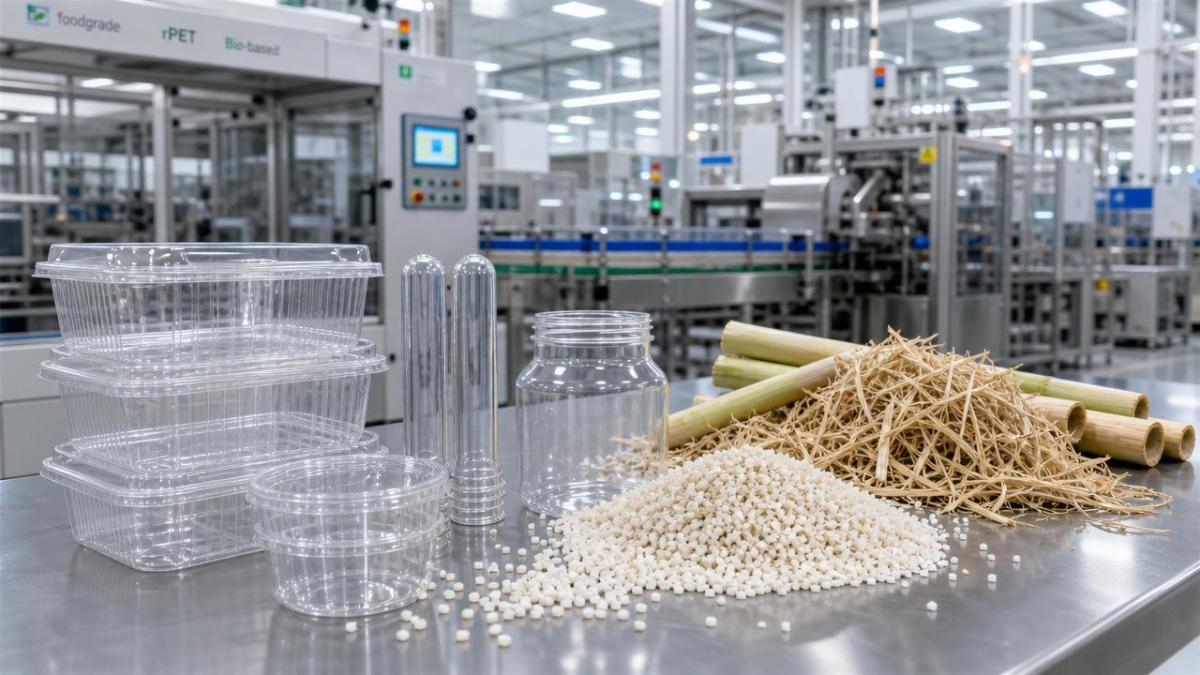
In May 2026, a report commissioned by the European Commission and released by nova-Institute set out quantified medium- and long-term mandatory quotas for bio-based materials in plastic packaging, including a 24% bio-based content requirement for food-contact PET packaging by 2040 and 44% for other food packaging. The development is relevant to food packaging producers, PET packaging users, raw material buyers, trade companies, and supply chain service providers because it is linked to the implementation of the Packaging and Packaging Waste Regulation and future market access requirements from 2027.
Event Overview
The disclosed information shows that the European Commission commissioned nova-Institute to prepare the report titled Analysis of Bio-Based Feedstocks for Plastic Packaging. The report was officially disclosed in May 2026.
According to the disclosed summary, the report quantified mandatory medium- and long-term quotas for bio-based materials for the first time. By 2040, food-contact PET packaging is required to contain 24% bio-based materials, while other food packaging is required to contain 44% bio-based materials.
The report is identified as a core basis for the implementation of the Packaging and Packaging Waste Regulation, known as PPWR, and the disclosed information states that it will be directly converted into statutory market access thresholds starting from 2027.
Which Segments May Be Affected
Direct Trade Companies
Direct trade companies involved in food packaging, PET packaging, or packaging-related imports and exports may be affected because the disclosed quotas are tied to future EU market access thresholds. If packaging products supplied to the EU fall within the food-contact PET or other food packaging categories mentioned in the report, compliance expectations may become part of order review, product documentation, and customer communication.
From an industry perspective, the main impact for trading companies may appear in product classification, contract negotiation, supplier verification, and the need to confirm whether packaging materials meet the applicable bio-based content requirement for the relevant product category and timeline.
Raw Material Procurement Companies
Companies responsible for sourcing PET-related materials or other packaging raw materials may be directly affected because the disclosed quotas focus on the proportion of bio-based materials in packaging. Procurement teams may need to pay closer attention to whether existing suppliers can provide materials that align with the 2040 quota direction and the 2027 market access threshold mentioned in the disclosed information.
Analysis shows that procurement pressure may not only concern price, but also material traceability, specification consistency, supplier documentation, and the ability to distinguish between food-contact PET packaging and other food packaging categories.
Packaging Processing and Manufacturing Companies
Manufacturers of food-contact PET packaging and other food packaging are among the most directly exposed segments because the disclosed report specifies bio-based content levels for packaging categories. These companies may need to assess whether their product structures, material formulas, and production planning can support compliance with future EU requirements.
What deserves closer attention now is the connection between the report and PPWR implementation. For manufacturers supplying the EU market, the issue is not only technical feasibility, but also whether product documentation, compliance review, and customer declarations can support future market access requirements.
Channel and Distribution Companies
Channel and distribution companies handling packaged food products or packaging materials may be affected through downstream compliance requirements. If EU buyers or brand owners begin to request packaging information based on the disclosed quota direction, distributors may need to provide clearer documentation on packaging type, material source, and applicable compliance status.
Observably, the impact on this segment may be indirect but operational. Distribution companies may face more detailed information requests from customers, especially for products involving food-contact PET packaging or other food packaging entering the EU market.
Supply Chain Service Providers
Supply chain service providers, including compliance coordination, logistics support, and documentation management roles, may be affected because future access thresholds could increase the need for accurate packaging information. The disclosed report links bio-based content requirements with regulatory implementation, which may raise the importance of data collection across the packaging supply chain.
From an industry perspective, service providers may need to support clients in sorting packaging categories, collecting supplier declarations, and preparing documentation for EU-related business processes. These activities should be based on confirmed official requirements rather than assumptions.
What Companies and Practitioners Should Watch and How to Respond
Track Official PPWR Implementation Details
Companies should continue to monitor official EU communications related to PPWR implementation and the conversion of the report into statutory market access thresholds from 2027. The disclosed information points to clear quota targets, but companies still need to follow how the requirements are formally expressed, categorized, and enforced.
It is more appropriate to understand this as a compliance signal that is moving toward implementation, rather than treating every operational detail as already fully settled.
Identify Relevant Packaging Categories Early
Companies should first distinguish whether their products involve food-contact PET packaging or other food packaging. This distinction matters because the disclosed quotas are different: 24% for food-contact PET packaging by 2040 and 44% for other food packaging by 2040.
Analysis shows that early category mapping can help companies avoid treating all packaging products as one group. For businesses serving the EU market, this may support more accurate procurement, technical review, and customer communication.
Review Supplier and Material Documentation
Procurement and manufacturing teams should begin reviewing whether suppliers can provide clear information related to bio-based material content. This does not mean making unsupported compliance claims, but it does mean preparing a documentation framework that can respond to future EU market access requirements.
Current priorities may include supplier declarations, material specifications, product category records, and internal files showing which packaging products are intended for food-contact use.
Separate Policy Signals from Immediate Business Execution
Companies should avoid overreacting before all official implementation details are available. At the same time, they should not ignore the report, because the disclosed information states that it is a core basis for PPWR implementation and will be converted into statutory thresholds from 2027.
What deserves closer attention now is the practical gap between long-term 2040 quota targets and the 2027 start of statutory market access thresholds. Businesses should prepare scenarios for procurement, customer communication, and product planning while continuing to verify new official information.
Editor’s View / Industry Observation
Observably, this development is significant because it moves bio-based packaging from a general sustainability topic toward quantified regulatory requirements for specific food packaging categories. The disclosed 24% requirement for food-contact PET packaging and 44% requirement for other food packaging give companies a clearer direction for long-term planning.
Analysis shows that the report should be understood as both a policy signal and an approaching compliance framework. It is not merely a market preference, because the disclosed information connects it directly with PPWR implementation and statutory market access thresholds beginning in 2027.
From an industry perspective, the most important point is not only the 2040 quota itself, but the need for companies to begin building product classification, supplier documentation, and market access awareness earlier. Businesses connected to EU food packaging supply chains should continue to watch official updates closely.
Conclusion
The disclosure of nova-Institute’s report commissioned by the European Commission marks an important development for bio-based plastic packaging policy in the EU. For food-contact PET packaging, other food packaging, and related supply chain roles, the quotas provide a clearer view of future compliance expectations.
It is more appropriate to understand this news as a regulatory direction with practical business implications, especially because the disclosed information links the report to PPWR implementation and market access thresholds from 2027. Companies should respond with measured preparation, category review, supplier communication, and continued monitoring of official requirements.
Information Source Statement
Main source: nova-Institute, Analysis of Bio-Based Feedstocks for Plastic Packaging, commissioned by the European Commission and officially disclosed in May 2026.
Related regulatory context: Packaging and Packaging Waste Regulation.
Items for continued observation: official EU implementation details, final statutory wording, category definitions, documentation requirements, and the practical application of market access thresholds from 2027.
News Recommendations
 What records are needed for an ISO 9001 furniture factory audit?
![51a6ab95581761cc26f4318be6520c15]()
Aris Katos
Future of Carbide Coatings
 How to choose AI marketing tools that work with your existing CRM
![51a6ab95581761cc26f4318be6520c15]()
Aris Katos
Future of Carbide Coatings
 Do freight costs erase savings when buying retail fixtures wholesale?
![51a6ab95581761cc26f4318be6520c15]()
Aris Katos
Future of Carbide Coatings
 What brightness should an OEM shelf LCD screen have for retail use?
![51a6ab95581761cc26f4318be6520c15]()
Aris Katos
Future of Carbide Coatings
 Can smart retail IT solutions for CPG work with legacy POS systems?
![51a6ab95581761cc26f4318be6520c15]()
Aris Katos
Future of Carbide Coatings
 What permit approvals belong in a commercial fitout planning checklist?
![51a6ab95581761cc26f4318be6520c15]()
Aris Katos
Future of Carbide Coatings
 Does Data Transparency Matter When Selecting Consumer Goods Suppliers?
![51a6ab95581761cc26f4318be6520c15]()
Aris Katos
Future of Carbide Coatings
 How Does Commercial Design Differ from Interior Decoration?
![51a6ab95581761cc26f4318be6520c15]()
Aris Katos
Future of Carbide Coatings
 How Long Does It Take to Verify a Commercial Furniture Supplier?
![51a6ab95581761cc26f4318be6520c15]()
Aris Katos
Future of Carbide Coatings
 How to verify compostability claims from a bubble mailer manufacturer
![51a6ab95581761cc26f4318be6520c15]()
Aris Katos
Future of Carbide Coatings
 Will commercial smart infrastructure solutions work with legacy systems?
![51a6ab95581761cc26f4318be6520c15]()
Aris Katos
Future of Carbide Coatings
 How to verify a preschool furniture manufacturer's safety standards
![51a6ab95581761cc26f4318be6520c15]()
Aris Katos
Future of Carbide Coatings
 A technical comparison of semiconductor processes for power devices
![51a6ab95581761cc26f4318be6520c15]()
Aris Katos
Future of Carbide Coatings
 How to verify that a BIFMA ergonomic chair meets the standard
![51a6ab95581761cc26f4318be6520c15]()
Aris Katos
Future of Carbide Coatings
 How to use a CRI value chart when choosing LED lighting
![51a6ab95581761cc26f4318be6520c15]()
Aris Katos
Future of Carbide Coatings
 How to compare hotel aroma diffuser wholesale options by coverage area
![51a6ab95581761cc26f4318be6520c15]()
Aris Katos
Future of Carbide Coatings
 How to prevent O-rings and seals from failing in food equipment
![51a6ab95581761cc26f4318be6520c15]()
Aris Katos
Future of Carbide Coatings
 How to compare commercial linear light wholesale quotes accurately
![51a6ab95581761cc26f4318be6520c15]()
Aris Katos
Future of Carbide Coatings
 How to verify international standards compliance for Middle East exports
![51a6ab95581761cc26f4318be6520c15]()
Aris Katos
Future of Carbide Coatings
 How to select laboratory instruments for reproducible test results
![51a6ab95581761cc26f4318be6520c15]()
Aris Katos
Future of Carbide Coatings
 When does a sheet metal prototype reveal design flaws early?
![51a6ab95581761cc26f4318be6520c15]()
Aris Katos
Future of Carbide Coatings
 When PE air column bags reduce damage in e-commerce fulfillment
![51a6ab95581761cc26f4318be6520c15]()
Aris Katos
Future of Carbide Coatings
 How energy-efficient design reduces operating costs in retail lighting
![51a6ab95581761cc26f4318be6520c15]()
Aris Katos
Future of Carbide Coatings
 When commercial aluminum storefronts make sense for a retail renovation
![51a6ab95581761cc26f4318be6520c15]()
Aris Katos
Future of Carbide Coatings
 What makes LED lights durable in high-use commercial spaces?
![51a6ab95581761cc26f4318be6520c15]()
Aris Katos
Future of Carbide Coatings
 Which industry categories offer the strongest export potential in Latin America?
![51a6ab95581761cc26f4318be6520c15]()
Aris Katos
Future of Carbide Coatings
 How to choose an ultra bright waterproof window display for storefronts
![51a6ab95581761cc26f4318be6520c15]()
Aris Katos
Future of Carbide Coatings
 How to verify suppliers on a trade portal for global sourcing
![51a6ab95581761cc26f4318be6520c15]()
Aris Katos
Future of Carbide Coatings
 How RoHS requirements should be stated in product specifications
![51a6ab95581761cc26f4318be6520c15]()
Aris Katos
Future of Carbide Coatings
 What affects the lead time for custom retail counter displays?
![51a6ab95581761cc26f4318be6520c15]()
Aris Katos
Future of Carbide Coatings
 What consumer packaging USA importers need to verify before ordering
![51a6ab95581761cc26f4318be6520c15]()
Aris Katos
Future of Carbide Coatings
 How commercial spaces interiors shape customer dwell time
![51a6ab95581761cc26f4318be6520c15]()
Aris Katos
Future of Carbide Coatings
 How LED commercial lighting design reduces glare in retail spaces
![51a6ab95581761cc26f4318be6520c15]()
Aris Katos
Future of Carbide Coatings
 How industrial technology information improves RFID inventory accuracy
![51a6ab95581761cc26f4318be6520c15]()
Aris Katos
Future of Carbide Coatings
 When drip garden watering systems make more sense than sprinklers
![51a6ab95581761cc26f4318be6520c15]()
Aris Katos
Future of Carbide Coatings
 When category comparison improves sourcing for industrial applications
![51a6ab95581761cc26f4318be6520c15]()
Aris Katos
Future of Carbide Coatings
 Industrial application guidance for selecting the right LED lighting
![51a6ab95581761cc26f4318be6520c15]()
Aris Katos
Future of Carbide Coatings
 Which commercial architecture standards apply to European retail fit-outs?
![51a6ab95581761cc26f4318be6520c15]()
Aris Katos
Future of Carbide Coatings
 How to verify FDA requirements for maternity care products
![51a6ab95581761cc26f4318be6520c15]()
Aris Katos
Future of Carbide Coatings