China-Mongolia AEO Deal Takes Effect June 1
Time
Click Count
Image Placement Plan
Place one image near the opening section to illustrate cross-border customs facilitation, certified trade operators, or logistics flows between China and Mongolia.
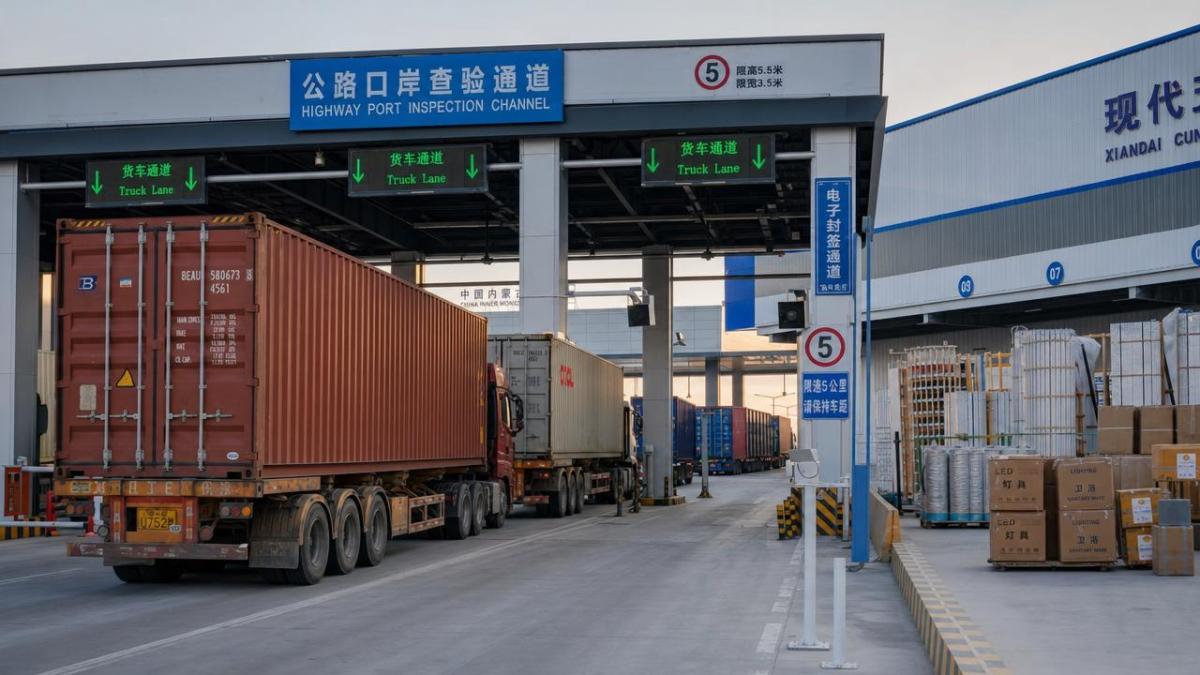
On June 1, 2026, the AEO mutual recognition arrangement between China and Mongolia customs authorities officially took effect, introducing customs facilitation for certified operators and affecting trade in building materials, lighting products, household goods, and light industrial products because eligible companies may receive faster clearance and lower procedural friction.
Confirmed Customs Facilitation Now in Force
The arrangement applies to AEO, or Authorized Economic Operator, companies recognized by the customs authorities of China and Mongolia. From June 1, 2026, certified companies from both sides may enjoy eight facilitation measures in the other market.
The confirmed measures include simplified document review, priority inspection, and dedicated coordinator support. The stated effect is to improve the efficiency of trade between China and Mongolia, particularly for Chinese exporters serving distribution networks in Mongolia and for regional warehousing and distribution service providers.
How the Rule Change May Affect Industry Participants
Cross-border trading companies
Direct exporters and importers are affected because customs recognition can influence the time and complexity of clearance. The impact is most visible in shipment documentation, inspection scheduling, customs communication, and delivery planning. Companies should pay attention to whether their AEO status is valid, recognized, and properly reflected in trade documents.
Raw material procurement teams
Procurement companies may feel the impact through lead-time expectations and supplier selection. If upstream or downstream partners are AEO-certified, purchasing schedules for materials used in building materials, lighting, household goods, and light industrial products may become easier to coordinate. Buyers should monitor supplier qualification records and the consistency of customs-related documentation.
Processing and manufacturing enterprises
Manufacturers involved in export-oriented production may be affected because clearance efficiency can influence production-to-delivery cycles. The relevant business links include order scheduling, finished-goods release, export document preparation, and quality traceability records. Manufacturers should align production plans with customs documentation requirements and avoid last-minute inconsistencies that could reduce the benefit of facilitation.
Supply chain and warehousing service providers
Regional warehousing, distribution, and logistics service providers may benefit from smoother customs processes for eligible clients. The impact may appear in warehouse turnover, dispatch sequencing, cross-border shipment coordination, and exception handling. Service providers should verify client certification status and strengthen communication procedures for shipments that may qualify for priority handling.
Practical Points for Companies to Review
Check AEO certification and compliance records
Companies seeking to benefit from the arrangement should first confirm their certification status and ensure that compliance records, customs declarations, and internal control procedures are consistent. The facilitation measures are linked to certified operator status, so qualification management becomes a central operational issue.
Align trade documents with customs expectations
Simplified document review does not remove the need for accurate documents. Exporters of building materials, lighting, household goods, and light industrial products should review invoices, packing lists, product descriptions, and shipment records to reduce mismatches during clearance.
Reassess delivery schedules for Mongolia-bound distribution
For companies serving distribution networks in Mongolia, the arrangement may support more predictable shipment planning. Businesses should review delivery cycles, warehouse replenishment plans, and procurement windows, while avoiding assumptions that every shipment will automatically receive the same operational outcome.
Improve partner qualification management
Because benefits depend on recognized AEO status, exporters, logistics providers, and warehouse operators should maintain updated records of partner qualifications. This is especially relevant where multiple suppliers, freight forwarders, or regional distribution partners are involved in the same shipment chain.
Industry Observation: Facilitation Is Becoming a Competitive Factor
From an industry perspective, this arrangement is more than a customs procedure update; it signals that certified compliance capability may increasingly influence cross-border trade competitiveness. Companies with stronger documentation control and certification management may be better positioned to use facilitation measures in daily operations.
Analysis shows that the most relevant change is likely to appear in operational reliability rather than in product demand itself. Faster review channels, priority inspection, and coordinator support may help reduce uncertainty for eligible companies, but the actual business effect will depend on implementation details and company readiness.
What deserves closer attention is whether buyers and distributors begin to treat AEO qualification as a practical supplier selection factor. This should be understood as an industry observation, not a confirmed rule change, because the input information does not state any mandatory procurement requirement.
A Measured Conclusion for the Trade Chain
The implementation of China-Mongolia AEO mutual recognition on June 1, 2026, is a notable customs facilitation development for certified operators. Its relevance is strongest for exporters, procurement teams, manufacturers, and logistics service providers connected with building materials, lighting, household goods, and light industrial products.
The arrangement may improve trade efficiency where companies are properly certified and operationally prepared. However, its final impact should be assessed through actual customs execution, company compliance performance, and feedback from market participants over time.
Information Basis and Items to Monitor
This article is based on the user-provided news title, event date, and event summary. Specific official source links were not provided in the input and should be verified continuously.
For events of this type, relevant information is usually checked against official customs announcements, certification guidance, trade compliance notices, and industry association updates. Follow-up observation should focus on detailed implementation rules, certification interpretation, changes in tender or procurement documents, customs execution practices, and feedback from affected companies.
News Recommendations
 What records are needed for an ISO 9001 furniture factory audit?
![51a6ab95581761cc26f4318be6520c15]()
Aris Katos
Future of Carbide Coatings
 How to choose AI marketing tools that work with your existing CRM
![51a6ab95581761cc26f4318be6520c15]()
Aris Katos
Future of Carbide Coatings
 Do freight costs erase savings when buying retail fixtures wholesale?
![51a6ab95581761cc26f4318be6520c15]()
Aris Katos
Future of Carbide Coatings
 Can smart retail IT solutions for CPG work with legacy POS systems?
![51a6ab95581761cc26f4318be6520c15]()
Aris Katos
Future of Carbide Coatings
 What permit approvals belong in a commercial fitout planning checklist?
![51a6ab95581761cc26f4318be6520c15]()
Aris Katos
Future of Carbide Coatings
 How Does Commercial Design Differ from Interior Decoration?
![51a6ab95581761cc26f4318be6520c15]()
Aris Katos
Future of Carbide Coatings
 How Long Does It Take to Verify a Commercial Furniture Supplier?
![51a6ab95581761cc26f4318be6520c15]()
Aris Katos
Future of Carbide Coatings
 How to verify compostability claims from a bubble mailer manufacturer
![51a6ab95581761cc26f4318be6520c15]()
Aris Katos
Future of Carbide Coatings
 Will commercial smart infrastructure solutions work with legacy systems?
![51a6ab95581761cc26f4318be6520c15]()
Aris Katos
Future of Carbide Coatings
 How to verify a preschool furniture manufacturer's safety standards
![51a6ab95581761cc26f4318be6520c15]()
Aris Katos
Future of Carbide Coatings
 A technical comparison of semiconductor processes for power devices
![51a6ab95581761cc26f4318be6520c15]()
Aris Katos
Future of Carbide Coatings
 How to verify that a BIFMA ergonomic chair meets the standard
![51a6ab95581761cc26f4318be6520c15]()
Aris Katos
Future of Carbide Coatings
 How to use a CRI value chart when choosing LED lighting
![51a6ab95581761cc26f4318be6520c15]()
Aris Katos
Future of Carbide Coatings
 How to compare hotel aroma diffuser wholesale options by coverage area
![51a6ab95581761cc26f4318be6520c15]()
Aris Katos
Future of Carbide Coatings
 How to prevent O-rings and seals from failing in food equipment
![51a6ab95581761cc26f4318be6520c15]()
Aris Katos
Future of Carbide Coatings
 How to compare commercial linear light wholesale quotes accurately
![51a6ab95581761cc26f4318be6520c15]()
Aris Katos
Future of Carbide Coatings
 How to verify international standards compliance for Middle East exports
![51a6ab95581761cc26f4318be6520c15]()
Aris Katos
Future of Carbide Coatings
 How to select laboratory instruments for reproducible test results
![51a6ab95581761cc26f4318be6520c15]()
Aris Katos
Future of Carbide Coatings
 When does a sheet metal prototype reveal design flaws early?
![51a6ab95581761cc26f4318be6520c15]()
Aris Katos
Future of Carbide Coatings
 When PE air column bags reduce damage in e-commerce fulfillment
![51a6ab95581761cc26f4318be6520c15]()
Aris Katos
Future of Carbide Coatings
 How energy-efficient design reduces operating costs in retail lighting
![51a6ab95581761cc26f4318be6520c15]()
Aris Katos
Future of Carbide Coatings
 When commercial aluminum storefronts make sense for a retail renovation
![51a6ab95581761cc26f4318be6520c15]()
Aris Katos
Future of Carbide Coatings
 What makes LED lights durable in high-use commercial spaces?
![51a6ab95581761cc26f4318be6520c15]()
Aris Katos
Future of Carbide Coatings
 Which industry categories offer the strongest export potential in Latin America?
![51a6ab95581761cc26f4318be6520c15]()
Aris Katos
Future of Carbide Coatings
 How to choose an ultra bright waterproof window display for storefronts
![51a6ab95581761cc26f4318be6520c15]()
Aris Katos
Future of Carbide Coatings
 How to verify suppliers on a trade portal for global sourcing
![51a6ab95581761cc26f4318be6520c15]()
Aris Katos
Future of Carbide Coatings
 How RoHS requirements should be stated in product specifications
![51a6ab95581761cc26f4318be6520c15]()
Aris Katos
Future of Carbide Coatings
 What affects the lead time for custom retail counter displays?
![51a6ab95581761cc26f4318be6520c15]()
Aris Katos
Future of Carbide Coatings
 What consumer packaging USA importers need to verify before ordering
![51a6ab95581761cc26f4318be6520c15]()
Aris Katos
Future of Carbide Coatings
 How commercial spaces interiors shape customer dwell time
![51a6ab95581761cc26f4318be6520c15]()
Aris Katos
Future of Carbide Coatings
 How LED commercial lighting design reduces glare in retail spaces
![51a6ab95581761cc26f4318be6520c15]()
Aris Katos
Future of Carbide Coatings
 How industrial technology information improves RFID inventory accuracy
![51a6ab95581761cc26f4318be6520c15]()
Aris Katos
Future of Carbide Coatings
 When drip garden watering systems make more sense than sprinklers
![51a6ab95581761cc26f4318be6520c15]()
Aris Katos
Future of Carbide Coatings
 When category comparison improves sourcing for industrial applications
![51a6ab95581761cc26f4318be6520c15]()
Aris Katos
Future of Carbide Coatings
 Industrial application guidance for selecting the right LED lighting
![51a6ab95581761cc26f4318be6520c15]()
Aris Katos
Future of Carbide Coatings
 Which commercial architecture standards apply to European retail fit-outs?
![51a6ab95581761cc26f4318be6520c15]()
Aris Katos
Future of Carbide Coatings
 How to verify FDA requirements for maternity care products
![51a6ab95581761cc26f4318be6520c15]()
Aris Katos
Future of Carbide Coatings
 How to verify BPA-free claims for food-contact products
![51a6ab95581761cc26f4318be6520c15]()
Aris Katos
Future of Carbide Coatings
 When does a European wholesale supplier suit modular office projects?
![51a6ab95581761cc26f4318be6520c15]()
Aris Katos
Future of Carbide Coatings